
Executive Overview
In the landscape of elementary education, early phonics instruction forms the bedrock upon which all future reading comprehension and linguistic fluency are built. As educators continually seek innovative methods to bridge the gap between theoretical phonetic rules and engaging student practice, new tools are emerging to target complex letter combinations. Among the most intricate phonetic concepts for young learners to master are vowel diphthongs—sounds where the mouth dynamically glides from one vowel position to another within a single syllable.
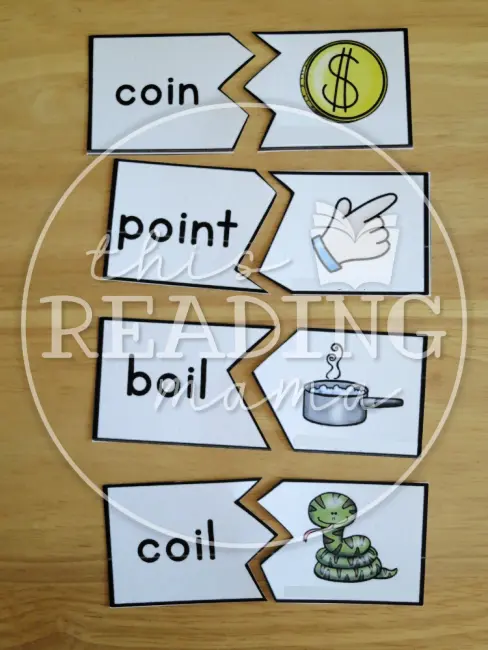
To address this pedagogical challenge, educational platforms have begun releasing specialized, hands-on instructional aids designed to demystify complex spelling and reading patterns. A prominent new offering in this space is the rollout of "Diphthong Puzzles," a free interactive resource created to transform how children interact with tricky vowel teams. By combining tactile puzzle-solving with targeted phonics practice, these tools aim to reinforce both reading decoding and spelling encoding skills.
This report provides an exhaustive examination of the new diphthong puzzles, exploring the linguistic mechanics of vowel glides, the pedagogical framework behind tactile learning, best practices for classroom and home implementation, and the broader implications of gamified phonics resources in modern K-3 curricula.

Detailed Chronology of Phonics Innovation and Resource Development
The evolution of phonics instruction has transitioned from rote memorization drills to multi-sensory, interactive methodologies. Understanding how tools like diphthong puzzles came to fruition requires examining the timeline of modern literacy interventions.
The Shift Toward Multi-Sensory Phonics
- Late 20th Century: Traditional reading instruction heavily favored whole-language approaches or rigid, drill-based phonics worksheets. While systematic phonics gained empirical backing through extensive educational research (such as the National Reading Panel report), the materials used to teach advanced phonetic concepts often remained dry and unengaging.
- Early 2000s: Educational researchers began emphasizing the importance of "orthographic mapping"—the mental process used to store words for immediate, effortless retrieval. Phonics experts recognized that teaching children how sounds map onto letters required engaging multiple senses simultaneously, particularly for abstract concepts like vowel teams.
- 2010s–Present: The proliferation of digital and printable hybrid educational resources allowed creators to design specialized manipulatives. Educators increasingly adopted puzzles, card sorts, and interactive games to make complex spelling patterns accessible. The introduction of targeted diphthong puzzles represents the latest milestone in this continuum, translating abstract phonetic glides into tangible, manipulable puzzle pieces that students can assemble, read, and spell.
Supporting Context & Metrics: The Science of Diphthongs and Early Literacy
To appreciate the utility of specialized phonics puzzles, one must first examine the linguistic definition of a diphthong and the cognitive metrics associated with phonics mastery in early childhood education.
What is a Diphthong?
Linguistically speaking, a diphthong (derived from the Greek diphthongos, meaning "having two sounds") is a complex vowel sound that begins with one vowel sound and glides smoothly into another within the same syllable.

- The Physical Mechanism: When a person pronounces a true diphthong, their vocal tract changes shape. The tongue, lips, and jaw move dynamically.
- Classic Examples: Consider the word boy. The speaker initiates the vocalization with an open-mid back unrounded vowel (the o sound) and glides upward and forward toward a close front unrounded vowel (the y sound). Other common diphthongs include the sound heard in cloud (ou/ow) or coin (oi/oy).
- The Pedagogical Hurdle: Unlike short vowels (which have a single, fixed sound) or long vowels (which often follow predictable silent-e or vowel team rules), diphthongs require students to recognize that two letters work in tandem to produce a single, gliding acoustic output. This abstract concept frequently causes friction for developing readers and spellers.
Literacy Metrics and Intervention Efficacy
Educational research consistently highlights a strong correlation between early phonics mastery and long-term reading comprehension. According to data from literacy advocacy groups:
- The Decoding Bottleneck: Over 60% of elementary students who experience reading difficulties in the third grade trace their struggles back to foundational gaps in decoding multi-letter phonemes, including digraphs, diphthongs, and complex vowel teams.
- Tactile Engagement Impact: Studies evaluating hands-on learning tools demonstrate that children retain phonetic rules up to 45% more effectively when learning is paired with tactile manipulation (such as assembling puzzle pieces) compared to passive worksheet completion. By physically connecting letter segments that form a diphthong, students build stronger neural pathways linking graphemes (written letters) to phonemes (sounds).
Official Guidelines: Best Practices for Implementing Diphthong Puzzles
Educational specialists emphasize that introducing a new learning tool requires adherence to structured literacy principles. Rushing students into advanced puzzle activities before they possess the prerequisite skills can lead to frustration and diminished confidence.
Prerequisite Mastery
Before deploying diphthong puzzles in a classroom or home-school setting, educators must ensure that learners have achieved foundational proficiency in simpler phonics concepts. Students should comfortably understand:

- CVC Words: Basic consonant-vowel-consonant decoding.
- Short and Long Vowels: A firm grasp of individual vowel sounds and basic silent-e rules.
- Basic Consonant Blends and Digraphs: Familiarity with how two letters can blend together while retaining their individual sounds (blends) or create an entirely new sound (digraphs like sh or ch).
Once these foundations are secure, learners are cognitively prepared to tackle the dynamic nature of vowel glides.
Dual-Purpose Implementation: Reading vs. Spelling
The versatility of diphthong puzzles lies in their ability to serve two distinct functions within the literacy curriculum:
1. Practicing Reading (Decoding)
- Setup: Present the assembled or partially assembled puzzle pieces to the student.
- Execution: Instruct the learner to examine the individual phonetic components, sound out the constituent parts, and blend them together to read the complete word.
- Cognitive Benefit: This reinforces the forward-mapping process, teaching the brain to scan multi-letter combinations and translate them into cohesive spoken words.
2. Practicing Spelling (Encoding)
- Setup: Disassemble the puzzles and scatter the pieces. Provide a verbal prompt or a picture clue representing the target word.
- Execution: Challenge the student to select the correct letter tiles or puzzle segments and fit them together in the proper sequence to spell out the word.
- Cognitive Benefit: This engages the reverse-mapping process, requiring the student to segment a spoken word into its constituent phonemes and select the appropriate orthographic representations (e.g., choosing oi versus oy based on position rules).
Future Outlook: The Intersection of Digital Libraries and Tactile Learning
As the educational publishing ecosystem evolves, the demand for accessible, high-quality, and ad-free instructional materials continues to surge. Educators and parents increasingly reject cluttered, ad-driven websites in favor of curated digital resource repositories—often referred to as "libraries" or membership platforms—that offer instant, one-click access to classroom-ready materials.

The Rise of Curated Teacher Hubs
The distribution model for supplemental teaching aids is undergoing a structural shift. Creators of educational content are moving toward streamlined digital memberships where teachers and parents can access hundreds of exclusive, printable resources—such as phonics puzzles, summer learning game bundles, and interactive mats—without the distraction of pop-up advertisements or paywalls. This direct-to-educator model ensures that instructional time is maximized and preparation friction is minimized.
Innovations on the Horizon
Looking ahead, the integration of physical manipulatives with digital tracking tools represents the next frontier in literacy education. While tactile puzzles remain essential for developing fine motor skills and spatial reasoning in early childhood, future iterations may incorporate augmented reality (AR) elements—allowing students to scan a completed diphthong puzzle with a tablet to hear native pronunciation, view animated mouth-shape diagrams of the vowel glide, or access interactive reading comprehension games.
Furthermore, as educational standards continue to emphasize structured literacy and the "Science of Reading," resources that explicitly break down complex phonetic mechanics will remain central to classroom curricula. By transforming abstract linguistic rules into engaging, hands-on puzzles, educators can ensure that all students—regardless of learning style—master the vital mechanics of reading and spelling.

Conclusion
The introduction of specialized diphthong puzzles marks a significant step forward in making complex phonics instruction both accessible and enjoyable. By demystifying the physical mechanics of vowel glides and offering dual-purpose practice for both reading decoding and spelling encoding, these tools bridge the gap between abstract linguistic theory and practical classroom application. As teachers and parents continue to embrace curated, ad-free digital resource hubs, innovative hands-in tools will remain indispensable allies in the ongoing mission to foster lifelong literacy and confidence in young learners.

