
Executive Overview
For generations, the traditional classroom dynamic has relied on a familiar rhythm: teachers deliver lectures, students complete textbook exercises, and assessments measure what was retained at the end of a unit. While students may successfully answer questions during a lesson, educators have long wrestled with a persistent challenge: How much of that learning actually sticks after the classroom bell rings?
A groundbreaking educational research study published by Boulahnane, Ismaili, and Haddi (2026) offers fresh insight into this enduring pedagogical dilemma. Investigating the impact of game-based learning in a Moroccan middle school, the researchers set out to determine whether interactive digital platforms could fundamentally alter not just immediate academic performance, but long-term knowledge retention.
Over a rigorous three-week experimental period, the study compared two ninth-grade classes mastering identical curricula—encompassing English grammar, English vocabulary, and Life and Earth Science. While the control group experienced conventional instruction featuring traditional teacher-led explanations, textbook drills, and pair-work, the experimental group utilized the popular game-based learning platform, Kahoot!.
The findings were striking. Students using Kahoot! achieved roughly twice the learning gains compared to their peers in the conventional instruction group. Furthermore, when tested two weeks later to measure knowledge retention, the Kahoot! cohort maintained significantly higher scores across all three academic subjects. Beyond academic metrics, the research revealed a dramatic disparity in student engagement, with game-based learners reporting substantially higher motivational and participatory scores.
This comprehensive report explores the chronological development of the study, details the supporting metrics and data, analyzes the pedagogical mechanics driving these outcomes, and evaluates the broader future outlook for digital game-based learning in middle school environments.
Detailed Chronology: Inside the Three-Week Experimental Design
To understand the profound implications of the Boulahnane, Ismaili, and Haddi (2026) study, it is essential to examine the careful construction and chronological execution of the research methodology.
Setting the Stage and Participant Demographics
The study was conducted within a real-world Moroccan middle school environment, ensuring that the findings reflect authentic classroom conditions rather than sterile, lab-controlled settings. The research focused on two distinct ninth-grade classes, comprising a total of 60 students aged 14 to 15 (30 students per class).
To establish a valid baseline, both groups shared identical educational parameters:
- Curriculum: Both classes covered the exact same academic content, divided evenly across English grammar, English vocabulary, and Life and Earth Science.
- Instructional Time: Both groups received the exact same duration of direct instruction per subject unit.
- Baseline Knowledge: Prior to the commencement of the instructional period, both cohorts completed baseline pre-tests for each subject. Statistical analysis confirmed that there were no significant baseline differences in prior knowledge between the two classes; both started from an equivalent academic footing.
The Divergent Pedagogical Approaches
While the subject matter and instructional time remained uniform, the delivery mechanisms diverged sharply between the two classes:
- The Conventional Instruction Group: This cohort followed traditional, time-tested teaching methodologies. Lessons consisted primarily of direct teacher explanations, structured textbook exercises, individual and pair-work drills, and traditional formative questioning.
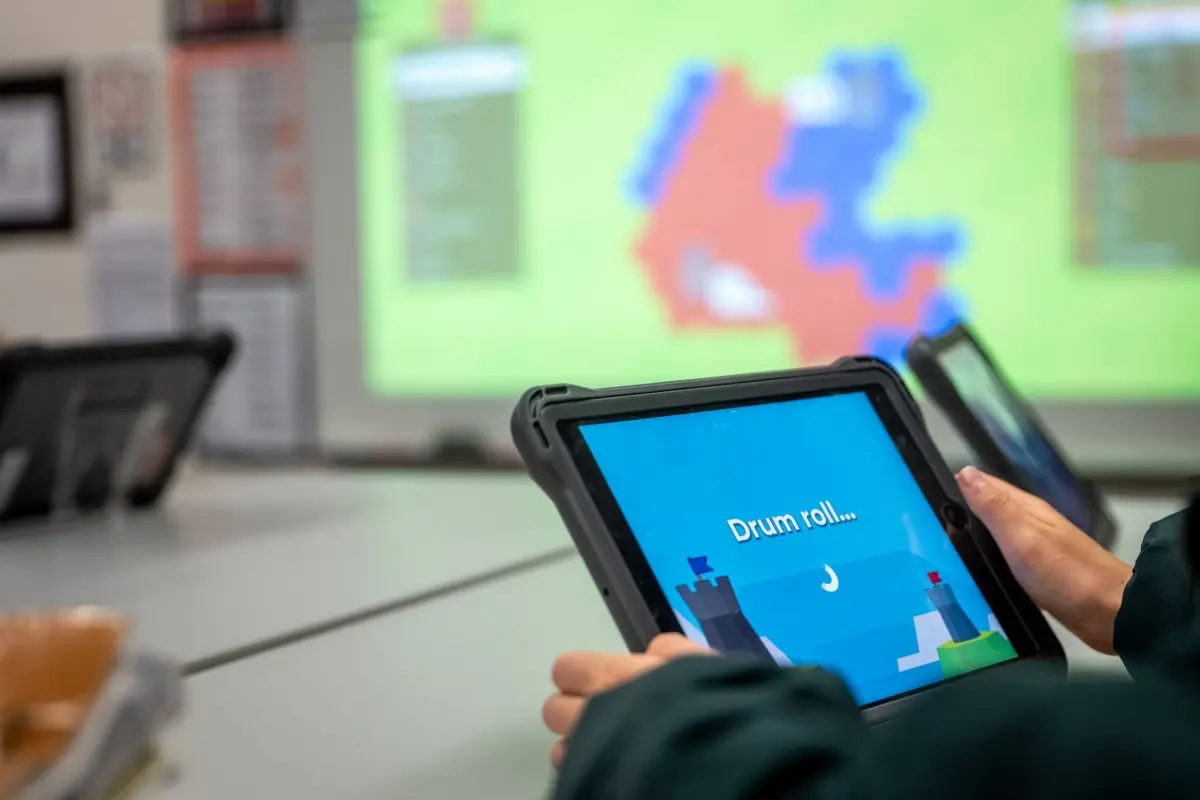
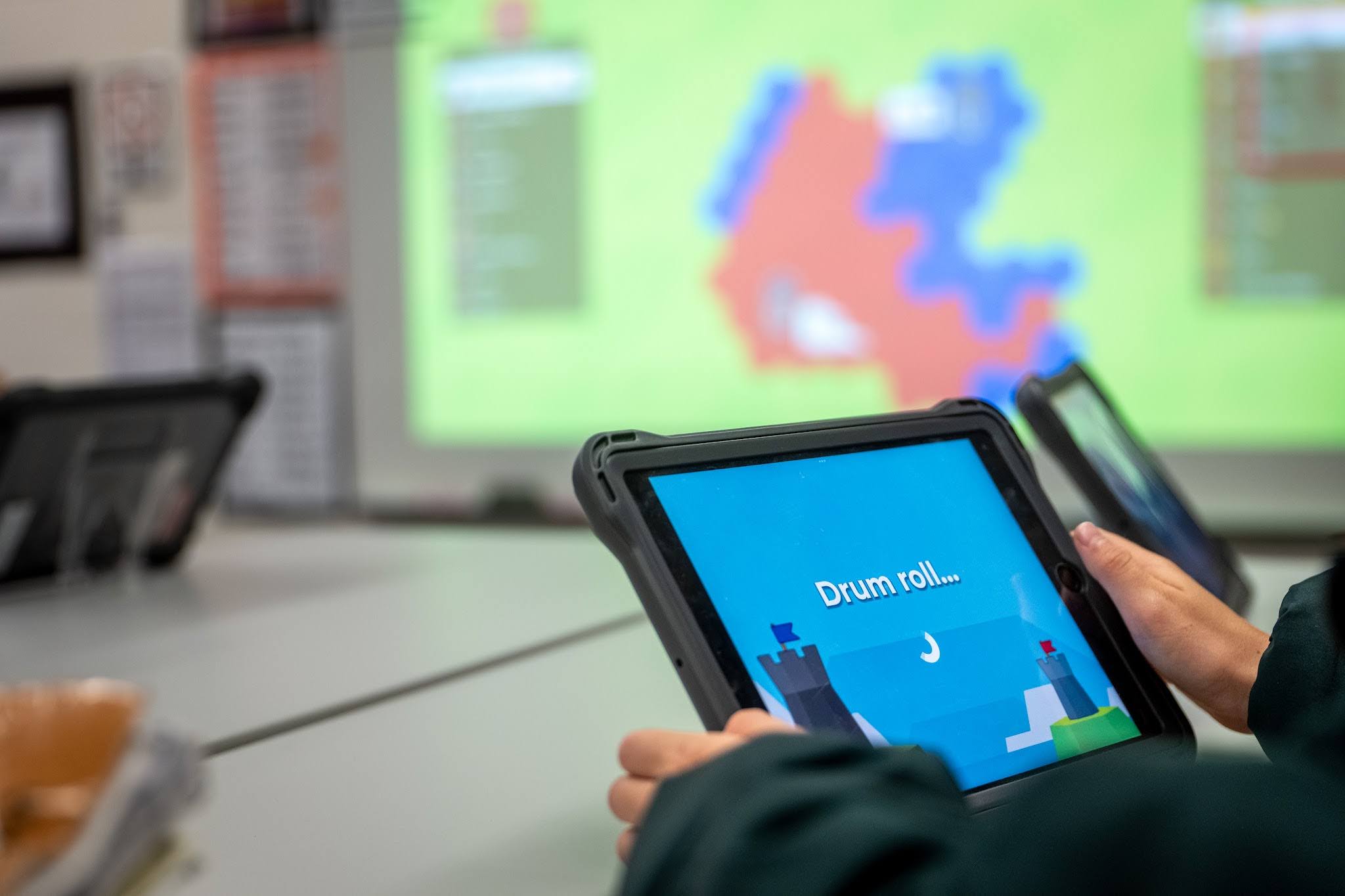
- The Kahoot! Experimental Group: This cohort engaged with the exact same curriculum through the lens of interactive, game-based digital quizzes. During these sessions, teachers projected quiz questions onto a shared classroom screen, while individual students responded using personal smartphones or tablets.
The Real-Time Pedagogical Feedback Loop
A critical variable in the Kahoot! instructional design was how teachers managed the interactive sessions. Rather than treating the game as a passive quiz or rushing through questions to rack up points, educators leveraged the platform’s real-time analytics.
After each individual question was answered, the platform instantly displayed the correct answer alongside a visual distribution of how the entire class had responded. This immediate data visualization served as an instant diagnostic tool.
Whenever a significant portion of the class answered incorrectly, the teacher paused the game, reviewed the specific misconception, provided targeted re-explanation, and facilitated a brief class discussion before advancing to the next prompt. This seamless integration of assessment, immediate feedback, and targeted remediation formed the heartbeat of the experimental group’s daily sessions.
Assessment Intervals and Follow-Up Testing
To measure both short-term acquisition and long-term retention, the researchers implemented a three-tier testing schedule:
- Pre-test: Administered prior to instruction to establish baseline equivalency.
- Immediate Post-test: Administered immediately following the conclusion of the three-week instructional period. This 20-item standardized test evaluated immediate knowledge acquisition across grammar, vocabulary, and science.
- Delayed Post-test (Two-Week Follow-up): Administered exactly two weeks after the conclusion of instruction, utilizing the same 20-item testing instrument to measure how much information successfully transitioned from short-term working memory into long-term cognitive storage.
Supporting Context & Metrics: Analyzing the Data
The quantitative data compiled by Boulahnane, Ismaili, and Haddi (2026) provides compelling empirical evidence regarding the efficacy of game-based learning. The metrics demonstrate clear advantages for the Kahoot! cohort across both immediate academic gains and long-term retention curves.
Immediate Learning Gains: Doubling Performance
When comparing pre-test scores to immediate post-test outcomes, the disparity in academic growth between the two teaching methodologies was unmistakable. While both classes improved—as is expected following direct instruction—the students utilizing Kahoot! demonstrated roughly twice the learning gains across all three evaluated subjects.
| Subject Area | Conventional Instruction Gain | Kahoot! Instruction Gain |
|---|---|---|
| English Grammar | Moderate improvement | Approximately 2x conventional gains |
| English Vocabulary | Moderate improvement | Approximately 2x conventional gains |
| Life and Earth Science | Moderate improvement | Approximately 2x conventional gains |
This accelerated acquisition rate suggests that the gamified format successfully captured student attention, reduced cognitive friction, and accelerated the encoding of new linguistic and scientific concepts into memory structures.
Long-Term Retention: Beating the Forgetting Curve
Educational psychologists have long recognized the "forgetting curve"—the natural tendency of the human brain to rapidly discard newly acquired information unless it is actively reviewed or reinforced. The research team specifically tested for this phenomenon by administering the follow-up assessment two weeks after instruction concluded.
The results validated the power of active retrieval practice:
- Sustained Advantage: Two weeks post-instruction, the Kahoot! class maintained higher average scores across all three subjects.
- Statistical Margin: The Kahoot! cohort held a consistent performance advantage of 3.3 to 3.7 points (measured on a scale out of 20) over the conventional instruction group.
- The Natural Decay Trend: Interestingly, the data revealed that both groups experienced a slight decline in scores during the two-week hiatus. This underscores a vital pedagogical truth identified by the researchers: while game-based learning significantly boosts initial retention and deepens encoding, continuous, periodic review remains essential for permanent knowledge consolidation.
Student Engagement Metrics
Academic achievement does not occur in a vacuum; it is deeply intertwined with student motivation, psychological safety, and engagement. To quantify this subjective experience, researchers administered a standardized engagement survey to students following the instructional period.
The findings were definitive:
- Kahoot! Group Engagement Score: Students utilizing the game-based platform reported an overwhelming average engagement score of 23.6 out of 25.
- Conventional Group Engagement Score: Students in the traditional instruction control group reported an average engagement score of 17.0 out of 25.
This dramatic 6.6-point differential illustrates that students experienced game-based learning not as a chore or a stressful testing environment, but as an immersive, stimulating, and enjoyable activity. This psychological shift from passive compliance to active, enthusiastic participation heavily correlates with the superior cognitive retention observed in the study.
Pedagogical Mechanisms: Why Does Kahoot! Work?
While the metrics clearly favor game-based learning, educational researchers must look beyond the numbers to understand why these interventions succeed. Boulahnane, Ismaili, and Haddi (2026) point to several underlying cognitive and psychological mechanisms at play during Kahoot! sessions.
1. Active Retrieval Practice vs. Passive Review
Traditional studying often involves passive re-reading of textbooks or listening to lectures—methods that create an "illusion of competence" where students feel they understand material because it is familiar. In contrast, answering a Kahoot! prompt requires active retrieval. Pulling information out of memory strengthens neural pathways far more effectively than simply re-exposing the brain to the correct answer. Each quiz question acts as a cognitive workout, forcing the student’s brain to search, retrieve, and lock in the data.
2. Immediate Feedback Loops
In traditional classroom settings, students may wait days—or even weeks—for homework assignments and quizzes to be graded and returned. By that time, the psychological connection to the mistake has faded. Kahoot! provides instant, real-time feedback. The moment a student submits an answer, they discover whether they were correct. If incorrect, the correct answer is displayed immediately, allowing the brain to instantly correct its error while the context of the question is still fresh in working memory.
3. Formative Assessment-Driven Instruction
The study highlights that the platform’s greatest utility may not just be for the students, but for the educator. By viewing instant response distributions, teachers gain X-ray vision into classroom comprehension. Rather than pushing forward blindly through a syllabus, teachers can instantly diagnose systemic misunderstandings, halt the game, and deliver targeted micro-explanations. This iterative, responsive teaching style closes learning gaps before they can widen into permanent academic deficits.
4. Low-Stakes, High-Motivation Environment
Adolescence is a stage of life where peer perception and social anxiety heavily influence classroom participation. Traditional questioning can put students on the spot, causing performance anxiety that inhibits learning. Digital game-based learning reframes assessment as play. By utilizing anonymous or gamified nicknames, incorporating friendly competition, and maintaining an upbeat pace, platforms like Kahoot! lower affective filters. Students feel safe taking risks, making mistakes, and learning from them without the debilitating fear of public failure.
Future Outlook: The Evolution of Digital Learning in Middle Schools
As educational technology matures, studies like Boulahnane, Ismaili, and Haddi (2026) transition game-based learning from a novel classroom novelty to an empirically validated instructional strategy. However, looking toward the future, educational experts emphasize that technology is a tool, not a silver bullet.
Bridging EdTech and Pedagogical Theory
Future research will likely seek to isolate the specific variables within game-based learning—disentangling the exact contributions of gamification elements (points, leaderboards, timers) from core cognitive principles (retrieval practice, spaced repetition, immediate feedback). Understanding these granular mechanics will allow curriculum designers to build even more effective digital learning tools.
Scalability and Implementation for Middle School Educators
For classroom teachers navigating packed curricula and standardized testing pressures, the practical takeaway from this research is remarkably accessible. Educators do not need massive technological overhauls or expensive software suites to replicate these results.
As demonstrated in the Moroccan middle school study, a simple, structured pedagogical routine can yield outsized rewards:
- Introduce Core Content: Deliver foundational explanations through standard instructional methods.
- Formative Check: Utilize a short, targeted kahoot to evaluate comprehension of grammar, vocabulary, or scientific concepts.
- Targeted Remediation: Pause when the data reveals widespread errors; address misconceptions openly and collaboratively as a class.
- Spaced Reinforcement: Recognize that memory decays over time and schedule periodic follow-up reviews to lock in long-term retention.
Conclusion
The empirical findings of Boulahnane, Ismaili, and Haddi (2026) provide encouraging, data-backed validation for middle school educators striving to capture student attention and secure lasting learning outcomes. By marrying the engaging, low-stakes mechanics of game-based learning with rigorous formative feedback and class discussion, teachers can transform the modern classroom into an environment where learning is not just temporarily memorized, but deeply retained.

