
Executive Overview
In the landscape of modern education, traditional pedagogical metrics have long favored the immediate feedback loop of a classroom lesson where students correctly answer questions in real time. However, a critical pedagogical question remains largely unanswered in day-to-day teaching: How much of that acquired knowledge actually persists after the classroom bell rings and the lesson concludes?
A groundbreaking educational research study published by Boulahnane, Ismaili, and Haddi (2026) directly addresses this enduring challenge. Conducted within a Moroccan middle school setting, the study undertook a rigorous comparative analysis of two ninth-grade classes over a three-week instructional period. The curriculum covered identical English grammar, English vocabulary, and Life and Earth Science content. While the control group experienced conventional, textbook-driven instruction, the experimental group utilized the game-based learning platform Kahoot! as an integrated instructional tool.
The findings offer compelling, data-backed evidence for the efficacy of interactive digital tools in foundational education. Students utilizing Kahoot! achieved roughly twice the learning gains of their peers in the conventional instruction group. More importantly, these academic advantages were not fleeting; follow-up assessments administered two weeks later demonstrated that the Kahoot! cohort retained significantly higher scores across all three subjects. Furthermore, self-reported engagement metrics highlighted a dramatic divergence in student motivation, with the game-based learning group reporting an average engagement score of 23.6 out of 25, compared to 17.0 for the control group.
This article explores the methodology, empirical results, pedagogical implications, and future outlook of the Boulahnane et al. (2026) study, providing educators, administrators, and educational technologists with an authoritative breakdown of how game-based formative assessment transforms cognitive retention.
Detailed Chronology and Research Methodology
To understand the weight of the Boulahnane, Ismaili, and Haddi (2026) study, one must examine the meticulous parameters established by the researchers. The study was structured to eliminate variables that could compromise the validity of comparative educational research, ensuring a true "apples-to-apples" evaluation of teaching methodologies.
Participant Demographics and Experimental Design
The three-week intervention involved two distinct ninth-grade classes within a single middle school. Each class consisted of 30 students, with ages ranging uniformly between 14 and 15 years old. To ensure baseline parity, both cohorts possessed equivalent academic histories and initial proficiency levels, verified through pre-instructional testing.
Both classes were assigned the exact same curriculum modules over the identical timeframe:
- English Grammar: Core syntactic structures and rule application.
- English Vocabulary: Thematic lexical acquisition and contextual usage.
- Life and Earth Science: Complex biological and geological concepts appropriate for the grade level.
While the independent variable—the mode of instruction—differed between the two groups, the total instructional time remained constant.
Treatment Conditions: Kahoot! Versus Conventional Instruction
The comparative study evaluated two distinct instructional deliveries:
- The Conventional Instruction Cohort: This group followed standard pedagogical frameworks. Instruction relied heavily on direct teacher explanations, structured textbook exercises, and traditional pair-work drills. Formative checks were conducted using standard verbal questioning or written worksheets.
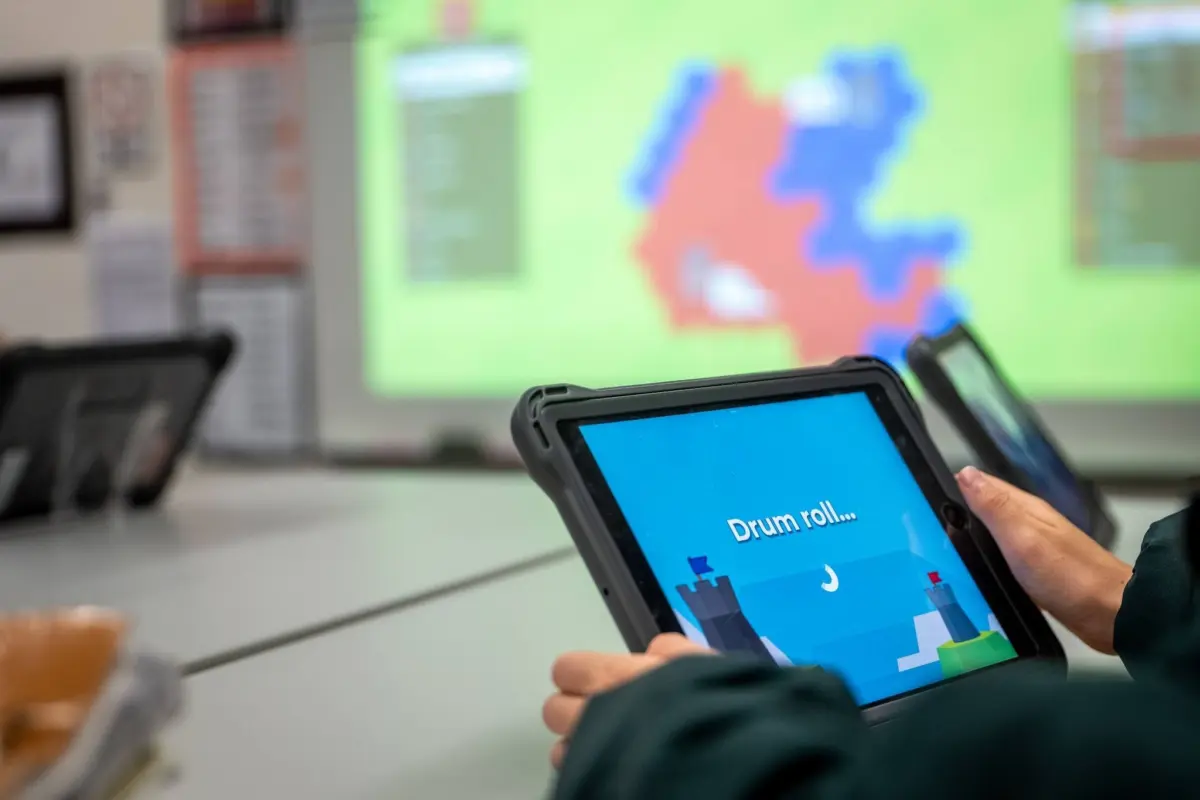
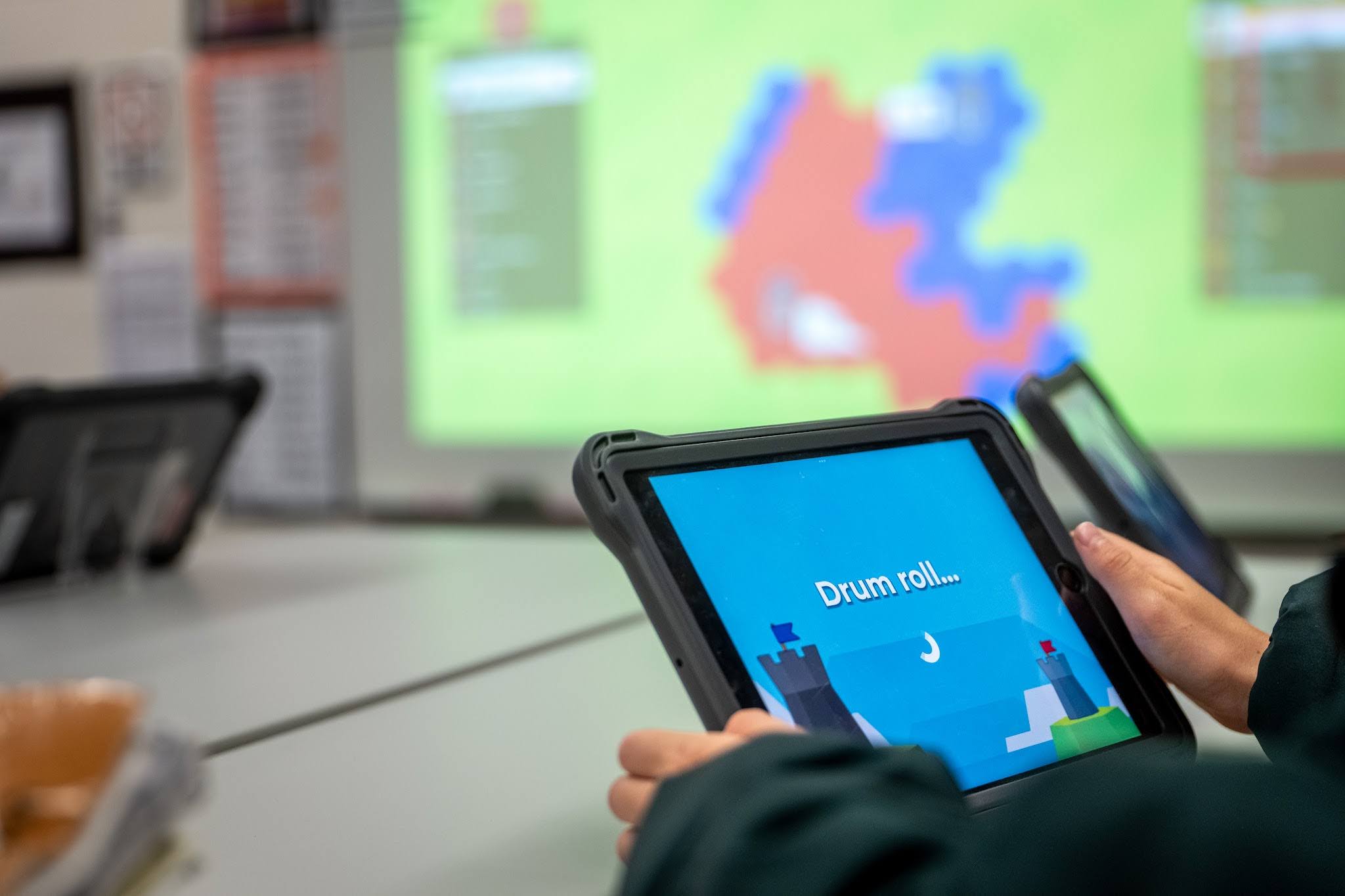
- The Kahoot! Cohort: This group experienced a gamified learning environment. During instructional sessions, teachers projected quiz questions onto a shared classroom screen. Students utilized personal smartphones or school-provided tablets to submit their responses within a competitive, timed format.
A vital component of the Kahoot! intervention was the immediate feedback loop. Following each quiz question, the platform automatically displayed the correct answer alongside a visual distribution of the entire class’s responses. Instructors did not merely advance to the next slide; instead, they paused to review questions that exhibited high failure rates, providing targeted remediation before moving forward.
Testing Intervals and Evaluation Metrics
To measure both immediate comprehension and long-term memory consolidation, the researchers implemented a three-tiered testing schedule:
- Pre-Test: Administered prior to the instructional unit across all three subjects utilizing a standardized 20-item assessment per domain.
- Immediate Post-Test: Administered immediately following the conclusion of the instructional modules.
- Follow-Up Retention Test: Administered unexpectedly two weeks post-instruction using the identical 20-item testing instruments to measure knowledge retention over time.
Supporting Context, Quantitative Metrics, and Data Analysis
The empirical data gathered by Boulahnane, Ismaili, and Haddi (2026) provides a stark quantitative contrast between gamified formative assessment and traditional instructional delivery. The findings extend far beyond simple score improvements, shedding light on cognitive load theory, active recall, and sustained student motivation.
Academic Gains: Pre-Test to Post-Test Performance
Both student cohorts began the study on level footing, displaying statistically insignificant variances in their baseline pre-test scores across English grammar, English vocabulary, and Life and Earth Science. However, the divergence in performance materialized immediately upon the conclusion of the instructional delivery.
From pre-test to immediate post-test, students utilizing Kahoot! demonstrated substantially greater improvements across all evaluated domains:
- English Grammar: The Kahoot! group surged ahead, exhibiting learning gains roughly double those recorded by the conventional instruction group.
- English Vocabulary: Retention of new lexical items was markedly higher, driven by repeated exposure and competitive retrieval practice.
- Life and Earth Science: Complex scientific terminology and systems were mastered more efficiently when broken down into interactive, gamified formative check-ins.
The Two-Week Retention Gap
A critical limitation of many educational studies is their reliance solely on immediate post-instruction evaluation. Educational psychology has long recognized the "forgetting curve"—the exponential loss of retained information over time if no reinforcement occurs.
When Boulahnane et al. administered the follow-up assessments two weeks later, the durability of learning became apparent:
- While both groups experienced a slight regression in scores over the two-week hiatus—underscoring the absolute necessity of continuous pedagogical review—the Kahoot! cohort maintained a commanding statistical advantage.
- Students in the game-based learning group sustained a consistent performance margin, holding a 3.3 to 3.7-point advantage over the comparison class on the 20-point scale across all three subjects.
Researchers hypothesized that this superior retention stemmed from the combined mechanisms of repeated active recall and immediate feedback. By forcing students to actively retrieve information under timed conditions, the brain strengthens neural pathways far more effectively than passive listening or traditional homework drills. However, the researchers noted that the study design did not isolate these individual elements to quantify the precise psychological weight of gamification versus feedback alone.
Student Engagement Metrics
Beyond academic achievement, the study evaluated psychological engagement through structured post-intervention surveys. Engagement in a middle school environment is notoriously difficult to capture objectively, but self-reported metrics yielded decisive results:
- Kahoot! Class Average Engagement Score: 23.6 out of 25.
- Conventional Instruction Class Average Engagement Score: 17.0 out of 25.
This differential of over six points indicates that students experienced the gamified learning environment not merely as an assessment tool, but as a deeply motivating, immersive experience. Higher engagement levels are intrinsically tied to reduced classroom behavioral disruptions, increased attention spans, and a more positive psychological association with challenging academic subjects like secondary science and foreign language acquisition.
Official Perspectives and Pedagogical Implications
The implications of the Boulahnane, Ismaili, and Haddi (2026) study stretch across the broader educational technology sector and into everyday classroom management. While the research was localized to a single Moroccan middle school over a compressed three-week window, its alignment with broader cognitive science literature offers actionable insights for educators worldwide.
The Power of Formative Diagnostics and Responsive Teaching
A primary takeaway for middle school teachers is how the instructional sessions were executed. The success of the intervention was not solely tied to the digital interface or the flashing lights of the game platform; it was rooted in the pedagogical strategy of responsive teaching.
When a conventional classroom administers a worksheet, grading often occurs hours or days later, creating a temporal disconnect between the error and the correction. In contrast, the Kahoot! integration transformed the quiz into a live diagnostic tool:
- Real-Time Data Aggregation: The teacher instantly views where the classroom consensus has broken down.
- Strategic Pausing: Rather than blindly adhering to a lesson plan, the educator pauses the game the moment a high error rate is detected.
- Collaborative Remediation: The class engages in an immediate, teacher-led discussion to deconstruct why a distractor answer was incorrect, rectifying misconceptions at the exact moment of cognitive conflict.
This simple instructional loop—Check, Identify, Discuss—is easily translatable to any discipline, requiring minimal technological overhead beyond a shared screen and student-accessible devices.
Future Outlook and Continuing Research
As educational institutions navigate the post-pandemic landscape of learning recovery, student engagement, and digital integration, studies such as the one conducted by Boulahnane, Ismaili, and Haddi (2026) provide an invaluable empirical compass.
Horizon of Game-Based Learning Research
While the findings provide robust evidence supporting the short-to-medium-term benefits of platforms like Kahoot!, educational researchers point to several avenues for future investigation:
- Longitudinal Tracking: Future studies must examine whether the performance advantage of gamified learning persists over longer intervals, such as a full academic semester or an entire school year.
- Component Isolation: Disentangling the exact cognitive mechanisms—measuring the isolated impacts of competition, point structures, audio-visual feedback, and active retrieval separately—will allow instructional designers to optimize software interfaces for maximum cognitive retention.
- Scalability Across Demographics: Expanding similar research designs to diverse socioeconomic environments, elementary grades, and higher education will test the universal applicability of these findings.
Conclusion
For middle school educators striving to capture students’ attention in an era of unprecedented digital distraction, the message from contemporary research is clear. Game-based learning platforms, when implemented with intentional pedagogical strategy, are far more than digital diversions. As demonstrated by Boulahnane, Ismaili, and Haddi, integrating interactive platforms like Kahoot! can double short-term learning gains, cement long-term knowledge retention, and elevate student engagement to new heights—transforming the classroom from a passive environment of listening into an active arena of discovery.

