
Executive Overview
In an era defined by an overwhelming abundance of digital information, the ability to critically evaluate historical media has never been more crucial. Recognizing this pedagogical imperative, the National Council of Teachers of English (NCTE) has embarked on a transformative collaboration with the Library of Congress. Operating as an active participant in the prestigious Teaching with Primary Sources (TPS) Consortium, the NCTE is spearheading an initiative designed to fundamentally reshape how literacy educators and students interact with historical archives.
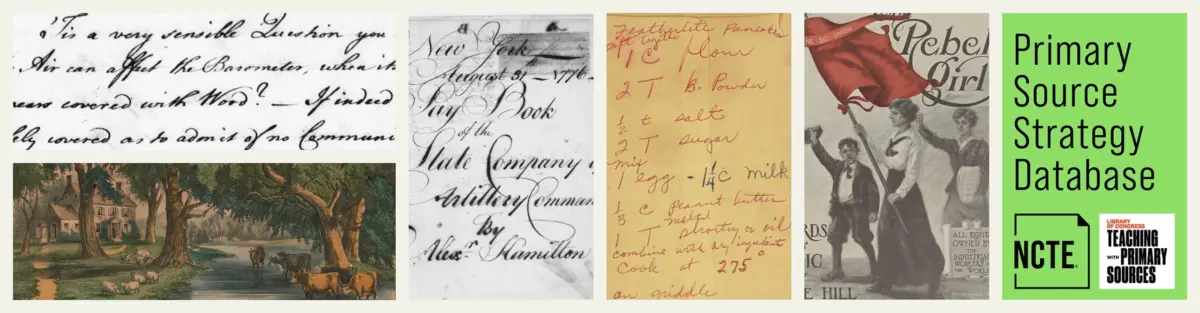
At the heart of this nationwide educational movement is a newly unveiled, highly searchable database. This comprehensive digital repository houses expert pedagogical strategies tailored to more than 150 specific artifacts drawn directly from the Library of Congress’s vast, digitized primary source collections. Far from being a static digital archive, the platform is a dynamic teaching tool. The instructional strategies embedded within the database were meticulously crafted by more than two dozen distinguished educators and leaders in English language arts (ELA) education.
Each entry in the database does more than merely catalog a historical item; it articulates specific literacy merits for curriculum and classroom integration. Furthermore, the platform equips teachers with suggested thematic connections, unit frameworks, and explicit alignments to state educational standards. Educators can seamlessly navigate the repository using intuitive tags such as picture book, argument, history, advertising, and oral histories. By embedding authentic historical artifacts into daily literacy instruction, this initiative bridges the gap between passive historical consumption and active, critical analysis, ultimately fostering a generation of students capable of decoding the complex narratives that shape both past and present societies.
Detailed Chronology: The Evolution of the NCTE-Library of Congress Partnership
The integration of primary sources into modern American classrooms did not happen overnight; it represents the culmination of years of strategic alignment between cultural institutions and educational thought leaders.
- The Foundation of the TPS Consortium: The Library of Congress established the Teaching with Primary Sources program to make its unparalleled historical collections accessible to the nation’s educators. By partnering with universities and educational organizations across the United States, the TPS Consortium aimed to build a nationwide network of professionals dedicated to primary source-based instruction.
- The NCTE Integration: Recognizing the natural synergy between historical analysis and advanced literacy skills—such as close reading, textual analysis, and argumentative writing—the NCTE joined the TPS Consortium. This partnership positioned ELA classrooms as primary incubators for historical inquiry.
- Mobilizing ELA Leaders: Over subsequent phases, the NCTE mobilized over two dozen leading English language arts educators, curriculum developers, and classroom innovators. These professionals were tasked with reviewing items from the Library of Congress’s digitized archives and developing repeatable, standards-aligned instructional strategies.
- Database Development and Launch: The collaborative efforts culminated in the launch of the searchable online database. Designed with user experience in mind, the platform allows teachers to filter resources by media type, instructional focus, and critical thinking objectives.
- Continuous Expansion: Today, the database continues to evolve. With strategies built around more than 150 distinct primary sources—ranging from mid-century advertising films and government photographs to oral histories and historic literature—the repository serves as a living library that expands alongside the needs of modern educators.
Supporting Context & Metrics: Case Study of a Primary Source in Action
To understand the practical impact of the NCTE-Library of Congress database, one must examine how individual artifacts are translated into rigorous classroom curricula. A prime example featured within the repository is the 1957 promotional video titled In the Suburbs, produced by Redbook Magazine.
Instructional Profile: In the Suburbs (1957)
- Creators/Contributors: Carlo Arcamone, Tracy Ward, Bert Spielvogel, On Film, Inc., Redbook Magazine, and the Library of Congress Copyright Collection.
- Format & Repository Link: Library of Congress Item 2019600440
- Historical Context: Released during the post-World War II economic boom, In the Suburbs captures the dizzying expansion of American suburbanization, consumer culture, and domestic ideals. The video reflects the socio-political climate of the Eisenhower administration, emphasizing rigid gender roles, family dynamics, and an unshakeable economic optimism closely tied to homeownership.
Pedagogical Value and Cross-Curricular Application
The instructional value of In the Suburbs extends far beyond basic historical observation. ELA educators utilize the film as a sophisticated text through which students can examine media literacy, cultural norms, and rhetorical intent.
Within the database framework, teachers are provided with specific lesson pathways. For instance, the video serves as a catalyst for cross-curricular work bridging English language arts and economics. Students are prompted to explore foundational questions regarding the definition of home and the powerful psychological connection between property ownership and the American Dream. By pairing In the Suburbs with complementary instructional films—such as The Rise of Suburban Areas During the 1950s—students engage in comparative analyses, evaluating how mid-century media manufactured and maintained cultural stereotypes.
Standards Alignment: Rigor in Action
The database ensures that engaging with historical artifacts directly supports rigorous state-level academic benchmarks. For example, lessons built around In the Suburbs map directly to advanced high school English standards, such as Louisiana State Standard RI.11-12.4 and RL.11-12.4.
These standards require students to:
- Determine the meaning of words and phrases as they are used in a text, including figurative, connotative, and technical meanings.
- Analyze how an author or media producer uses and refines the meaning of key terms over the course of a text.
- Evaluate the impact of specific word choices and framing on overall meaning and tone.
By applying these rigorous literary analysis skills to a visual and cultural artifact, students learn to interrogate media with the same critical eye traditionally reserved for classic literature or foundational political documents.
Official Statements and Pedagogical Philosophy
The philosophy driving the NCTE and Library of Congress collaboration centers on the belief that historical literacy is inextricably linked to civic engagement. Leaders from both organizations have consistently emphasized the transformative power of placing primary sources directly into the hands of students.
Educational specialists within the TPS Consortium have noted that primary sources disrupt traditional, passive learning models. When students interact with raw historical data—whether it is a 1957 promotional film, a Civil War-era photograph, or a foundational piece of poetry—they cease to be passive consumers of textbook narratives. Instead, they become active historians, tasked with synthesizing evidence, questioning institutional biases, and constructing their own well-reasoned arguments.
Furthermore, NCTE leadership highlights that modern literacy extends well beyond alphabetic print. In an environment saturated with digital media, advertisements, and streaming content, students must possess multimodal literacy skills. The database’s inclusion of diverse media formats—ranging from oral histories and prints to advertising films and literature—ensures that educators are equipped to teach students how to decode the complex visual and rhetorical strategies employed by creators past and present.
Future Outlook: The Next Frontier in Literacy Education
As the NCTE-Library of Congress partnership looks toward the future, the primary objective is continued expansion and adaptation. The educational landscape is shifting rapidly, driven by emerging technologies, evolving state standards, and an urgent demand for media-literate graduates.
Plans for the database include expanding the repository well beyond its current milestone of 150 items. NCTE organizers are continuously working with educators across the nation to crowdsource and vet new instructional strategies that respond to contemporary classroom challenges. Future updates will focus heavily on enhancing cross-curricular integration, ensuring that primary sources seamlessly bridge history, economics, media studies, and language arts.
Moreover, professional development initiatives tied to the TPS Consortium are scaling up. Workshops, webinars, and collaborative teacher networks are being deployed nationwide to train educators on how to effectively integrate these digital archives into daily lesson planning. By demystifying the process of working with raw historical artifacts, these programs empower teachers—particularly those in under-resourced districts—to bring museum-quality primary sources directly to their students.
Ultimately, the collaboration between the NCTE and the Library of Congress represents a profound investment in the intellectual future of American students. By transforming vast, intimidating historical archives into accessible, searchable, and pedagogically sound classroom tools, this initiative ensures that the lessons of the past remain vibrant, relevant, and essential for the thinkers of tomorrow.

