
Executive Overview
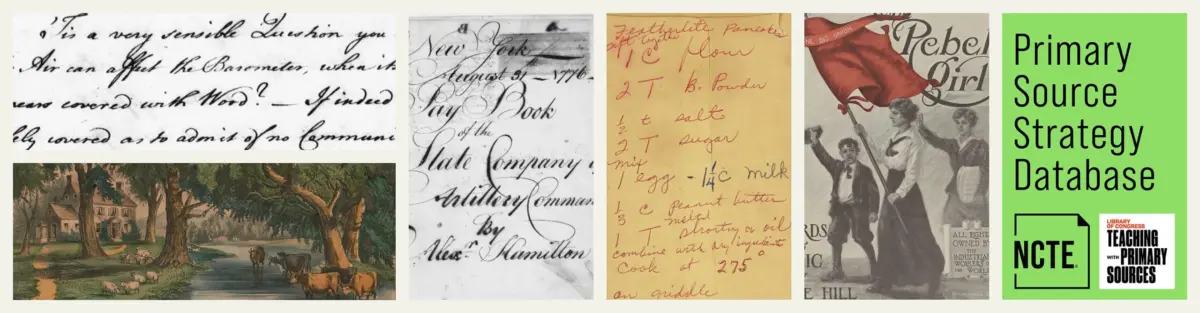
In an era defined by rapid information exchange and a critical need for media literacy, the National Council of Teachers of English (NCTE) has deepened its collaborative footprint with the Library of Congress. Operating as a key participant in the prestigious Teaching with Primary Sources (TPS) Consortium, the NCTE has rolled out an expansive, searchable database designed to revolutionize how literacy teachers and students integrate historical artifacts into everyday curricula.
This ambitious initiative bridges the gap between historical archival research and contemporary language arts education. By unlocking access to more than 150 specific, digitized items from the Library of Congress collections, the program offers educators ready-to-use pedagogical frameworks. Crafted by over two dozen esteemed English language arts teachers and educational leaders, these strategies do more than merely present historical context—they articulate explicit literacy merits, suggest thematic alignment, map directly to state standards, and foster critical thinking skills such as argumentation and media analysis.
At the heart of this resource library lies a commitment to unearthing marginalized narratives, challenging conventional historiography, and equipping modern classrooms with the tools necessary to evaluate complex texts. Among the myriad primary sources highlighted in the database is a fascinating historical newspaper feature that examines women who lived as men—a resource purposefully chosen to challenge students to interrogate gender roles, societal constraints, and the ongoing historical pursuit of equality.
Detailed Chronology: From Archives to Classrooms
The integration of primary sources into literacy education has evolved significantly over the past two decades, driven by a pedagogical shift away from rote memorization and toward inquiry-based learning.
- Foundation of the Partnership: The collaborative relationship between the Library of Congress and educational stakeholders solidified through the establishment of the Teaching with Primary Sources Consortium. The program’s core mission has consistently been to build awareness of the Library’s vast digital holdings, foster effective teaching practices, and help students construct new knowledge through authentic historical inquiry.
- Curriculum Development Phase: Recognizing a persistent gap in how English language arts classrooms utilize historical non-fiction, the NCTE mobilized cohorts of educators and curriculum specialists. Over successive development cycles, these leaders analyzed over 150 specific Library of Congress artifacts, translating archival assets into actionable classroom strategies.
- Database Launch and Tagging Integration: To ensure maximum usability, the resulting repository was structured around intuitive search parameters. Educators can now filter content using targeted tags such as picturebook, argument, vocabulary, media literacy, and collaboration.
- Integration of Complex Historical Texts: Within this expanding framework, specialized instructional modules were designed around culturally and historically complex artifacts. A prominent example is a historical feature published in The Salt Lake Tribune—telegraphed via a "Special Cable to The Tribune" from London-based author Rupert Neville. This article details the extraordinary lives of historical figures such as Marie LeRoy, Madame Velasquez, Hannah Snell, Mary Ann Talbot, Catherine Coome, and Marion Edwards: women who lived portions of or entire lives as men.
- Standards Alignment and Rollout: The initiative culminated in the systematic mapping of these resources to state academic standards, including the New Mexico Adopted Content Standards for Reading and Literacy in History/Social Studies, ensuring that teachers can seamlessly integrate rigorous Common Core-aligned tasks without sacrificing thematic depth.
Supporting Context & Metrics: The Pedagogical Framework
The instructional value embedded within these primary source modules is both profound and multifaceted. Quantitative and qualitative metrics utilized by the NCTE demonstrate that historical inquiry significantly boosts student engagement, critical source evaluation, and reading comprehension.
Instructional Value and Interdisciplinary Scope
The inclusion of archival pieces that challenge social norms serves a dual purpose in the modern classroom. As outlined in the NCTE curriculum guides, exploring the lives of women who defied nineteenth-century and earlier social expectations accomplishes several core educational goals:
- Deconstructing Gender Norms: By analyzing the severe limitations historically placed on women, students are encouraged to question traditional gender roles and evaluate the systemic impacts of societal expectations on individual agency.
- Restoring Erased Histories: Many of the individuals documented in archival journalism have been systematically marginalized or erased from mainstream historical narratives. Bringing figures like Hannah Snell and Mary Ann Talbot into the light provides students with a more complete, nuanced understanding of social history.
- Cultivating Empathy and Critical Analysis: Confronting the physical, social, and legal challenges these historical figures faced builds deep student empathy while illuminating the long, continuous trajectory of the fight for human rights and equality.
Standards and Literacy Metrics
The primary source strategies are meticulously engineered to satisfy rigorous educational benchmarks. Below is an overview of how specific instructional modules—such as the analysis of Rupert Neville’s Salt Lake Tribune dispatch—map to adopted state standards for secondary education:
| Curriculum Area | Standard Identifier | Focus & Skill Competency |
|---|---|---|
| Reading: Informational Text (Grades 9-10) | RI.9-10.1 | Cite strong and thorough textual evidence to support explicit analysis and valid inferences drawn from historical texts. |
| Reading: Informational Text (Grades 9-10) | RI.9-10.8 | Delineate and evaluate arguments and specific claims, assessing whether reasoning is valid and evidence is relevant and sufficient. |
| Literacy in History/Social Studies (Grades 11-12) | RH.11-12.2 | Determine central ideas or information of a primary/secondary source; provide accurate summaries mapping key details. |
Operational Tags and Instructional Modalities
The searchable database leverages a robust tagging architecture to support diverse classroom structures, including:
- Vocabulary & Reading Fluency: Scaffolding complex nineteenth-century journalistic syntax for contemporary readers.
- Media Literacy & Argumentation: Analyzing the rhetorical stance, geographic origin ("Special Cable"), and potential biases of historic news reporting.
- Writing Process & Collaboration: Encouraging peer-to-peer discourse through structured minilessons and collaborative inquiry tasks.
Official Statements and Expert Perspectives
Educational leaders driving the TPS Consortium and NCTE initiatives emphasize that primary sources are not merely illustrative add-ons, but foundational drivers of critical literacy.
"When students interact directly with primary sources, they cease to be passive consumers of historical narratives and instead become active investigators," noted curriculum specialists involved in the design of the database. "By examining texts that challenge the status quo—such as historical accounts of women defying rigid gender constraints—we teach students how to read between the lines, question institutional omissions, and apply rigorous analytical frameworks to the media they consume today."
Furthermore, representatives from the Library of Congress stress the democratization of knowledge facilitated by digitized archives.
"The vast collections of the Library of Congress belong to the public, and their true value is unlocked only when they enter the hands of innovative educators," shared program coordinators within the Teaching with Primary Sources network. "Through our ongoing partnership with the NCTE, we are ensuring that teachers have the pedagogical scaffolding needed to transform raw historical archives into dynamic catalysts for student literacy and civic awareness."
Future Outlook: The Next Phase of Primary Source Education
As education continues to adapt to an increasingly digital and information-saturated landscape, the NCTE and the Library of Congress are poised to expand their collaborative initiatives. The success of the current database—anchored by more than 150 primary sources and guided by expert teacher-leaders—serves as a blueprint for future curriculum design.
Scaling Up Accessibility and Interactivity
Looking ahead, the partnership aims to incorporate advanced digital tools into the database interface. Future iterations will likely feature enhanced interactive annotations, multimedia integration, and expanded tagging matrices designed to support English Language Learners (ELL) and special education populations. By lowering the barrier to entry for complex archival materials, the initiative ensures that teachers across diverse school districts—regardless of resource availability—can bring museum-grade historical documents directly to their students.
Addressing Content Challenges and Supporting Educators
Recognizing that exploring non-traditional historical narratives can sometimes invite controversy or require delicate classroom navigation, the NCTE is concurrently developing resource links and professional development modules focused on "Potential for Challenge." These tools will provide teachers with proactive strategies, peer-reviewed discussion guidelines, and community support frameworks, ensuring that classrooms remain safe, intellectually rigorous spaces for open inquiry.
Ultimately, the ongoing work between the National Council of Teachers of English and the Library of Congress represents a vital investment in the future of critical thinking. By teaching students how to interrogate the past, evaluate historical evidence, and unearth stories long hidden by time, educators are preparing the next generation to navigate, question, and shape the world around them.

