
In a major strategic pivot that signals the maturation of enterprise and consumer artificial intelligence ecosystems, OpenAI has announced the official deprecation and retirement of Custom GPTs. The pioneering specialized chat assistants, which allowed users to build tailored versions of ChatGPT with unique instructions, reference materials, and custom actions, are being phased out in favor of a unified plugin architecture. This new framework spans both the flagship ChatGPT interface and OpenAI’s specialized Codex coding agent, establishing a standardized method for extending AI capabilities across platforms.
The decommissioning of Custom GPTs is scheduled to culminate on December 11, 2026. However, the timeline varies significantly depending on account tiers and enterprise workspace agreements. For enterprise customers, the transition begins much sooner: the creation of new Custom GPTs is slated to end on October 26, 2026. Qualifying enterprise workspaces that have secured approved deferrals may continue utilizing their existing Custom GPTs until February 11, 2027.
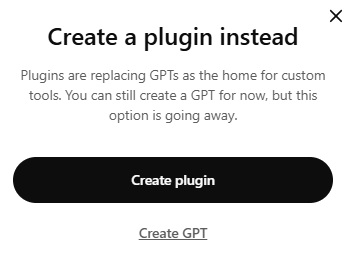
To signal this transition, OpenAI has already begun altering its user interface. Custom GPTs have been pushed to a less prominent position, and users attempting to create a new Custom GPT are actively prompted to build a plugin instead.
This structural overhaul marks a distinct shift in OpenAI’s product philosophy—moving away from isolated, siloed personal assistants toward modular, reusable capabilities. Under the new architecture, developers and organizations can package repeatable workflows, reference documentation, and direct integrations with outside systems into shareable, discoverable plugins. While OpenAI offers a migration pathway via the "My GPTs" interface, the transition comes with notable caveats, including the loss of chat history, broken sharing permissions, and the necessity of rebuilding custom actions. Consequently, the announcement has elicited a mixed reception across the developer community, drawing praise for its architectural scalability alongside sharp criticism over migration friction and behavioral inconsistencies.
Detailed Chronology and Migration Timeline
The phasing out of Custom GPTs is not an abrupt shutdown, but rather a structured, multi-phase deprecation process designed to give organizations and developers time to adjust. Understanding the timeline is critical for enterprise administrators and individual creators managing mission-critical workflows built on the legacy architecture.

Key Milestones in the OpenAI Transition Plan
- Immediate UI Changes (Current): OpenAI has updated the user interface across ChatGPT, minimizing the visibility of Custom GPTs. Attempting to initiate a new Custom GPT now triggers an explicit prompt encouraging users to opt for the new plugin creation flow instead.
- October 26, 2026: The hard stop for enterprise workspaces regarding the creation of new Custom GPTs. After this date, enterprise accounts can no longer spin up fresh instances of legacy custom assistants.
- December 11, 2026: The broad, standard sunset date for Custom GPTs across general accounts and standard workspaces.
- February 11, 2027: The final cutoff date for qualifying enterprise customers who have applied for and received approved deferrals. Beyond this point, all remaining Custom GPT infrastructure will cease operation, and users will be forced onto the plugin architecture.
The Mechanics of Migration
For creators looking to salvage their work, OpenAI has built a migration tool accessible through the "My GPTs" interface. The automated pipeline handles portions of the translation:
- Instructions: The foundational prompt instructions of the Custom GPT are automatically converted into reusable "skills" within the new plugin.
- Knowledge Files: Uploaded reference documents and reference materials are copied directly into the replacement plugin’s file repository.
- Connected Apps: Previously established app connections can often be carried over, maintaining some degree of external service integration.
However, the migration process is far from seamless. OpenAI has confirmed that historical chat sessions and user interactions tied to legacy Custom GPTs do not transfer over. Furthermore, the underlying model selection fails to migrate automatically, and Custom Actions frequently require manual rebuilding—either via an available official app or through a newly configured Model Context Protocol (MCP) server.
Additionally, administrative access and sharing parameters are completely reset. All migrated plugins initialize in a private state; legacy users of the old Custom GPT do not automatically inherit access to the replacement, and previous sharing settings must be manually re-established by the creator or workspace administrator.
Supporting Context & Metrics: From Custom Assistants to Reusable Capabilities
To understand why OpenAI is abandoning a feature that proved immensely popular among early adopters, one must examine the fundamental architectural limitations of Custom GPTs versus the scalable horizon of the new plugin model.
The Architectural Shift
Custom GPTs were initially conceived as an accessible, no-code mechanism to democratize AI specialization. Users could upload PDFs, write system prompts, and configure web-browsing or DALL-E capabilities without writing a line of code. However, as enterprise deployments scaled, several systemic bottlenecks emerged:
- Siloed Ecosystems: Custom GPTs operated as isolated islands. A workflow built for ChatGPT could not be natively executed within Codex or other developer-facing tools without complete duplication.
- Maintenance Overhead: Updating shared enterprise knowledge meant updating dozens of separate GPTs individually, leading to version control nightmares.
- Opaque Execution Layers: The proprietary wrappers around Custom GPT actions made debugging complex API integrations frustratingly difficult for enterprise engineering teams.
In contrast, OpenAI’s new plugin architecture breaks down these barriers by decoupling instructions from execution environments. Under the new paradigm, plugins can comprise:
- Skills: Reusable packages containing localized instructions and reference resources designed for repeatable enterprise workflows.
- Model Context Protocol (MCP) Servers: Standardized server architectures that expose external tools, databases, and enterprise systems directly to the AI model.
This unified approach allows ChatGPT and the Codex coding agent to draw from a single, universal plugin directory. An enterprise can package complex compliance guidelines, internal code review standards, and database connections into a single plugin that functions seamlessly whether an employee is querying the chat interface or writing code in an integrated development environment (IDE).
Enterprise Implications
For corporate environments, this evolution transforms the AI integration strategy. Instead of relying on decentralized, employee-created Custom GPTs—which often posed shadow-IT and data governance risks—organizations can now manage centralized, cryptographically secure plugins.
A financial institution, for example, can deploy an MCP-backed plugin that safely queries internal ledger systems using strict authorization protocols, ensuring that the AI has access to real-time data without exposing sensitive endpoints to unauthorized users. By shifting the focus from "assistants" to "capabilities," OpenAI is positioning its models not as standalone personalities, but as extensible engines capable of plugging directly into existing corporate software stacks.
Official Statements and Community Reception
Whenever a major platform deprecates a beloved feature, friction is inevitable. OpenAI’s announcement has sparked intense debate within its developer and creator communities, exposing a rift between the company’s enterprise-focused architectural goals and the day-to-day realities of individual builders.

Official Stance and Cautions
OpenAI has defended the consolidation as a necessary step toward a more robust, scalable ecosystem. In its technical documentation and release notes, the company emphasizes that plugins offer a superior mechanism for users to "discover, install, share, and publish" AI capabilities across multiple product surfaces.
At the same time, OpenAI has issued pragmatic warnings regarding behavioral divergence. In official migration guidance, the company cautions organizations against assuming that a migrated plugin will behave identically to its predecessor.
"A migrated plugin may respond differently," OpenAI notes in its deployment documentation.
The company explicitly recommends that developers and enterprise administrators thoroughly retest familiar prompts, reference-material ingestion, output formatting requirements, and external integrations before relying on migrated assets in production environments.
Backlash and Community Friction
Despite the technical merits of MCP servers and unified skill packages, the transition has met with notable pushback. On the official OpenAI Developer Community forums, multiple threads have highlighted frustrations regarding the forced migration.

Critics argue that plugins do not adequately reproduce the dedicated, predictable sandbox environment of a Custom GPT. Where a Custom GPT acted as an opinionated, singular persona tailored for a specific task, plugins function more like modular toolkits, which some builders claim introduces unwanted variability in model responses.
Other primary points of contention include:
- Loss of Distribution Momentum: Creators who spent months building audiences and sharing public Custom GPT links find themselves forced to restart their distribution efforts from scratch, as sharing settings and user bases do not carry over.
- Migration Complexity: For non-technical creators who relied on the simple no-code interface of Custom GPTs, transitioning to MCP servers and advanced plugin packaging represents a steep, intimidating learning curve.
- Feature Parity Gaps: Complaints have centered on subtle differences in how migrated workflows parse reference materials and execute instructions, forcing developers to rewrite core prompt logic to achieve desired outputs.
Future Outlook: The Plugin Era and the Roadmap Ahead
The retirement of Custom GPTs and the rollout of the universal plugin architecture represent a defining moment for OpenAI’s product strategy. By sunsetting a consumer-facing feature in favor of an enterprise-grade, developer-friendly infrastructure, OpenAI is signaling where its long-term revenue and utility lie: deep integration into the enterprise workflow stack.
What Lies Ahead for Developers and Enterprises
As the December 2026 deadline approaches—and the February 2027 enterprise hard stop looms—organizations must treat this transition not merely as a technical migration, but as an opportunity to audit and upgrade their AI operations.
- Embracing MCP Standards: The heavy emphasis on the Model Context Protocol (MCP) suggests that OpenAI is aligning itself with broader industry standards for AI tool use. Developers who invest time in mastering MCP servers will find their skills transferable not just across ChatGPT and Codex, but across the wider AI landscape.
- Centralized Governance: Enterprise IT departments are expected to leverage the new plugin directory to enforce stricter security controls, ensuring that all external data connections and automated workflows comply with corporate governance policies.
- Refining Prompt Engineering: Because migrated prompts may exhibit behavioral drift, prompt engineers and workspace managers will need to dedicate significant testing cycles to fine-tuning instructions within the new plugin format.
Ultimately, while the loss of Custom GPTs marks the end of an era for casual, no-code AI assistants, it paves the way for a more integrated, powerful, and secure generation of artificial intelligence tools. By moving from isolated chat personalities to reusable, interconnected capabilities, OpenAI is laying the groundwork for AI that acts less like a standalone chatbot and more like an invisible, ubiquitous operating layer for modern work.

