
Executive Overview
In contemporary education, the definition of academic success has expanded far beyond the mastery of traditional core subjects like mathematics, literature, and science. While foundational knowledge remains vital, educators increasingly recognize that a student’s ability to navigate the learning process itself is just as critical as the content being taught. This realization has brought executive functioning skills—the core brain-based processes that govern planning, organization, attention, time management, and self-regulation—to the forefront of pedagogical strategy.
Every teacher, regardless of grade level or subject matter, is inherently a teacher of executive functioning. Whether a fourth-grade student is breaking down a multi-step word problem, an eighth-grader is organizing an argumentative essay, or a high schooler is pacing themselves through a high-stakes science assessment, these cognitive processes are constantly at play.

However, these essential skills do not always develop automatically or evenly across childhood and adolescence. As classrooms grow more diverse and demanding, intentional integration of executive functioning strategies into daily curricula has shifted from a novel idea to an educational necessity. By embedding these cognitive tools into existing lesson plans, educators can bridge the gap between academic potential and actual achievement, fostering independence, resilience, and lifelong learning capabilities.
Detailed Chronology: The Paradigm Shift in Educational Psychology
To fully understand the current push for executive functioning integration in schools, it is helpful to trace how educational paradigms have evolved regarding cognitive development and classroom instruction.

Phase One: The Content-Centric Era (Late 20th Century)
Historically, traditional schooling models operated primarily on an input-output framework. Curricula were heavily content-driven, focusing on the accumulation of factual knowledge and standardized assessment outcomes. Students who struggled with organization, focus, or task initiation were frequently labeled as unmotivated or disorganized, with little institutional framework in place to explicitly teach the underlying cognitive skills required to manage academic workloads.
Phase Two: The Rise of Special Education and Interventions (Early 2000s)
As cognitive neuroscience advanced, researchers began mapping how the prefrontal cortex—the command center for executive functions—matures slowly throughout childhood and well into early adulthood. This neurological insight prompted a shift in special education and psychology. Interventions for attention-deficit disorders and learning differences began to target self-regulation and working memory. However, these strategies remained largely siloed, treated as specialized accommodations for specific students rather than universal tools for every learner.
Phase Three: The Universal Design Movement (2010s)
The introduction of Universal Design for Learning (UDL) frameworks revolutionized how educators viewed classroom accessibility. Schools began to recognize that executive dysfunction is not merely a clinical diagnosis, but a common developmental hurdle that affects a wide spectrum of students. Educators started experimenting with visual schedules, graphic organizers, and structured transition times, though these practices were often implemented haphazardly without a unified theoretical framework.
Phase Four: The Modern Era of Intentional Integration (Present Day)
Today, educational experts advocate for a systematic, proactive approach where executive functioning skills are woven directly into everyday instruction. Rather than adding separate, time-consuming programs to an already overburdened school day, modern pedagogy emphasizes "stealth teaching"—incorporating strategies for planning, metacognition, and emotional self-control directly into math, language arts, art, and physical education. This holistic model acknowledges that empowering students with self-regulatory tools is the most effective way to prepare them for an increasingly complex, autonomous future.

Supporting Context & Metrics: The Anatomy of Executive Functioning
Executive functioning is an umbrella term for several interrelated mental processes managed primarily by the frontal lobe of the brain. To successfully integrate these skills, teachers must understand the specific domains that comprise executive functioning and how they manifest in academic environments.
The Core Pillars of Executive Functioning
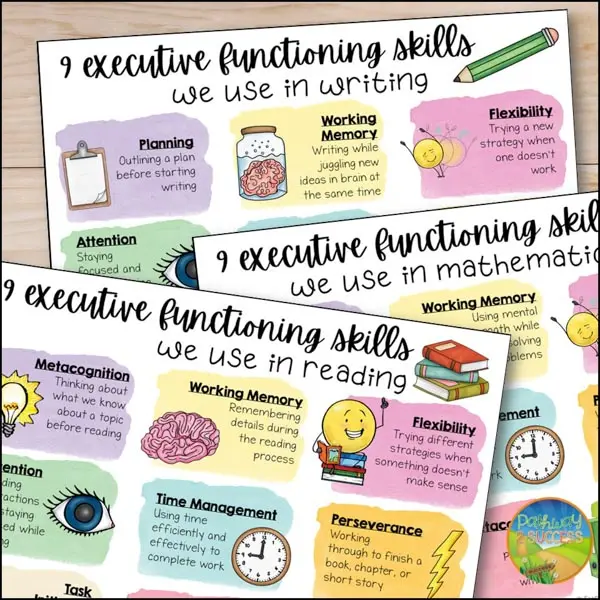
- Planning and Prioritization: The ability to identify steps required to reach a specific goal and sequence them logically. In the classroom, this is vital for long-term projects, research papers, and studying for comprehensive exams.
- Organization: The process of arranging materials, ideas, and physical or digital spaces logically. Disorganized students often lose assignments, struggle to track materials, and experience heightened anxiety.
- Task Initiation: The capacity to overcome procrastination and begin a task in a timely manner. Students lacking this skill frequently sit staring at a blank page, overwhelmed by the prospect of starting.
- Attention and Focus: The ability to sustain concentration on a task, person, or idea while filtering out internal and external distractions.
- Time Management: Estimating how long a task will take and allocating time efficiently to meet deadlines.
- Self-Monitoring: Regularly checking in on one’s own progress and behavior to ensure a goal is being met. This involves asking, "Am I on the right track?" or "Is this strategy working?"
- Self-Control (Inhibition): The capacity to pause, reflect, and think before acting or speaking. This underpins classroom behavior, social interactions, and academic decision-making.
- Perseverance and Problem-Solving: Working through challenges, frustrations, and setbacks to complete a goal. This represents the core of a growth mindset.
- Flexible Thinking: Shifting perspectives, adapting to sudden changes, and finding alternative solutions when an initial plan fails.
The Impact on Student Outcomes
Educational research underscores the profound correlation between strong executive functioning skills and long-term academic success. Studies indicate that self-regulation and attentional control are often better predictors of academic performance than standardized IQ tests. Conversely, deficits in these areas are frequently linked to lower academic achievement, chronic school anxiety, and behavioral challenges. By providing structured scaffolding in these domains, schools can level the playing field, ensuring that students from all backgrounds develop the cognitive stamina required for higher education and modern careers.

Official Statements and Pedagogical Insights
Educational leaders and curriculum specialists emphasize that integrating executive functioning does not require an overhaul of existing teaching standards. Instead, it requires a conscious shift in how content is delivered.
"Every teacher is inherently a teacher of executive functioning because every learning task demands these core cognitive skills," notes a leading voice in educational psychology. "When we teach students not just what to think, but how to organize their thoughts, monitor their progress, and persevere through frustration, we are giving them the ultimate toolkit for independence."

Curriculum experts advocate for a multi-layered approach to classroom integration:
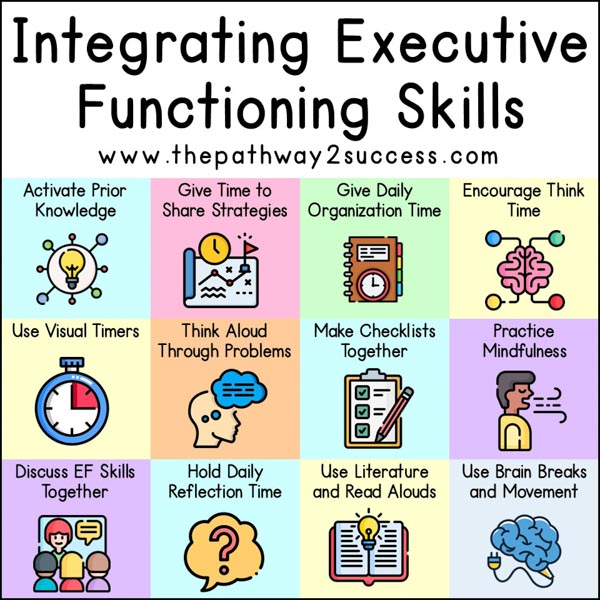
- Explicit Mini-Lessons: Carving out brief, focused periods of time to introduce specific executive functioning vocabulary, concepts, and strategies. Utilizing tools like "Word of the Day" activities (focusing on terms like neuroplasticity, adapt, and momentum) helps normalize conversations about brain development and cognitive growth.
- Routine Embedded Strategies: Blending metacognitive check-ins, time-estimation exercises, and collaborative problem-solving directly into core subject lessons. For instance, asking students to predict how long a math problem will take before they begin introduces time management organically.
- Reflective Practice: Using end-of-day reflection questions, read-aloud discussions, and motivational quotes as daily bell-ringers to reinforce self-monitoring, flexible thinking, and emotional resilience.
Future Outlook: The Next Frontier in Classroom Design
As the educational landscape continues to evolve, the integration of executive functioning skills is projected to become a foundational pillar of teacher preparation programs and school improvement plans.

The Shift Toward Proactive Prototyping
Historically, executive functioning supports were deployed reactively—implemented only after a student fell behind or exhibited chronic behavioral difficulties. The future of education points toward a proactive, universal design model. By embedding executive functioning scaffolding into general education classrooms from preschool through high school, schools can support neurodiverse learners and neurotypical students alike, reducing the stigma associated with specialized interventions.
Technological Tools and Cognitive Scaffolding
The integration of digital learning management systems offers exciting avenues for supporting student organization, planning, and time management. However, technology alone is not a panacea. Educators must actively teach students how to use digital planners, set realistic digital boundaries, and self-monitor their screen-based attention. The goal is to transition students from teacher-directed scaffolding to complete self-directed autonomy.

Long-Term Societal Benefits
Ultimately, the push to integrate executive functioning skills extends far beyond standardized test scores. In a rapidly changing global economy characterized by automation, complex problem-solving, and continuous learning, the non-cognitive skills of adaptability, emotional regulation, and strategic planning are paramount. By systematically cultivating these capacities in our classrooms, educators are not just shaping better students—they are empowering the resilient, self-directed leaders, innovators, and thinkers of tomorrow.

