
Executive Overview
As school districts across the nation launch into new academic calendars, educational leaders and classroom practitioners undergo an intensive annual ritual: drafting instructional pacing guides, aligning lesson plans with state academic standards, arranging physical learning spaces, and establishing operational protocols. While these administrative and pedagogical preparations remain vital mechanics of school operation, a growing body of educational research and frontline leadership consensus indicates that operational mechanics alone cannot drive student performance. At the center of sustainable academic outcomes lies an intangible yet highly quantifiable variable: classroom culture.
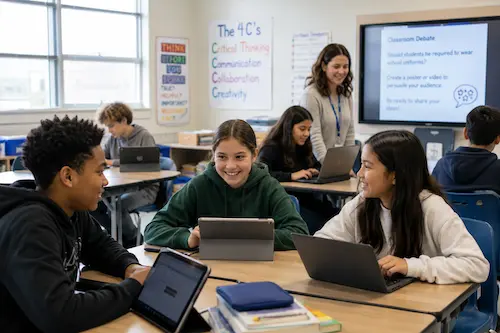
Recent insights from educational leaders at Empower Community School—including Tiffany Wilson-Pugh, Dr. Yuvraj Verma, Dr. Luther Riley, and Rachel Campbell—emphasize that cognitive engagement is fundamentally downstream of emotional safety. Students achieve optimal learning outcomes in environments where they experience psychological safety, perceived personal value, appropriate cognitive friction, and authentic interpersonal connections with adult educators.
This paradigm shift challenges the traditional, content-first instructional model. Rather than viewing school climate as a secondary byproduct of classroom management, contemporary educational leadership frames culture building as an imperative structural prerequisite. By operationalizing the principle that relational trust must precede academic rigor, educators can unlock systemic improvements in student resilience, reduce chronic absenteeism, and cultivate intrinsic motivation across diverse learning cohorts.
+-----------------------------------------------------------------------+
|                    THE CULTURAL FOUNDATION MODEL                       |
+-----------------------------------------------------------------------+
|  [ Academic Rigor & Performance ]  <- Requires Cognitive Capacity     |
|              ^                                                         |
|              |                                                         |
|  [ Relational Trust & Expectations ] <- Requires Emotional Stability   |
|              ^                                                         |
|              |                                                         |
|  [ Psychological Safety & Culture ]  <- Base Operational Layer        |
+-----------------------------------------------------------------------+
Detailed Chronology: The Structural Phasing of Cultural Architecture
Establishing an effective classroom culture is not a singular event occurring on the first day of school; it is an iterative, multi-phase operational timeline that spans from pre-service planning through the end of the academic year. The following chronology outlines how high-performing educators construct, test, and sustain culture across key operational phases.
PRE-SERVICE          DAYS 1-10           WEEKS 3-6          WEEKS 7-12+
[Phase 1] --------> [Phase 2] --------> [Phase 3] --------> [Phase 4]
Environmental       Relational          Restorative        Cultural
Blueprinting        Diagnostics         Calibration        Autonomy
Phase 1: Pre-Service Alignment and Environmental Blueprinting (July–August)
Prior to student arrival, instructional staff engage in structural and environmental design. While traditional prep focuses on curriculum mapping, culture-first preparation focuses on designing environment protocols:
- Space Optimization: Classrooms are configured to promote peer-to-peer collaboration, minimize anxiety-inducing bottleneck points, and establish clear spaces for socio-emotional regulation.
- Relational Planning: Teachers audit roster data not merely for historical testing scores, but to establish proactive outreach schedules, identifying background context, home languages, and individualized accommodations.
- Norm Alignment: Grade-level and school-wide teams standardize behavioral expectations, ensuring students experience consistent boundary enforcement across all learning environments.
Phase 2: Onboarding and Relational Diagnostics (Days 1–10)
The initial ten instructional days serve as the foundational onboarding period, where operational efficiency and relational trust are established simultaneously:
- Individualized Greeting Protocols: Implementation of threshold greetings—calling every student by name at the door—establishing an immediate micro-check-in to assess student affect daily.
- Co-Creation of Norms: Rather than delivering an absolute list of rules, educators guide students through establishing shared values, defining what respect, accountability, and psychological safety look like in practice.
- Diagnostic Outreach: Teachers complete preliminary outreach to families before any academic or behavioral issues arise, framing the home-school relationship around partnership rather than reporting.
Phase 3: Stress-Testing Norms and Restorative Calibration (Weeks 3–6)
As initial back-to-school novelties fade, academic demands increase, exposing the structural integrity of the classroom culture:
- Emergence of Conflict: Natural behavioral pushback occurs as cognitive rigor increases. Effective culture builders shift from punitive measures to restorative loops, addressing root causes of disruption while maintaining non-negotiable standards.
- Absence and Engagement Tracking: Staff implement targeted intervention protocols for early signs of disengagement or chronic absenteeism, signaling to students that their physical presence and participation are essential to the community.
- Proactive Relationship Repair: In instances of discipline or conflict, educators take ownership of the restorative process, re-establishing rapport within 24 hours of a disruptive incident.
Phase 4: Sustainable Cultural Autonomy and Rigor Escalation (Weeks 7–12 & Beyond)
With foundational relationships and behavioral norms secure, the classroom shifts from teacher-directed control to student-led accountability:
- Rigor Acceleration: Teachers leverage established relational trust to push students into higher-order cognitive tasks, productive struggle, and vulnerability in academic risk-taking.
- Peer-Led Culture Maintenance: Students begin holding one another accountable to established group norms, internalizing behavioral structures.
- Continuous Feedback Loops: Educators conduct pulse surveys and dynamic check-ins to monitor classroom climate, adapting instructional delivery to maintain emotional safety amidst rising academic stakes.
Supporting Context & Metrics: The Quantitative and Neurobiological Case for Culture
The shift toward culture-first pedagogy is supported by both empirical educational research and neuroscience. The human brain prioritizes emotional processing over complex cognitive processing; when a student feels socially threatened, anxious, or unvalued, the brain’s amygdala initiates a stress response that limits access to executive functioning and working memory located in the prefrontal cortex.
       [ PERCEIVED THREAT / ANXIETY ]
                   |
                   v
       ( Amygdala Stress Response )
                   |
     +-------------+-------------+
     |                           |
     v                           v
[ Executive Function ]     [ Working Memory ]
    IMPEDING LEARNING         RESTRICTED
Empirically Measuring the "Culture Dividend"
Meta-analyses across educational leadership, psychology, and organizational management demonstrate a direct correlation between positive school climate and academic output.
| Metric / Indicator | Traditional Instructional Model Focus | Culture-First Pedagogical Model Focus | Quantitative Impact / Observed Outcome |
|---|---|---|---|
| John Hattie’s Visible Learning Effect Size | Teacher Subject Knowledge (d = 0.11) | Teacher-Student Relationships (d = 0.52 to 0.72) | Up to 1.8x acceleration in typical annual learning gains. |
| CASEL Meta-Analysis on Social-Emotional Learning (SEL) | Isolated Skill Delivery / Direct Instruction | Integrated Culture & Relational Security | 11-Percentile Point Gain in standardized academic achievement tests. |
| Chronic Absenteeism Rates | Reactive Truancy Enforcement / Attendance Fines | Proactive Door Greetings & Daily Relational Check-ins | 15% to 25% Reduction in persistent unexcused absences. |
| Behavioral Disruption & Referrals | Punitive Suspension & Exclusionary Discipline | Restorative Repair Protocols & Clear Behavioral Norms | 30% to 45% Drop in out-of-school suspensions and office referrals. |
Equity, Attendance, and Post-Pandemic Learning Vulnerabilities
The necessity for robust classroom culture is further amplified by systemic post-pandemic challenges. Educational data indicates that persistent learning loss cannot be remediated purely through accelerated curriculum delivery. Students returning to physical classrooms after periods of prolonged isolation often exhibit elevated baseline anxiety, underdeveloped peer collaboration skills, and heightened sensitivity to stress.
When schools prioritize punitive discipline over culture architecture, vulnerable student cohorts—specifically low-income learners, neurodivergent students, and minority populations—face higher risks of academic detachment. Conversely, data shows that high-expectation, high-support environments serve as an effective equalizer, mitigating the negative impacts of socioeconomic stress on academic performance.
Official Statements and Authoritative Frameworks
The leadership team at Empower Community School—comprising Tiffany Wilson-Pugh, Dr. Yuvraj Verma, Dr. Luther Riley, and Rachel Campbell—presents a clear vision for operationalizing classroom culture, stressing that relational work must be executed with intentionality rather than treated as an afterthought.
"As the school year begins, teachers often devote significant time to planning lessons, reviewing standards, organizing classrooms, and establishing routines. While these are all essential components of effective teaching, they cannot replace the importance of creating a positive classroom culture. Students learn best in environments where they feel safe, valued, challenged, and connected to the adults around them."
— Empower Community School Leadership Team
In articulating the core ethos of their educational philosophy, the authors reference historical leadership principles, framing care as a structural requirement for effective leadership:
"In the words of former president Teddy Roosevelt, ‘People don’t care how much you know until they know how much you care.’ Every decision educators make should be guided by what’s best for kids. When that mindset drives the classroom’s practices, the students are more likely to develop confidence, resilience, and a genuine desire to learn."
                       [ DECISION MATRIX ]
                                |
             Is this guided by what is best for kids?
                                |
               +----------------+----------------+
               |                                 |
             [YES]                             [NO]
               |                                 |
       Implement Culture               Re-evaluate Action /
          Practices                        Policy Design
               |                                 |
               v                                 v
   Builds Trust, Resilience,             Risk of Disengagement,
    and Cognitive Growth                 Anxiety, and Friction
The leadership team outlines actionable frameworks for translating macro-level philosophy into daily classroom routines, highlighting that instructional delivery fails if basic relational connections are missing:
"A positive culture begins with relationships. For example, greeting students by name, learning about their interests and their families, noticing when they are absent, checking in with their families, and repairing relationships after a conflict (regardless of who ‘started it’) demonstrate that each child matters. As educators, we cannot expect students to respond positively if we are directing without first connecting. Relationship must always come before rigor."
Addressing the common misconception that a relationship-centered approach implies lower behavioral or academic standards, the authors emphasize that high expectations are themselves an expression of care:
"A positive classroom culture also depends on consistency, intentionality, and high expectations. Students flourish when expectations remain clear and consistent for behavior, attendance, participation, or academic performance. Maintaining high expectations communicates that every learner is capable of growth even though the circumstances behind a student’s struggles may be real. Effective teachers remain fully present, intentionally plan engaging lessons, adjust instruction when students need additional support, and bring positive energy into the classroom every day because students often reflect the emotional climate established by their teacher."
Future Outlook: Systemic Policy Shifts and Educational Leadership
As school boards, superintendents, and policy experts look toward the future of public education, integrating culture-first methodologies into institutional policy will be essential for addressing teacher retention and academic performance.
1. Transforming Teacher Preparation and Professional Development
Historically, teacher preparation programs have heavily emphasized curriculum design, pedagogical theory, and compliance metrics, providing minimal instruction in interpersonal management, restorative practice, and socio-emotional environment architecture. School systems must shift professional development budgets to include:
- Trauma-informed instructional training.
- De-escalation tactics and non-punitive classroom management models.
- Frameworks for constructing culturally responsive learning environments.
TRADITIONAL PD ALLOCATION:   [ Curriculum/Standards (70%) ] [ Compliance (20%) ] [ Culture (10%) ]

FUTURE-FACING PD ALLOCATION: [ Relational Pedagogy & Culture Architecture (45%) ] [ Curriculum (45%) ] [ Compliance (10%) ]
2. Mitigating Educator Burnout Through Cultural Cohesion
Educator attrition has reached historic highs nationwide, driven significantly by behavioral challenges in the classroom and secondary traumatic stress. Classrooms built on low-trust, highly punitive dynamics generate chronic stress for both students and teachers.
By investing in continuous culture architecture, districts create low-friction environments where behavioral issues are addressed proactively. This emotional stability directly improves teacher job satisfaction, turning high-culture schools into sustainable work environments.
3. District-Wide Policy Recommendations
To translate the insights of the Empower Community School leadership team into scalable system practices, district administrators should pursue three key structural adjustments:
- Redefine Teacher Evaluation Rubrics: Shift evaluation systems to measure teacher-student connection, emotional safety, and restorative climate practices alongside standard-aligned lesson delivery.
- Institutionalize Restorative Time Structures: Adapt school master schedules to incorporate dedicated advisory periods, daily morning circles, and structured check-in times, ensuring relational work is integrated directly into the academic day.
- Deploy Systemic Climate Analytics: Move beyond once-a-year climate surveys by utilizing frequent, low-stakes pulse assessments from students, families, and staff to monitor classroom health in real time, allowing for rapid intervention before culture breaks down.
The future of K-12 education relies on recognizing that academic excellence and emotional well-being are inextricably linked. By establishing high expectations within a framework of deep relational support, schools can build learning environments where every student possesses the trust, confidence, and internal motivation needed to reach their full potential.

