
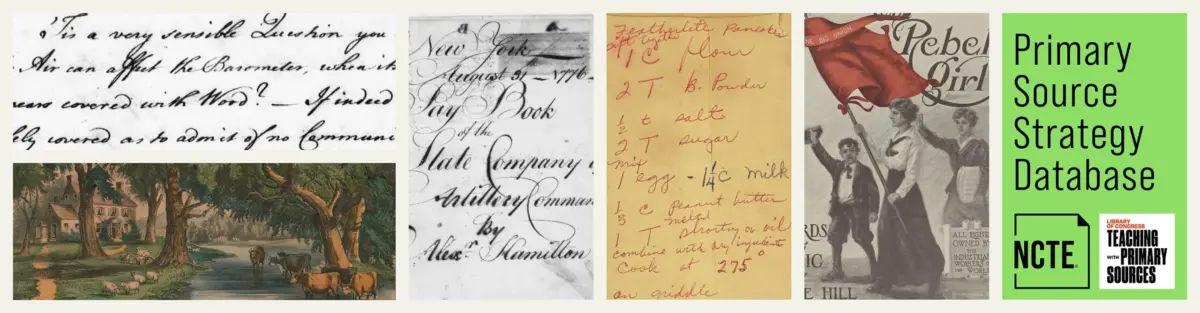
Executive Overview
In an era defined by an overabundance of digital information, the ability to critically analyze primary sources has never been more vital for students. Recognizing this educational imperative, the National Council of Teachers of English (NCTE) has forged a dynamic partnership with the Library of Congress. Operating as an active participant in the prestigious Teaching with Primary Sources (TPS) Consortium, the NCTE is spearheading an initiative designed to seamlessly weave authentic historical documents, films, and artifacts into the everyday teaching and learning habits of literacy educators and their students.
At the heart of this nationwide initiative is a newly expanded, highly searchable digital database. This platform grants educators access to carefully curated pedagogical strategies for more than 150 specific, digitized primary sources housed within the Library of Congress collections. Developed by a dedicated cohort of over two dozen English language arts (ELA) leaders and classroom practitioners, these resources bridge the gap between archival history and modern literacy instruction. Each entry articulates the precise literacy merits of a document, aligning it with thematic units, cross-curricular projects, and rigorous state standards.
To understand the immense scope of this project, one need only examine a single artifact from the database—such as the 1957 promotional video In the Suburbs, produced by Redbook magazine. Far from being a mere historical curiosity, this artifact serves as a springboard for deep critical inquiry, enabling students to dissect post-World War II American culture, consumerism, and the socio-economic constructs of the American Dream. Through initiatives like these, the NCTE and the Library of Congress are redefining how students interact with the past, transforming passive readers into active historical investigators.
Detailed Chronology: Bridging Archives and the Modern Classroom
The integration of Library of Congress archives into contemporary ELA classrooms is the culmination of years of targeted strategic collaboration between national cultural institutions and educational thought leaders.
Phase One: Establishing the Foundation
The genesis of this partnership lies in the Library of Congress’s broader Teaching with Primary Sources program, which invites educators, universities, and professional organizations to unlock the vast educational potential of the nation’s library. Recognizing that English language arts teachers often look exclusively to literary texts while social studies teachers claim historical documents, the NCTE sought to dismantle these disciplinary silos. The council recognized that primary sources—ranging from mid-century advertising films to early-American poetry and oral histories—offer rich narrative and rhetorical landscapes ideal for advanced literacy development.
Phase Two: Collaborative Curriculum Design
To move from theoretical integration to practical classroom application, the NCTE mobilized a specialized task force comprising more than two dozen educators and ELA curriculum leaders. Over several intensive development cycles, this collective reviewed hundreds of digitized artifacts from the Library of Congress. Their objective was twofold:
- To identify items with high rhetorical and cultural value.
- To craft robust, standards-aligned instructional strategies that educators could immediately deploy in diverse classroom environments.
The resulting database was designed with intuitive functionality. Educators can effortlessly filter content using specialized tags such as picturebook, argument, oral history, and advertisement, allowing them to pinpoint resources that match specific unit themes or Common Core and state-level standards.
Phase Three: Deep-Dive Implementation—The Case of In the Suburbs (1957)
A prime illustration of this curriculum design in action is the incorporation of the 1957 promotional film In the Suburbs, produced by Redbook magazine (Cataloged via the Library of Congress, Item ID: loc.gov/item/2019600440/).
- Historical Capture: Created during the height of the post-World War II economic boom, the video captures the rapid acceleration of suburbanization. It presents an idealized vision of family life, rigid gender roles, and burgeoning consumerism.
- Pedagogical Deployment: Rather than viewing the film as a straightforward historical record, modern ELA students are prompted to analyze it as a persuasive text. Educators utilize the video to examine how mid-century media manufactured cultural norms, reinforced societal expectations, and inextricably linked homeownership to the elusive concept of the American Dream.
- Cross-Curricular Synthesis: The lesson structures surrounding In the Suburbs often bridge English Language Arts and economics. Students explore foundational definitions of "home," analyzing the rhetorical strategies used by corporate media to market a specific lifestyle to the American middle class.
Supporting Context & Metrics: The Mechanics of Primary Source Literacy
To fully appreciate the significance of the NCTE-Library of Congress database, it is necessary to examine the pedagogical theories and structural frameworks that support it. Primary source analysis shifts the educational paradigm from rote memorization of historical dates to active evaluation of human perspectives, biases, and communicative intent.
The Anatomy of an Archival Resource Entry
Every item cataloged within the NCTE database is accompanied by a standardized, multi-dimensional instructional framework designed to ease the cognitive load on teachers while maximizing student engagement. A typical entry incorporates several core components:
- Link and Citation: Providing verifiable access points to the Library of Congress digital repository, ensuring academic rigor and transparency.
- Instructional Value: Articulating why a specific artifact matters to the ELA curriculum. For example, multimedia artifacts like In the Suburbs provide a realistic portrayal of post-war living that forces students to grapple with the underlying economic optimism and social exclusivity of the era.
- Summary and Description: Providing a concise overview of the artifact’s origins, creator intentions (such as Redbook magazine’s marketing objectives), and thematic focuses (gender roles, family dynamics, consumer habits).
- Contextual Background: Equipping teachers with historical context—such as the Eisenhower administration, suburban infrastructure development, and shifting racial dynamics—so they can guide students safely through potentially complex historical landscapes.
- Standards Alignment: Mapping resources directly to rigorous state standards. For instance, the instructional strategies for mid-century advertising texts align closely with advanced standards such as Louisiana’s RI.11-12.4 and RL.11-12.4, which require students to determine the figurative, connotative, and technical meanings of words and phrases, and to analyze how authors use word choice to shape tone and meaning.
Curricular Scope and Diversity of Media
The database’s 150+ items are not restricted to traditional text documents. They reflect a sweeping mosaic of American expression, categorized across multiple dynamic topics:
- History & Cultural Evolution: Tracing ideological shifts across generations.
- News, Journalism, and Advertising: Deconstructing persuasive media and mass-market propaganda.
- Oral Histories: Amplifying marginalized or firsthand human experiences.
- Photographs, Prints, and Posters: Analyzing visual rhetoric, symbolism, and artistic composition.
- Poetry and Literature: Examining creative texts in dialogue with their historical moments of inception.
By incorporating diverse formats, the database accommodates various learning styles, ensuring that visual, auditory, and kinesthetic learners alike can access rigorous literary and historical content.
Official Statements and Institutional Vision
The partnership between the NCTE and the Library of Congress represents a shared commitment to modernizing civic and literary education. Leaders from both institutions have continually emphasized the transformative power of placing primary sources directly into the hands of teachers and students.
While specific statements from the ongoing consortium emphasize a unified mission, the underlying institutional philosophy is clear: democracy relies on a citizenry capable of independent critical thought.
An NCTE curriculum representative involved in the database development noted:
"When students interact directly with archival material—whether it is a 1950s advertising video, a handwritten poem from the Harlem Renaissance, or a pioneering photograph—they are no longer just reading about history; they are engaging in the messy, human work of interpretation. They learn to ask who created a text, who was left out, and why certain narratives were prioritized over others. These are foundational skills for both historical scholarship and advanced literacy."
Representatives from the Library of Congress Teaching with Primary Sources program have similarly highlighted the unique capability of ELA classrooms to unlock the emotional and rhetorical power of historical artifacts. By treating historical documents as texts worthy of close reading, close listening, and rhetorical analysis, literacy teachers offer students the tools to decode not only the past, but the media-saturated environment of the present day.
Future Outlook: Expanding the Frontiers of Literacy Education
As educational landscapes continue to shift in response to technological advancements and evolving curriculum standards, the NCTE and the Library of Congress are looking toward the future with ambitious expansion goals.
Scaling the Database
The current repository of over 150 items is viewed by project organizers as a robust pilot foundation. Future phases of the TPS Consortium partnership aim to scale the database significantly, incorporating hundreds of additional digitized artifacts. Special emphasis will be placed on sourcing materials that reflect diverse, multicultural perspectives, ensuring that students from all backgrounds see their histories and communities represented within the Library of Congress collections.
Professional Development and Educator Empowerment
Access to digital archives is only valuable if educators feel confident deploying them. To address this, the NCTE is rolling out targeted professional development opportunities, webinars, and regional workshops. These sessions are designed to train teachers in artifact-based inquiry methods, teaching them how to craft compelling focus questions, navigate potential classroom sensitivities, and scaffold source analysis for students reading below grade level or English language learners.
Fostering Lifelong Critical Thinkers
Ultimately, the longevity and impact of the NCTE-Library of Congress initiative will be measured by its effect on student outcomes. In an era where misinformation spreads rapidly across digital platforms, the rigorous analytical habits fostered by this database—evaluating source credibility, identifying media bias, understanding historical context, and parsing connotative language—are indispensable.
By bridging the gap between national archives and daily classroom practice, the NCTE and the Library of Congress are ensuring that the next generation of students does not merely inherit history, but possesses the critical literacy skills required to question, understand, and shape the world around them.
Educators interested in exploring the searchable database, accessing complete instructional strategies, and reviewing alignment guides can visit the NCTE’s dedicated Teaching with Primary Sources portal.

