
Executive Overview
In the landscape of modern higher education, the traditional lecture format faces an unprecedented crisis of engagement. Long gone are the days when dense slide presentations and uninterrupted monologues could reliably hold the attention of a lecture hall. This issue is acutely pronounced in demanding professional disciplines such as healthcare, where medical and dental students face punishing workloads, high-stakes testing, and rigorous clinical preparation. As traditional lecture attendance wanes and student disengagement rises, institutions are forced to re-evaluate their pedagogical frameworks.
A groundbreaking study recently published in Medical Science Educator by Argus-Calvo et al. (2026) offers a compelling lens through which to examine this educational evolution. Focusing on wellness education—a critical yet often sidelined component of medical training designed to combat rampant burnout, depression, and anxiety among practitioners—the researchers investigated the efficacy of game-based learning versus traditional lecture models.
Comparing two cohorts of medical and dental students across consecutive academic years, the study evaluated "Well-Teach," an identical wellness curriculum delivered via standard slide-based lectures in 2023 and integrated with interactive Kahoot! game sessions in 2024. While both instructional delivery methods yielded comparable improvements in students’ self-efficacy, emotional health, and psychological quality of life, the game-based learning framework proved overwhelmingly superior in driving student engagement, fostering community, and motivating active participation.
This article provides an in-depth examination of the Argus-Calvo et al. study, analyzing its methodology, quantitative and qualitative findings, the psychological profile of Generation Z learners, and the broader implications for the future of health professions education.
Detailed Chronology: The "Well-Teach" Study in Action
To understand the scope and implications of the Argus-Calvo et al. research, it is essential to trace how the study was designed, deployed, and evaluated across its academic timeline.
The Pedagogical Challenge: Addressing Healthcare Burnout
Before examining the curriculum, the researchers established the high stakes of wellness education in healthcare. Documented rates of burnout, depression, and anxiety among medical students and practicing clinicians have reached alarming levels. These psychological vulnerabilities do not merely impact the individual; they cascade into professional performance, clinical decision-making, and, ultimately, patient care quality. Despite this urgent need, formal wellness training often takes a backseat to hard clinical sciences, crowded out by pharmacology, anatomy, and pathology.
Recognizing this gap, instructors designed the "Well-Teach" workshop to equip healthcare trainees with practical tools for stress management, emotional regulation, and self-care. However, the challenge remained: how to teach a subject centered on mental wellness using a format that did not inadvertently contribute to student cognitive fatigue.
The 2023 Cohort: The Traditional Baseline
In the autumn of 2023, the first cohort of medical and dental students underwent the Well-Teach curriculum through a traditional pedagogical lens.
- Structure: The workshop was condensed into two intensive 2-hour sessions.
- Delivery Mechanism: Instruction relied heavily on slide presentations, traditional lecturing, case studies, group discussions, and one-on-one instructor feedback.
- Participant Count: A total of 216 students participated in this baseline iteration.
While instructors utilized active learning strategies such as case studies and discussions to break up the monotony, the foundational architecture of the sessions remained rooted in long-form exposition.
The 2024 Cohort: Introducing Game-Based Interventions
A year later, in 2024, a second cohort of 221 students experienced the exact same theoretical content, practical exercises, and experiential activities. However, the delivery architecture was fundamentally redesigned.
- Structure: The two 2-hour blocks were restructured into four digestible 1-hour sessions, spreading the curriculum out to enhance cognitive pacing.
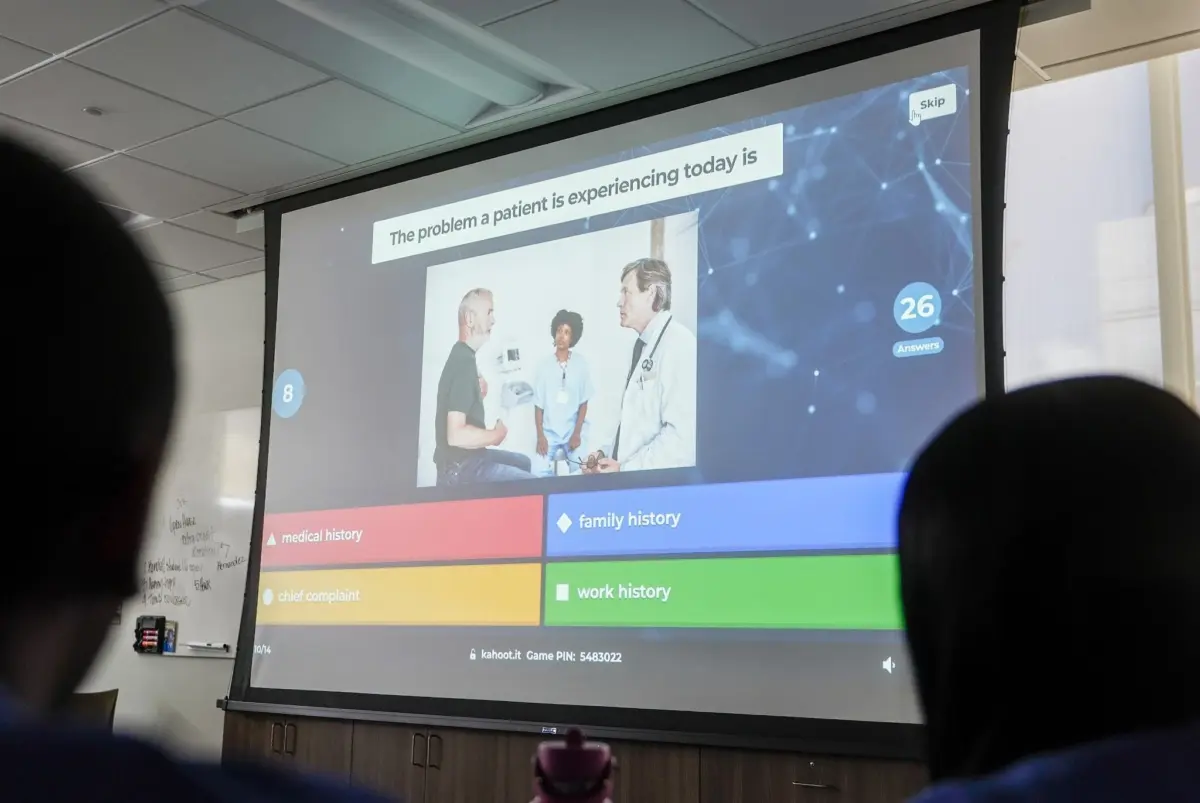
- Delivery Mechanism: Instructors wove interactive Kahoot! questions throughout the presentations. Students engaged directly using their personal digital devices, responding to gamified prompts while the aggregate results were instantly displayed to the room in real time.
- Participant Count: A total of 221 students took part in this second iteration.
Across both cohorts, a total of 437 healthcare trainees participated. Because the two groups were assessed in consecutive years rather than through randomized controlled trials in the same room, the study’s authors emphasized that the findings should be interpreted as a robust, real-world data point rather than a rigid laboratory experiment. Nonetheless, the comparative insights captured across the two models provide profound lessons for modern educators.
Supporting Context & Metrics: Data, Outcomes, and Cognitive Science
The quantitative and qualitative metrics gathered by Argus-Calvo et al. challenge conventional academic assumptions about how students learn and retain complex, non-clinical competencies.
Efficacy: Comparable Academic and Psychological Outcomes
A primary concern among educators hesitant to adopt game-based learning is whether gamification dilutes academic rigor or compromises knowledge acquisition. The findings of this study offer reassuring clarity: game-based learning and traditional formats produced statistically comparable results in efficacy.
- Self-Efficacy Gains: Students in both groups reported significant enhancements in self-efficacy. In the traditional lecture group, self-efficacy scores rose from a baseline mean of 20.36 to 21.82. In the Kahoot!-driven group, scores increased from 20.32 to 21.98.
- Psychological Quality of Life: Measures of psychological well-being also registered significant upward shifts. The traditional cohort saw scores rise from 13.74 to 14.34, while the game-based cohort experienced an increase from 14.20 to 15.04.
- Holistic Wellness Metrics: Both cohorts demonstrated notable improvements across secondary indicators of emotional intelligence, stress management, anger control, and overall emotional health.
While the game-based learning format exhibited marginally elevated mean changes across several metrics and a higher proportion of students reporting individual wellness gains, these differences were not statistically significant. The takeaway is clear: gamification did not sacrifice educational outcomes; rather, it achieved parity in learning efficacy while radically transforming the student experience.
The Generational Imperative: Decoding Generation Z
To understand why the game-based format resonated so powerfully, the researchers contextualized their findings within generational psychology. The vast majority of today’s medical and healthcare students belong to Generation Z (individuals born between 1997 and 2012).
Argus-Calvo et al. characterize Gen Z as a cohort of habitual multitaskers. While multitasking is often viewed colloquially as a productivity skill, cognitive science reveals a darker side: chronic multitasking significantly increases cognitive load, fragments attention spans, diminishes memory retention, and creates a steep barrier to deep engagement with dense, text-heavy academic material.
Traditional lectures—often characterized by long stretches of passive listening—exacerbate this cognitive bottleneck. Gen Z learners frequently experience standard lecture formats as disengaging, leading to mind-wandering, absenteeism, and cognitive fatigue.
Game-based learning acts as a direct counter-strategy to these cognitive patterns. By introducing rapid cycles of questioning, peer visibility, and immediate performance feedback, gamification:
- Sharpens Focus: Constantly prompts the learner to re-engage with the material.
- Builds Intrinsic Motivation: Transforms passive review into an active, rewarding challenge.
- Lowers Cognitive Friction: Breaks monolithic blocks of information into digestible micro-learning moments.
- Fosters Peer Connection: Keeps students visually and socially tethered to their classmates.
Official Statements and Qualitative Insights: What the Students Said
While quantitative metrics demonstrated that both teaching methods achieved equivalent wellness outcomes, qualitative feedback revealed a stark divide in how students felt about their learning environments.
The Dominance of "Engagement and Interactivity"
When researchers coded open-ended qualitative feedback from both cohorts, a definitive pattern emerged. "Engagement and interactivity" surfaced as the single most frequently mentioned theme across the study, appearing 85 times in student evaluations. These remarks pointed explicitly to the Kahoot! sessions, as well as the structured group discussions embedded in both formats.
Furthermore, a secondary theme—a palpable sense of community derived from sharing interactive experiences with peers—was cited 25 times.
Student Voices
The qualitative comments captured the human element of pedagogical design. Students did not just tolerate the gamified elements; they actively celebrated them as catalysts for learning and motivation. One representative student feedback entry highlighted the psychological pull of gamified learning:
"The Kahoot! games. I learned a lot and was motivated to play because I liked the prizes."
By introducing low-stakes competition, immediate feedback loops, and playful incentives, the instructors successfully reframed a heavy, emotionally taxing wellness workshop into an energizing, collaborative community experience. The researchers concluded that the game-based model was decisively the more popular and engaging framework, primarily because the interactive polling mechanisms coaxed even hesitant students out of passive observation and into active participation.
Future Outlook: Reimagining Higher Education for the Digital Age
The implications of the Argus-Calvo et al. study extend far beyond a single wellness workshop in a medical school. They point toward a broader, necessary evolution in how higher education institutions design curricula for 21st-century learners.
Scaling Interactivity Without Rebuilding Courses from Scratch
A common fear among university faculty is that incorporating modern pedagogical techniques requires dismantling an entire syllabus and rebuilding it from the ground up. The researchers argue otherwise. Shortening every lecture or entirely replacing standard instruction with games is neither realistic nor always pedagogically sound. Instead, educators can implement high-impact, low-effort instructional shifts within their existing lecture frameworks:
- Curiosity-Driven Openings: Begin lectures with a provocative, thought-provoking question or poll rather than a formal outline.
- Micro-Pacing: Break up long stretches of content delivery every 15 to 20 minutes with brief case studies, pair-and-share discussions, or rapid gamified checkpoints.
- Real-Time Formative Assessment: Utilize interactive polling tools to give students an immediate, anonymous gauge of their own mastery, reducing anxiety and correcting misconceptions on the spot.
Joining a Growing Body of Scientific Evidence
This study does not stand in isolation. It builds upon a rapidly expanding foundation of educational research supporting the integration of game-based learning in professional and higher education.
For instance, a comprehensive meta-analysis conducted by Özdemir (2025), encompassing 43 distinct studies, identified substantial, statistically significant gains in knowledge retention and academic achievement associated with the regular use of Kahoot! across diverse educational disciplines. Similarly, Kahoot! has established a rapidly growing track record specifically within medical and health sciences education, proving its utility in complex, high-stakes training environments where precision, engagement, and rapid recall are paramount.
Conclusion: The Synergy of Rigor and Experience
For higher education institutions, deans, and faculty members wrestling with how to modernize their teaching methodologies, the findings of Argus-Calvo et al. (2026) offer an encouraging and actionable roadmap. Traditional lectures remain fully capable of delivering core theoretical content, but game-based learning delivers something equally vital: an immersive, motivating, and deeply human educational experience.
By acknowledging the unique cognitive landscape of Generation Z, embracing interactive technologies, and bridging the gap between clinical rigor and human connection, medical and higher education can cultivate professionals who are not only academically proficient, but mentally resilient, deeply engaged, and ready to meet the complex demands of the modern world.
To explore the complete library of independent academic research, institutional case studies, and empirical data supporting interactive learning, visit kahoot.com/research.

