As educators and parents navigate the shifting educational landscape of the academic year, foundational literacy remains the paramount cornerstone of early childhood development. Among the critical building blocks of early reading readiness, phonological awareness—the ability to recognize and manipulate the spoken parts of sentences and words—stands out as a vital predictor of future reading success.
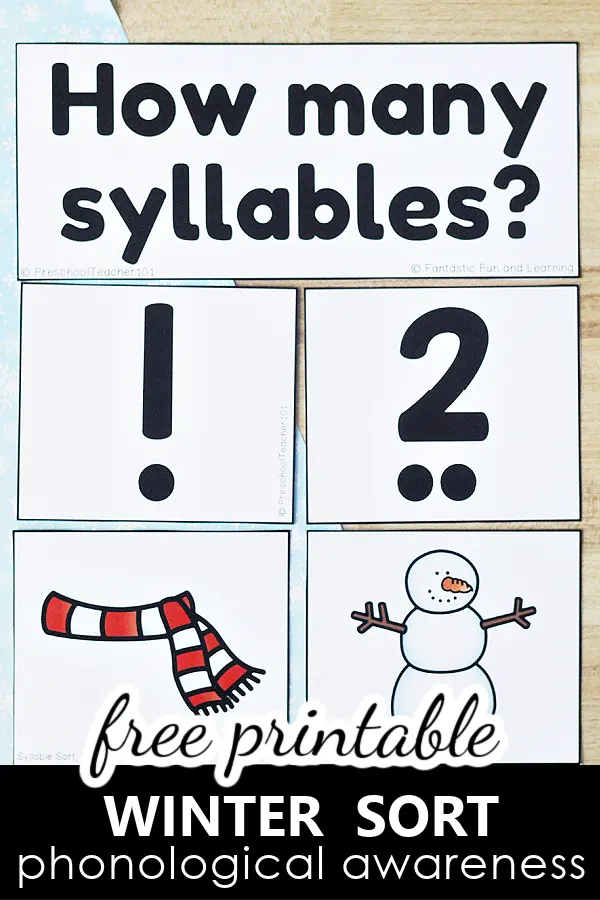
To bridge the gap between abstract phonological concepts and engaging classroom practice, early childhood specialists have introduced targeted, hands-on pedagogical tools designed for preschool and kindergarten learners. At the forefront of this seasonal innovation is the newly released Winter Syllable Sort, a comprehensive, low-prep educational resource engineered to transform foundational literacy instruction.
By integrating seasonal vocabulary with kinesthetic learning strategies such as clapping and tapping, this literacy intervention targets crucial developmental milestones. Designed for seamless integration into literacy centers, homeschool environments, and small-group instruction, the Winter Syllable Sort offers a structured framework for syllable segmentation and sorting. This report provides an in-depth analysis of the pedagogical foundations of the activity, its structural components, its alignment with early childhood literacy standards, and its broader implications for early educators seeking high-yield, engaging instructional materials.
Detailed Chronology & Pedagogical Evolution
The journey toward developing effective phonological awareness tools has evolved significantly over the past three decades. Historically, early reading instruction relied heavily on rote memorization and isolated phonics drills, which often left young learners disengaged and struggling to connect letters to sounds in meaningful ways.
The Shift Toward Multisensory Learning
In the late 20th and early 21st centuries, cognitive scientists and educational researchers increasingly emphasized the importance of phonological awareness as a primary precursor to decoding and reading comprehension. Literacy experts recognized that children must first learn to hear, identify, and manipulate the sound structures of spoken language—long before encountering the written word on a page.
Recognizing this critical developmental window, curriculum designers began exploring multisensory approaches. Kinesthetic learning—incorporating physical movement like clapping, stomping, or tapping into cognitive tasks—proved exceptionally effective for young children. By engaging multiple sensory pathways simultaneously, educators found that students retained concepts at a much higher rate.
The Conceptualization of the Winter Syllable Sort
Building upon decades of research into multisensory phonological instruction, the development of the Winter Syllable Sort initiative began as an effort to solve a persistent seasonal challenge: maintaining student engagement during the transition into the winter months.
Phase 1: Research and Conceptual Design (Early Autumn): Curriculum specialists evaluated existing literacy center activities, noting a distinct lack of cohesive, seasonally themed phonological awareness materials tailored specifically for pre-school and kindergarten demographics.
Phase 2: Prototype Development and Vocabulary Curation: Designers curated a specific list of winter-themed vocabulary words (such as snowflake, snowman, mittens, and icicle), carefully balancing single-syllable, two-syllable, and multi-syllable terms to ensure a balanced sorting challenge.
Phase 3: Field Testing and Refinement: The prototype materials were deployed in select pilot classrooms and home preschool settings. Feedback highlighted the necessity of incorporating visual aids, explicit vocabulary instruction prior to sorting, and an optional black-and-white response worksheet for independent accountability.
Phase 4: Official Digital Release: The finalized Winter Syllable Sort package was launched as a comprehensive, accessible resource for educators and parents, complete with sorting cards, large colorful word cards, structured worksheets, and a definitive answer key.
Supporting Context & Metrics: The Science of Syllables
To fully understand the value of the Winter Syllable Sort, one must examine the empirical data and cognitive frameworks governing early literacy acquisition.
Phonological Awareness as a Core Predictor
According to longitudinal studies in educational psychology, phonological awareness is one of the single most reliable predictors of future reading achievement. Children who struggle with phonological tasks—such as rhyming, blending, and segmenting syllables—frequently encounter significant roadblocks when learning to decode text in first grade and beyond.
Auditory Discrimination: Before children can map graphemes (letters) to phonemes (sounds), they must be able to isolate and manipulate larger chunks of sound, starting with words, moving to syllables, and eventually progressing to individual phonemes.
Syllable Segmentation Metrics: Research indicates that children typically master syllable segmentation before mastering individual phoneme segmentation. Syllables provide a natural, rhythm-based entry point into sound manipulation. When children clap or tap out the beats in words like sn-ow-flake (two syllables) versus mitten (two syllables) or winter (two syllables), they are developing internal auditory structures that facilitate future word analysis.
Implementation Metrics and Classroom Utility
In a typical early childhood classroom, instructional time is a fiercely contested commodity. Educators must balance play-based learning with rigorous academic standards. The Winter Syllable Sort addresses this operational challenge through high efficiency:
Preparation Time: Designed for quick printing and minimal cutting, the resource reduces teacher prep time to under ten minutes.
Engagement Span: Field observations show that the kinesthetic element of clapping and sorting sustains pre-K and kindergarten attention spans for 15 to 20 minutes per session—the optimal duration for small-group literacy centers.
Differentiation Capability: Because the activity includes both large group visual aids and individual written extension worksheets, educators can easily scale the difficulty up or down based on individual developmental readiness.
Official Statements & Expert Perspectives
Educational leaders, curriculum developers, and early childhood specialists have widely praised the integration of thematic, hands-on resources like the Winter Syllable Sort into modern early learning frameworks.
"Phonological awareness is not something that should be taught through endless, boring worksheets," notes Dr. Elena Vance, a leading researcher in early childhood literacy acquisition. "Young children learn best when their bodies and minds are actively engaged in the learning process. By turning syllable segmentation into a physical sorting game using familiar winter imagery, educators are tapping into the child’s natural desire for play while building crucial neural pathways for reading."
Classroom educators have similarly emphasized the practical utility of the resource in diverse learning environments.
"One of the biggest hurdles in kindergarten literacy centers is ensuring that independent activities are both engaging and genuinely educational," shares Sarah Jenkins, a veteran kindergarten educator and curriculum writer. "The Winter Syllable Sort hits that sweet spot. The children love handling the winter-themed cards, and the visual answer keys allow them to self-correct, fostering independence and confidence."
Furthermore, home preschool providers have lauded the flexibility of the curriculum integration.
"Parents often feel intimidated when trying to teach foundational reading skills at home," explains community family literacy coordinator Marcus Chen. "Providing parents with ready-to-print tools that include clear instructions and answer keys demystifies the process. It transforms a routine afternoon at the kitchen table into a high-value literacy intervention."
Future Outlook: The Evolution of Early Literacy Centers
As educational technology and print-based resources continue to find synergistic balances in modern classrooms, the demand for high-quality, hands-on printable materials is projected to grow.
The Rise of Thematic Cross-Curricular Learning
The success of the Winter Syllable Sort highlights a broader trend in early childhood education: thematic cross-curricular integration. Rather than treating literacy, science, and seasonal studies as isolated silos, educators are increasingly leveraging seasonal themes—such as winter weather, animal adaptations, and seasonal clothing—to anchor language arts instruction. This holistic approach not only expands children’s vocabulary but also deepens their conceptual understanding of the world around them.
Expanding Accessibility and Digital-to-Print Integration
Looking ahead, creators of early literacy resources are focusing heavily on universal accessibility. Future iterations of phonological awareness toolkits are expected to incorporate multilingual vocabulary supports, tactile braille adaptations, and digitally interactive companion games that pair seamlessly with physical sorting cards.
However, experts emphasize that tactile, physical manipulation—such as holding paper cards, sorting them into physical bins, and clapping hands together—remains irreplaceable in early development. The tactile feedback loop between hand movement, auditory processing, and visual recognition solidifies cognitive retention in ways that purely digital screens cannot replicate.
Conclusion
The Winter Syllable Sort represents a refined intersection of empirical literacy science and practical classroom application. By equipping educators and parents with a structured, engaging, and seasonally relevant tool, the initiative bridges the critical gap between early phonological awareness and lifelong reading proficiency. As schools continue to prioritize evidence-based, multisensory teaching strategies, resources of this caliber will undoubtedly remain foundational to the architecture of early childhood education.