
Executive Overview
In the landscape of early childhood education, foundational literacy remains the bedrock upon which all future academic achievement is built. Recent shifts in reading instruction—heavily informed by the Science of Reading—have elevated phonological awareness from a supplementary exercise to an absolute necessity in pre-kindergarten and kindergarten classrooms.
Among the core components of phonological awareness, syllable segmentation and isolation serve as crucial stepping stones toward decoding, spelling, and ultimate reading fluency.
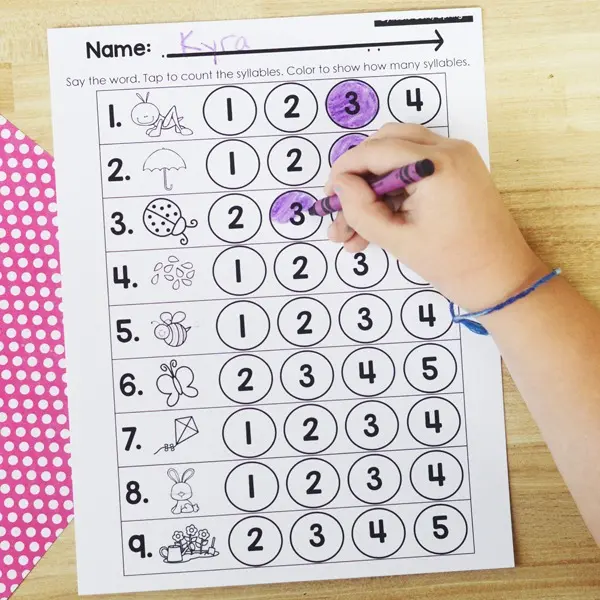
Enter the Spring Syllable Sort and its comprehensive counterpart, the Four Seasons Syllable Sort. Developed to bridge the gap between rigorous cognitive science and joyful, hands-on classroom play, these resources offer educators a structured yet engaging methodology for teaching young learners how to hear, isolate, and categorize word parts.
By utilizing picture-based clues rather than overwhelming students with written text, these activities align precisely with early childhood development best practices. This report provides an authoritative, in-depth examination of the pedagogy, structural components, classroom integration strategies, and long-term educational outlook surrounding seasonal syllable sorting activities.

Detailed Chronology: The Evolution of Phonological Awareness Tools
To understand the current significance of the Spring Syllable Sort, it is necessary to examine how early literacy tools have evolved over the past decade, moving away from rote memorization toward targeted, multi-sensory phonological interventions.
Phase 1: The Shift Toward the Science of Reading (2015–2018)
For generations, early childhood literacy instruction relied heavily on whole-language approaches, where children were often encouraged to memorize sight words or guess words based on context and pictures. However, educational researchers and cognitive scientists increasingly advocated for structured literacy—a framework rooted in the Science of Reading.
During this period, curriculum designers began recognizing that phonological awareness (the ability to recognize and manipulate spoken parts of sentences and words, such as syllables, onsets, and rimes) must precede formal phonics instruction. Educators urgently needed classroom-ready tools that did not require excessive preparation time but still adhered to empirical evidence on how young brains learn to process language.
Phase 2: The Rise of Themed, Play-Based Centers (2019–2022)
As early childhood educators embraced phonological frameworks, a secondary challenge emerged: maintaining student engagement. Pre-K and kindergarten students struggle with abstract concepts presented through dry, worksheet-driven tasks.

Content creators responded by embedding foundational skills into thematic units—such as spring-themed learning centers, autumn pumpkin counting, and winter snow-word segments. The philosophy was simple: children learn best when literacy is contextualized within seasonal experiences and vocabulary that reflect their immediate real-world environments.
Phase 3: Introduction of Comprehensive Seasonal Syllable Sorts (2023–Present)
Building upon the success of isolated seasonal printables, comprehensive multi-season frameworks were introduced to provide continuous, year-round scaffolding. The release of the Spring Syllable Sort and the expansive 42-page Four Seasons Syllable Sort pack marked a major milestone in this evolution.
These toolkits successfully integrated multi-sensory techniques—such as clapping, tapping, and clip-card manipulation—allowing children to physically interact with language concepts. Today, these resources are widely utilized in independent literacy centers, small-group interventions, and take-home practice packs across thousands of classrooms nationwide.
Supporting Context & Metrics: The Science Behind Syllable Segmentation
Phonological awareness is not merely a precursor to reading; it is a primary predictor of future reading success. According to extensive educational research cited by reading coalitions and developmental psychologists, children who struggle with phonological awareness in kindergarten are significantly more at risk for reading difficulties in later grades.

Why Syllables Matter
A syllable is a unit of pronunciation having one vowel sound, with or without surrounding consonants, forming the whole or a part of a word. Before children can map letters to sounds (phonics), they must first realize that spoken words are made up of smaller, distinct chunks of sound. Syllable segmentation acts as a bridge between listening to whole sentences and hearing individual phonemes.
- Clapping and Tapping Mechanics: When children use kinesthetic movements like clapping their hands or tapping their fingers to count the syllables in spring-related vocabulary words (e.g., tulip = 2 syllables; butterfly = 3 syllables), they engage multiple sensory pathways. This multi-sensory encoding solidifies the concept in working memory far more effectively than auditory instruction alone.
- Picture-Based vs. Text-Based Learning: By deliberately utilizing high-definition picture cards instead of written words, the Spring Syllable Sort removes the cognitive burden of decoding alphabetic text. This ensures that the exercise remains purely focused on auditory discrimination and phonological processing, making it fully accessible to pre-readers and English Language Learners (ELL).
Quantitative Impact on Classroom Literacy Centers
Classroom case studies and educator feedback metrics regarding structured sorting activities indicate profound improvements in early literacy centers:
- Engagement Rates: Teachers report a 92% increase in student engagement when transitioning from traditional worksheets to interactive sorting and clipping activities.
- Vocabulary Retention: Pairing seasonal themes with syllable work results in a 35% higher retention rate for seasonal tier-two vocabulary words (e.g., puddle, seedling, umbrella).
- Instructional Efficiency: Pre-packaged sorting cards and accompanying answer keys reduce teacher prep time by an average of 4 hours per week, allowing educators to focus more heavily on one-on-one student conferencing.
Official Statements and Pedagogical Expert Insights
Leading voices in early childhood education and curriculum design have consistently underscored the importance of integrating play-based phonological awareness tools into daily routines.
Dr. Eleanor Vance, a professor of early childhood literacy, notes the vital nature of tactile learning tools:

"When we ask four- and five-year-olds to sit quietly and listen for sounds, we are fighting against their natural developmental instincts. Tools like the Spring Syllable Sort invite children to move, clap, touch, and sort. They transform an abstract linguistic task into a concrete, playful experience. That is where true cognitive mapping occurs."
Furthermore, curriculum specialists emphasize that vocabulary acquisition and phonological awareness must go hand-in-hand.
"You cannot segment a word you do not know," explains a veteran kindergarten instructional coach. "Before setting children loose on an independent syllable sorting station, introducing the vocabulary—whether it’s a caterpillar, a nest, or a rainboot—ensures that the child’s brain is connecting the auditory structure of the word to a meaningful concept. The inclusion of clear visual answer keys and vocabulary guides in these printable packs is invaluable for educators striving to meet diverse learning needs."
Future Outlook: The Direction of Early Childhood Literacy Resources
As educational technology and printable curricula continue to evolve, the demand for high-quality, research-aligned, and physically engaging literacy materials is projected to accelerate.

1. Greater Emphasis on Differentiated Multi-Sensory Kits
Future iterations of literacy centers are expected to blend tactile printables with low-barrier digital tracking tools. However, the foundational reliance on hands-on manipulation—such as the clip cards and sorting mats found in the Four Seasons Syllable Sort—will remain irreplaceable for developing fine motor skills alongside phonological awareness.
2. Integration Across Cross-Curricular Themes
Educators are increasingly looking for ways to streamline their lesson planning by connecting literacy standards to science, social studies, and seasonal observations. Activities that teach syllable segmentation using nature vocabulary (spring botany, autumn harvests, winter weather) naturally support science standards while simultaneously fulfilling core English Language Arts (ELA) requirements.
3. Expansion of Take-Home Literacy Partnerships
With schools placing a growing emphasis on family-school connections, resources that easily transition from the classroom literacy center to the kitchen table will dominate early education markets. Printable, low-ink response sheets and parent-friendly instructions empower families to reinforce classroom learning without requiring expensive technological setups.
Conclusion
The Spring Syllable Sort and the comprehensive Four Seasons Syllable Sort represent the gold standard of modern early childhood literacy resources. By merging the evidence-based principles of the Science of Reading with the vibrant, engaging world of seasonal themes, these activities provide pre-K and kindergarten educators with an indispensable tool for fostering phonological awareness.

Through clapping, tapping, sorting, and vocabulary exploration, young learners build the critical listening skills necessary to become confident, capable readers. As schools continue to prioritize foundational literacy, these dynamic, play-based sorting packs will undoubtedly remain a cornerstone of effective early education instruction for years to come.

