
Executive Overview
In an era defined by hyper-connectivity, hyper-stimulation, and increasingly sedentary indoor lifestyles, educators, psychologists, and parents are grappling with a silent crisis: the depletion of executive functioning skills in children and teenagers. Executive functions—the neuro-cognitive command center housed in the prefrontal cortex—are the foundational brain-based abilities required to plan, focus, remember instructions, prioritize tasks, regulate impulses, and successfully juggle multiple responsibilities. Without robust executive functioning, academic achievement flounders, emotional regulation collapses, and interpersonal relationships fray.
However, a growing body of scientific research points toward a powerful, time-tested antidote readily available just outside our doors: the natural world. Far from being merely a space for physical recreation, nature functions as an original, organic classroom capable of naturally rehabilitating and expanding the cognitive capacities of young minds. Recent neuroscientific studies indicate that brief, consistent exposures to green spaces significantly reduce stress hormones, sharpen attentional networks, and promote cognitive flexibility.
This comprehensive report examines the intersection of environmental psychology and childhood development, detailing over a dozen practical, nature-based activities designed to systematically build executive functioning skills. Whether utilizing a sprawling wilderness trail, an urban community park, or even a modest school courtyard, the outdoors provides a dynamic ecosystem for children and teens to develop the mental scaffolding required for lifelong success.
Detailed Chronology: The Evolution of Outdoor Learning and Brain Development
The understanding that the natural world profoundly impacts human cognition is not a novel concept, but the empirical mapping of its neurological mechanisms has evolved significantly over the past several decades.
The Mid-20th Century: The Shift Indoors
For generations, unstructured outdoor play was the default state of childhood. Children spent hours navigating physical environments, organizing neighborhood games, and negotiating social rules without adult mediation. However, the latter half of the 20th century marked a rapid industrial and technological shift. As urban density increased, safety concerns mounted, and screen-based entertainment captured the domestic sphere, children’s daily geographic range shrank dramatically. By the turn of the 21st century, researchers coined terms like "nature deficit disorder" to describe the behavioral, attentional, and emotional fallout of indoor isolation.
The 2000s: The Rise of Attention Restoration Theory (ART)
In environmental psychology, the pioneering work of Rachel and Stephen Kaplan established Attention Restoration Theory (ART). The Kaplans demonstrated that urban environments demand "directed attention"—a finite resource that requires constant inhibition of distractions, leading to mental fatigue and executive burnout. Nature, by contrast, elicits "soft fascination," engaging the brain’s attention effortlessly through patterns like rustling leaves, flowing water, and shifting light. This effortless engagement allows the prefrontal cortex to rest, recover, and rebuild its capacity for high-level executive control.
The 2010s to Present: Empirical Validation and Modern Applications
Over the past fifteen years, neuroimaging and large-scale population studies have transformed outdoor education from an intuitive philosophy into an evidence-based cognitive intervention. Landmark investigations—such as a 2019 study tracking 20,000 individuals—conclusively linked a minimum of two hours of weekly outdoor exposure to vastly superior reports of mental well-being and cognitive sharpness. Today, educators and mental health professionals are systematically integrating nature into cognitive behavioral frameworks, utilizing outdoor spaces not just as a break from learning, but as an active laboratory for executive functioning remediation.
Supporting Context & Metrics: The Science of Green Spaces
To understand why nature serves as an ideal catalyst for executive functioning, one must examine the metrics quantifying its physiological and neurological impacts.
Key Research Findings
- The 20-Minute Stress Reduction Window: According to findings published by Harvard Medical School, spending as little as 20 minutes immersed in a natural setting triggers a measurable reduction in salivary cortisol (the primary stress hormone). Lower stress levels immediately clear the path for enhanced working memory and cognitive control.
- The Two-Hour Well-Being Threshold: Research published in scientific journals involving tens of thousands of participants indicates that spending at least 120 minutes per week in nature correlates with significantly heightened psychological well-being and cognitive vitality.
- Global Cognitive Enhancement: An extensive review of environmental literature highlighted consistent, positive correlations between nature exposure and improvements in selective attention, working memory capacity, sleep architecture, and emotional regulation across pediatric populations.
The Neurological Connection to Executive Functions
Executive functions rely primarily on the prefrontal cortex and its neural networks. These core skills include:
- Inhibitory Control (Self-Control): The ability to resist impulses, delay gratification, and maintain focus despite distractions.
- Working Memory: The capacity to retain, manipulate, and utilize complex information over short periods.
- Cognitive Flexibility: The mental agility to switch perspectives, adapt to unexpected changes, and solve problems creatively.
When children interact with natural environments, these three pillars are continually activated. Navigating an uneven woodland trail requires physical and cognitive flexibility; tracking an insect or identifying plant species demands sustained attention; resisting immediate impulses to quit a frustrating task builds perseverance and self-regulation.
Official Perspectives and Expert Insights
Child development specialists and educational researchers emphasize that executive functioning cannot be mastered purely through direct instruction or flashcard-style intervention. Instead, these skills must be practiced in dynamic, real-world contexts.
"Nature provides an unmatched sensory landscape that gently demands our attention without exhausting our cognitive reserves," notes a leading environmental psychologist. "When kids are outdoors, they encounter unpredictability. A sudden gust of wind, an unexpected animal sighting, or a complex obstacle on a hiking trail forces the brain to pivot, adapt, and regulate its responses in real time."
Educators note that integrating executive function training with nature-based activities bridges the gap between abstract academic skills and practical self-regulation. "When a child plans a garden, they aren’t just learning botany," explains an elementary curriculum coordinator. "They are actively engaging in task initiation, sequential planning, resource organization, and long-term goal maintenance—the exact executive skills they need to write a research paper or manage complex high school coursework."
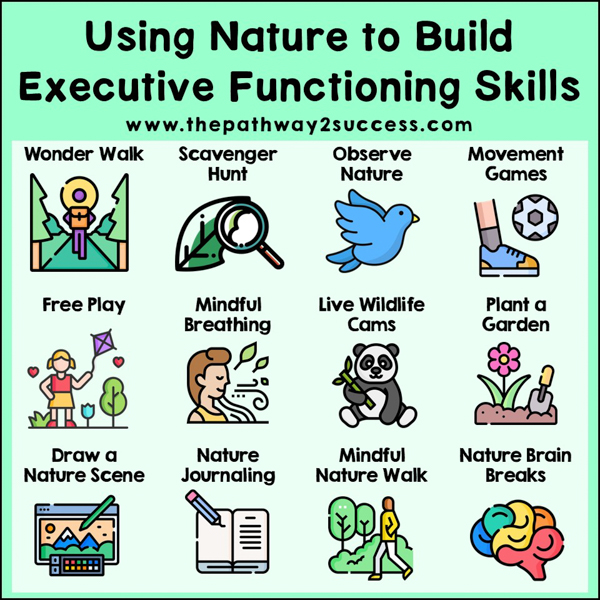
Practical Applications: Over 10 Nature Activities to Boost Executive Functions
Any green space—whether a sprawling national park, a neighborhood pocket park, or a small patch of grass outside a school building—can serve as a developmental arena. Below are evidence-based activities categorized by the specific executive functions they target.
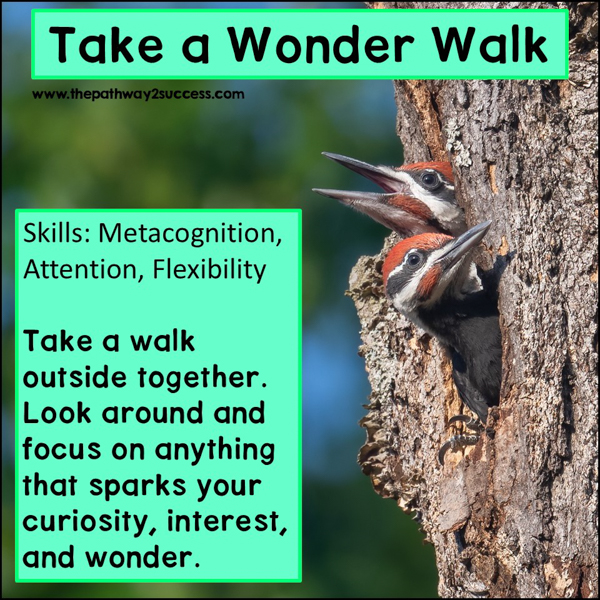
1. Take a Wonder Walk
- Target Skills: Metacognition, attention, flexibility, intrinsic motivation.
- Implementation: Lead children on an outdoor walk dedicated entirely to curiosity. Encourage them to voice observations or questions that spark genuine wonder, such as why bird species communicate with distinct calls or how water carves paths through soil. Later, use these questions as research prompts to foster intrinsic motivation and academic inquiry.
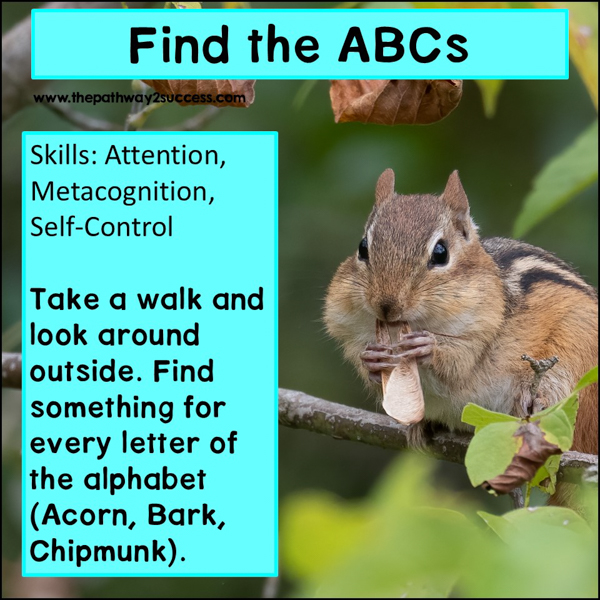
2. Find the ABCs
- Target Skills: Metacognition, attention, self-control.
- Implementation: Challenge learners to scan their environment and locate a natural object corresponding to each letter of the alphabet sequentially (e.g., A for acorn, B for bark). This game trains children to deliberately direct their focus, override distractions, and practice sustained concentration.
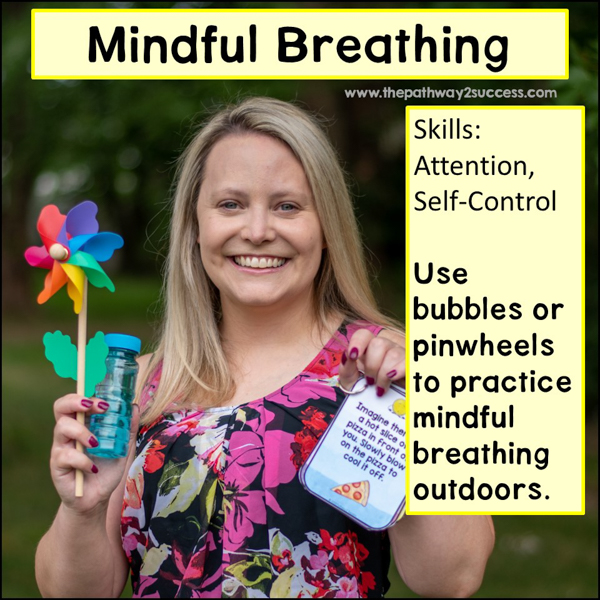
3. Outdoor Mindful Breathing
- Target Skills: Self-control, attention.
- Implementation: Combine somatic self-regulation with environmental awareness. Have children practice deep breathing exercises outdoors—using props like pinwheels or bubbles, or engaging in nature-inspired movements like "bear breathing" or "butterfly breathing." This establishes an accessible anchor for emotional regulation that children can deploy in any stressful setting.
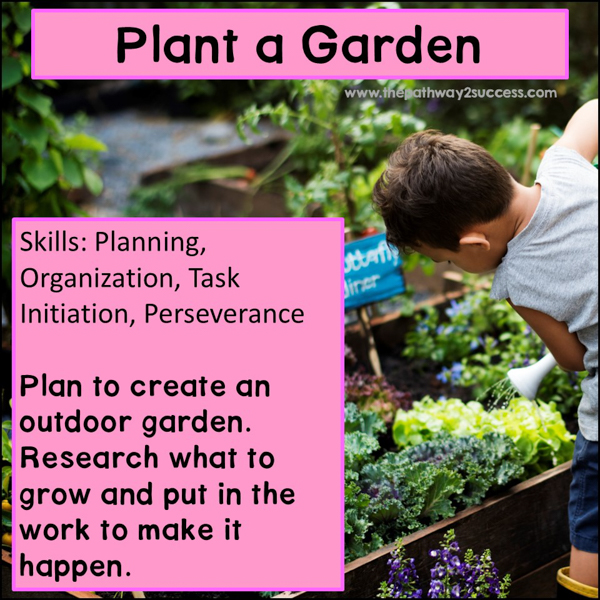
4. Plant a Garden
- Target Skills: Planning, organization, task initiation, perseverance.
- Implementation: Engage youth in the multi-step process of designing, researching, and planting a garden space. From selecting appropriate flora and gathering tools (soil, seeds, watering cans) to maintaining the plot over weeks and months, gardening teaches long-term project management and deferred gratification.
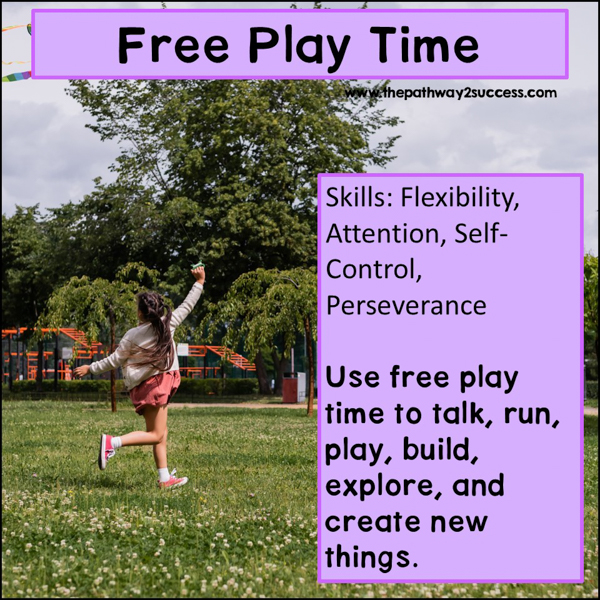
5. Unstructured Free Play
- Target Skills: Flexibility, attention, self-control, perseverance, time management.
- Implementation: Carve out dedicated, unstructured time for children to explore, negotiate social dynamics, and invent games outdoors without heavy adult oversight. Free play remains one of the most powerful natural incubators for adaptive thinking and peer-to-peer conflict resolution.
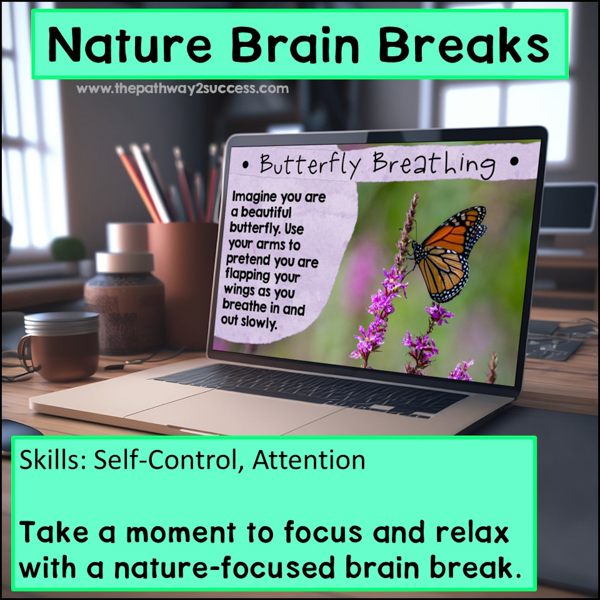
6. Nature Brain Breaks
- Target Skills: Self-control, attention.
- Implementation: Introduce short, nature-themed somatic breaks during intense academic blocks. Even indoor classrooms can utilize guided visualizations—such as imagining flying like a hawk over vast landscapes—to reset the nervous system and restore depleted cognitive focus.
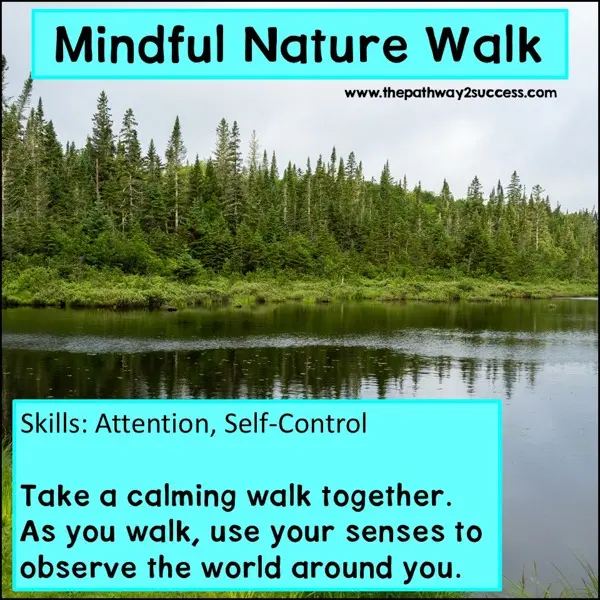
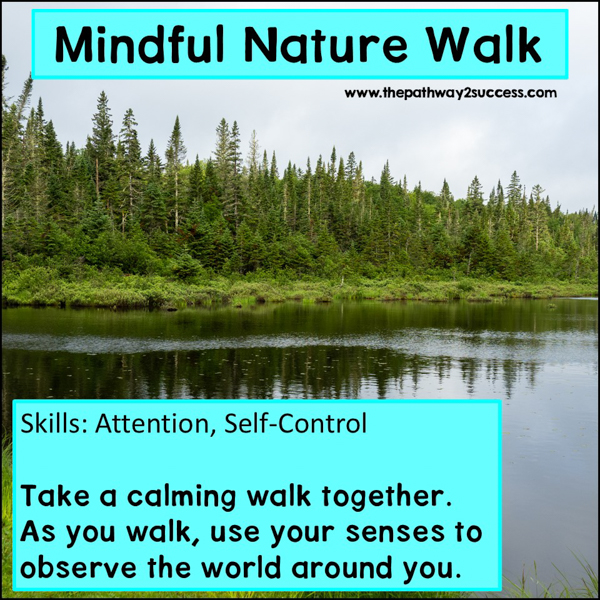
7. Mindful Nature Walks
- Target Skills: Attention, self-control.
- Implementation: Slow the pace down completely. Instruct children to walk silently while cataloging sensory inputs across all five sights, sounds, smells, and textures. Afterward, prompt them to reflect on their internal state and list specific details they noticed.
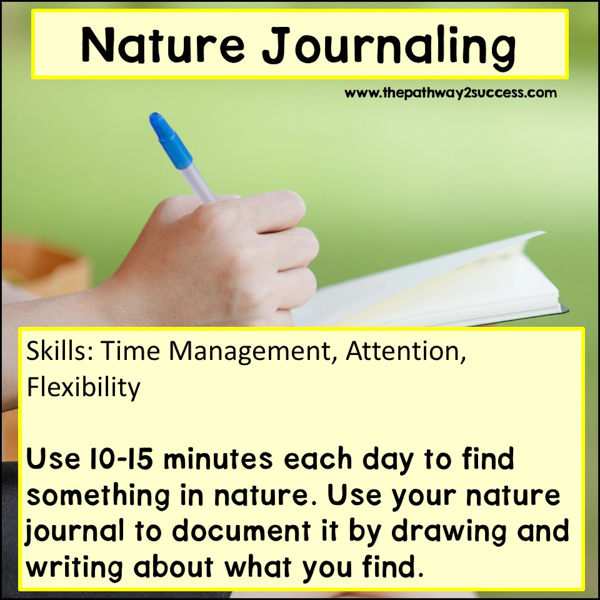
8. Start a Nature Journal
- Target Skills: Time management, attention, flexibility.
- Implementation: Provide a blank notebook for daily journaling outdoors. Encourage students to sketch observed specimens, document seasonal changes, and draft reflective writing pieces, integrating artistic expression with scientific observation.
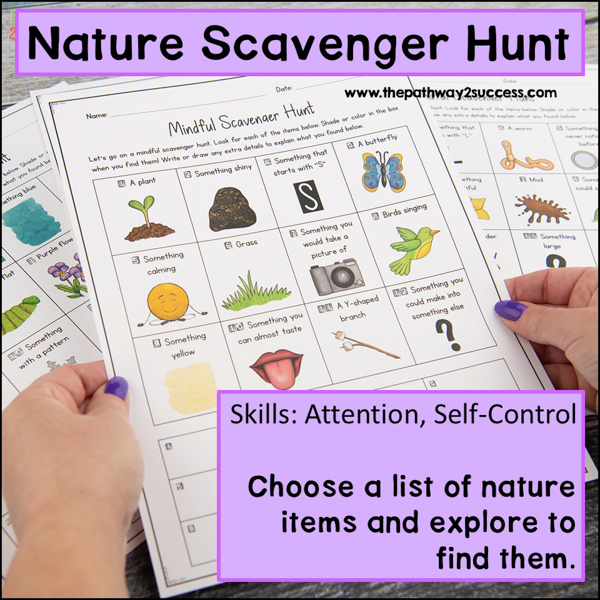
9. Nature Scavenger Hunt
- Target Skills: Attention, self-control, metacognition.
- Implementation: Compile a collaborative checklist of items to find (e.g., a smooth stone, a feather, a specific leaf shape, a puddle). Scavenger hunts activate background knowledge, encourage focused searching, and require impulse control to stay with the group.
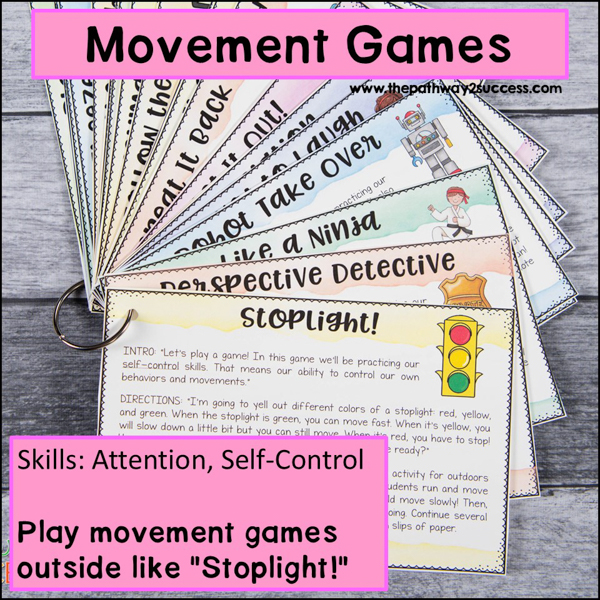
10. Play Movement Games
- Target Skills: Attention, self-control, working memory.
- Implementation: Utilize classic rhythmic and listening games outdoors, such as "Follow the Beat" (clapping or stomping patterns that peers must repeat), "Stoplight," or "Simon Says." These games challenge working memory and rapid inhibitory control.
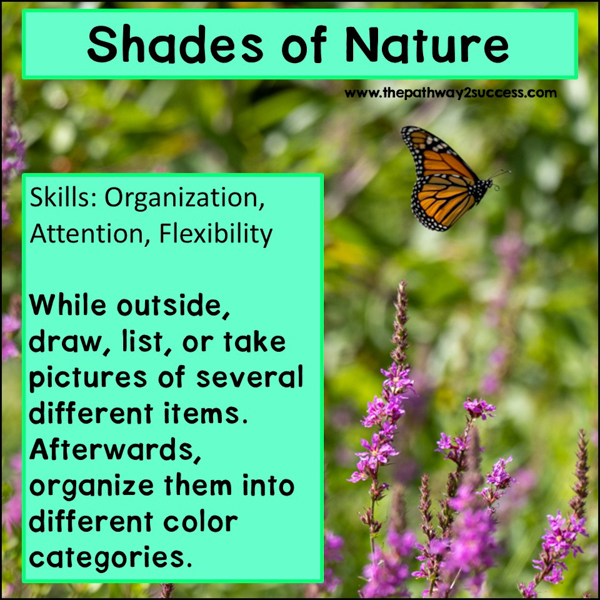
11. Shades of Nature
- Target Skills: Organization, attention.
- Implementation: Armed with a clipboard, challenge learners to collect or document multiple natural items matching specific color palettes (e.g., finding five distinct shades of green or locating an unexpected blue feather or water reflection).
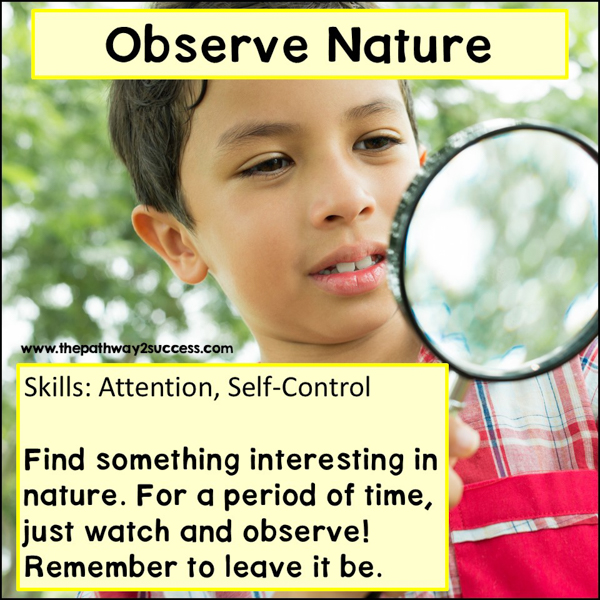
12. Observe Nature (Passive Observation)
- Target Skills: Attention, self-control.
- Implementation: Practice the art of stillness. Instruct students to find a living organism—such as an ant colony or a blossoming flower—and simply wait, watch, and allow nature to unfold without interference. This profound exercise builds intense impulse control and patient attention.
13. Positive Affirmations with a Nature Theme
- Target Skills: Attention, self-control, emotional regulation.
- Implementation: Combine cognitive reframing with outdoor settings by reading and reflecting on positive self-talk phrases and wildlife-themed affirmations, reinforcing resilience and confidence when facing challenges.
14. Use Live Wildlife Cams
- Target Skills: Attention, flexibility.
- Implementation: When inclement weather prevents outdoor access, utilize live-streamed wildlife cameras (such as nesting Ospreys, Bald Eagles, or exhibits at major zoological parks) to study animal behaviors and ecological systems over extended periods.
15. Community Clean-Up Projects
- Target Skills: Organization, task initiation, time management, empathy.
- Implementation: Organize a group effort to clear litter or manage fallen debris in a local park or school yard. Beyond building executive capacities, this fosters community responsibility and prosocial empathy.
16. Art in Nature
- Target Skills: Attention, planning, organization.
- Implementation: Have students study a scenic landscape, mentally compose the frame, and translate their visual observations into drawings, paintings, or mixed-media artwork.
17. Watch the Changes
- Target Skills: Attention, metacognition, flexibility.
- Implementation: Select a dynamic natural subject—such as a growing sapling, an evolving insect lifecycle, or a construction project by local birds—and return to the exact location repeatedly to document gradual transformations over time.
Future Outlook
As the educational landscape continues to adapt to the post-digital age, the integration of environmental mindfulness and cognitive science represents a vital frontier. Forward-thinking schools and communities are increasingly designing "green schoolyards," outdoor classrooms, and nature-immersive curricula not as supplemental luxuries, but as core developmental necessities.
The evidence is clear: when we invest in connecting children and teens with the natural world, we are doing far more than encouraging physical health or environmental stewardship. We are actively building the neurological architecture of the mind. By stepping outside, children harness the restorative power of green spaces to sharpen their attention, regulate their emotions, and expand their executive functioning skills—laying a resilient foundation for a focused, adaptable, and balanced future.

