As the global workplace undergoes its most profound structural transformation since the dawn of the digital age, a critical paradox has emerged. Organizations across every major industry are aggressively implementing artificial intelligence, machine learning, and advanced automation to optimize operations, enhance productivity, and secure a competitive edge. Yet, even as technical tools become more sophisticated, the human infrastructure required to wield them effectively is showing signs of severe strain.
According to landmark data from the World Economic Forum, the most in-demand core competencies in the modern workplace are not technical proficiencies, but enduring human traits: resilience, flexibility, and agility. These attributes are the hallmark of the lifelong learner—an individual equipped with the psychological safety and confidence to continuously experiment, expand their knowledge base, and innovate in ambiguous environments.
However, a widening chasm exists between corporate expectations and workforce readiness. Barely 18 percent of U.S. company leaders believe that entry-level workers are fully prepared for their roles, pointing directly to a systemic deficit in foundational soft skills. This sentiment is profoundly mirrored by the workforce itself. Only 39 percent of Generation Z employees feel fully prepared for their job responsibilities—a sharp 20-point drop from the previous year.
Left feeling overwhelmed and undersupported, a staggering two-thirds of Gen Z workers now admit to feeling chronically out of their depth. In an attempt to bridge this capability gap, over half (59 percent) have turned to generative AI tools to execute daily tasks. While this signals resourcefulness, it highlights a dangerous misconception: while AI can draft an email or analyze a dataset, it cannot automate empathy, critical thinking, or human collaboration.
To prevent an impending productivity and engagement crisis—especially as Gen Z is projected to become the largest demographic in the global workforce within the decade—forward-thinking leadership must fundamentally redesign their learning and development (L&D) frameworks. By strategically integrating AI as a cognitive catalyst, embedding soft skills training into daily workflows, and fostering peer-to-peer learning ecosystems, companies can transform entry-level anxiety into long-term organizational resilience.
Detailed Chronology: The Evolution of the Skills Crisis
Understanding the current workplace dilemma requires examining the socioeconomic and technological trajectory that led to this tipping point. The convergence of post-pandemic labor shifts, the acceleration of remote work, and the meteoric rise of generative artificial intelligence have compressed a generation’s worth of workplace evolution into just a few short years.
Phase One: The Remote Learning Disruption (2020–2022)
The foundational roots of today’s soft skills deficit can be traced back to the educational and early career disruptions of the early 2020s. Millions of students and early-career professionals completed their formative educational years and initial internships behind computer screens. Traditional avenues for organic professional development—such as observing senior colleagues navigate difficult client calls, impromptu brainstorming sessions in hallways, and casual networking—were abruptly replaced by transactional video calls. Consequently, a generation missed out on crucial experiential learning regarding workplace etiquette, non-verbal communication, and spontaneous problem-solving.
Phase Two: The AI Inundation and the Technical Pivot (2023–2024)
As organizations rushed to integrate generative AI tools into their workflows, corporate priorities shifted heavily toward technical upskilling. Leaders assumed that younger demographics, often labeled as "digital natives," would naturally adapt to these emerging technologies. Training budgets were heavily funneled into software adoption, prompt engineering, and data literacy programs. However, this tech-first focus inadvertently sidelined the development of critical human competencies. While Gen Z employees learned to code and query faster, their capacity for critical analysis, emotional intelligence, and complex interpersonal conflict resolution began to stagnate.
Phase Three: The Confidence Collapse and the AI Crutch (2025–Present)
By 2025, the hidden costs of this skills imbalance became impossible to ignore. Study after study revealed a precipitous drop in workplace confidence among young professionals. With formal mentorship structures strained by hybrid work models, entry-level workers increasingly turned to AI not as a collaborative assistant, but as a crutch to compensate for inadequate onboarding and training. Rather than fostering deep understanding, this over-reliance on automated answers began to atrophy critical thinking and independent problem-solving skills. Recognizing that technical tools alone cannot sustain corporate innovation, business leaders began sounding the alarm, initiating a necessary pivot back toward human-centric, holistic professional development.
Supporting Context & Metrics: The Data Behind the Divide
Quantitative research from leading economic, academic, and corporate institutions paints a stark picture of the contemporary labor market. The disconnect between executive expectations and employee self-perception is not merely a matter of generational perception; it is a measurable structural vulnerability.
The Preparedness Gap
The Executive Perspective: Data from workforce analytics firms indicates that only 18 percent of U.S. company leaders feel confident that entry-level workers arrive equipped for the realities of their positions. The overwhelming majority cite deficiencies in basic workplace communication, time management, and emotional resilience as primary roadblocks.
The Employee Reality: This lack of preparedness is acutely felt by the workforce. According to recent Trinet data, only 39 percent of Gen Z employees report feeling fully prepared for their specific job roles, representing a massive 20-point year-over-year decline.
The Imposter Syndrome Epidemic: Over two-thirds of Gen Z professionals now admit to feeling frequently "out of their depth" at work. This chronic feeling of inadequacy is compounded by a profound fear of professional exposure; approximately 55 percent of Gen Z workers report that a lack of interpersonal training makes them terrified of asking "dumb questions" for fear of judgment.
The AI Paradox
The Reliance on Automation: Faced with inadequate training and overwhelming workloads, 59 percent of Gen Z employees openly admit to utilizing artificial intelligence to complete core work tasks simply because they feel undertrained to handle them independently.
The Cognitive Cost: While AI boosts short-term efficiency, Microsoft research demonstrates that offloading analytical and creative reasoning tasks entirely to automated systems leads to a measurable decline in human critical thinking and problem-solving longevity.
The Soft Skills Wall: Corporate leaders must confront a fundamental truth: while technical workflows can be automated, the foundational pillars of leadership—empathy, negotiation, ethical judgment, and collaborative resilience—cannot be outsourced to algorithms.
Official Statements & Expert Perspectives
As organizations grapple with these sobering statistics, prominent voices in human resources, learning theory, and organizational psychology are calling for an immediate overhaul of corporate talent strategies.
"Resilience, flexibility, and agility are not just buzzwords; they are the survival metrics of the modern enterprise. As emerging technologies redefine technical requirements almost daily, a company’s ultimate competitive advantage is its people’s capacity to learn, unlearn, and relearn."
— Insights from the World Economic Forum’s Future of Jobs Report
Industry analysts emphasize that traditional onboarding models—often consisting of static compliance videos and dense employee handbooks—are fundamentally incompatible with the psychological needs and learning preferences of modern digital natives.
"When young professionals feel isolated and undertrained, they naturally seek out the path of least resistance, which is often an AI prompt box. However, true professional growth happens in the friction of human collaboration and real-time mentorship. Leaders must build environments where asking questions is not penalized, but celebrated as the primary engine of innovation."
— Corporate Talent Development Strategist
Furthermore, experts highlight that employee engagement and talent retention are inextricably linked to continuous, constructive feedback loops. Research compiled by Gallup and Workhuman indicates that organizations that successfully redefine feedback—moving away from intimidating annual reviews toward real-time, constructive dialogue—drastically improve retention rates and give employees the precise behavioral roadmap they need to thrive.
Future Outlook: Three Strategic Pillars for Workforce Empowerment
To prepare Gen Z employees—and the broader workforce—for sustained excellence over the next decade, forward-looking organizations must move beyond superficial training programs. Transforming the workplace into an ecosystem of lifelong learning requires the implementation of three strategic pillars:
1. Harness AI to Improve Learning, Not Erase Critical Thinking
Artificial intelligence must be repositioned from a substitute for human effort to a sophisticated catalyst for cognitive growth. Instead of utilizing AI to deliver ready-made solutions, forward-thinking trainers can leverage AI tools to generate thought-provoking questions, simulated customer scenarios, and dynamic discussion starters.
By challenging employees to interrogate AI-generated outputs rather than accepting them blindly, organizations can save administrative time while actively exercising their workers’ critical thinking and problem-solving muscles. Efficiency should serve to create cognitive space for human creativity and strategic oversight, not eliminate it.
2. Integrate Soft Skills Development Throughout Workforce Training
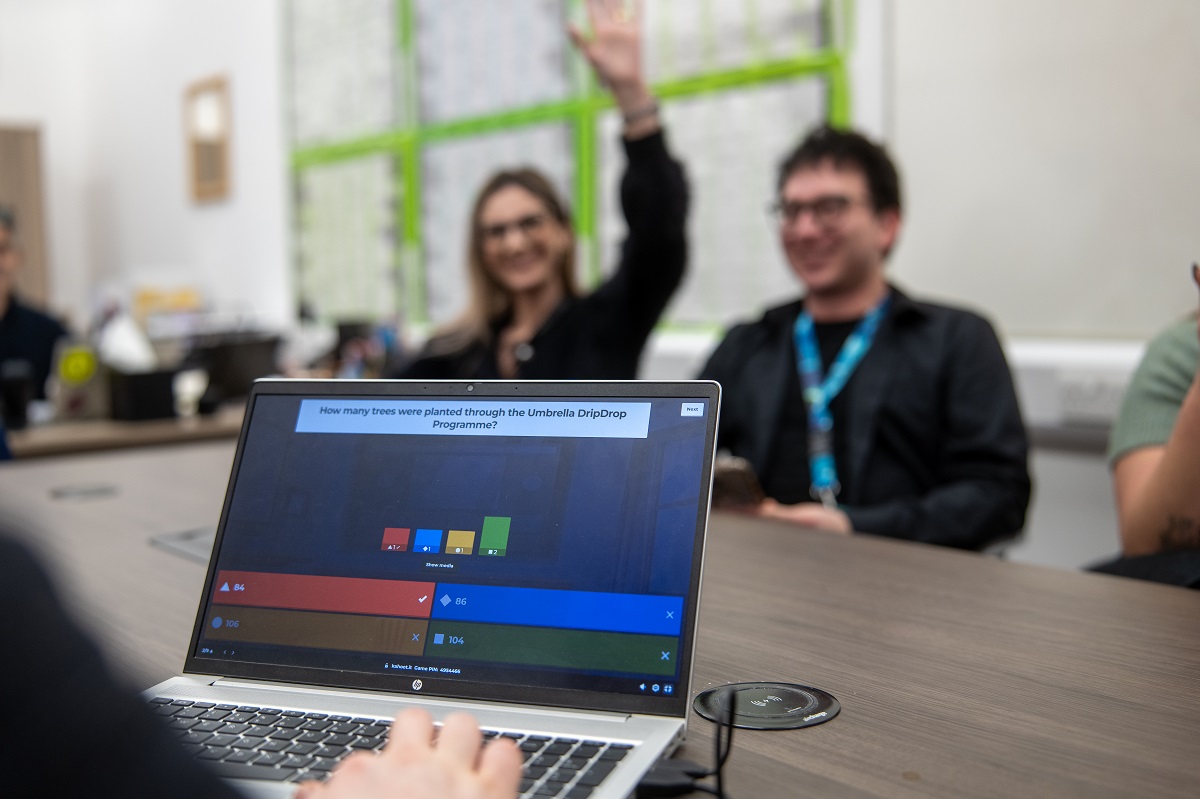
Soft skills cannot be effectively taught in isolated, once-a-year seminars; they must be woven into the fabric of daily operational training. Gamified learning methodologies and collaborative team challenges—which resonate exceptionally well with Gen Z preferences—allow employees to practice communication, negotiation, and conflict resolution in low-stakes, interactive environments.
Integrating digital learning platforms that offer instant, real-time feedback ensures that employees receive continuous validation and course correction. This ongoing dialogue fosters engagement and eliminates the anxiety associated with traditional performance reviews.
3. Pair Training with Peer-to-Peer Learning and Mutual Mentorship
To dismantle the fear of asking questions, organizations must champion peer-to-peer knowledge exchange. Establishing cross-departmental study circles and junior-led workshops creates safe spaces for younger professionals to articulate their ideas without intimidation.
Furthermore, implementing "mutual mentorship" programs—where junior workers guide older colleagues through emerging digital tools and platforms, while veteran employees share institutional knowledge, strategic wisdom, and professional networks—bridges generational divides. These symbiotic relationships foster a profound sense of belonging and support, elevating the competency of the entire enterprise.
Conclusion
Within the next decade, Generation Z is projected to become the single largest demographic in the global workforce. For organizations aiming to maintain market leadership, investing deeply and thoughtfully in the holistic development of these young professionals is not optional; it is an absolute strategic imperative.
The future of work demands an uncompromising commitment to lifelong learning. By embracing innovative workforce engagement platforms like Kahoot! 360, organizations can successfully dismantle the soft skills gap, transform AI from a crutch into a collaborative ally, and cultivate a resilient, confident workforce equipped to conquer the challenges of today and shape the innovations of tomorrow.