
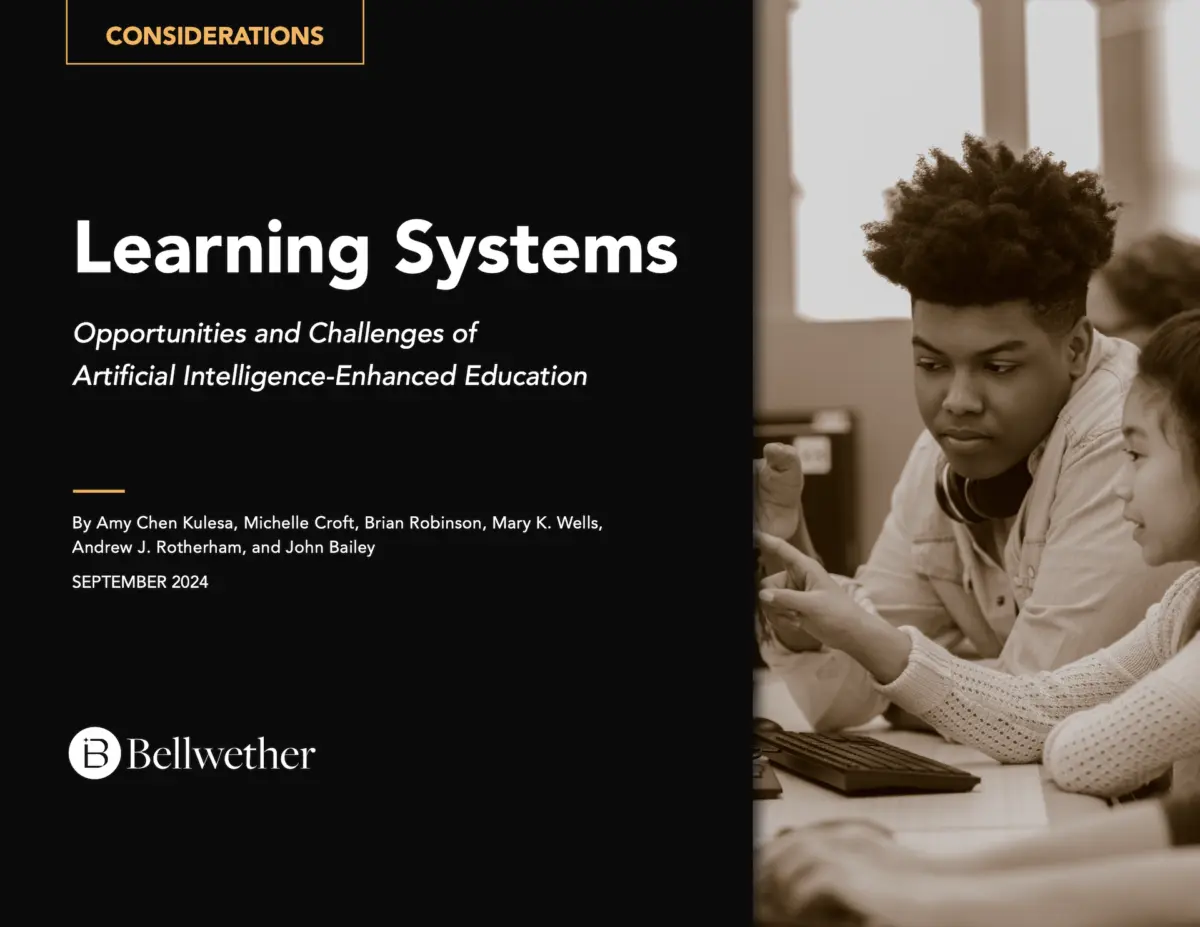
WASHINGTON, D.C. — In the landscape of modern American education, the pursuit of equity and innovation remains a formidable challenge. For more than a decade, the national nonprofit Bellwether has positioned itself at the forefront of this struggle, dedicated to transforming educational systems so that all young people—particularly those furthest from opportunity—can achieve outcomes leading to fulfilling lives and flourishing communities.
A recently released multi-phase research and publishing project underscores the organization’s ongoing commitment to rigorous analysis and actionable policy reform. Backed by a coalition of prominent philanthropic organizations and driven by a diverse team of researchers, advisers, and senior fellows, this expansive initiative sheds light on the structural shifts, funding dynamics, and emerging paradigms shaping modern schooling.
This report provides an in-depth examination of the collaborative effort behind Bellwether’s landmark project, detailing the financial architecture, key contributors, institutional philosophy, and forward-looking vision that define the organization’s approach to educational equity.

Executive Overview
At its core, Bellwether operates as a specialized nonpartisan nonprofit working to accelerate impact, inform policy, and redesign educational programs. Founded in 2010, the organization has consistently targeted education’s most pressing challenges, ranging from systemic funding inequities to the evolution of nontraditional and out-of-school learning models.
The multi-edition project—encompassing critical releases in September 2024, May 2025, January 2026, and August 2026—represents a culmination of years of empirical research, qualitative interviews, and strategic synthesis. By examining how structural interventions can better serve marginalized populations, the initiative aims to offer a roadmap for policymakers, system leaders, and philanthropic stakeholders.
However, producing research of this scale is a collaborative enterprise. The initiative’s success rests on a robust foundation of institutional funding, interdisciplinary authorship, and rigorous editorial oversight. Understanding the architecture of this project requires looking closely at the financial benefactors, the core research team, and the collaborative ethos that enabled its completion.

Detailed Chronology and Project Phases
Bellwether’s comprehensive research initiative was rolled out across distinct phases, each marked by targeted publications supported by specialized funding streams and tailored investigative focuses.
Phase I: The Autumn 2024 Foundation (September 2024)
Launched in September 2024, the initial phase of the project established baseline data regarding systemic educational disruptions and post-pandemic recovery metrics. This phase examined how educational systems were adapting to shifting demographic needs and technological integrations. Financial backing for this foundational rollout was secured through a coalition of philanthropic organizations committed to systemic reform, setting a high benchmark for subsequent analysis.
Phase II: Mid-Cycle Expansion (May 2025)
By May 2025, the project expanded its scope to evaluate early childhood interventions, alternative funding mechanisms, and structural flexibilities within public and charter school ecosystems. This phase drew heavily on qualitative interviews with educators, administrators, and policy experts across the United States. The insights gathered during this period highlighted the growing demand for non-traditional learning pathways.

Phase III: The Winter 2026 Deep Dive (January 2026)
As the educational landscape continued to evolve, the January 2026 edition focused on long-term sustainability, workforce development, and the integration of out-of-school learning structures into mainstream educational policy. This installment interrogated the viability of scaling innovative schooling models to reach rural and under-resourced urban communities alike.
Phase IV: The Late-Stage Synthesis (August 2026)
The final installment, published in August 2026, synthesized the quantitative and qualitative findings of the preceding editions into a cohesive strategic framework. Supported by targeted philanthropic partnerships, this phase offered definitive recommendations for institutional leaders seeking to modernize their approach to student opportunity and achievement.
Supporting Context, Funding, and Collaboration
High-impact educational research requires significant financial investment and intellectual capital. The multi-edition project was made possible through the generous support of several of the nation’s leading philanthropic institutions.

Philanthropic Backing
Financial support for the September 2024, May 2025, and January 2026 editions was provided by a formidable coalition of foundations:
- The Bezos Family Foundation
- Chan Zuckerberg Initiative
- Charles and Helen Schwab Foundation
- The Charter School Growth Fund
- Oak Foundation
- Overdeck Family Foundation
- Raikes Foundation
Additionally, the August 2026 edition received specialized financial support from The Charter School Growth Fund and The Walton Family Foundation. This robust funding structure ensured that the research team could conduct exhaustive field interviews, analyze large-scale datasets, and disseminate their findings widely without compromising editorial independence.
The Research and Editorial Team
The intellectual weight of the project was carried by a multidisciplinary team of Bellwether experts, advisers, and external fellows.

- Core Research and Authorship: The initiative benefited from the direct contributions of Bellwether specialists Amy Chen Kulesa, Michelle Croft, Marissa Mission, Brian Robinson, Linea Harding, and Mary K. Wells.
- Leadership and Vision: Mary K. Wells, a co-founder and senior partner at Bellwether, leads the organization’s pioneering work on nontraditional and out-of-school learning. Alongside fellow co-founder and senior partner Andrew J. Rotherham, Wells provided overarching strategic direction for the project.
- External Expertise: John Bailey, a nonresident senior fellow at the American Enterprise Institute, lent his considerable expertise to the initiative, bridging the gap between economic policy and educational practice.
- Internal Support and Dissemination: The project also drew on the institutional knowledge of current Bellwether colleagues—including Alex Spurrier, Daniela Torre Gibney, Christine Wade, Lynne Wells Graziano, Mark Baxter, Priyanka Patel, and Alexis Richardson—as well as former colleagues Shruti Nagarajan, Zoe Cuddy, Mandy Berman, Kaitlin Beeson, and Janine Sandy. Operational logistics, shepherding, and dissemination were managed by Amy Ribock, Kate Stein, Andy Jacob, McKenzie Maxson, Esta Sherr, Temim Fruchter, Julie Nguyen, and Amber Walker, alongside professional copyediting teams.
Bellwether maintains a strict standard of accountability: while these individuals and entities significantly enhanced the quality of the work, any errors in fact or analysis remain exclusively the responsibility of the authors.
Official Statements and Institutional Philosophy
To fully understand the gravity of Bellwether’s latest research initiative, one must examine the foundational philosophy of the organization itself. Founded in 2010, Bellwether operates at the intersection of practice, policy, and philanthropy.
In various institutional briefs and foundational statements, Bellwether leadership has repeatedly emphasized that traditional educational models are frequently misaligned with the economic and social realities of the 21st century. By focusing heavily on young people "furthest from opportunity," the organization seeks to dismantle systemic barriers that perpetuate generational inequality.

"Bellwether is a national nonprofit that works to transform education to ensure young people — especially those furthest from opportunity — achieve outcomes that lead to fulfilling lives and flourishing communities," the organization stated in a project overview. "We help mission-driven partners accelerate their impact, inform and influence policy and program design, and bring leaders together to drive change on education’s most pressing challenges."
The research project serves as an extension of this mission. By documenting innovative practices in out-of-school learning, alternative funding, and systemic reform, Bellwether provides stakeholders with the empirical evidence needed to enact meaningful, lasting change.
Future Outlook: Implications for Policy and Practice
As the educational sector looks beyond the release of the August 2026 report, the findings compiled across Bellwether’s multi-edition project are expected to influence policy debates at both the state and federal levels.

Key Takeaways for Educational Leaders
- Flexibility in Learning Environments: The data underscores the growing importance of nontraditional and out-of-school learning pathways. Policymakers are increasingly recognizing that rigid, seat-time-based schooling fails a significant portion of the student population.
- Philanthropic Synergy: The collaboration between major foundations—such as the Bezos Family Foundation, the Chan Zuckerberg Initiative, and the Walton Family Foundation—demonstrates a unified philanthropic interest in scalable, evidence-based educational reform.
- Data-Driven Accountability: By maintaining rigorous standards of analysis and inviting external critique, Bellwether’s initiative sets a standard for transparency in educational research.
Navigating Copyright and Open Access
In alignment with its commitment to widespread dissemination, Bellwether has released the research project under a Creative Commons license. This open-access approach permits noncommercial reuse, copying, display, and distribution of the content, provided that clear attribution is given to Bellwether alongside a link back to their primary publication portal at www.bellwether.org.
This progressive stance on intellectual property ensures that researchers, educators, and policymakers across the globe can build upon Bellwether’s findings without prohibitive legal barriers, amplifying the reach of the initiative and accelerating the pace of educational transformation.
For further information regarding Bellwether’s ongoing initiatives, publications, or expert contact details, visit bellwether.org.

