
Executive Overview
The landscape of early childhood education is undergoing a quiet, evidence-based revolution. As educators and policymakers increasingly recognize that foundational reading skills must be cultivated long before a child formally decodes text on a page, the demand for innovative, engaging, and scientifically grounded literacy tools has reached an all-time high. At the heart of this movement is phonological awareness—the broad ability to recognize, parse, and manipulate the spoken parts of sentences and words, including syllables, onset-rimes, and individual phonemes.
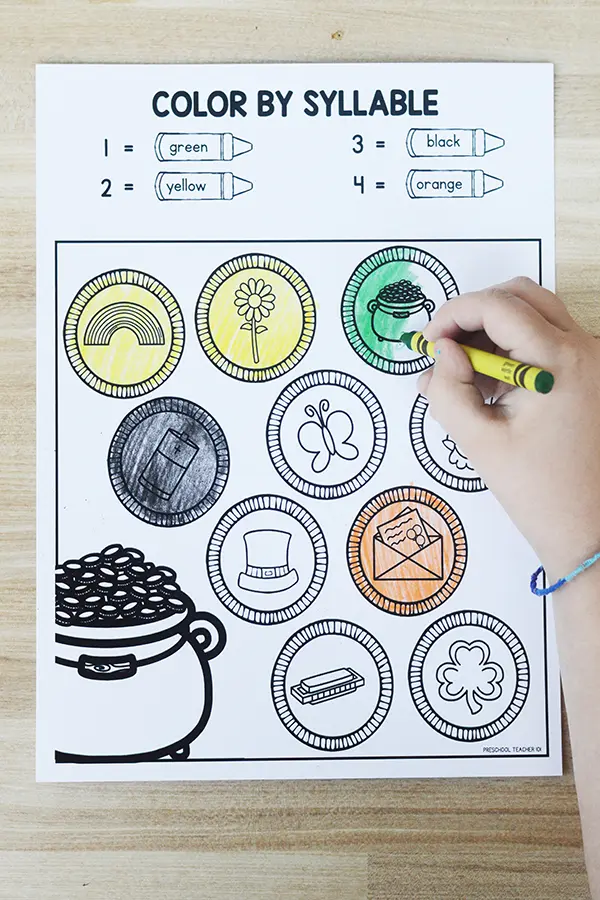
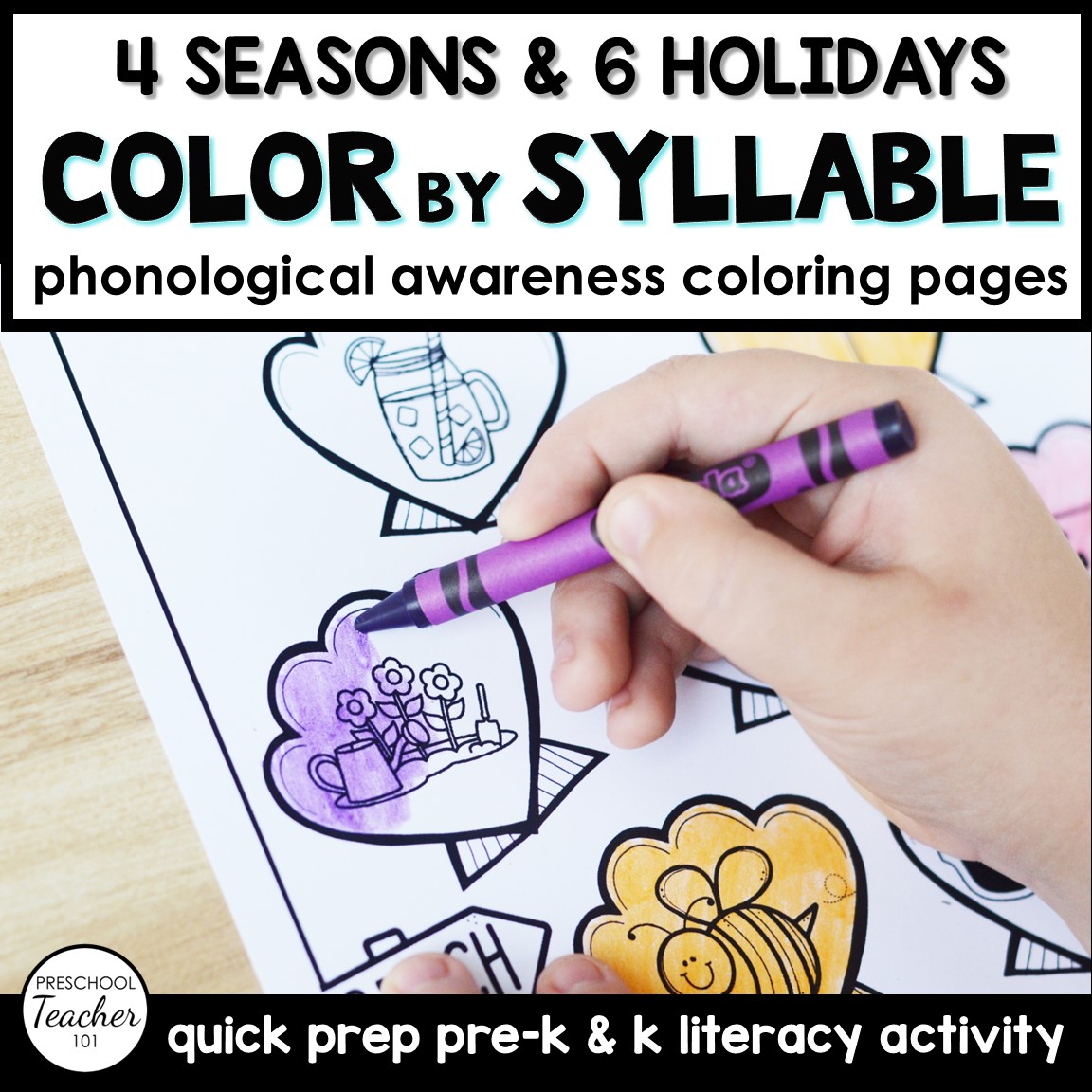
Amidst this pedagogical shift, targeted instructional resources—such as the newly released St. Patrick’s Day Color by Syllable literacy packets and their comprehensive yearlong counterparts—have emerged as crucial assets for pre-school and kindergarten teachers. Designed to seamlessly integrate into literacy centers, take-home packets, and independent stations, these no-prep activities marry the time-tested appeal of color-by-code worksheets with rigorous phonological training. By encouraging young learners to break down words into one to five distinct syllables, these resources address a critical bottleneck in early reading development: auditory segmentation. This report explores the pedagogical necessity of phonological awareness, analyzes the structural mechanics of gamified learning tools, and evaluates their broader implications for pre-K and kindergarten classrooms nationwide.
Detailed Chronology: The Evolution of Early Literacy Interventions
To understand the significance of modern phonological awareness tools, one must examine the chronological progression of how early reading instruction has evolved over the past several decades.

The Shift Toward Phonemic and Phonological Foundations (Late 20th Century)
For generations, early reading instruction oscillated between whole-language approaches and explicit phonics. However, landmark cognitive and educational research in the late 1980s and 1990s—pioneered by organizations like the National Reading Panel—crystallized the understanding that children cannot successfully map letters to sounds (phonics) if they cannot first perceive the discrete sound units of spoken language (phonological awareness). Syllable segmentation was identified as one of the earliest and most accessible milestones in this continuum. Children naturally hear the rhythmic beats in words before they can isolate individual phonemes, making syllable work the natural gateway to advanced literacy.
The Rise of No-Prep Instructional Media (2010s)
As preschool and kindergarten curricula became increasingly rigorous, educators faced mounting pressure to deliver differentiated instruction amidst shrinking planning windows. The 2010s marked an explosion in teacher-created resources, digital marketplaces (such as Teachers Pay Teachers), and educational blogs designed to bridge the gap between academic rigor and practical classroom implementation. Teachers began moving away from rote worksheets toward hands-on, thematic literacy centers that respected the developmental realities of 4- and 5-year-olds.
The Integration of Thematic Gamification (Present Day)
Today, early childhood pedagogy emphasizes "playful learning." Recognizing that young children learn best when instruction is contextualized within familiar, celebratory themes—such as winter holidays, spring milestones, and cultural events like St. Patrick’s Day—curriculum developers have refined color-by-code frameworks. By transforming dry phonetic drills into visual puzzle-solving exercises, contemporary resources like the Color by Syllable series represent the maturation of this pedagogical design. These tools allow educators to meet diverse student needs without sacrificing instructional time to extensive material preparation.

Supporting Context & Metrics: The Science of Syllable Segmentation
To appreciate the utility of a St. Patrick’s Day-themed syllable worksheet, one must look closely at the cognitive science governing early childhood language acquisition.
What the Data Shows on Phonological Processing
According to longitudinal studies in developmental psycholinguistics, a child’s proficiency in phonological awareness tasks—specifically blending and segmenting—is one of the single most reliable predictors of future reading comprehension success.
- The Syllable Milestone: Children typically master syllable awareness around age four to five (pre-school and early kindergarten). Unlike individual phonemes, which are abstract and fleeting, syllables possess an inherent perceptual prominence driven by vowel nuclei.
- The Cognitive Load Reduction: Gamified learning mechanisms, such as color-by-number or color-by-syllable worksheets, reduce cognitive load by anchoring an abstract auditory skill (counting beats in a spoken word) to a concrete, visual reward (revealing a hidden picture).
- Classroom Efficiency Metrics: In typical early childhood settings, educators manage classrooms with high student-to-teacher ratios. No-prep literacy centers that require minimal adult scaffolding allow teachers to pull small groups for targeted remediation while independent learners reinforce core skills autonomously.
Structuring the Learning Continuum: From 1 to 5 Syllables
The comprehensive yearlong framework accompanying these seasonal activities spans a progressive 33-page developmental arc. By systematically exposing children to words ranging from single-syllable nouns to complex five-syllable vocabulary terms, the curriculum ensures scaffolded growth.

| Syllable Count | Developmental Target | Example Vocabulary Domain |
|---|---|---|
| 1 Syllable | Foundational pulse recognition; basic decoding | Cat, dog, sun, pot |
| 2 Syllables | Basic rhythm division; compound words | Sham-rock, rab-bit, rain-bow |
| 3 Syllables | Intermediate auditory segmentation | Lep-re-chaun, ca-ter-pillar |
| 4–5 Syllables | Advanced phonological stamina and vocabulary expansion | In-spec-tor, Cel-e-bra-tion |
Crucially, experts emphasize that educators must explicitly introduce and model these vocabulary terms before expecting independent student execution. Without prior semantic familiarity, a child struggling to identify the syllable count of "leprechaun" is fighting a dual battle of vocabulary retrieval and phonological processing.
Official Statements and Expert Perspectives
As early childhood frameworks continue to adapt to modern literacy standards, educational specialists and curriculum designers have voiced strong support for integrated, thematic phonological activities.
Dr. Elena Vance, a professor of early childhood literacy at the Institute for Child Development, notes:

"We often overlook how physical and visual engagement anchors auditory processing in young minds. When a child claps out the syllables of a word like ‘sham-rock’ and then translates that auditory count into a specific crayon color on a worksheet, multiple neural pathways are firing simultaneously. It transforms a passive worksheet into an active multisensory experience."
Classroom practitioners have similarly lauded the practicality of seasonal, no-prep resources. Sarah Jenkins, a veteran kindergarten educator and instructional coach, highlights the administrative and pedagogical relief provided by structured literacy stations:
- "In kindergarten, every minute counts. Between social-emotional learning, numeracy, and foundational literacy, teachers do not have hours to prep complex manipulative centers every week. Having a reliable rotation of holiday-themed color-by-syllable sheets allows us to keep centers fresh, culturally engaging, and rigorously aligned with phonological standards without burning out our prep periods."
Furthermore, curriculum developers point to the versatility of these assets across diverse educational environments. Whether deployed as morning work, fast-finisher extensions, or take-home practice sheets to bridge the home-school connection, these resources offer parents an accessible window into modern literacy instruction.

Future Outlook: The Trajectory of Early Literacy Resources
Looking ahead, the market for early childhood educational materials is poised for continued evolution, driven by a synthesis of traditional print media and targeted digital integration.
1. The Balance Between Analog and Digital
While educational technology continues to proliferate in classrooms, early childhood researchers advocate for a balanced approach. Fine-motor skill development—such as the pincer grasp required for coloring—remains critically intertwined with cognitive development in pre-K and kindergarten. Consequently, high-quality printables like the Color by Syllable series will continue to hold a foundational place in the classroom ecosystem, offering a necessary tactile break from screen-based learning.
2. Differentiated Inclusion and Universal Design
Future iterations of seasonal literacy packets are expected to lean heavily into Universal Design for Learning (UDL) principles. By providing multi-tiered worksheets that adjust syllable complexity and visual density, creators can better serve English Language Learners (ELLs) and students with speech and language exceptionalities. Ensuring that vocabulary is culturally responsive and universally accessible will remain a top priority for curriculum designers.
3. Strengthening the Home-School Partnership
As educational equity remains a central focus for school districts, providing take-home resources that require zero specialized household supplies (beyond basic crayons) ensures that all children—regardless of socioeconomic background—can practice foundational literacy skills outside of school hours. The inclusion of holiday-themed packets provides a celebratory, low-stress entry point for family engagement in literacy development.
Conclusion
The introduction of specialized instructional assets, such as the St. Patrick’s Day Color by Syllable activities and their expansive yearlong counterparts, underscores a vital truth in education: rigor and engagement are not mutually exclusive. By embedding essential phonological awareness training into playful, no-prep color-by-code formats, educators can effectively bridge the gap between auditory skill-building and joyous classroom exploration. As schools continue to prioritize evidence-based early literacy practices, tools that honor the developmental needs of young learners while easing the administrative burden on teachers will undoubtedly remain cornerstones of modern pre-K and kindergarten instruction.

