
EXECUTIVE OVERVIEW
In the modern educational landscape, early childhood literacy experts face an ongoing challenge: how to seamlessly integrate foundational pre-reading skills with engaging, low-stress classroom activities. Phonological awareness—the ability to recognize and manipulate the spoken parts of sentences and words, such as syllables, onset-rimes, and phonemes—remains one of the most critical predictors of future reading success in preschool and kindergarten students.
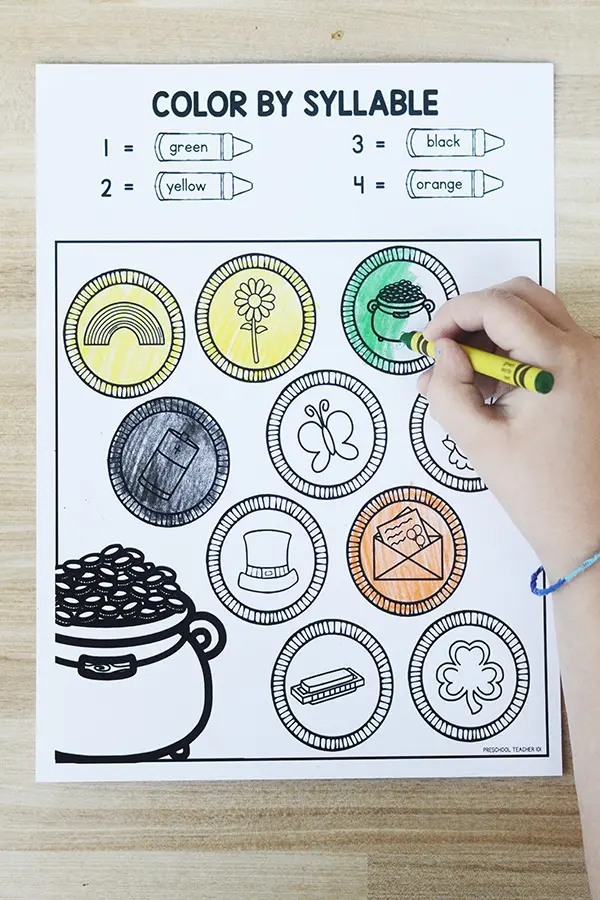
Enter the innovative "Color by Syllable" pedagogical framework, a no-prep educational resource designed to revolutionize literacy centers, take-home practice, and specialized learning modules. Spearheaded by popular educational platforms like Fantastic Fun and Learning, these seasonal and holiday-themed printables—highlighted most recently by a newly released St. Patrick’s Day collection—are transforming abstract linguistic concepts into tangible, creative exercises. By combining the classic appeal of "color-by-code" worksheets with evidence-based phonological segmentation, educators are equipped with a powerful tool to help young learners break down multisyllabic words, hear individual sounds, and master essential pre-reading competencies while celebrating seasonal milestones.

The Evolution of Early Literacy: Understanding Phonological Awareness in Pre-K and Kindergarten
To fully appreciate the impact of interactive resources like the St. Patrick’s Day Color by Syllable worksheets, one must examine the broader pedagogical shifts occurring in early childhood education. Decades of cognitive science and educational research underscore that reading comprehension is built upon a sturdy foundation of oral language skills. Among these, phonological and phonemic awareness stand out as primary building blocks.
Before children can successfully map letters to sounds (phonics), they must first understand that spoken language is composed of smaller, distinct units of sound. Syllabification—the ability to identify, count, and segment the beats within a word—is a crucial milestone in this developmental trajectory. Traditional methods of teaching syllabification often rely heavily on rote clapping, drumming, or verbal counting. While effective to a degree, these methods can sometimes fail to hold the fleeting attention spans of preschoolers and kindergarteners.
The Color by Syllable methodology bridges this gap by infusing visual and motor skill engagement into auditory processing tasks. As children evaluate a vocabulary word, segment its syllables, and match the corresponding number to a designated color code, they engage multiple sensory pathways simultaneously. This multi-sensory approach reinforces cognitive retention, turning what might otherwise be a tedious drill into an immersive, artistic puzzle.

Inside the St. Patrick’s Day Literacy Suite: Design and Implementation
The newly introduced St. Patrick’s Day-themed literacy pack exemplifies how seasonal themes can be leveraged to maintain classroom enthusiasm during transitional academic periods. Designed specifically for Pre-K and kindergarten cohorts, the free printable packet offers educators a versatile, zero-preparation solution that addresses diverse learning needs within the classroom.
Key Pedagogical Features:
- Targeted Syllable Segmentation: Worksheets are structured to help students identify words containing varying syllable counts, typically ranging from one to five syllables.
- Vocabulary Integration: Experts emphasize that children cannot accurately segment words they do not understand. The curriculum encourages educators to introduce and contextualize vocabulary terms—such as "shamrock," "leprechaun," "rainbow," and "horseshoe"—before students attempt independent work.
- Differentiation for Fast Finishers: The flexible design of the printables makes them ideal for literacy centers, morning work, or as a meaningful assignment for students who complete core tasks ahead of schedule.
- Home-School Connection: With simple printing requirements, teachers can easily send packets home for family-guided practice, reinforcing classroom lessons in a domestic setting.
By embedding these cognitive exercises within festive iconography, the activity reduces math and reading anxiety, framing literacy acquisition as a rewarding, playful challenge rather than an intimidating academic hurdle.
Scaling the Curriculum: The Comprehensive Yearlong Framework
While holiday-themed activities capture immediate student interest, early childhood educators require sustained, systematic resources to guide learners through a full academic year. Recognizing this demand, developers have expanded the single-event worksheets into an expansive, 33-page comprehensive yearlong color-by-syllable pack.

This overarching curriculum is meticulously mapped to accompany seasonal shifts, major holidays, and recurring classroom themes. By maintaining a consistent instructional format while varying the thematic content, teachers minimize the instructional time typically lost to explaining new rules or worksheet layouts. Students instantly recognize the routine: identify the picture, speak the word aloud, clap or tap the syllables, locate the corresponding number on the key, and color the designated space.
The Yearlong Matrix Includes Syllability Modules For:
- Autumn and Harvest Themes: Back-to-school concepts, Halloween, and Thanksgiving vocabulary.
- Winter Celebrations: Snow, arctic animals, and holiday-specific imagery.
- Spring Milestones: St. Patrick’s Day, Easter, spring growth, and outdoor exploration.
- Summer and Everyday Themes: Weather, animals, community helpers, and general academic transitions.
This continuous exposure ensures that children do not merely learn syllable segmentation as a one-off skill, but rather internalize it as a fundamental linguistic strategy applicable to any new vocabulary they encounter throughout their primary education.
Expert Perspectives and Instructional Best Practices
Leading voices in early childhood education and curriculum design have increasingly championed the integration of low-prep, high-engagement worksheets that respect both student developmental needs and teacher time constraints. In an era where educators face burnout and administrative pressures, resources that require minimal preparation while adhering to rigorous standards are invaluable.

According to curriculum specialists, effective implementation of color-by-syllable activities relies heavily on explicit teacher-led modeling during initial introductions.
- The Do-First Phase: Teachers are advised to display a target image, pronounce the word clearly, and physically demonstrate syllable-clapping or chin-dropping (feeling the jaw drop for each vowel sound).
- Guided Practice: The class then processes two or three sample words collectively, ensuring that every student understands how the syllable count dictates the color choice.
- Independent Application: Once the foundational mechanics are established, students transition to independent or small-group center work, freeing the educator to circulate the room, provide targeted interventions, and assess individual phonological deficits.
Furthermore, speech-language pathologists note that structured syllabification exercises provide hidden benefits for articulation and expressive language development. As children intentionally slow down their speech to isolate syllables, they naturally practice clearer enunciation and breath control.
Future Outlook: The Intersection of Digital Accessibility and Print Literacy
As educational institutions navigate the balance between digital learning tools and traditional tactile methodologies, resources like the printable Color by Syllable packets occupy a vital niche. While tablets and interactive whiteboards offer dynamic visual stimuli, occupational therapists and early childhood educators consistently advocate for the preservation of fine motor skill development—specifically pencil grip, spatial awareness, and controlled coloring—which are inherently reinforced by physical worksheets.

Looking ahead, educational creators plan to expand these phonological awareness frameworks to encompass broader literacy domains, including onset-rime manipulation, rhyming recognition, and initial phoneme substitution. By anchoring these advanced linguistic concepts in familiar, playful formats like color-by-code art, publishers are paving the way for a generation of confident, enthusiastic readers.
For educators, homeschool parents, and literacy specialists seeking to enrich their curricula without adding administrative burdens, these printable packets represent a harmonious blend of pedagogical rigor and seasonal fun. As classrooms continue to embrace evidence-based teaching strategies wrapped in engaging themes, tools that foster both foundational skills and joyful learning will undoubtedly remain a cornerstone of early childhood education.

