
Executive Overview
In an era increasingly dominated by complex digital technologies, microprocessors, and automated software, the foundational principles of physical engineering are often overshadowed. Yet, every advanced technological marvel—from a towering skyscraper to a microscopic gear inside a mechanical watch—is fundamentally rooted in six classical devices known as simple machines: the lever, the inclined plane, the wedge, the screw, the wheel and axle, and the pulley.
Far from being relics of antiquity, these mechanical devices are the indispensable building blocks of modern engineering. They form compound machines, dictate the physics of industrial manufacturing, and serve as the cornerstone of early childhood STEM (Science, Technology, Engineering, and Mathematics) curricula. Educators, parents, and curriculum developers are increasingly emphasizing hands-on project-based learning to teach these concepts. By utilizing tactile, craft-based demonstrations—such as constructing cardboard pulleys, testing miniature marble run ramps, and assembling recycled car axles—students transcend theoretical physics and observe firsthand how work, force, and mechanical advantage govern the physical world.
This comprehensive guide explores the physics behind simple machines, details six engaging classroom and home-based projects, debunks persistent misconceptions regarding mechanical efficiency and friction, and highlights the broader educational landscape of STEM subscriptions and building toys designed to cultivate the next generation of engineers.
Detailed Chronology: The Evolution and Educational Integration of Simple Machines
The formal study of simple machines dates back to the Renaissance of mechanics in the ancient world, yet their systematic integration into modern pedagogy represents a century-long evolution in educational philosophy.
- The Ancient Foundations (c. 3rd Century BCE): Greek mathematician Archimedes is famously credited with establishing the foundational principles of applied mechanics. His rigorous study of levers, pulleys, and the screw led to his legendary declaration regarding mechanical leverage: "Give me a place to stand, and I shall move the Earth." For millennia, these principles were applied purely out of pragmatic necessity in construction, agriculture, and warfare.
- The Industrial Revolution and Formal Physics (Late 18th – 19th Century): As mechanized manufacturing emerged, the theoretical definition of "work" ($W = Fd$) was mathematically formalized. Engineers began analyzing machines not merely as tools, but as systematic exchangers of force and distance. Educational texts began incorporating mechanics into school curricula to prepare a workforce capable of operating and maintaining industrial machinery.
- The Mid-20th Century Hands-On Movement (1960s – 1980s): Educational reform movements shifted classrooms away from rote memorization toward inquiry-based learning. Educators recognized that abstract physics formulas meant little to young students unless paired with tangible experimentation. Classroom toolkits featuring wooden blocks, gears, and pulleys became standard fixtures in elementary science laboratories.
- The Modern STEM Era (2010s – Present): With the global push toward STEM literacy, simple machines experienced a renaissance. Educators began integrating recycled materials, maker-space philosophies, and subscription-based educational kits into daily lessons. Today, the teaching of simple machines has expanded beyond static textbook diagrams into dynamic, cross-disciplinary projects that prepare students for advanced robotics and engineering design challenges.
Supporting Context & Metrics: Defining Work and Mechanical Advantage
To understand why simple machines are indispensable, one must first deconstruct the physics definition of "work." In everyday language, "work" can mean typing an email, carrying groceries, or writing a report. In physics, however, work is strictly defined as the application of a force to move an object over a specific distance.
The mathematical equation governing this principle is deceptively simple:
$$W = F times d$$
(Where $W$ represents Work, $F$ represents Force or effort, and $d$ represents Distance.)
The Myth of Reduced Work
A prevalent misconception among students—and even many adults—is that simple machines reduce the total amount of work required to complete a task. In a closed physical system governed by the conservation of energy, this is false. Simple machines do not decrease the absolute amount of work ($W$); instead, they alter the trade-off between the force applied and the distance over which that force must be exerted.
By trading distance for force, simple machines provide a mechanical advantage. For example, lifting a heavy container straight up to a loading dock requires a massive amount of instantaneous force. By utilizing an inclined plane (a ramp), the required force is drastically reduced, but the operator must push the object over a much longer linear distance. The total work remains roughly equivalent (minus energy lost to thermal friction), but human muscle limitations make the task achievable only through the mechanical advantage provided by the ramp.
The Six Classical Simple Machines at a Glance
- The Lever: A rigid bar that pivots around a fixed point known as a fulcrum. Levers are categorized into three distinct classes depending on the relative positions of the fulcrum, the effort applied, and the load.
- The Inclined Plane: A flat supporting surface tilted at an angle, allowing heavy loads to be raised vertically with less effort by traveling a longer horizontal or diagonal path.
- The Wedge: Essentially a moving inclined plane (or two back-to-back inclined planes) used to separate objects, lift loads, or hold objects in place.
- The Screw: An inclined plane wrapped around a cylinder or cone, converting rotational force (torque) into linear force.
- The Wheel and Axle: A circular frame (wheel) locked to a central shaft (rotation axis), which multiplies torque and reduces rotational friction during transport.
- The Pulley: A wheel with a grooved rim around which a cord passes, used to change the direction of an applied force and lift heavy loads with reduced effort.
Official Perspectives: Expert Insights on Hands-On STEM Pedagogy
Educational experts and curriculum designers universally advocate for experiential learning when introducing foundational physics to children. Traditional pedagogical approaches often introduce complex equations to students who have yet to develop spatial reasoning skills, leading to cognitive fatigue and disengagement.
According to leading STEM educators, introducing simple machines through tactile brainstorming sessions transforms abstract concepts into relatable phenomena. When a classroom is prompted to identify everyday simple machines—recognizing that a doorknob is a wheel and axle, a zipper is a series of wedges, and a flagpole utilizes a pulley—students realize they are surrounded by engineering innovations.
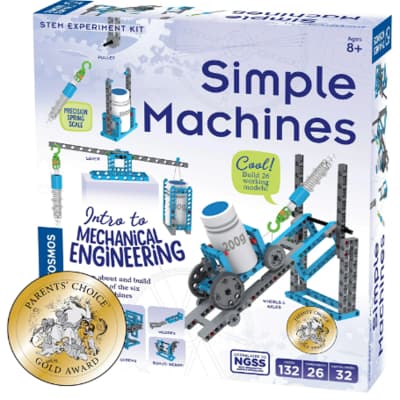
Furthermore, educational psychologists emphasize that kinesthetic learning—building, cutting, rolling, and lifting—activates multiple neural pathways, greatly enhancing long-term memory retention. Whether implemented in a formal classroom environment, an after-school makerspace, or at the family kitchen table, tactile projects bridge the gap between theoretical science and practical application. For parents and educators seeking structured guidance, monthly educational subscription boxes (such as those highlighted in curated roundups like 13 Awesome (& Educational) STEM Subscription Boxes for Kids) provide guided, project-based pathways that foster lifelong engineering curiosity.
Six Fun, Hands-On Simple Machine Projects
To bring these theoretical concepts to life, educators can utilize the following hands-on, craft-based projects. These activities require minimal specialized equipment, utilizing everyday household items to demonstrate each of the six classical simple machines.
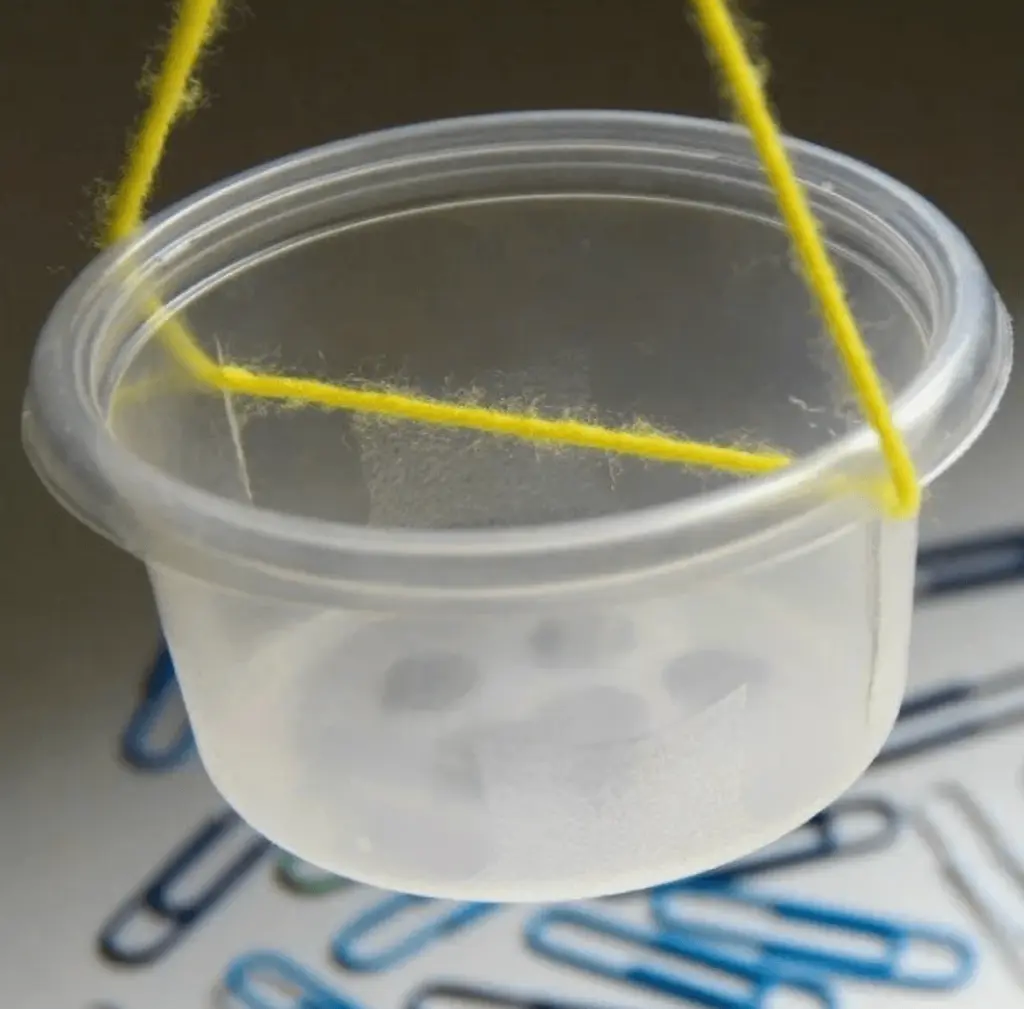
1. Make Your Own Pulley
- Target Simple Machine: Pulley
- Materials Needed: Spools or plastic wheels, string or yarn, a small basket or bucket, and a stable overhead hanging point (such as a classroom rafters or a sturdy doorway pull-up bar).
- Project Overview: Inspired by classic educational activities (such as those featured by Carrots are Orange), students construct a functional hanging pulley system. By threading a cord through a suspended wheel and attaching a small basket filled with lightweight objects, students can explore how changing the direction of pull makes lifting objects significantly easier.
- Extension Activity: Turn the project into a competitive engineering game. Have students test how many wooden blocks or toy bricks their custom pulley can lift before the string slips or the structure fails, recording their findings to analyze weight distribution and tension.
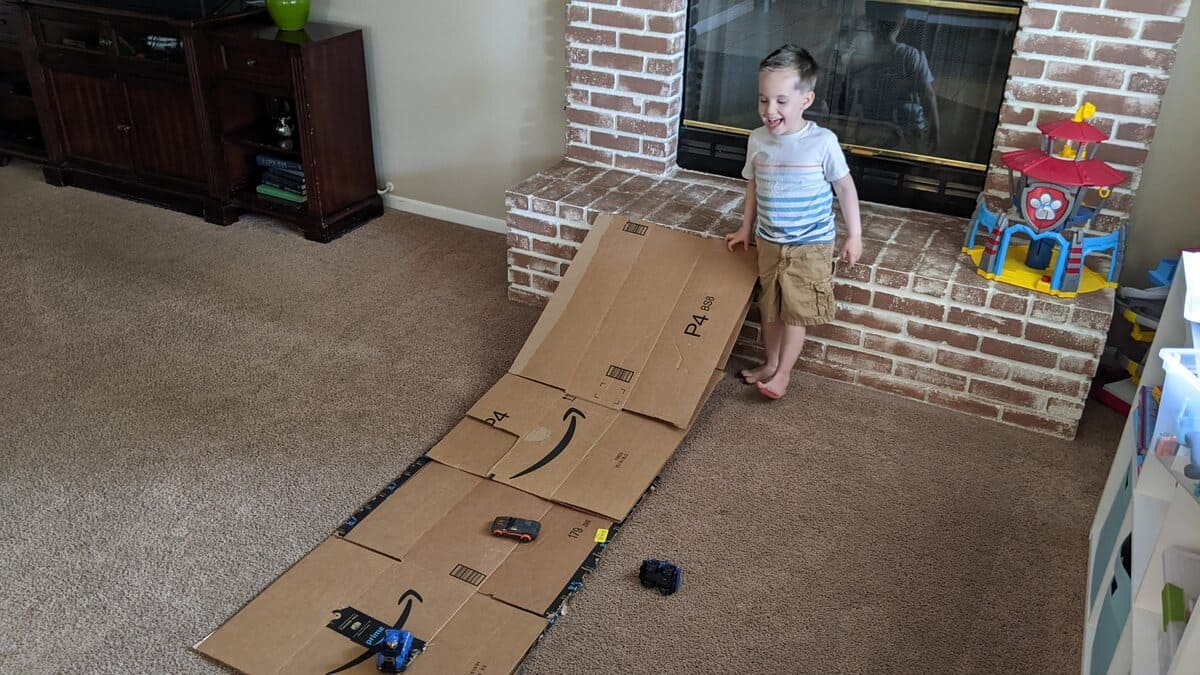
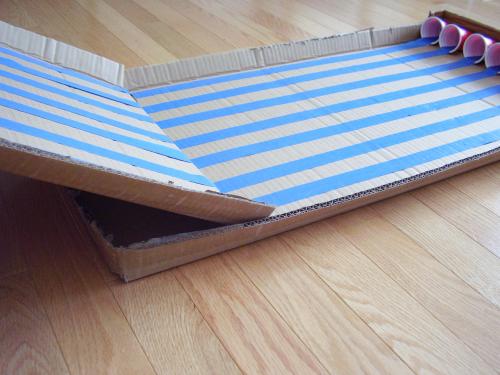
2. Marble Run Inclined Plane
- Target Simple Machine: Inclined Plane
- Materials Needed: Cardboard tubes, foam pipe insulation, painter’s tape, blocks of varying heights, and marbles or toy cars.
- Project Overview: Rather than constructing a static, flat ramp, students build an elaborate marble racecourse. By varying the steepness (angle of inclination) of different track segments, students observe how height and slope affect the acceleration and momentum of the marble.
- Educational Takeaway: This project vividly illustrates how an inclined plane reduces the immediate force required to elevate an object to a higher elevation, translating raw gravitational potential energy into kinetic motion.
3. Make a Lever with a Binder Clip
- Target Simple Machine: Lever
- Materials Needed: Large binder clips, craft sticks (popsicle sticks), small rubber bands, and lightweight weights (like pennies or paperclips).
- Project Overview: By folding the metal arms of a binder clip flat and using the central body as a sturdy fulcrum, students can slide a craft stick through the clip to create a micro-seesaw lever.
- Classroom Application: Instructors can have students place a small load (e.g., a single penny) on one end and press down on the opposite end, experimenting with how shifting the position of the fulcrum alters the amount of effort required to lift the load.
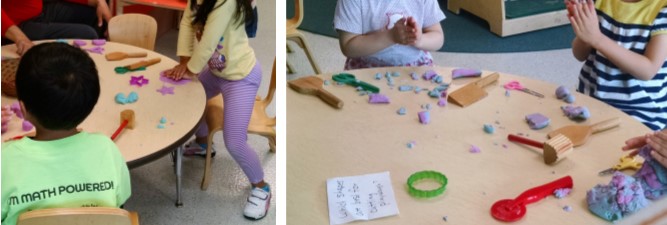
4. Splitting Play Dough with a Wedge
- Target Simple Machine: Wedge
- Materials Needed: Modeling play dough, wooden or plastic triangular wedge blocks, and blunt-edged tools.
- Project Overview: While a sharp steel axe is the textbook example of a wedge, it is entirely inappropriate for young classrooms. Instead, children can roll play dough into cylindrical logs to simulate timber. Have students attempt to cut the dough using only the flat side of their hands or blunt plastic cards—demonstrating that linear pressure alone is ineffective. Then, introduce the wedge block, showing how its tapered edge concentrates force outward to cleanly split the material.
5. Demonstrating Screws
- Target Simple Machine: Screw
- Materials Needed: A block of soft pine wood, standard steel nails, wood screws, and a manual screwdriver.
- Project Overview: This teacher-led demonstration highlights the unique mechanical advantage of the screw. First, invite a student to push a steel nail straight into the wood using only hand pressure, demonstrating the immense force required. Next, demonstrate how a wood screw easily penetrates the wood when rotated.
- Educational Takeaway: Explain that a screw is simply an inclined plane wrapped around a central shaft. The spiral threads convert gentle rotational torque into immense linear insertion force, securely holding materials together.
6. Wheel and Axle Recycled Cars
- Target Simple Machine: Wheel and Axle
- Materials Needed: Empty cardboard tubes or plastic water bottles, wooden skewers or plastic straws (axles), plastic bottle caps (wheels), hot glue or tape, and decorative craft supplies.
- Project Overview: This student-favorite project transforms domestic recycling into functional engineering marvels. Students begin by attempting to push an empty cardboard tube across a rough floor, noting the heavy sliding friction. Next, they mount wheels using axles (skewers threaded through straws).
- Extension Activity: Load the recycled vehicle with heavy coins or blocks. Students immediately observe how the wheel and axle assembly drastically reduces friction and distributes weight, allowing heavy loads to roll smoothly across surfaces.
Addressing Common Misconceptions About Simple Machines
Even though simple machines are foundational concepts, several persistent misconceptions can impede deeper scientific comprehension. Educators and parents should proactively address the following points:
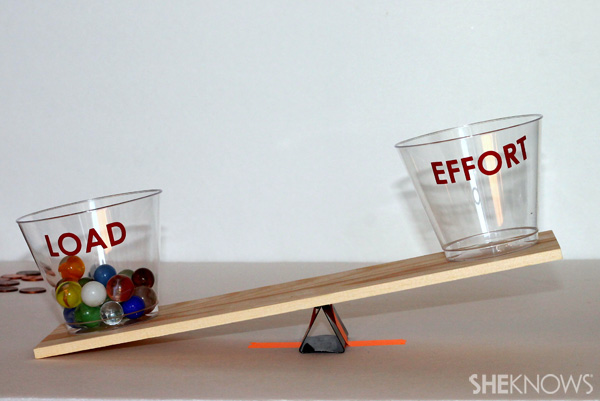
Misconception 1: All Levers Function Identically
Many students assume all levers operate the same way because they share a basic bar-and-fulcrum structure. In reality, mechanics categorize levers into three distinct classes based on the relative positioning of the Fulcrum ($F$), the Load ($L$), and the Effort ($E$):
- First-Class Levers: The fulcrum is positioned between the effort and the load (e.g., a seesaw, crowbar, or pair of scissors).
- Second-Class Levers: The load is positioned between the fulcrum and the effort (e.g., a wheelbarrow, nutcracker, or bottle opener).
- Third-Class Levers: The effort is applied between the fulcrum and the load (e.g., a pair of tweezers, human arm, or sports bats).
Misconception 2: Friction Is Always an Enemy
In many engineering contexts, friction is viewed as an unwanted source of energy loss and thermal waste. However, simple machines often rely fundamentally on friction to function correctly. A wedge (such as a doorstop) depends entirely on static friction to remain wedged in place. Similarly, a wheel and axle requires friction between the tire tread and the ground to propel a vehicle forward without slipping. Without friction, many simple machines would be entirely unusable.
Misconception 3: Simple Machines Decrease Total Work
As established by the law of conservation of energy, machines never create energy or reduce the total amount of physical work required to move an object. They merely redistribute the effort over a greater distance or alter the direction of the applied force, providing a mechanical advantage that accommodates human physiological limits.
Future Outlook: Engineering the Next Generation of Innovators
As educational paradigms continue to shift toward integrated, project-based learning, the study of simple machines remains more vital than ever. Far from being archaic concepts, simple machines serve as the foundational stepping stones for advanced robotics, mechatronics, and aerospace engineering. When students master how a pulley lifts a heavy load or how a wedge concentrates force, they are internalizing the baseline physics required to design complex automated systems, mechanical prosthetics, and sustainable urban infrastructure.
Furthermore, the integration of maker spaces, building kits, and engineering toy subscriptions ensures that children can explore these concepts outside the traditional classroom. By fostering curiosity, encouraging iterative trial-and-error, and connecting theoretical physics to tangible everyday objects, educators and parents empower children to transition from passive consumers of technology to active, creative builders of tomorrow.
Whether young engineers are constructing Rube Goldberg machines out of household recyclables or assembling precision model building kits, the journey always begins with the six fundamental simple machines. Let curiosity guide the way—happy building!

