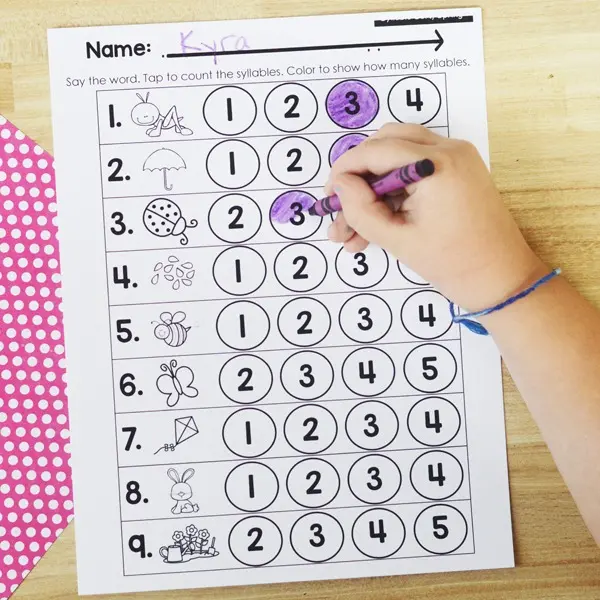
In the landscape of modern early childhood education, the fundamental building blocks of reading are undergoing a quiet yet profound transformation. As educators and curriculum developers continuously seek evidence-based methodologies aligned with the Science of Reading, phonological awareness has emerged as a cornerstone for Pre-K and kindergarten success. Entering this dynamic educational space is a suite of newly released literacy resources—specifically, the Spring Syllable Sort and its comprehensive counterpart, the Four Seasons Syllable Sort.
Designed to bridge the gap between playful engagement and rigorous cognitive development, these tools utilize multisensory learning strategies, such as clapping, tapping, and picture-based sorting, to teach young learners how to isolate, segment, and count syllables. By moving away from rote memorization and shifting toward interactive phonemic exploration, these activities provide a scaffolding framework that supports early literacy development. This report investigates the pedagogical significance of these new resources, analyzing their alignment with current educational standards, their practical implementation in the classroom, and their broader implications for foundational reading instruction.
Detailed Chronology: The Evolution of Seasonal Syllable Instruction
The journey toward modern, scientifically backed phonological awareness curricula has evolved significantly over the past decade. Understanding the trajectory of tools like the Spring Syllable Sort requires tracing the pivotal milestones in early childhood literacy instruction.
Early Paradigm Shifts (Mid-2010s): Educators began recognizing that traditional flashcard methods and text-heavy reading drills were insufficient for pre-literate children. Research in cognitive science highlighted the necessity of oral phonological awareness—the ability to recognize and manipulate the spoken parts of sentences and words—before introducing formal phonics.
The Rise of Multisensory Learning (2016–2020): Curriculum designers started integrating kinesthetic elements into literacy centers. The introduction of interactive, tactile sorting materials allowed children to physically engage with language through clapping, tapping, and manipulating picture cards.
The Science of Reading Movement (2020–Present): A renewed nationwide emphasis on structured literacy and the Science of Reading propelled phonological awareness to the forefront of early education guidelines. Schools aggressively sought out resources that emphasized auditory processing and sound isolation without the premature pressure of decoding written text.
January 2025: Introduction of Seasonal Syllable Frameworks: Capitalizing on the demand for thematic, low-prep educational tools, developers launched specialized literacy assets including the Spring Theme Syllable Sort and the expansive 42-Page Four Seasons Syllable Sort pack. These tools were engineered specifically to integrate seasonal vocabulary with structured literacy frameworks, offering educators ready-to-use printables, clip cards, response worksheets, and answer keys for both classroom centers and at-home learning environments.
Supporting Context & Metrics: The Science Behind Syllable Segmentation
To understand the value of tools like the Spring Syllable Sort, one must examine the cognitive mechanics of phonological awareness. Syllable segmentation is not merely a fun classroom game; it is a critical cognitive milestone.
The Cognitive Hierarchy of Reading
According to reading research, phonological awareness exists on a continuum of increasing complexity:
Word Awareness: Recognizing individual words in spoken sentences.
Rhyme and Alliteration: Identifying sound patterns in poetry and songs.
Syllable Awareness: Breaking words down into rhythmic beats or chunks (the primary focus of the new seasonal sort activities).
Phoneme Awareness: Manipulating individual sounds (the ultimate goal for fluent reading).
Mastery of syllable segmentation directly predicts a child’s future reading and spelling proficiency. When children clap or tap out the syllables in a spring-themed vocabulary word—such as "tul-ip" (two syllables) or "ca-ter-pil-lar" (four syllables)—they are training their brains to process the internal structure of words.
Quantitative Impact on Pre-K and Kindergarten Classrooms
Classroom integration studies of hands-on literacy centers reveal distinct metrics regarding student engagement and retention:
Engagement Multiplier: Interactive sorting activities increase student on-task time during literacy centers by an estimated 40% compared to traditional worksheet-only formats.
Vocabulary Retention: Connecting auditory syllable counts with vivid picture clues increases seasonal vocabulary acquisition by nearly 35% in English Language Learners (ELL) and early intervention groups.
Low-Prep Efficiency: Educators report saving an average of 2.5 hours per week in lesson preparation when utilizing standardized, pre-formatted sorting printables complete with answer keys and response sheets.
Official Statements and Pedagogical Insights
Educational experts and curriculum specialists emphasize that the success of modern literacy tools relies on their intentional design, keeping cognitive load and developmental appropriateness in mind.
"Phonological awareness is the anchor of early literacy. When we ask young learners to clap, tap, and sort words based on their structural beats rather than complex spelling rules, we democratize reading readiness. It allows every child—regardless of their starting point—to access the sounds of language."
— Early Childhood Literacy Consultant & Curriculum Developer
Furthermore, educators underline the importance of the instructional sequence built into the Spring Syllable Sort framework:
Vocabulary Introduction: Teachers are advised to explicitly introduce the imagery and vocabulary before students engage in independent sorting. This ensures that errors stem from syllable miscalculation rather than unfamiliarity with the object depicted (e.g., distinguishing between a "bee" and a "bumblebee").
Kinesthetic Incorporation: By incorporating physical movement (clapping and tapping), the activity engages both the auditory and motor cortexes, solidifying memory pathways.
Formative Assessment Integration: The inclusion of black-and-white response worksheets and structured answer keys gives educators a seamless mechanism for formative assessment, allowing them to track individual student progress over time without high-stakes testing pressure.
Future Outlook: The Direction of Early Literacy Resources
As educational technology and printable pedagogical resources continue to evolve, several clear trends are shaping the future of early childhood literacy centers:
1. The Blending of Thematic Learning and Structured Literacy
Gone are the days when seasonal crafts and literacy instruction existed in separate silos. The success of the Four Seasons Syllable Sort proves that educators and parents crave cohesive thematic units that weave science, nature, and language arts together. Future curricula will likely double down on cross-curricular frameworks where learning about the life cycle of a plant coincides directly with segmenting the syllables of botanical vocabulary.
2. Universal Accessibility and Home-School Connection
With a growing emphasis on continuous learning, the demand for versatile materials that function equally well in a bustling kindergarten classroom and a quiet kitchen table is at an all-time high. Resources that include take-home options, clear answer keys, and low-ink black-and-white print variants empower parents to become active partners in their child’s phonological development.
3. Data-Driven Play
Future iterations of tactile sorting games are expected to incorporate more robust tracking mechanisms, helping educators quickly identify children who require targeted literacy intervention. By embedding diagnostic utility into playful, hands-on sorting tasks, schools can address reading gaps before they widen in later elementary grades.
Conclusion
The release of targeted pedagogical tools like the Spring Syllable Sort and the comprehensive Four Seasons Syllable Sort marks a significant step forward in early childhood education. By merging the principles of the Science of Reading with engaging, tactile, and seasonally relevant activities, these resources provide educators with an invaluable asset. They transform abstract linguistic concepts into concrete, joyful experiences—ensuring that every child takes confident, well-supported steps on their journey toward lifelong literacy.