
Executive Overview
As the landscape of higher education and professional development hurtles deeper into the digital age, a quiet paradox has emerged. Educators, instructional designers, and technologists find themselves more globally connected than ever before through cloud collaboration tools, high-definition video conferencing platforms, and generative artificial intelligence engines. Yet, behind this veneer of hyper-connectivity, an underlying sense of professional and personal isolation persists.
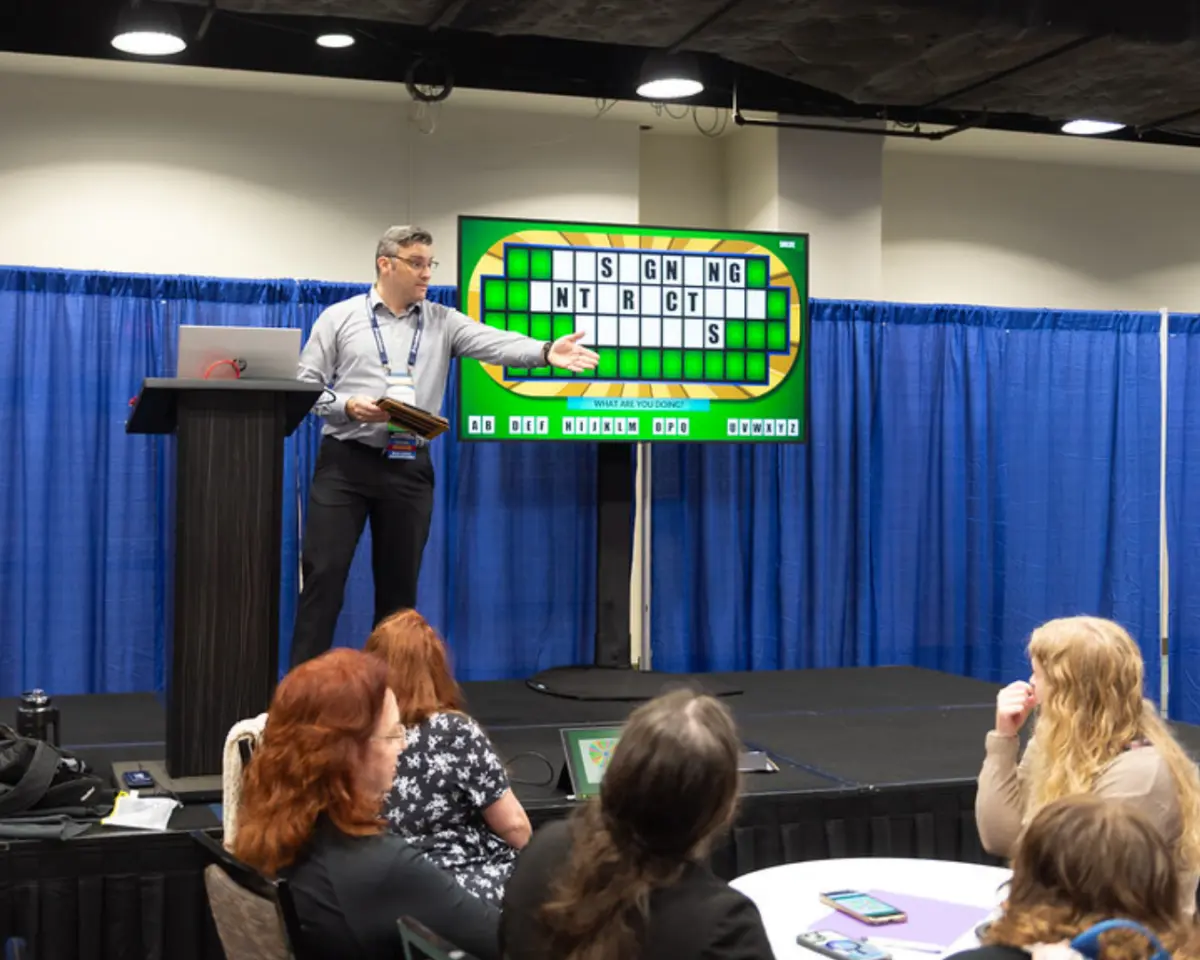
It is within this contemporary landscape that the Online Learning Consortium (OLC) is preparing for its flagship annual event: OLC Accelerate 2026. Rather than leaning exclusively into the digital efficiencies that define modern remote work, the conference’s Engagement Team is spearheading a deliberate counter-movement. The core mission for Accelerate 2026 is clear: to leverage nostalgic, low-stakes play and intentional community-building to bridge the communication gaps exacerbated by years of remote and hybrid workflows.
This special report explores the philosophy behind the 2026 Engagement Hub—a vibrant, 1980s-themed interactive space featuring giant Lite-Brittes, Skee-Ball, and curated social challenges. It examines the vital role of intentional mentorship, breaks down the psychology of conference-going for both introverts and extroverts, and shares the personal trajectory of leadership within the OLC community. Ultimately, this article investigates how a simple, unscripted invitation to share a table can lay the groundwork for lifelong professional partnerships and transform the way educational technologists view community in the twenty-first century.
Detailed Chronology: From Nashville First-Timer to Engagement Leadership
To understand the vision driving OLC Accelerate 2026, one must look back at the personal narratives that shape the conference’s leadership. The journey of modern academic engagement often begins with the same universal experience: the anxiety of walking into a massive convention hall for the very first time.
The Nashville Catalyst
Years ago, a first-time attendee arrived at an OLC conference in Nashville, Tennessee, grappling with a cocktail of emotions familiar to anyone stepping into a large-scale academic gathering for the first time: excitement, nervousness, and an acute sense of being slightly in over their head. The desire to learn and connect with peers was palpable, but the immediate visual and social reality of the venue was daunting. Pre-existing conversations echoed across the halls, creating the distinct impression that everyone else had already established their networks, leaving the newcomer on the outside looking in.
The turning point for that first-timer was an institutional staple of OLC events: the First-Timers Meeting. Designed specifically to lower the barrier of entry, this orientation provided a structured yet welcoming environment to step out of shell. By breaking the ice with peers seated nearby, the attendee quickly transitioned from a passive observer to an active participant, forming bonds that would anchor them for the remainder of the event.
The Power of an Unscripted Invitation
While structured meetings provide an invaluable safety net, the moments that leave a lasting mark are often entirely spontaneous. Later during that same Nashville conference, the attendee found themselves sitting alone at a table surrounded by an otherwise empty room of open seating.
A stranger walked over, paused, and asked a simple, disarming question: “Can I join you?”
With empty tables stretching out in all directions, the visitor could have sat anywhere. Instead, they consciously chose that specific table. Introductions were made, casual conversation flowed, and a relationship was forged without the aid of elaborate networking exercises, rehearsed elevator pitches, or carefully orchestrated icebreakers.
That single interaction catalyzed a professional and personal connection that endures to this day. It stands as a testament to the fact that the most impactful conference moments frequently happen outside the margins of the official agenda.
The Evolution to Leadership
That nervous first-timer did not remain an outsider. Over subsequent years, consistent attendance and active participation allowed them to find a permanent home within the OLC community. They witnessed firsthand how dedicated Engagement Chairs continuously designed inclusive environments that brought disparate individuals together through shared experiences.
Today, that same individual occupies a leadership role as an Engagement Co-Chair for OLC Accelerate 2026. Armed with a microphone and a deeply personal understanding of the first-time attendee experience, they are uniquely positioned to craft the very programs that once welcomed them into the fold. The trajectory from isolated observer to community leader underscores a central truth of the OLC ethos: the community is built and sustained by those who have walked its paths and are eager to illuminate them for others.
Supporting Context & Metrics: The Digital Dilemma and the Rise of AI
The deliberate focus on human connection at OLC Accelerate 2026 does not exist in a vacuum; it is a direct response to structural shifts in how educators, instructional designers, and academic leaders live and work.
The ChatGPT Generation of Work
We are solidly entrenched in the era of artificial intelligence and distributed workforces. For many professionals in online and digital learning, the daily routine involves waking up, logging onto a remote workspace, collaborating via digital whiteboards, teaching through virtual learning environments, and leaning heavily on generative AI models—such as ChatGPT—to brainstorm syllabi, troubleshoot code, and draft reports.
Anecdotal and observational data across the tech and education sectors point to a striking realization: many modern professionals report having more verbal or text-based interactions with artificial intelligence engines in a given week than they do with fellow human beings. While remote work and digital tools offer unmatched flexibility, efficiency, and global reach, they carry a hidden psychological toll. The friction of serendipitous, face-to-face encounters has been engineered out of our daily routines, replaced by optimized schedules and transactional digital exchanges.
Technology and Human Connection Are Not Opposites
The Online Learning Consortium has always championed technological innovation. As an organization dedicated to advancing quality online education, embracing cutting-edge digital tools is in its DNA. However, veteran OLC leaders emphasize a crucial distinction: technology and human connection do not have to be opposing forces.
Rather, as our daily environments become increasingly digital, intentional human connection becomes not just a nice-to-have, but a vital necessity. Digital platforms excel at delivering content, scaling information, and connecting us across vast geographic distances. They fall short, however, when it comes to the visceral, empathetic resonance of shared laughter, physical presence, and spontaneous eye contact.
OLC Accelerate 2026 bridges this gap by using the physical conference space as a powerful antidote to digital fatigue. The goal is not to reject technology, but to leverage the physical gathering to restore the relational balance required for sustained professional vitality.
Official Statements & Strategic Vision for OLC Accelerate 2026
As planning for OLC Accelerate 2026 reaches its zenith, the Engagement Team has released details regarding the strategic philosophy guiding this year’s attendee experience.
The Core Objective: "I Feel Connected"
While educational conferences are traditionally evaluated by the density of their academic sessions, the breadth of research presented, and the volume of notes taken, the leadership team at OLC is raising the bar for holistic conference outcomes.
"Yes, we want you to learn. Yes, we want you to come away with new ideas. But we also want you to leave saying: ‘I feel connected.’"
— OLC Engagement Leadership Team
This guiding mantra shifts the institutional key performance indicators (KPIs) of the conference. Success at Accelerate 2026 will not merely be measured by session attendance rates or evaluation scores, but by the qualitative depth of the relationships forged on-site.
The 1980s-Themed Engagement Hub: Play as a Social Catalyst
To foster this deep sense of community, the Engagement Team is rolling out a meticulously designed, 1980s-themed Engagement Hub. Far from a sterile corporate lounge, this space is engineered to disarm weary attendees through immersive nostalgia, playful competition, and shared cultural touchstones.
Key features of the Engagement Hub include:
- The Giant Lite-Brite: Inviting attendees to collaborate on luminous, colorful pixel art, sparking organic conversations as designs take shape.
- Classic Skee-Ball Lanes: Bringing physical movement and friendly arcade competition into the conference ecosystem.
- Nostalgic 1980s Trivia and Challenges: Creating low-pressure trivia teams that naturally mix veterans with first-timers.
- Curated Prizes and Activities: Providing immediate, tangible incentives for stepping out of professional comfort zones.
In addition to the arcade-inspired Hub, the team is deploying interactive initiatives such as Human Bingo. Far from a tedious corporate icebreaker, Human Bingo is intentionally structured to compel participants to venture out, interact with strangers, and uncover surprising shared interests.
The Secret of the Games
The Engagement Team is transparent about the underlying psychology of these activities: the games and activations are not the ultimate point; they are the strategic excuse.
Human beings—even highly educated academics and instructional designers—often experience social friction when initiating conversations with strangers. We worry about interrupting, saying the wrong thing, or appearing awkward. Laughter, shared play, and nostalgic environments have a scientifically proven way of lowering cortisol levels, breaking down communication barriers, and providing an immediate, socially acceptable pretext to say hello.
Future Outlook: Inclusive Engagement for Introverts and Veterans Alike
Designing a massive national conference requires balancing the diverse needs of thousands of attendees. A common misconception in conference management is that engagement strategies must cater exclusively to the archetypal extrovert—the high-energy professional who effortlessly "works the room" and collects a hundred business cards before lunch.
Redefining Engagement for Introverts
OLC Accelerate 2026 is built on the explicit recognition that engagement is for introverts, too. True community-building does not require loud voices, relentless self-promotion, or marathon networking sessions.
The conference design respects varied social batteries and professional styles by offering multiple entry points to community:
- Low-Intensity Participation: Attendees can engage with an interactive installation for ten minutes, absorb the energy of the room, and retreat to a quiet space without social penalty.
- One-on-One Connections: Quieter, intimate spaces are prioritized for those who thrive in deep, dyadic conversations rather than large group settings.
- Autonomy of Experience: There is no single "correct" way to inhabit the OLC community. Whether an attendee spends their time deep in quiet contemplation of research posters or laughing over Skee-Ball, their presence is equally valued.
The Responsibility of the Conference Veteran
While first-time attendees require supportive onboarding, the long-term health of the OLC community heavily relies on its veteran members—those who have attended consistently for five, ten, or fifteen years.
For a veteran, walking into Accelerate is a vastly different experience than wearing a first-timer badge. They have established circles of colleagues, familiar routines, and an innate sense of navigation. Recognizing this dynamic, conference leadership issues a proactive call to action for seasoned attendees: Look outside your circle.
The actionable guidance for conference veterans is simple yet transformative:
- Notice the Solitary Attendee: If someone is standing alone looking uncertain of their next move, offer a welcoming greeting or directions.
- Open the Table: If a lone attendee is eating by themselves, approach and ask, “Can I join you?” Even if they politely decline, the gesture signals radical hospitality.
- Model the Future: When longtime members intentionally connect with newcomers, they do more than impart wisdom; they actively demonstrate to the new attendee what their own professional future within the OLC ecosystem can look like.
Conclusion: The Power of Choosing the Occupied Table
As OLC Accelerate 2026 approaches, the overarching vision extends far beyond the confines of the conference center walls. The ultimate metric of success is encapsulated in a simple parting reflection that organizers hope every participant can utter upon returning home:
"I met someone who…"
Someone they did not know upon arrival. Someone who made them laugh, challenged their pedagogical assumptions, or sparked a collaboration destined to last for years.
Building a resilient, vibrant community in the twenty-first century does not always require complex digital architectures or massive institutional programs. Sometimes, all it takes is a sea of open tables—and the conscious, courageous choice to walk over, sit down at an occupied one, and say hello.

