
Executive Overview
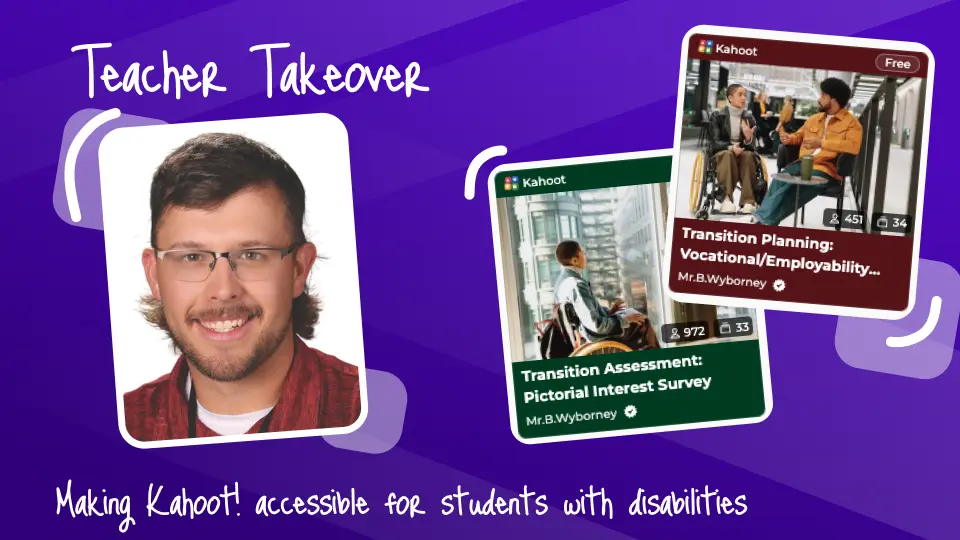
In the modern educational landscape, digital learning platforms are frequently heralded for their ability to engage general education students, but their utility in specialized learning environments remains an underexplored frontier. Entering this critical intersection is Brett Wyborney, an eight-year teaching veteran and Kahoot! Ambassador currently shaping special education in Washington state after beginning his career in Alaska. Wyborney has spent years confronting a persistent challenge in special education: the acute scarcity of age-appropriate, accessible instructional materials for students with moderate-to-severe disabilities.
Rather than accepting the limitations of conventional curricula, Wyborney leveraged the popular game-based learning platform Kahoot!, systematically adapting its interface and mechanics to bridge learning gaps. By reimagining standard quiz formats—incorporating picture-based answer keys, touch-screen optimizations, reduced answer choices, and multiple correct selections—Wyborney has transformed Kahoot! from a gamified trivia tool into a powerful, student-driven medium for functional academics, data collection, and vital life-skills transition assessments. This report examines Wyborney’s pedagogical methodologies, the mechanics of his adaptations, the impact on nonreader and nonspeaking student populations, and the broader implications for inclusive educational technology.
Detailed Chronology: The Evolution of an Inclusive Classroom Strategy
Phase 1: Identifying the Resource Deficit
When Wyborney transitioned into teaching functional academics classrooms serving students aged 14 to 22 with significant disabilities, he immediately encountered systemic barriers. Typical classrooms comprised six to eight students with profoundly diverse support profiles: most relied on one-on-one para-educators, a significant portion were nonreaders or nonspeaking, others managed visual impairments, and several came from households where English was a secondary language.
Standard instructional resources were either overwhelmingly patronizing—designed for much younger children—or utterly inaccessible to students unable to parse heavy blocks of text. Wyborney recognized that traditional edtech platforms required rigorous structural overhauls to serve these populations meaningfully. Turning to Kahoot!, he hypothesized that the platform’s visual nature and high-engagement framework could serve as a blank canvas, adaptable to the unique cognitive and physical motor needs of his students.
Phase 2: Developing Multi-Tiered Accessibility Strategies
Over successive academic terms, Wyborney pioneered specific adjustments to standard Kahoot! architectures, effectively stripping away literacy and fine-motor barriers without diluting academic rigor:
- Visual Substitution for Text: By replacing or supplementing text-based answers with photographic icons, Picture Exchange Communication System (PECS) symbols, and familiar visual markers, Wyborney unlocked participation for nonreaders. Paired with touch-screen devices, these picture-based menus bypassed the fine-motor hurdles of traditional computer mice and trackpads, affording students autonomous control over their learning experiences.
- Scaffolding via Reduced Choices: Recognizing that four-choice multiple-choice questions often introduced cognitive overload and unnecessary distractions, Wyborney frequently reduced questions to a binary choice (e.g., distinguishing a mammal via a dog versus a fish). This not only simplified decision-making but enlarged on-screen UI buttons, optimizing interactions for learners with physical impairments.
- Inclusive Multi-Correct Formats: Moving beyond rigid right-or-wrong binaries, Wyborney utilized questions with multiple correct options to survey student preferences (such as hobbies or arts interests). By marking all options as correct, every student experienced the psychological win of scoring points and appearing on the classroom leaderboard, neutralizing frustration while keeping engagement high.
Phase 3: Revolutionizing Secondary Transition Assessments
Transition planning—the roadmap helping students navigate life after high school and satisfy Individualized Education Program (IEP) milestones—traditionally depends on heavy reading, writing, or verbal interviews. For nonreaders or nonspeaking students, these protocols historically required heavy scaffolding from a 1-to-1 adult interpreter, potentially skewing authentic student preference.
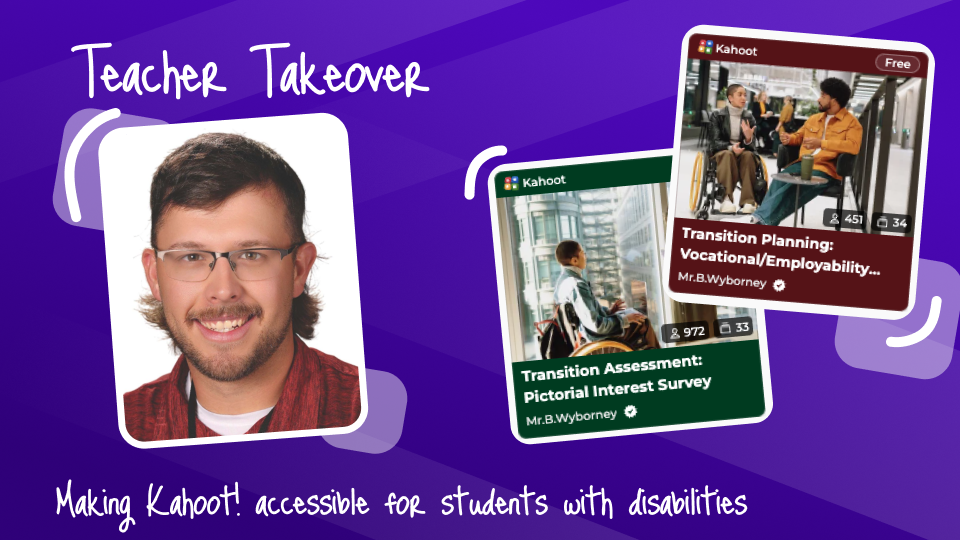
Wyborney codified his accessibility strategies into targeted tools, culminating in the creation of specialized assets like the "Transition Assessment: Pictorial Interest Survey." Designed specifically for secondary students aged 14–21, this digital assessment presents pictorial career and activity prompts, allowing learners to register feedback via intuitive visual choices (such as thumbs-up or thumbs-down indicators) independently on tablets.
Supporting Context & Metrics: The Mechanics of Inclusive EdTech
The pedagogical framework engineered by Wyborney addresses deeply entrenched operational bottlenecks in special education (SPED) classrooms. Managing a functional academics room requires balancing diverse individualized education programs (IEPs) simultaneously. By deploying adapted digital tools, educators achieve operational efficiencies while amplifying student agency.
Data Collection and Analytical Repeatability
Beyond daily instruction, special educators spend countless hours logging behavioral and academic data to satisfy compliance mandates. Wyborney discovered that shifting assessments to Kahoot! automated a significant administrative burden.
Traditional Assessment Workflow:
[1:1 Interview] ---> [Manual Note-Taking] ---> [Data Transcription] ---> [IEP Documentation]
(High time investment, prone to observer bias)

Adapted Kahoot! Workflow:
[Student Digital Input] ---> [Automated Reports Generation] ---> [Longitudinal Pattern Analysis]
(High autonomy, rapid documentation, repeatable protocols)
As students interact with the digital interface, responses are automatically compiled into comprehensive Kahoot! Reports. This feature yielded two profound advantages for Wyborney’s classroom:
- Elimination of Manual Logging Lag: Teachers could instantly review and document student performance without interrupting the flow of learning to scribble notes.
- Longitudinal Repeatability: Because the digital assessment framework remained static, Wyborney could administer identical interest and transition surveys repeatedly over weeks or months. By comparing automated data reports across time, he could evaluate whether student preferences were stable and consistent—critical insights for building defendable, student-centered High School and Beyond Plans.
Official Statements and Educator Perspectives
The core philosophy guiding Wyborney’s work rests on centering student autonomy and removing administrative or physical friction from learning. Reflecting on his transition from traditional formats to adapted digital solutions, Wyborney noted:
"I realized that Kahoot! could be the perfect platform for creating materials that were appropriate for my students’ unique needs… With a few adjustments to the way I created my kahoots, I was able to make these lessons more accessible, engaging, and useful for instruction and assessment."
Addressing the common concern that digital adaptation might compromise instructional integrity or substitute professional expertise, Wyborney offered an authoritative perspective on the supportive nature of technology:
"Kahoot! wasn’t replacing professional judgment or other transition assessment methods. Instead, it became one additional tool for collecting meaningful student data in a way that was accessible to my students."
Wyborney’s insights underscore an essential tenet of modern inclusive design: technology should not force students to adapt to rigid systems; rather, flexible platforms must be bent to accommodate the human diversity of the classroom.
Future Outlook: The Next Wave of Inclusive Digital Learning
As educational technology continues its rapid evolution, the methodologies pioneered by educators like Brett Wyborney provide a blueprint for inclusive design across the global edtech sector. The convergence of touch-screen accessibility, visual-first communication tools, and automated telemetry opens promising avenues for the future of special education:
- Mainstreaming Universal Design for Learning (UDL): Edtech developers are increasingly pressured to bake UDL principles directly into software foundations. Features that Wyborney had to manually configure—such as dynamic answer reduction, native PECS integration, and one-click audio read-alouds—are transitioning from "hacks" to native platform features.
- AI-Driven Personalization in SPED: The integration of artificial intelligence into assessment platforms holds the potential to automatically adapt question complexity, visual styling, and answer constraints based on real-time biometric or touch-based interaction metrics from individual learners.
- Elevating Student Voice in Transition Planning: As pictorial and nonverbal transition tools become more prevalent and standardized, younger cohorts of students with significant disabilities will exercise unprecedented self-determination over their post-secondary futures, fundamentally shifting the paradigm of special education outcomes.
Ultimately, Wyborney’s work demonstrates that with creativity, empathy, and technical resourcefulness, digital learning spaces can be successfully reshaped into equitable environments where every student—regardless of reading level, verbal ability, or physical dexterity—can participate, succeed, and lead.

