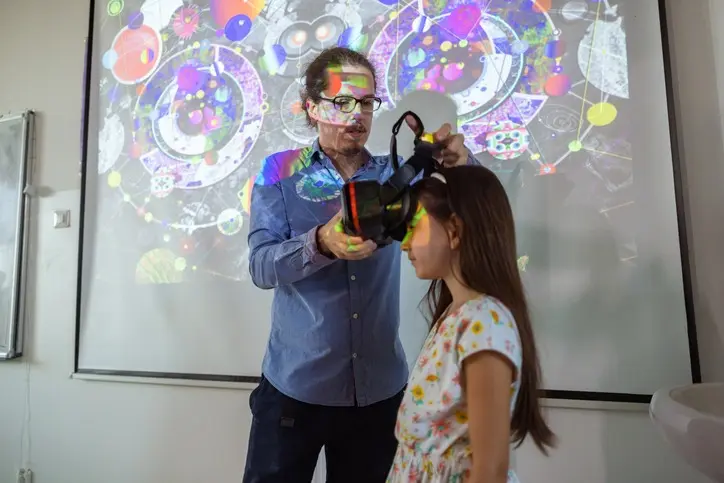
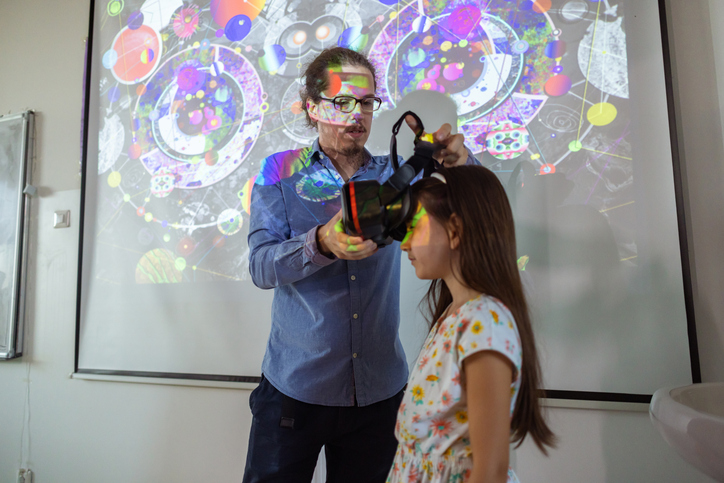
The existential debate over whether artificial intelligence belongs in the K-12 classroom has officially ended. The question is no longer if machines should have a place alongside whiteboards and textbooks, but rather how educators can harness them effectively without sacrificing academic integrity, student data privacy, or human oversight.
According to data from a comprehensive 2025 survey conducted by the Walton Family Foundation and Gallup, six in ten public school teachers now utilize artificial intelligence tools at least occasionally. For regular users, the rewards are tangible: weekly adopters report saving an average of 5.9 hours per week—amounting to roughly six weeks of recovered professional time over the course of a single academic year.
Yet, this technological integration is far from a silver bullet. While AI excels at drafting administrative documents, generating leveled reading passages, and structuring initial lesson plans, it brings distinct vulnerabilities. Invented standards citations, biased AI detectors, and severe data privacy risks remind educators that while AI can draft, the human educator must always verify.
Detailed Chronology: From Resistance to Integration
Phase 1: The Panic of Inception (2022–2023)
When generative AI models burst into the public consciousness, the immediate reaction across public school districts was defensive panic. Administrators worried about rampant academic dishonesty, essay mills, and the erosion of foundational writing skills. Early software iterations promised automated grading and instant cheat detection, sparking an arms race between student-generated text and flawed detection algorithms. During this era, major tech companies—including OpenAI—retracted their own AI detection tools due to unacceptably high rates of false positives, proving that the technology was not ready for high-stakes disciplinary actions.
Phase 2: The Practical Pivot (2024)
As the panic subsided, educators on the front lines began experimenting behind closed doors. Rather than focusing on student cheating, forward-thinking teachers discovered that LLMs (Large Language Models) could shoulder the crushing burden of after-hours administrative work. Platforms tailored specifically for educators, such as MagicSchool and Diffit, emerged to fill the gap, moving away from generic chatbots toward purpose-built educational workspaces. School districts began shifting from outright bans to establishing formalized guidelines for acceptable software use.
Phase 3: Mainstream Adoption and Institutionalization (2025–Present)
Today, AI integration has entered a mature operational phase. Institutional tech giants like Google have woven generative AI directly into educational ecosystems (such as Gemini for Workspace for Education), while major educational research firms routinely track the time-saving metrics of classroom AI adoption. The current landscape is characterized by a pragmatic focus: finding the exact intersection between administrative relief and professional responsibility.
Supporting Context & Metrics: Where the Time Goes
Adoption rates among public school educators remain nuanced. The 2025 Walton Family Foundation and Gallup survey—which polled 2,232 public school teachers—revealed that approximately 32% of educators use AI on a weekly basis, while 28% use it occasionally. Conversely, roughly 40% of teachers do not use these tools at all, highlighting a growing professional divide between tech-empowered educators and holdouts.
For those who lean into weekly use, the time savings are heavily concentrated in specific repetitive workflows:
Task Category
What the Tools Do Well
What Educators Must Still Verify
Worksheets & Assessments
Generates multiple leveled versions of the exact same core text in minutes.
Answer keys, appropriate reading lexile levels, and factual accuracy.
Lesson Planning
Produces a solid, workable first draft featuring clear objectives and activities.
Standards citations (which are frequently fabricated or misattributed).
Administrative Writing
Drafts parent-teacher emails, report card narratives, and behavior plans.
Tone consistency and specific individual student details.
Grading & Feedback
Drafts constructive feedback aligned to a specific rubric across large sets of student work.
Every numerical score before it is officially entered into a gradebook.
Translation & Accessibility
Converts class materials into home languages and alternative digital formats.
Nuance, subject-specific vocabulary, and regional linguistic registers.
The Data on English Learners and Special Education
The practical utility of these tools becomes even more critical when examining modern classroom demographics. According to National Center for Education Statistics (NCES) data, approximately 5.3 million public school students (10.6% of total enrollment) were classified as English learners as of Fall 2021, with states like Texas seeing concentrations exceeding 20%. AI-driven translation tools provide immediate, localized support for these students, though educators warn that complex subject-specific terminology still requires human intervention.
Similarly, federal data from the U.S. Department of Education notes that nearly 7.9 million students ages 3 through 21 received services under the Individuals with Disabilities Education Act (IDEA) during the 2023–24 school year, representing roughly 15% of public school enrollment. While AI tools excel at converting materials into accessible formats (with 60% of Gallup survey respondents noting improvements in accessibility), generating legal documents like Individualized Education Programs (IEPs) requires rigorous human oversight to maintain strict compliance standards.
Official Statements & Expert Insights: Navigating the Pitfalls
Despite the measurable productivity gains, educational experts and researchers urge extreme caution regarding several deeply flawed areas of educational technology.
The Fallacy of AI Detectors
One of the most persistent myths in modern education is that AI-detection software can reliably police student writing. Independent studies—including landmark research conducted by Stanford University—shattered this illusion. Researchers tested seven popular AI detectors against TOEFL essays written entirely by human authors and discovered that 61% were falsely flagged as AI-generated.
The error rates disproportionately targeted non-native English speakers. Detectors frequently penalized simple, predictable prose—the exact writing style taught to second-language learners and students mastering foundational composition.
"A percentage score is not evidence," notes education policy analyst Amanda Castillo. "An academic integrity conversation that opens with a detector score immediately puts the educator on weak footing." Instead, experts recommend relying on classic pedagogical methods: in-class writing, tracked drafting histories, and oral follow-up interviews.
The Privacy and Policy Quagmire
Data privacy represents the single biggest blind spot for adopting educators. Under federal regulations such as the Family Educational Rights and Privacy Act (FERPA) and the Children’s Online Privacy Protection Act (COPPA), dropping personally identifiable student information into a public, consumer-grade AI tool can constitute a severe compliance violation.
"A tool your district blocks is not a tool," industry guidelines emphasize. Educators are continuously reminded to scrub all student names, IDs, and personal anecdotes before engaging with external AI models, restricting unverified platforms strictly to lesson planning and resource generation.
Future Outlook: What AI Still Can’t Do
As school systems look toward the horizon, the psychological toll of AI integration remains a paradox. Interestingly, concerns are highest among the most frequent users: 57% of regular AI-using teachers surveyed by Gallup expressed fear that student AI reliance will diminish independent thinking, while 52% worried about the degradation of critical thinking skills.
Furthermore, educators must remain vigilant against predatory ed-tech marketing. Post-2023, countless software vendors have slapped the "AI-powered" label onto legacy products without adding any genuine functional upgrades.
The Path Forward for Educators
Rather than overhauling an entire curriculum overnight, experts recommend a minimalist, high-impact approach to integration:
Identify the Bottleneck: Pick the single administrative task that steals the most personal evenings (e.g., generating reading comprehension quizzes).
Test One Tool: Commit to using one approved platform consistently for a two-week trial period.
Measure the Return: If the tool genuinely gives time back without inflating verification labor, keep it. If not, discard it.
Ultimately, artificial intelligence can organize a seating chart, draft an email to a concerned parent, or level a scientific text in seconds. But it cannot build trust, read a discouraged teenager’s body language, or inspire a lifelong passion for learning. Those responsibilities remain, as they have always been, the exclusive domain of the human teacher.