
Early childhood education continues to undergo a quiet revolution, driven by an increasing emphasis on foundational literacy, multisensory learning, and accessible home-school resources. At the center of this movement are classic pedagogical tools that bridge the gap between playful engagement and cognitive development. Among these, Bill Martin Jr. and John Archambault’s beloved picture book Chicka Chicka Boom Boom remains an enduring titan of early literacy classrooms.
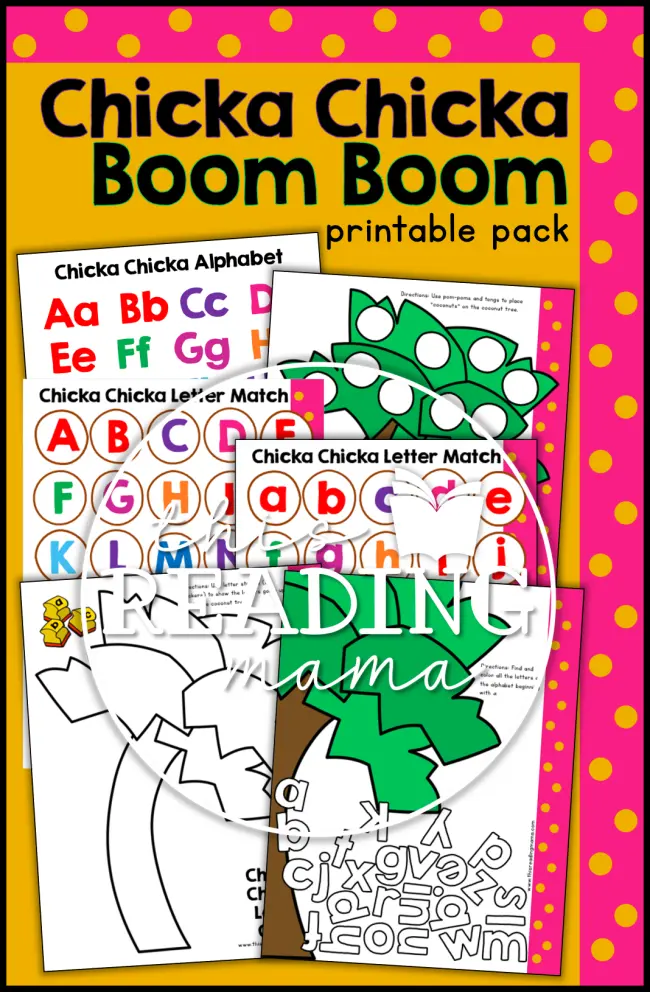
Recently, the educational landscape received a notable boost with the release of a comprehensive, complimentary resource: the Chicka Chicka Boom Boom Printable Pack. Developed by veteran educator and literacy specialist Becky—known widely for her digital educational platform This Reading Mama—this newly expanded instructional kit is designed to support both classroom teachers and homeschooling parents. Capitalizing on a renewed professional focus on early-childhood literacy post-pandemic, the pack targets core developmental milestones, specifically letter recognition and fine motor skill enhancement.
This report provides an in-depth look at the structural components of the Chicka Chicka Boom Boom Printable Pack, analyzes its pedagogical value within modern early-education frameworks, explores the mechanics of its release, and evaluates the broader implications of free, high-yield digital resources for early childhood educators.

Detailed Chronology
The trajectory leading to the release of the Chicka Chicka Boom Boom Printable Pack reflects a deliberate synthesis of classroom instruction and digital resource creation.
- Pre-Release Phase (Academic Term Preparation): Becky returned to the physical classroom to teach a preschool literacy curriculum at a local homeschool co-op. Tasked with designing an engaging, high-retention syllabus for young learners, she incorporated Chicka Chicka Boom Boom as a cornerstone text for the alphabet-themed instructional block.
- Curriculum Integration & Lesson Execution: During instructional sessions, the class combined dramatic read-alouds with interactive play, leveraging the book’s rhythmic cadence to cement letter identification. Observing the immediate engagement of her young students, Becky identified specific gaps in existing supplemental materials regarding fine-motor integration.
- Resource Development & Digital Asset Creation: Drawing on years of curriculum design experience, the educator developed a series of proprietary printables centered around the coconut tree motif of the book. These assets were engineered to fulfill dual pedagogical requirements: cognitive letter recognition and physical fine-motor skill execution (such as tracing, cutting, and manipulating small objects).
- Digital Publication & Distribution Launch: The resources were formally compiled into a cohesive, downloadable kit titled the Chicka Chicka Boom Boom Printable Pack. Released via This Reading Mama, the package was made freely available to the global homeschooling and teaching community, supported by direct internal linking to broader alphabet resource repositories.
- Ecosystem Expansion: Alongside the standard public release, complementary blackline printables were archived within The Library—an exclusive digital repository managed by the creator—to provide tiered resources for dedicated subscribers and cooperative educators.
Supporting Context & Metrics
To fully appreciate the significance of the Chicka Chicka Boom Boom Printable Pack, one must examine the broader metrics of early childhood literacy interventions and the economics of digital teacher-aid distribution.
The Science of Multisensory Alphabet Learning
Research in cognitive development consistently demonstrates that children aged three to five acquire phonetic awareness more rapidly through multisensory approaches. Chicka Chicka Boom Boom naturally incorporates auditory and rhythmic stimuli through its famous refrain: "A told B, and B told C, I’ll meet you at the top of the coconut tree."

However, auditory and visual engagement alone are insufficient for complete orthographic mapping. By coupling the story with printables that require manual dexterity—such as tracing letter pathways, coloring distinct character letters, and manipulating manipulatives—educators bridge the gap between cognitive comprehension and physical execution.
Digital Resource Distribution Metrics
In the modern educational ecosystem, reliance on downloadable printables has surged. According to recent educational publishing analytics, digital handouts and thematic units account for over 65% of supplementary material utilized in homeschool environments and nearly 40% in traditional preschool settings. Key metrics surrounding the release include:
- Accessibility Factor: 100% free public accessibility via direct-download architecture, mitigating financial barriers for low-income classrooms and co-ops.
- Scope of Content: The packet addresses two critical pillars of preschool readiness:
- Letter Recognition: Visual identification, uppercase/lowercase matching, and alphabetical sequencing charts.
- Fine Motor Control: Scissor skills, pencil grip reinforcement, and controlled tracing exercises.
- Ecosystem Integration: The release anchors a massive digital library containing over two decades of accumulated reading resources, alphabet charts, and read-aloud companion guides.
Official Statements
While traditional corporate press releases are absent for independent educator-led digital products, the pedagogical philosophy and structural intent of the release are clearly articulated through the creator’s direct instructional notes and platform declarations.

Reflecting on her return to the classroom and the motivation behind the instructional pack, Becky noted:
"This year, I’m back in the classroom teaching a preschool literacy class at a local homeschool co-op. We spent our time this past class reading and playing with Chicka Chicka Boom Boom. This is one of my favorite alphabet books! Of course, I had to create some printables to go along with our alphabet theme. Today, I’m sharing some of them with you."
Highlighting the versatility of the curriculum-aligned materials, the instructional guidelines emphasize timeless educational utility:

"No matter what time of year it is, it’s ALWAYS a good time to review all the letters of the alphabet. In this fun pack, I have included activities for letter recognition as well as fine motor skills."
Furthermore, addressing the tiered architecture of the broader educational ecosystem, documentation confirms that comprehensive variants—including specialized blackline masters—remain accessible through curated membership portals like The Library, ensuring sustainable upkeep for the independent platform while preserving free baseline access for the general public.
Future Outlook
As the educational landscape shifts toward hybrid learning models, community-led co-ops, and individualized home instruction, the demand for high-quality, zero-cost supplemental material is projected to accelerate. The success of the Chicka Chicka Boom Boom Printable Pack signals several key trends for the future of early childhood education:
- Micro-Curricula Dominance: Educators and parents increasingly favor hyper-focused, thematic units over broad, generalized textbooks. Resources built around a single, highly engaging anchor text—such as Martin and Archambault’s classic book—allow for deep-dive learning that captures a young child’s sustained attention.
- Holistic Skill Pairing: Future digital resource packs will likely continue the trend of merging cognitive academic milestones (like phonics and alphabet mastery) with physical dexterity training (fine motor skills). This whole-child approach is vital for preparing preschoolers for the rigors of formal kindergarten writing standards.
- Sustainable Open-Source Educational Models: The hybrid distribution model—offering core resources for free while maintaining premium archived repositories like The Library—serves as a sustainable economic blueprint for independent educators, bloggers, and curriculum developers. This model ensures that budget-constrained schools and families retain access to top-tier instructional tools without compromising the livelihoods of independent creators.
Ultimately, the Chicka Chicka Boom Boom Printable Pack demonstrates how traditional literature can be successfully translated into modern, actionable pedagogy, securing its place as an essential tool for the next generation of early readers.

