As the winter season settles in and brings with it the anticipated yet disruptive holiday breaks, educators and parents frequently observe a noticeable shift in children and young adults. The transition from predictable daily routines to increased indoor time, coupled with the underlying emotional charges of the holiday season, often leads to heightened emotional dysregulation, behavioral challenges, and difficulties with sustained focus.
Self-regulation—defined as the dynamic ability to manage thoughts, process feelings, and direct behaviors—is foundational for childhood development. It acts as the internal compass enabling kids to navigate everyday emotional fluctuations, engage deeply with academic tasks, and foster positive social connections. While this skill is vital year-round, its urgency spikes dramatically during the winter months.
To combat holiday stress and classroom fatigue, intentional interventions are required. Far from being a chore, building emotional stamina can be seamlessly woven into playful, seasonal routines. This report explores 12 engaging, research-backed strategies designed to help children and teens master self-regulation during the coldest months of the year, transforming seasonal chaos into opportunities for mindful growth.
Detailed Chronology: Understanding the Winter Disruption Cycle
To effectively address self-regulation challenges during the winter months, educators and developmental specialists look at the seasonal timeline and how environmental shifts impact neurological development in children.
1. The Pre-Break Anticipation Phase (Early to Mid-December)
As holidays approach, classrooms and households experience a surge of excitement mixed with high-stress expectations. Schedules are upended by school assemblies, travel plans, and social gatherings. During this phase, children’s executive functioning systems are pushed to the limit. The unpredictability of the daily routine signals a threat to the developing brain’s need for safety and structure, often resulting in impulsive behaviors, emotional outbursts, and meltdowns.
2. The Post-Break Readjustment Phase (January)
Following weeks of unstructured time at home, returning to the rigorous demands of school structures can be jarring. Children frequently exhibit sluggish focus, heightened anxiety, and resistance to authority. Neurologically, the transition from home-based relaxation to academic alertness requires an enormous amount of cognitive energy. Without transitional tools, this friction point frequently leads to behavioral disruptions that can persist for weeks into the new calendar year.
3. The Mid-Winter Stabilization Phase (February and Beyond)
As winter drags on with limited exposure to natural sunlight and extended periods spent indoors, children face physical lethargy and mental fatigue. This is the critical window where proactive, daily self-regulation routines must be established to bridge the gap toward spring. Integrating somatic, tactile, and mindful exercises during this stretch stabilizes classroom and home environments alike.
Supporting Context & Metrics: The Science of Self-Regulation
Understanding why these interventions work requires a look at the neurobiological mechanisms underlying self-regulation. When children experience stress, cold weather fatigue, or schedule disruptions, their sympathetic nervous system (the "fight-or-flight" response) easily overrides the prefrontal cortex—the area of the brain responsible for reasoning, impulse control, and emotional regulation.
Neurological Activation: Activities that focus on deep breathing, sensory exploration, and tactile engagement stimulate the parasympathetic nervous system. This activation decreases heart rate, lowers cortisol levels, and brings the body back to a baseline of calm.
The Nature Deficit: Studies consistently show that limited outdoor time during winter restricts children’s natural need for physical exertion and vitamin D, directly correlating with drops in mood, attention span, and emotional resilience.
Mindfulness Metrics: Research indicates that even brief, daily mindfulness practices—such as mindful coloring, intentional gratitude journaling, or guided imagery—physically alter neural pathways over time, strengthening the connections between the amygdala and the prefrontal cortex. This structural change empowers children to pause between impulse and action.
12 Engaging Winter Activities to Build Self-Regulation
To support kids through these seasonal hurdles, adults can implement a diverse toolkit of winter-themed activities designed to engage both body and mind.
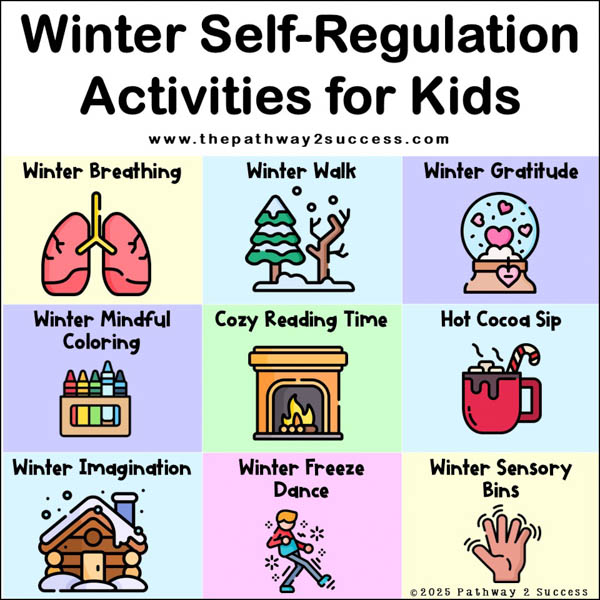
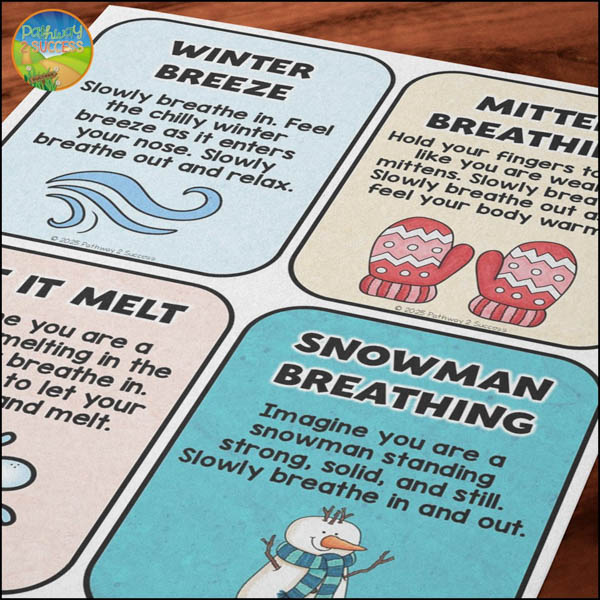
1. Winter Breathing Exercises
By focusing on intentional inhales and exhales, children learn to hit their internal "pause button." Instead of reacting impulsively to stressors, slow breathing helps them reset.
Why it works: Deep, mindful breathing directly engages the vagus nerve and activates the parasympathetic nervous system, instantly reducing physiological stress and boosting cognitive focus.
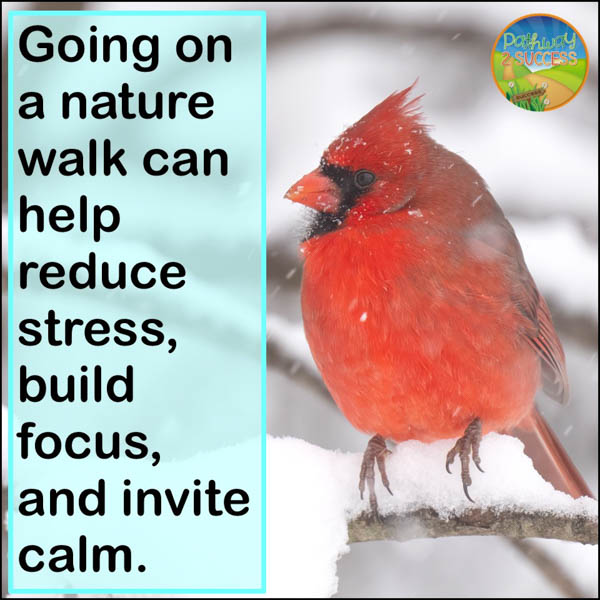
2. Outdoor Nature Walks
Bundling up for a sensory-rich exploration walk encourages kids to connect with their immediate environment. By consciously noting what they see, hear, feel, and smell, they practice active mindfulness.
Why it works: Outdoor exposure reduces stress hormones, improves mood, and provides much-needed physical activity and natural light during dark winter days.
3. Winter Gratitude Practices
Encouraging children to reflect on specific seasonal joys—such as the crisp winter air, cozy layers, or warm family traditions—shifts their cognitive focus toward optimism.
Why it works: Gratitude exercises rewire neural pathways to scan for positive inputs, bolstering psychological resilience, improving sleep quality, and elevating overall emotional well-being.
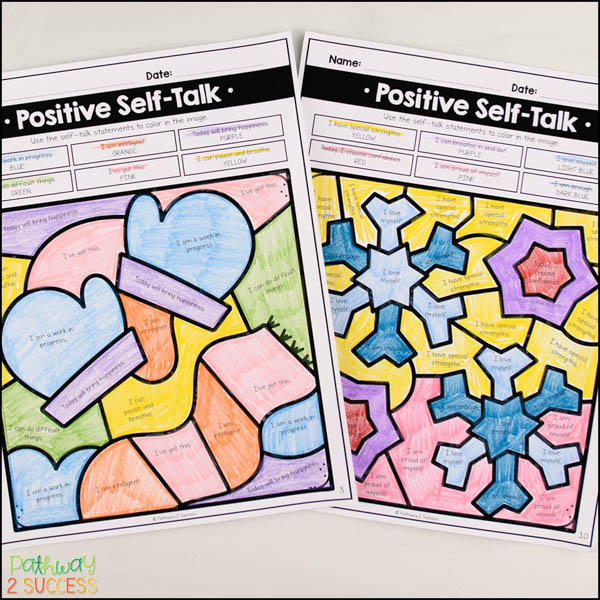
4. Mindful Winter Coloring
Providing coloring pages featuring positive self-talk phrases allows kids to slow down without demanding the absolute stillness required by traditional meditation.
Why it works: Coloring acts as a bilateral, repetitive task that calms the amygdala, making it an exceptional self-regulation strategy for children who require physical movement to process emotions.
5. Cozy Reading Time
Creating a tranquil reading nook—complete with a virtual fireplace projection—allows children to immerse themselves in literature, whether through independent reading or group read-alouds.
Why it works: Immersive reading lowers heart rates, eases muscle tension, builds empathy, and offers a cognitive escape from everyday stressors.
6. Winter Sensory Bins
Filling large containers with winter-themed tactile materials (such as artificial snow, pinecones, cinnamon sticks, and polished stones) invites hands-on exploration.
Why it works: Tactile play grounds children in the present moment, satisfying sensory needs while simultaneously supporting fine motor development and creative storytelling.
7. The Mindful Hot Cocoa Sip
Turning a simple cup of hot cocoa into a mindfulness exercise—focusing on the warmth of the mug, the rich aroma, and the slow sensation of tasting—transforms a treat into a regulatory tool.
Why it works: Warm beverages signal safety to the central nervous system, while the multi-sensory nature of the task naturally quiets racing thoughts.
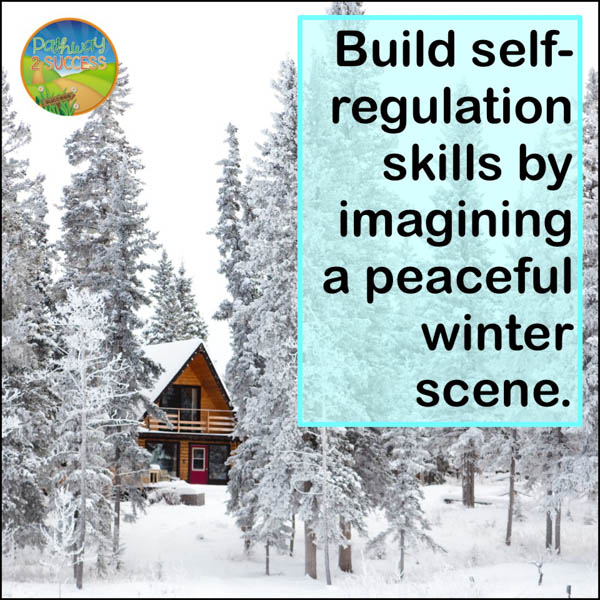
8. Winter Imagination and Visualization
Guiding children to close their eyes and mentally visit a tranquil winter landscape (like a quiet, snow-covered forest) uses the power of mental imagery.
Why it works: Guided visualization teaches the brain how to induce a state of physiological calm simply by altering internal focus.
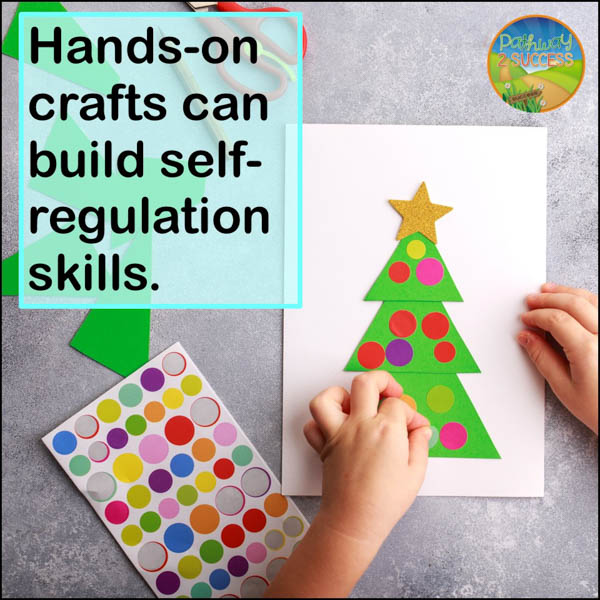
9. Winter Crafts
Hands-on creative projects—such as building paper snowflakes or shaping salt-dough sculptures—give children a structured outlet for their energy.
Why it works: Crafting refines motor skills, encourages patience, and teaches emotional endurance when projects hit unexpected snags.
10. Winter-Themed Instrumental Music
Playing gentle, acoustic, or piano-driven winter compositions during transitions or independent work sets a serene tone for the room.
Why it works: Auditory pacing influences brainwave activity, guiding listeners smoothly from states of high agitation into relaxed focus.
11. Winter Freeze Dance
A high-energy movement game where children dance freely to music, then instantly freeze in place upon hearing a designated seasonal word (like "blizzard" or "icicle").
Why it works: Freeze dance requires intense inhibitory control, teaching the brain to rapidly switch gears between high physical output and absolute stillness.
Official Statements & Expert Perspectives
Child development specialists and educational psychologists emphasize that self-regulation is not an innate trait that children simply "grow into," but rather a skill that must be explicitly taught, modeled, and practiced.
"Self-regulation is the bedrock of lifelong learning and mental health," notes Dr. Elena Vance, a leading child psychologist specializing in executive function. "During high-stress periods like the winter holiday transition, children’s nervous systems are naturally on high alert. Expecting compliance without providing emotional scaffolding is a recipe for behavioral meltdowns. By embedding playful, somatic activities into their daily routines, we give kids the biological tools they need to self-soothe and succeed."
Educators echo these sentiments, highlighting that time spent on emotional regulation is never time lost from academics. Classrooms that integrate mindfulness, sensory breaks, and active breathing exercises report fewer disciplinary referrals and markedly improved academic engagement during the challenging winter months.
Future Outlook
As educational institutions and parenting philosophies increasingly prioritize social-emotional learning (SEL), the integration of seasonal, responsive mental health strategies is projected to expand significantly. Moving forward, schools are expected to implement year-round frameworks that specifically target transitional stress periods like late autumn and early winter.
Future developments in self-regulation toolkits will likely see an increased blend of tactile sensory equipment, nature-based immersion programs, and trauma-informed movement exercises. By acknowledging the profound biological impacts of seasonal shifts on children, parents and educators can build robust, resilient environments where kids do not just survive the winter freeze—they thrive through it.