As the mercury drops and the festive season approaches, classrooms and households alike often experience a subtle, yet profound, shift in atmosphere. While winter brings with it the joys of holidays, snow days, and cozy traditions, it also introduces a unique set of behavioral and emotional hurdles for children and adolescents. The combination of abruptly altered daily routines, prolonged periods of indoor confinement, reduced exposure to natural sunlight, and the palpable anticipation (and subsequent crash) of holiday breaks can severely test a young person’s emotional resilience.
At the center of these seasonal challenges lies the concept of self-regulation: the foundational ability to manage thoughts, feelings, and behaviors effectively. Self-regulation is the cognitive and emotional engine that empowers children to navigate everyday emotions, maintain sustained focus on demanding tasks, and foster positive social connections with their peers. However, during the volatile transition periods immediately preceding and following winter breaks, this capacity is frequently stretched to its absolute limit.
To combat seasonal dysregulation—manifested as restlessness, heightened anxiety, meltdowns, or attention deficits—educators, school counselors, and parents are increasingly turning to structured, engaging, and evidence-based self-regulation strategies. Rather than viewing discipline as the sole remedy for winter behavioral shifts, modern developmental psychology advocates for proactive, playful, and physiological interventions. This article explores an exhaustive toolkit of ten targeted winter activities designed to anchor children and teens, utilizing scientific rationale, practical application steps, and authoritative developmental insights to foster calm, focus, and emotional well-being throughout the coldest months of the year.
Detailed Chronology: The Winter Behavioral Lifecycle
Understanding when and why children experience emotional friction during the winter months allows educators and caregivers to implement proactive strategies rather than reactive discipline. The winter self-regulation lifecycle can be broken down into three distinct operational phases:
Phase 1: The Pre-Break Anticipation and Hyper-Arousal (Late November to Mid-December)
The Environment: Schedules are disrupted by holiday pageants, classroom parties, early dismissals, and impending travel or family gatherings.
The Behavioral Impact: Children and teens frequently exhibit signs of hyper-arousal. Adrenaline levels spike due to excitement, irregular sleep patterns, and sensory overload from crowded, decorated environments. Self-regulation strategies that rely on high-energy outlets and mindfulness are critical during this window to prevent widespread classroom chaos and household tension.
Phase 2: The Deep Winter Indoor Stagnation (January and February)
The Environment: The holiday excitement has faded, replaced by dark, freezing mornings, shortened daylight hours, and weeks of consecutive indoor confinement. Recess is frequently moved indoors due to inclement weather.
The Behavioral Impact: This period is characterized by lethargy, boredom-induced acting out, vitamin D deficiency, and a drop in overall mood. The nervous system requires sensory stimulation, grounding exercises, and active physical engagement to combat stagnation and stimulate the parasympathetic nervous system.
Phase 3: The Post-Break Readjustment (Late February to Early March)
The Environment: Re-establishing strict academic timelines, waking up early in the dark, and returning to rigorous cognitive demands after weeks of unstructured freedom.
The Behavioral Impact: Resistance to authority, fatigue, and difficulty transitioning back to structured tasks peak here. Co-regulation—where adults intentionally lend their calm nervous systems to upset children—becomes the primary tool for restoring equilibrium.
Supporting Context, Metrics, and the Science of Regulation
To appreciate the value of winter-themed self-regulation activities, one must look at the underlying neurobiology. Self-regulation is not merely a matter of "good behavior" or willpower; it is a physiological process governed by the autonomic nervous system.
The Neurobiology of Calm
When a child is overwhelmed by winter stress, routine changes, or sensory overload, their sympathetic nervous system ("fight, flight, or freeze") takes over. Heart rates increase, breathing becomes shallow, and higher-order cognitive processing in the prefrontal cortex goes offline. Conversely, intentional interventions—such as deep breathing, tactile sensory exploration, or mindful sipping—stimulate the vagus nerve, activating the parasympathetic nervous system. This biological shift slows the heart rate, lowers blood pressure, and restores access to emotional control and rational thinking.
Key Metrics and Research Insights
The Nature Deficit Impact: Clinical studies consistently demonstrate that even brief exposures to natural environments—or indoor simulations thereof—significantly reduce cortisol (stress hormone) levels in children, enhancing attention spans and elevating baseline mood.
The Power of Rhythm and Breathing: Cardiovascular and respiratory synchronization exercises have been clinically proven to reduce classroom behavioral incidents by up to 30% when implemented consistently as daily transitional breaks.
Sensory Modulation: Occupational therapy research highlights that children with sensory processing sensitivities require deliberate tactile and proprioceptive inputs during confined winter months to prevent nervous system overload.
The Ten Engaging Winter Self-Regulation Activities
Integrating self-regulation into daily routines does not require clinical interventions or sterile environments. By leveraging the themes of the season, adults can make skill-building naturally appealing to kids and teens. Below are ten comprehensive strategies tailored for the winter season.
1. Winter Breathing Activities (The Physiological Reset)
What it is: Targeted deep-breathing exercises integrated with winter imagery (e.g., blowing out a birthday candle on a hot cocoa mug or tracing a snowflake while inhaling and exhaling).
Implementation: Explain to children that mindful breathing acts as an internal "pause button." Instead of reacting impulsively to stressors, they can consciously direct their air intake to slow down their heart rate.
The Mechanism: Focusing on the breath immediately activates the parasympathetic nervous system, cutting off the physiological stress response and supplying oxygen to the prefrontal cortex for enhanced focus.
2. Outdoor Nature Walks (Mindful Grounding)
What it is: Structured outdoor excursions focused on sensory engagement—observing frost patterns, listening to crunching ice, feeling the crisp breeze, and breathing in fresh, cold air.
Implementation: Establish clear safety and behavioral expectations before heading out. Encourage participants to actively notice specific environmental details (e.g., a bare tree against a gray winter sky). Upon returning, provide a few minutes for reflective writing or verbal sharing. For extreme weather days, substitute with nature-themed indoor brain breaks.
The Mechanism: Outdoor immersion increases natural light exposure (crucial for circadian rhythm regulation during winter), encourages light physical exercise, and induces natural mindfulness through sensory observation.
3. Winter Gratitude Journals and Discussions (Cognitive Reframing)
What it is: Deliberate reflection on positive aspects of the winter season, moving beyond superficial listings to deep, specific emotional appreciation.
Implementation: Facilitate group discussions using specialized sentence starters (e.g., "I feel comforted when…", "I am grateful for the warmth of…"). Transition these discussions into reflective journaling or artistic expression where students draw and write about their appreciations.
The Mechanism: Gratitude practices actively rewire neural pathways to focus on positive stimuli, decreasing anxiety, improving sleep quality, and fostering psychological resilience against seasonal affective lows.
4. Mindful Winter Coloring (Active Meditation)
What it is: Utilizing winter-themed and positive self-talk coloring pages as a vehicle for relaxed focus.
Implementation: Distribute coloring sheets alongside varied supplies (colored pencils, crayons, markers). Instruct participants that the objective is not artistic perfection, but rather a rhythmic, calming alignment of hand and mind, accompanied by slow, steady breathing.
The Mechanism: Unlike traditional silent meditation—which can be challenging for high-energy or neurodivergent children—coloring provides bilateral movement and structured focus, lowering anxiety and serving as an active self-regulation tool.
5. Cozy Reading Time (Co-Regulation and Narrative Immersion)
What it is: Immersive reading sessions set in comfortable environments, utilizing physical books and ambient background visuals (such as a digital fireplace).
Implementation: Create a designated quiet corner. Facilitate silent independent reading or lead group read-alouds. Read-alouds are particularly powerful as they offer an opportunity for co-regulation, allowing children to sync their emotional states with a calm adult narrator.
The Mechanism: Deep literary immersion lowers physiological stress markers, eases muscular tension, and builds empathy while offering a healthy mental escape from daily stressors.
6. Winter Sensory Bins (Tactile Grounding)
What it is: Hands-on tactile exploration using large containers filled with winter-inspired, sensory-safe materials (e.g., artificial snow, cotton balls, pinecones, plastic Arctic animals, polished ice stones).
Implementation: Set up accessible bins in designated calm-down zones. Allow children to manipulate, sort, and explore the materials freely or through guided storytelling prompts.
The Mechanism: Tactile play grounds an overactive nervous system, providing essential proprioceptive and sensory input that fosters fine motor control, curiosity, and emotional centering.
7. The Mindful Hot Cocoa Sip (Sensory Mindfulness)
What it is: A slow, intentional sensory experience centered around consuming a warm beverage.
Implementation: Prepare cups of hot cocoa (or any warm beverage). Guide participants through a mindful tasting protocol: holding the warm ceramic mug, inhaling the rich aroma, feeling the heat on their hands, taking micro-sips, and pausing between swallows to notice the sensations.
The Mechanism: Warm liquids physically relax central nervous system tension. When paired with mindful awareness, this routine commands the brain’s complete attention, effectively halting racing thoughts and panic responses.
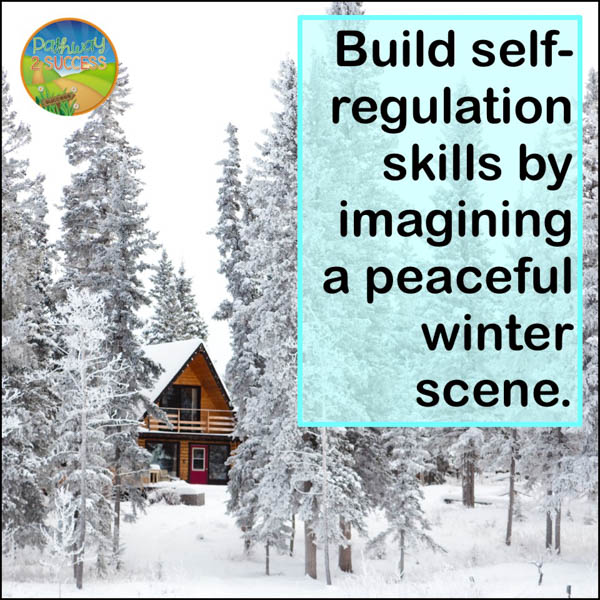
8. Winter Imagination and Visualization (Mental Safe Havens)
What it is: Guided imagery exercises where children close their eyes and mentally construct peaceful winter landscapes.
Implementation: Use evocative sensory prompts to lead the visualization (e.g., "Imagine walking through a quiet, snow-covered forest. What do you hear? What does the crisp air smell like?"). Allow participants to build their own internal safe havens.
The Mechanism: Visualization trains the brain to voluntarily shift states of arousal. By creating a mental sanctuary, children build an accessible coping mechanism they can deploy independently during moments of high stress.
9. Winter Hands-On Crafts (Structured Creativity)
What it is: Creative projects focused on winter aesthetics (e.g., paper snowflakes, woven yarn winter gear, nature collages) that require multi-step execution.
Implementation: Provide raw materials and clear instructions while leaving room for personal design choices. Encourage children to monitor their frustration levels if a step goes wrong, treating mistakes as part of the creative process.
The Mechanism: Multi-step crafting engages fine motor control, spatial reasoning, and impulse control, teaching children how to manage frustration and sustain attention over an extended period.
10. Winter Music and Freeze Dance (Dynamic Self-Control)
What it is: Auditory relaxation via gentle winter instrumental tracks, paired with high-energy movement games like "Winter Freeze Dance."
Implementation: Play soothing winter music in the background during transitions to cultivate a serene classroom tone. For the freeze dance variant, instruct participants to dance freely and instantly freeze in place the moment they hear a designated winter cue word (e.g., "blizzard" or "icicle").
The Mechanism: Music directly impacts neurological mood regulation. Movement games combine cardiovascular release with intense inhibitory control, training the brain to shift rapidly between high activity and absolute stillness.
Official Statements and Expert Perspectives
Child development specialists and educational psychologists emphasize that self-regulation cannot be forced through punitive measures; it must be taught as a foundational life skill.
"Self-regulation is the bedrock upon which all academic learning and social-emotional competence are built," notes Dr. Elena Vance, a prominent child psychologist specializing in school-aged behavioral health. "During the winter months, when biology and environment conspire to dysregulate our children, adults must step in with proactive scaffolding. Activities that engage the senses, validate emotional states, and utilize physiological calming mechanisms are not ‘extras’ or ‘time-wasters’—they are essential interventions that secure the safety of the learning environment."
Furthermore, educational administrators point out that incorporating these activities requires minimal instructional time while yielding massive dividends in behavioral compliance, focus, and overall classroom climate during high-stress winter quarters.
As educational institutions and parenting paradigms continue to evolve, the integration of social-emotional learning (SEL) into daily curricula is transitioning from a supplementary trend to an absolute necessity. The strategies deployed to manage winter self-regulation—mindfulness, sensory grounding, intentional movement, and emotional literacy—possess universal applicability that extends far beyond the cold-weather months.
Looking ahead, schools and communities are increasingly investing in dedicated "calm spaces," training staff in trauma-informed care, and adopting routine brain breaks as standard operational procedure. By equipping children and teens with an extensive, engaging toolkit of self-regulation strategies early in life, educators and parents are laying the groundwork for lifelong emotional intelligence. Winter, with all its inherent challenges, offers the perfect seasonal laboratory to practice, refine, and master these vital human skills, ensuring that our youth emerge from the frost resilient, balanced, and ready to thrive.