As the winter season settles in, educators, parents, and pediatric behavioral specialists face a recurring, predictable challenge: a notable uptick in dysregulated behavior, mounting stress, and fragmented focus among children and adolescents. The convergence of shifting daily routines, extended periods of confinement indoors, and the anticipation or aftermath of major holiday breaks creates an emotional pressure cooker for young minds.
Self-regulation—the cornerstone developmental capacity to manage thoughts, monitor emotional states, and intentionally direct physical behaviors—is tested to its limits during these colder months. Far from being an innate trait that simply appears with age, self-regulation is a learned skill that requires explicit instruction, consistent modeling, and regular practice.
Fortunately, child development experts emphasize that mastering these critical emotional and behavioral controls does not require rigid, clinical environments. Instead, self-regulation can be effectively nurtured through engaging, seasonal, and evidence-based activities. By integrating mindful breathing, tactile exploration, gratitude practices, and intentional movement into daily routines at home and in the classroom, adults can provide children with the vital tools they need to weather emotional storms. This comprehensive report examines the underlying mechanisms of winter dysregulation and outlines a robust toolkit of interactive strategies designed to foster resilience, calm, and focus in youth.
Detailed Chronology: The Winter Behavioral Shift
To understand why winter poses unique developmental hurdles, one must trace the physiological and environmental timeline of the season:
Late Autumn (Pre-Holiday Transition): As temperatures drop and outdoor play windows shrink, children begin spending significantly more hours indoors. The shift in physical containment immediately alters energy expenditure. Simultaneously, the impending holiday schedule introduces subtle cues of disruption, initiating early-stage anticipatory anxiety or over-stimulation in neurodiverse and neurotypical youth alike.
The Holiday Peak: Routines are entirely upended. Sleep schedules shift due to family gatherings, travel, and festive events. Dietary changes, sensory overload from crowded environments, and the emotional highs and lows of the holiday season strain a child’s neurological capacity for impulse control.
The Post-Break Return (January & February): Historically recognized by educators as the most volatile behavioral window of the school year, the return from winter break requires a jarring transition back to structured academic demands. Combined with shorter daylight hours—which frequently impact circadian rhythms and vitamin D levels—children often present with lethargy, irritability, heightened emotional reactivity, and severely diminished attention spans.
Late Winter Consolidation: As schools and families settle into the prolonged stretch of late winter, intentional interventions implemented during the early cold-weather months begin to yield stability. Consistent daily incorporation of self-regulation strategies helps reset neurological baselines, guiding children toward balanced emotional health as spring approaches.
Supporting Context & Metrics: The Science of Self-Regulation
Self-regulation is governed by the prefrontal cortex—the area of the brain responsible for executive functions, impulse control, and emotional modulation. However, this neural circuitry is under construction throughout childhood and adolescence. When children experience stress, cold-weather confinement, or broken routines, the amygdala (the brain’s threat-detection center) frequently hijacks the prefrontal cortex, triggering a "fight, flight, or freeze" response rather than thoughtful behavioral choice.
Clinical and educational metrics consistently highlight the efficacy of proactive coping mechanisms over reactive discipline:
Physiological Impact of Mindfulness: Research into parasympathetic nervous system activation reveals that controlled deep breathing and mindful sensory engagement lower cortisol (stress hormone) levels and reduce heart rate within minutes.
The Nature Deficit Paradox: Studies in environmental psychology demonstrate that even brief exposures to natural outdoor environments significantly decrease behavioral anxiety, enhance working memory, and improve attention spans in school-aged children.
Gratitude and Neuroplasticity: Regular gratitude journaling and reflective exercises physically alter neural pathways, reinforcing positive affective states and cultivating long-term emotional resilience.
The Role of Sensory Integration: Occupational therapy research underscores that tactile, kinesthetic activities—such as working with sensory bins or participating in structured movement games—provide the necessary proprioceptive input to help children self-soothe and re-center hyperactive or unfocused nervous systems.
Official Perspectives and Expert Insights
Child development specialists, educators, and pediatric psychologists increasingly advocate for embedding social-emotional learning (SEL) directly into core daily schedules rather than treating emotional regulation as an afterthought.
"Self-regulation is not merely about obedience or sitting quietly; it is the foundational capacity that allows a child to understand their internal landscape, recognize when they are losing control, and independently select a strategy to regain balance," notes a leading pediatric behavioral researcher. "During the winter months, when natural outlets for physical and emotional release are restricted by weather and routine changes, adults must intentionally bridge that gap through structured, engaging activities."
Educators echo this sentiment, emphasizing that punitive measures fail when applied to dysregulated children. Instead, proactive strategies—such as mindful coloring, sensory exploration, and guided visualization—transform classrooms and households into collaborative environments where emotional safety paves the way for academic and personal growth.
The 10 Engaging Winter Self-Regulation Activities for Kids and Teens
To operationalize these insights, caregivers and educators can implement a diverse suite of ten engaging, winter-themed activities designed to meet children at their developmental level.
1. Winter Breathing Activities
What it is: Deep breathing exercises framed with comforting winter imagery to help calm the body and mind.
How to execute: Explain mindful breathing as an internal "pause button." Instead of reacting impulsively to frustration, children take slow, deliberate inhales and exhales. Utilize visual cards featuring winter themes—such as tracing a snowflake while breathing in, or pretending to blow out a cold frost.
Why it works: Focuses attention on the breath, directly stimulating the vagus nerve and activating the parasympathetic nervous system to induce physical calm and mental clarity.
2. Outdoor Nature Walks
What it is: Guided outdoor explorations focused on sensory awareness—noticing sights, sounds, textures, and smells in the winter landscape.
How to execute: Establish clear behavioral expectations before bundling up. While walking, prompt children to identify subtle winter details, such as the chill of the breeze, the sound of crunching frost, or the stark silhouette of bare trees. Follow up with reflective writing or group sharing.
Why it works: Combines physical exercise and natural sunlight with mindfulness, proven to reduce stress, elevate mood, and strengthen attentional focus.
3. Winter Gratitude Reflection
What it is: Structured opportunities to identify and appreciate specific positive elements of the winter season.
How to execute: Brainstorm a list of winter comforts—such as warm beverages, family time, or the beauty of falling snow—on a shared board. Encourage children to use sentence starters or journaling prompts to articulate deeper reflections, shifting their perspective toward appreciation.
Why it works: Gratitude exercises actively rewire neural pathways to focus on positive stimuli, fostering resilience, improving sleep, and lowering everyday stress.
4. Mindful Winter Coloring
What it is: The practice of coloring intricate winter-themed pages with an emphasis on the process rather than the artistic product.
How to execute: Provide coloring supplies alongside winter or positive self-talk coloring sheets. Instruct participants to slow down, match their breathing to their strokes, and let go of perfectionism.
Why it works: Acts as a moving meditation. Because it does not require absolute stillness, coloring serves as an accessible self-regulation tool for kinesthetic learners and children with high physical energy.
5. Cozy Reading Time
What it is: Immersive reading sessions designed to foster stillness, empathy, and deep relaxation.
How to execute: Create a cozy environment by displaying a virtual fireplace on a screen, offering comfortable seating, and engaging in either independent reading or a group read-aloud.
Why it works: Deep immersion in a narrative lowers heart rates, eases muscle tension, and provides a healthy cognitive retreat from daily stressors.
6. Winter Sensory Bins
What it is: Hands-on tactile exploration utilizing bins filled with winter-themed materials.
How to execute: Fill large shallow containers with safe, tactile items such as fake snow, cotton balls, polished glass stones, pinecones, and plastic winter animals, allowing children free exploratory play.
Why it works: Tactile play grounds children in the present moment, supporting fine motor development, curiosity, and somatic self-soothing.
7. The Mindful Hot Cocoa Sip
What it is: A sensory-rich ritual that transforms a simple winter treat into a mindfulness exercise.
How to execute: Serve warm hot cocoa (or any comforting beverage). Guide students to hold the warm mug, inhale the aroma, take slow, deliberate sips, and notice every sensory aspect of the experience before swallowing.
Why it works: Combines warmth—which naturally signals the central nervous system to relax—with deliberate sensory mindfulness to quiet an overactive mind.
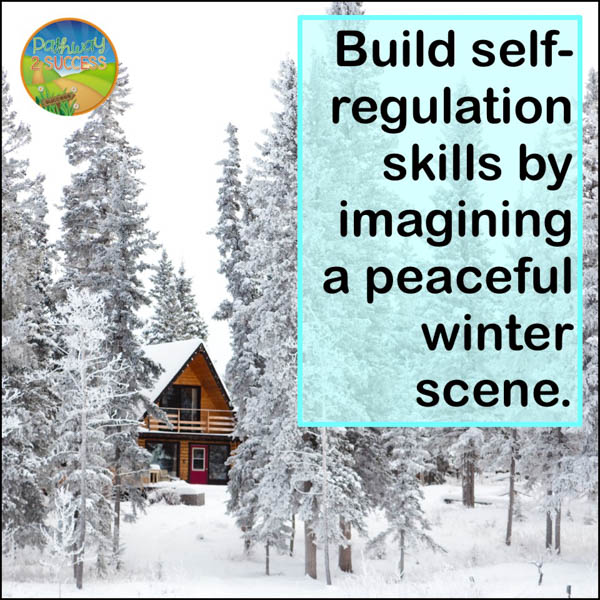
8. Winter Scene Visualization
What it is: Guided imagery exercises where children mentally construct and explore a peaceful winter landscape.
How to execute: Ask children to close their eyes while you provide gentle sensory prompts: What do you see on a quiet snowy morning? What do you hear? What does the crisp air smell like?
Why it works: Leverages the brain’s imagination to shift physiological arousal states, teaching children how to mentally transport themselves to a place of internal calm.
9. Winter Crafts and Hands-On SEL Projects
What it is: Creative, structured crafting sessions centered around winter themes or social-emotional learning concepts.
How to execute: Provide craft supplies and allow children to follow multi-step instructions to create seasonal decorations or emotional regulation tools, encouraging patience when challenges arise.
Why it works: Engages fine motor skills, requires sustained attention, and teaches frustration tolerance when a creative step does not go according to plan.
10. Winter Music and Freeze Dance
What it is: Auditory mindfulness paired with dynamic physical movement and impulse control games.
How to execute: Play calming instrumental winter music during quiet work periods, or transition to an active "Freeze Dance" where children move freely and must immediately freeze in place upon hearing a designated winter cue word.
Why it works: Music regulates mood and heart rate, while freeze games provide a high-energy, playful workout in executive functioning and physical inhibition.
Future Outlook
As educational institutions and parenting philosophies continue to evolve toward a holistic understanding of child development, the integration of emotional self-regulation strategies will undoubtedly become a permanent fixture of seasonal planning. Moving forward, researchers anticipate broader adoption of universal SEL frameworks that adapt dynamically to environmental stressors, such as seasonal affective shifts and prolonged indoor confinement.
By equipping children with proactive, engaging tools—ranging from mindful breathing to sensory play—parents and educators are not merely managing immediate winter behavioral challenges. They are laying the groundwork for lifelong emotional intelligence, ensuring that tomorrow’s adults possess the resilience to navigate any storm, regardless of the season.