
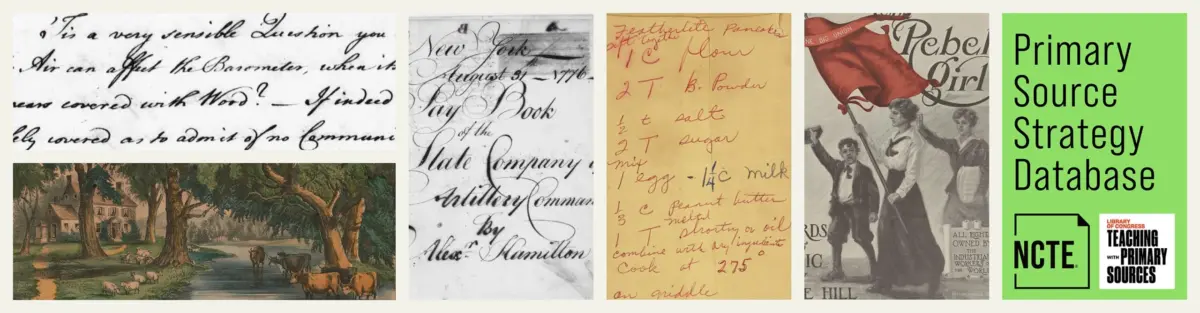
Executive Overview
In an era defined by information abundance and media saturation, modern education faces a critical challenge: teaching students not just how to read words on a page, but how to critically evaluate history, interrogate narratives, and engage deeply with the authentic artifacts of the past. To address this evolving pedagogical imperative, the National Council of Teachers of English (NCTE) has forged a dynamic, multi-year collaboration with the Library of Congress.
Operating under the aegis of the esteemed Teaching with Primary Sources (TPS) Consortium, this nationwide initiative is fundamentally reshaping how literacy teachers and students interact with history, literature, and culture. By embedding digitized archival materials directly into daily classroom instruction, the partnership bridges the gap between static textbook learning and active, inquiry-based historical investigation.
At the heart of this collaborative enterprise is a newly expanded, highly searchable digital database. Designed by more than two dozen distinguished English language arts (ELA) educators and instructional leaders, this repository houses pedagogical strategies for over 150 specific items drawn directly from the Library of Congress’s vast digitized collections.
Far beyond a simple digital archive, the platform provides educators with immediate, standards-aligned frameworks that articulate the precise literacy merits of each primary source. Complete with thematic tags such as picture book, argument, STEM, and history, the database equips teachers to dismantle traditional, narrow historical narratives. By highlighting diverse innovators, groundbreaking historical publications like the early-20th-century African American newspaper The Statesman, and real-world problem solvers, the initiative empowers a new generation of students to see themselves reflected in history while mastering vital critical-thinking and literacy skills.
Detailed Chronology: Building the Bridge Between Archives and Classrooms
The integration of primary source methodology into modern language arts and humanities curricula did not happen overnight. It represents the culmination of decades of educational reform, technological advancement in digital preservation, and targeted institutional partnerships.
The Genesis of Digital Accessibility
For generations, engaging students with authentic primary sources—such as handwritten letters, original broadsides, century-old newspapers, and historical photographs—was an educational luxury. Such materials were largely confined to specialized university archives, rare-book rooms, or elite research institutions. Teachers outside of these geographic hubs were heavily reliant on heavily edited textbook anthologies that frequently stripped historical documents of their raw context, nuance, and visual power.
The turning point arrived with the digital revolution, spearheaded by institutions like the Library of Congress. Through massive, systematic digitization efforts, millions of rare historical artifacts, manuscripts, audio recordings, and periodicals were liberated from physical vaults and uploaded to the internet. Platforms such as Chronicling America transformed historical research from an exclusive academic endeavor into a globally accessible public resource.
Forging the Partnership: NCTE and the Library of Congress
Recognizing that the sheer volume of digitized artifacts could easily overwhelm classroom teachers, educational leaders realized that access alone was insufficient. Educators needed expert guidance on how to translate raw historical data into rigorous, standards-aligned literacy lessons.
To bridge this gap, the Library of Congress established the Teaching with Primary Sources (TPS) Partner Program, inviting nationwide educational organizations to join its collaborative consortium. The National Council of Teachers of English stepped forward as a vital partner, leveraging its extensive network of English language arts professionals to pioneer methods for integrating primary sources into reading, writing, and critical-thinking instruction.
Curating the Database: Educators Leading Educators
Over the past several years, NCTE mobilized more than two dozen master teachers, curriculum developers, and ELA leaders to build a systematic framework for these archival treasures. These educators were tasked with reviewing over 150 specific items from the Library of Congress collection and developing robust pedagogical strategies for each.
Rather than treating primary sources merely as illustrations for history class, these curriculum leaders designed strategies that explicitly connect historical artifacts to literacy acquisition. They articulated how examining a 20th-century editorial or an archival photograph builds textual analysis skills, fosters argumentative writing, and deepens reading comprehension. The resulting database was organized with intuitive search functionalities, allowing teachers to filter content by format, thematic unit, historical era, and specific state content standards.
Supporting Context & Metrics: Re-centering Marginalized Narratives and Meeting State Standards
The NCTE and Library of Congress initiative is anchored in a profound pedagogical philosophy: the materials students study in school profoundly shape their understanding of agency, capability, and civic identity.
Challenging Traditional Historical Bias
Historically, mainstream educational curricula have suffered from systemic omissions. Narratives surrounding inventors, scientists, and civic leaders have disproportionately centered on white men, inadvertently transmitting the message that innovation and historical impact are the exclusive domains of a privileged few.
The NCTE database actively confronts this paradigm by intentionally spotlighting diverse historical figures and grassroots movements. For instance, instructional modules centered on Black female innovators and community organizers challenge students to question traditionally limited historical perspectives. When students encounter historical figures who solved complex, real-world problems—often without formal education, institutional backing, or the promise of fame and fortune—they develop a more expansive, inclusive definition of human ingenuity.
This representation is not merely about social equity; it is fundamentally cognitive. When diverse students see individuals who share their racial, gender, or socioeconomic backgrounds driving historical progress, engagement deepens, critical inquiry sharpens, and academic confidence soars.
Case Study in the Archive: The Statesman
A prime example of the rich archival material featured in the initiative is The Statesman, a weekly newspaper founded in 1888 and published in Denver, Colorado. Serving the vibrant African American communities across Colorado, Wyoming, Montana, Utah, and New Mexico, The Statesman acted as a vital civic conduit.
The publication offered its readers a powerful platform to "voice their opinions, assert their rights, and demand their due recognition." Beyond reporting local church events, society news, and regional happenings, the paper tackled complex national and regional issues of deep concern to African Americans in the Mountain West. Its pages featured rigorous op-eds addressing interracial marriage, the oppressive codification of Jim Crow laws, and the systemic realities of segregation.
By engaging with primary sources like The Statesman, students step beyond passive historical observers and become active analysts. They examine how marginalized communities utilized journalism as an instrument of civil rights advocacy, fostering profound discussions around media literacy, persuasive writing, and constitutional rights.
Rigorous Alignment with Educational Standards
To ensure seamless integration into contemporary classrooms, the instructional strategies housed within the database are meticulously mapped to state academic content standards. For example, modules utilizing primary sources align directly with rigorous educational frameworks, such as the New Mexico Adopted Content Standards, across multiple grade bands:
- Reading Standards for Informational Text (RI.6.1): Students learn to cite textual evidence explicitly to support analysis of what a primary source text states, as well as to draw logical inferences from historical documents.
- Reading Standards for Informational Text (RI.7.2): Learners determine two or more central ideas within a historical text, analyze how those ideas develop over the course of the document, and draft objective summaries.
- Reading for History/Social Sciences (RH.9-10.1): High school students practice citing specific textual evidence to support deep analysis of primary and secondary sources, paying acute attention to metadata such as the date and origin of the information.
- Reading for History/Social Sciences (RH.11-12.2): Advanced students determine central ideas and complex information within primary sources, producing accurate summaries that clearly articulate the relationships among key historical details and overarching ideas.
Official Statements & Pedagogical Frameworks
The structural integrity and long-term vision of the NCTE-Library of Congress initiative are rooted in collaborative expertise. Educational leaders and institutional partners have consistently emphasized the transformative power of blending literacy instruction with authentic historical artifacts.
While individual teacher-contributors shaped the granular daily strategies within the database, the overarching institutional framework underscores a unified mission: to make critical literacy accessible to all students regardless of zip code or socioeconomic background.
"Primary sources possess a unique gravity," notes pedagogical frameworks established within the TPS Consortium. "When students touch the raw text of history—whether it is a stained editorial from a regional 19th-century newspaper or an unpolished patent application from an overlooked inventor—they realize that history is not a finished painting written by victors. It is an ongoing dialogue constructed by real human beings facing complex choices."
By organizing these resources into searchable tags such as picture book, argument, and history, the initiative ensures that language arts teachers do not have to reinvent the wheel. An ELA teacher looking to build a persuasive writing unit on social reform can instantly pull primary documents regarding early civil rights organizing in the American West, seamlessly blending historical inquiry with argumentative essay instruction.
Future Outlook: The Next Frontier in Literacy Education
As educational landscapes continue to adapt to technological innovations, artificial intelligence, and shifting media ecosystems, the importance of primary-source literacy will only accelerate. The partnership between the National Council of Teachers of English and the Library of Congress is uniquely positioned to lead this educational evolution.
Expanding the Digital Repository
Looking ahead, the consortium plans to continually expand the searchable database, incorporating new items from the Library of Congress’s ever-growing digital collections. Future expansions will likely focus on an even broader array of cultural perspectives, scientific milestones, and localized regional histories, ensuring that educators nationwide have an inexhaustible supply of culturally responsive teaching tools.
Professional Development and Teacher Training
Access to a database is only as effective as the professional development supporting it. Moving forward, NCTE is scaling its outreach efforts, offering nationwide webinars, workshops, and professional learning communities designed to train educators on how to deploy primary source strategies effectively. These programs emphasize inquiry-based learning, teaching educators how to step back as lecturers and step forward as facilitators of student-led historical discovery.
Cultivating the Citizen Scholars of Tomorrow
Ultimately, the collaboration between NCTE and the Library of Congress represents a profound investment in the future of democratic discourse. In an age where misinformation can spread instantaneously, the ability to interrogate a source, analyze its origin, evaluate its bias, and construct an evidence-based argument is an essential life skill.
By teaching students to investigate the past through the unvarnished voices of those who lived it—from pioneering Black journalists in the Mountain West to ingenious inventors solving everyday problems—this initiative does more than raise standardized test scores. It cultivates critical thinkers, empathetic global citizens, and empowered individuals who understand that they, too, possess the agency to shape history.

