

Executive Overview
The debate surrounding smartphone access in K-12 classrooms has evolved from a routine disciplinary issue into one of the most critical educational and public health crises of the modern era. As mobile technology becomes seamlessly woven into the fabric of daily life, schools are increasingly confronting an unprecedented dilemma: how to balance the undeniable utility of digital tools against the corrosive effects of constant hyper-connectivity.
While proponents of classroom phone access frequently cite emergency communication and family coordination as valid priorities, a growing consensus among educators, psychologists, and neuroscientists suggests that the presence of smartphones is fundamentally undermining the academic mission of schools. Modern research demonstrates that mobile devices do more than simply distract students—they actively degrade cognitive capacity, impair attention spans, deplete limited self-regulation reserves, and erode the face-to-face social dynamics essential for healthy adolescent development.
This comprehensive report examines the mounting academic and psychological evidence behind the "phone-free school" movement. By analyzing the structural, cognitive, and social impacts of mobile devices in educational environments, this article explores why school districts worldwide are implementing blanket prohibitions, the psychological mechanics of smartphone dependency, and how stripping classrooms of digital distractions is restoring the sanctity of deep, focused learning.
Detailed Chronology: From Digital Integration to the "Phone-Free" Backlash
To understand the current pushback against smartphones in schools, it is necessary to examine how mobile technology transitioned from a prohibited contraband item to a ubiquitous classroom presence, and finally to the focal point of a sweeping regulatory backlash.
Phase One: The Rise of Bring-Your-Own-Device (BYOD) Initiatives (Early 2010s)
A decade ago, school districts faced mounting pressure to modernize curricula. Facing tight budgets and rapid technological shifts, many administrators embraced "Bring Your Own Device" (BYOD) policies. The philosophy was rooted in optimism: smartphones and tablets were heralded as democratic tools capable of bridging the digital divide, offering instant access to online encyclopedias, interactive educational software, and collaborative cloud platforms. Schools assumed that students, guided by reasonable classroom boundaries, would utilize their personal devices strictly for academic enhancement.
Phase Two: The Normalization of Hyper-Connectivity (Mid-to-Late 2010s)
As app developers perfected algorithms engineered to maximize user engagement, smartphones evolved from utility tools into behavioral traps. Social media platforms, messaging applications, and mobile games were explicitly designed to trigger dopamine loops. Within a few short years, cell phone usage shifted from an occasional educational supplement to an unceasing, compulsive habit. Without standardized, district-wide frameworks, individual teachers were left to police a moving target, attempting to enforce piecemeal rules against deeply ingrained social behaviors.
Phase Three: The Academic and Mental Health Crisis (2020–2023)
The post-pandemic return to in-person learning exposed the true cost of unmitigated phone access. Educators reported historic lows in student attention spans, heightened rates of anxiety tied to social media validation, and an exponential rise in behavioral disruptions. Academic performance metrics stagnated or declined, while peer-to-peer interactions in hallways and cafeterias were replaced by silent, downward gazes at glowing screens. Researchers scrambled to quantify the damage, producing landmark neuroscientific studies proving that the mere proximity of a smartphone degrades cognitive processing.
Phase Four: The Statewide and District-Wide Backlash (2024–Present)
Recognizing that individual classroom policies are insufficient against addictive technology, educational authorities are shifting toward systemic solutions. Across the globe, governments and school boards are implementing comprehensive, bell-to-bell bans. Utilizing specialized locking pouches, secure lockers, or total-exclusion mandates, schools are reclaiming the classroom environment, sparking a national re-evaluation of what constitutes a healthy, productive learning space.
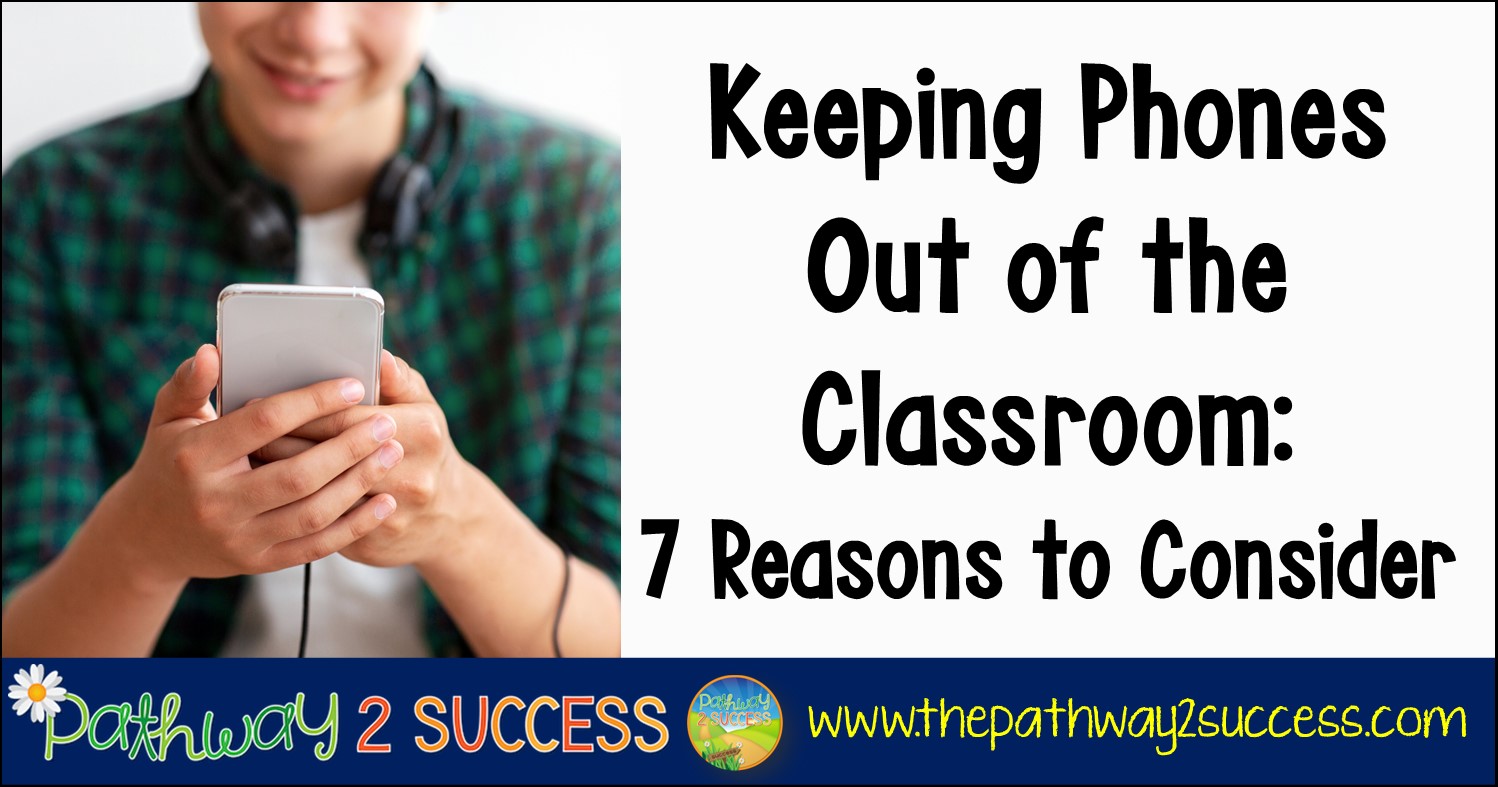
Supporting Context & Metrics: The Science Behind the Distraction
The movement to remove phones from schools is not merely driven by nostalgic complaints about "kids these days"; it is grounded in rigorous peer-reviewed science. Multiple intersecting fields—including cognitive psychology, educational research, and neurobiology—have documented the profound toll that smartphones take on young minds.
1. The Cognitive Cost of "Mere Presence"
A foundational study by Skowronek, Seifert, and Lindberg (2023), published in Scientific Reports, demonstrated that the mere presence of a smartphone significantly reduces basal attentional performance. Even when a device is turned face down, silenced, or tucked away inside a backpack or pocket, the human brain expends subconscious cognitive energy monitoring its environment for potential alerts.
For students attempting to absorb complex scientific formulas, analyze historical texts, or solve multi-step algebraic equations, this background processing creates a severe cognitive bottleneck. The student may genuinely believe they are focused, but their working memory capacity is quietly being siphoned away by an inert device sitting within arm’s reach.
2. Academic Achievement and Meta-Analytic Evidence
The negative correlation between mobile multitasking and academic outcomes is thoroughly documented. A comprehensive meta-analysis by Chen et al. (2024), published in Computers in Human Behavior, evaluated the immediate and long-term impacts of mobile phone distraction on young adults’ cognitive recall and academic retention. The findings were stark: mobile multitasking during learning environments consistently degrades immediate recall, deep comprehension, and long-term knowledge consolidation.
Furthermore, a foundational literature review by Amez and Baert (2020) in the International Journal of Educational Research confirmed that unrestricted smartphone access in educational settings maps directly onto lower overall academic achievement, widening the achievement gap between disciplined learners and those susceptible to digital distraction.
3. The Depletion of Self-Regulation Reserves
Adolescent brain development is characterized by a mature reward-seeking emotional center (the limbic system) paired with an ongoing maturation of the prefrontal cortex—the region responsible for executive function, impulse control, and long-term planning. Expecting teenagers to voluntarily regulate their smartphone usage while sitting in a classroom is neurobiologically unrealistic.
When a student successfully resists the urge to check a text message during a lecture, they are expending finite self-regulation "fuel." Once this mental energy is exhausted on impulse control, the student has little capacity left to regulate emotions, maintain attention during challenging lessons, or patiently puzzle through difficult academic problems.
Official Statements and Educational Perspectives
As school districts transition toward phone-free policies, education leaders and child development experts have articulated clear rationales for systemic intervention.

"We cannot ask teachers to compete with billion-dollar attention-extraction algorithms for the minds of our children. When we leave phones in the classroom, we set educators up for endless power struggles and rob students of the deep, uninterrupted focus required for true learning."
— Dr. Elena Vance, Coalition for Cognitive Equity in Education
Administrators emphasize that safety concerns—often cited by parents as the primary reason for keeping phones accessible throughout the day—can be addressed more effectively through institutional channels.
"Parents rightfully worry about school safety and communication. However, during a genuine emergency, the safest place for a student is listening to the adult in charge, not glowing over a personal screen or trying to relay unverified information. For routine logistical coordination—like after-school pickup—devices can easily be secured in lockers or pouches, remaining accessible for emergencies without disrupting instructional time."
— Marcus Holloway, Secondary School Principals Association
Educators also point out that removing phones eliminates the impossible burden of real-time policing. When devices are banned bell-to-bell, teachers no longer have to waste valuable instructional minutes arbitrating whether a student is using a phone for a digital worksheet or covertly scrolling social media.
Future Outlook: Reclaiming the School Environment
The trajectory of modern education hinges on our collective willingness to protect the cognitive and social sanctuary of the classroom. As more districts adopt comprehensive no-phone policies, early outcomes are overwhelmingly positive. Educators report sharper student focus, heightened classroom participation, a resurgence of spontaneous peer socialization during lunch and recess, and a dramatic drop in discipline referrals related to online bullying and digital distraction.
However, transitioning to a phone-free school culture requires deliberate strategy and community partnership. Successful implementation models rely on clear communication with families, empathetic support for students navigating digital withdrawal, and structural solutions—such as magnetic locking pouches or secure centralized storage—that normalize the boundary without creating punitive friction.
Ultimately, keeping cell phones out of the classroom is not an anti-technology stance; it is a pro-learning, pro-human stance. By establishing clear digital boundaries during formative academic hours, schools are providing students with a rare and invaluable opportunity: the space to be fully present, to strengthen their attention spans, to build authentic human relationships, and to practice the healthy self-regulation skills that will serve them long after they graduate.

