
Executive Overview
Modern parenting requires navigating an increasingly complex social landscape, but perhaps no transitional phase is as culturally distinct—or as rapidly shifting—as the early tween years. Gone are the days when pre-teens sorted themselves neatly into the traditional, cinematic high school tropes of the late 20th century: the jock, the nerd, the cheerleader, and the theater kid. According to observations from the front lines of modern domestic life, a new, highly specialized socio-cultural binary has emerged among children aged 10 to 12.
Welcome to the era of the Dragon Girl and the Sephora Girl.
This anthropological shift represents more than a mere divergence in consumer preferences or extracurricular activities; it is a profound behavioral dichotomy. While traditional sociological frameworks viewed pre-adolescence as a monolithic phase of awkward transition, contemporary data and parental testimony reveal that today’s young tweens immediately align themselves with one of two hyper-focused, highly passionate subcultures.
- The Dragon Girl is defined by literary escapism, mythical creatures, feline devotion, and short-lived, intense craft hyper-fixations. She can typically be found curled in an impossibly tight ball, devouring multi-volume fantasy epics.
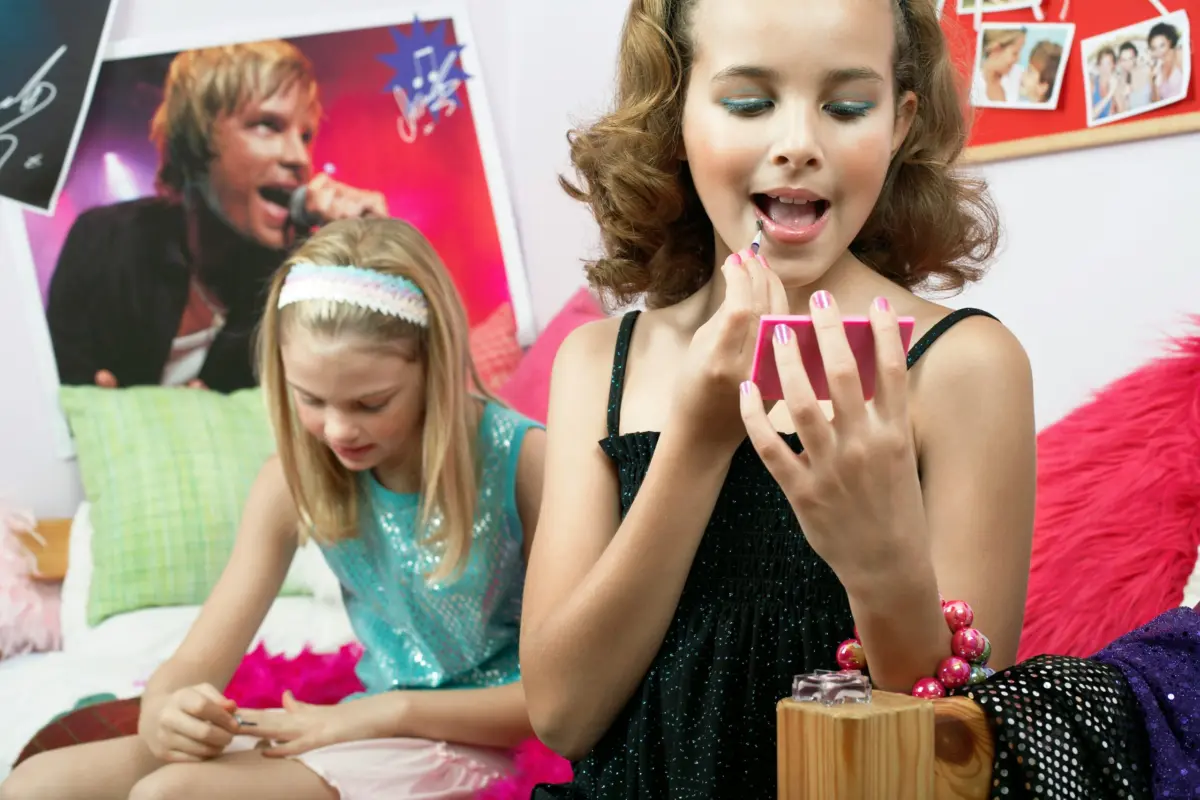
- The Sephora Girl is defined by a rigorous, TikTok-adjacent beauty and skincare regimen, a sophisticated (and expensive) vocabulary of aesthetic trends, and an uncompromising allegiance to modern pop-culture deities like Hailey Bieber.
Despite their starkly contrasting outward expressions—one steeped in subterranean fantasy and felt-based crafts, the other steeped in peptides, artificial freckles, and designer fragrances—both subcultures share an unexpected psychological anchor: a deep, reverent obsession with early-2000s Y2K nostalgia. This comprehensive report explores the origins, behavioral patterns, economic impacts, and future trajectories of the two tribes defining a generation of young girls.
Detailed Chronology: The Evolution of Tween Tribes
The bifurcation of tween culture does not happen overnight. It is a calculated, developmental sorting process that typically crystallizes between the ages of 10 and 12—a critical window where identity formation intersects with the dawn of puberty.
Phase 1: The Incubation Period (Ages 9–10)
At the precipice of middle school, children begin shedding the broad, generalized play patterns of early childhood. Toy aisles lose their luster, replaced by the desire for peer validation and independent self-expression. In this initial stage, the paths diverge rapidly based on subtle cues from digital algorithms and peer groups.
- The Dragon Track: Children on this trajectory begin migrating away from traditional picture books toward immersive, serialized fantasy literature. They demand pets—specifically cats—and utilize sophisticated emotional arguments regarding stress regulation to convince reluctant parents.
- The Sephora Track: Children on this trajectory begin absorbing media via older siblings, peer osmosis, or adjacent digital exposure. Even without direct access to platforms like TikTok, they develop an uncanny fluency in beauty trends, brand nomenclature, and skincare terminology.
Phase 2: Peak Immersion (Ages 11–12)
By the time a tween reaches sixth or seventh grade, the chosen subculture ceases to be a mere hobby and becomes a totalizing lifestyle.
- For the Dragon Girl: This phase is characterized by the "craft industrial complex." A simple idea—such as making a synthetic cat mask—spirals exponentially into the acquisition of industrial-grade faux fur, fleece, 3D-printed teeth, and elaborate business proposals aimed at local craft fairs. Simultaneously, reading habits reach a fever pitch, resulting in household friction whenever real-world obligations (like family movie nights) interrupt a chapter.
- For the Sephora Girl: This phase is marked by the institutionalization of the vanity space. Bedrooms and bathrooms become stocked with serums, "glass hair" treatments, and an arsenal of pimple patches proudly worn to school. The economic footprint expands as birthday gift cards from relatives are systematically funneled into high-end retail replenishment.
Phase 3: The Y2K Convergence
As these tweens approach the outer boundaries of early adolescence, both tribes ultimately converge on a shared aesthetic foundation: the early 2000s. Whether it is Sephora Girls blasting Britney Spears while window-shopping for classic sneakers, or Dragon Girls adopting Hot Topic-inspired oversized t-shirts, chain accessories, and fingerless gloves, the millennial youth culture of yesteryear has officially been resurrected as sacred scripture for Generation Alpha.
Supporting Context & Metrics: The Economics and Psychology of the Divide
To truly understand the Dragon Girl and Sephora Girl phenomena, one must examine the underlying economic and psychological drivers that sustain them.
The Financial Footprint of Pre-Teen Hobbies
While historical pre-teen hobbies—such as collecting stamps or playing youth sports—had predictable, bounded costs, the modern tween subculture is fueled by distinct micro-economies:
| Subculture | Primary Expenditures | Economic Impact | Secondary Market Behavior |
|---|---|---|---|
| Dragon Girls | Fantasy book series, craft supplies (felt, foam, 3D printer filament, faux fur), pet care paraphernalia. | Moderate upfront costs, often offset by aborted entrepreneurial ventures (e.g., unsold inventory for local craft fairs). | Peer-to-peer trading of books, DIY customization of accessories. |
| Sephora Girls | Skincare serums, tinted moisturizers, pimple patches, designer fragrances, specialized hair care. | High recurring costs, heavily sustained by gift cards, relatives, and mall excursions. | Brand loyalty, trend recycling, digital wishlist curation. |
Psychological Underpinnings: Regulation vs. Presentation
- Emotional Regulation via Fantasy: Psychologists note that the Dragon Girl’s fixation on epic fantasy and animal companionship serves a vital developmental purpose. Navigating the social complexities of early adolescence is daunting; immersing oneself in worlds where mythical creatures govern fate provides a safe psychological buffer. The relentless push for pets is often an intuitive quest for tactile emotional grounding.
- Aesthetic Agency via Skincare: Conversely, the Sephora Girl’s obsession with beauty products and skincare represents an early assertion of bodily autonomy and self-presentation. In an era where digital footprints are formed early, mastering the rituals of grooming, color coordination (such as applying meticulous autumn-brown fake freckles), and targeted skincare gives these young women a tangible sense of control and sophistication.
Official Statements & Expert Perspectives
Industry leaders, educators, and cultural commentators have increasingly weighed in on how modern marketing and digital culture have accelerated these micro-identities.
"We are witnessing an unprecedented acceleration in how young people curate their identities. The traditional boundaries of childhood are dissolving much earlier, driven not by traditional media, but by hyper-targeted subcultures that provide immediate community, aesthetic structure, and emotional vocabulary."
— Dr. Aris Vance, Cultural Anthropologist & Youth Media Researcher
Educators and parents alike report that while these subcultures can occasionally manifest as intense domestic stressors—such as navigating a bathroom counter overtaken by 12-step skincare regimens or tripping over piles of unfinished cat-mask foam—they ultimately reflect a generation of deeply passionate, highly focused individuals.
"Whether they are spending their allowance on the latest peptide serum or convincing you that fostering two stray cats is essential for their mental health, these kids know who they are. They are fierce, they are entrepreneurial, and they approach their passions with a level of dedication that adults often reserve for career paths."
— Parental & Industry Commentary
Future Outlook: The Next Iteration of Tween Identity
As both Dragon Girls and Sephora Girls march steadily toward full adolescence, the long-term implications of these early tribal markers are becoming clearer.
- The Rise of Multi-Hyphenate Tweens: Increasingly, researchers are observing cross-pollination between the two tribes. It is no longer entirely rare to find a Dragon Girl who enjoys a quality lip gloss, or a Sephora Girl who quietly devours fantasy novels under the covers. The rigid boundaries are beginning to soften as puberty approaches.
- Economic Disruption in Retail: Retailers are actively restructuring their marketing pipelines to cater directly to these pre-teen segments. The traditional toy market is shrinking, while "kidult" fantasy literature and youth-oriented prestige beauty products are experiencing historic surges in demand. Brands that fail to understand this dual-market reality risk losing an entire generation of consumers.
- Leadership Potential: Beneath the surface humor of terrible-smelling bedrooms, expired retinal creams, and abandoned craft fair projects lies a profound truth: these tweens are practicing the arts of intense focus, resource management, trend analysis, and project execution. Whether they grow up to run multinational cosmetics empires or write best-selling fantasy trilogies, these young women are developing the resilience and passion required to shape the future.
Ultimately, whether your household is currently overrun by the quiet, bookish rustle of fantasy pages and the faint scratching of foster cats, or the sweet, chemical-and-candy aroma of a post-shower Sephora regimen, one thing remains certain: the modern tween is a force of nature. Parents would do well to buckle up, embrace the chaos, and prepare to bow down to the cultural architects of tomorrow.

