
Executive Overview
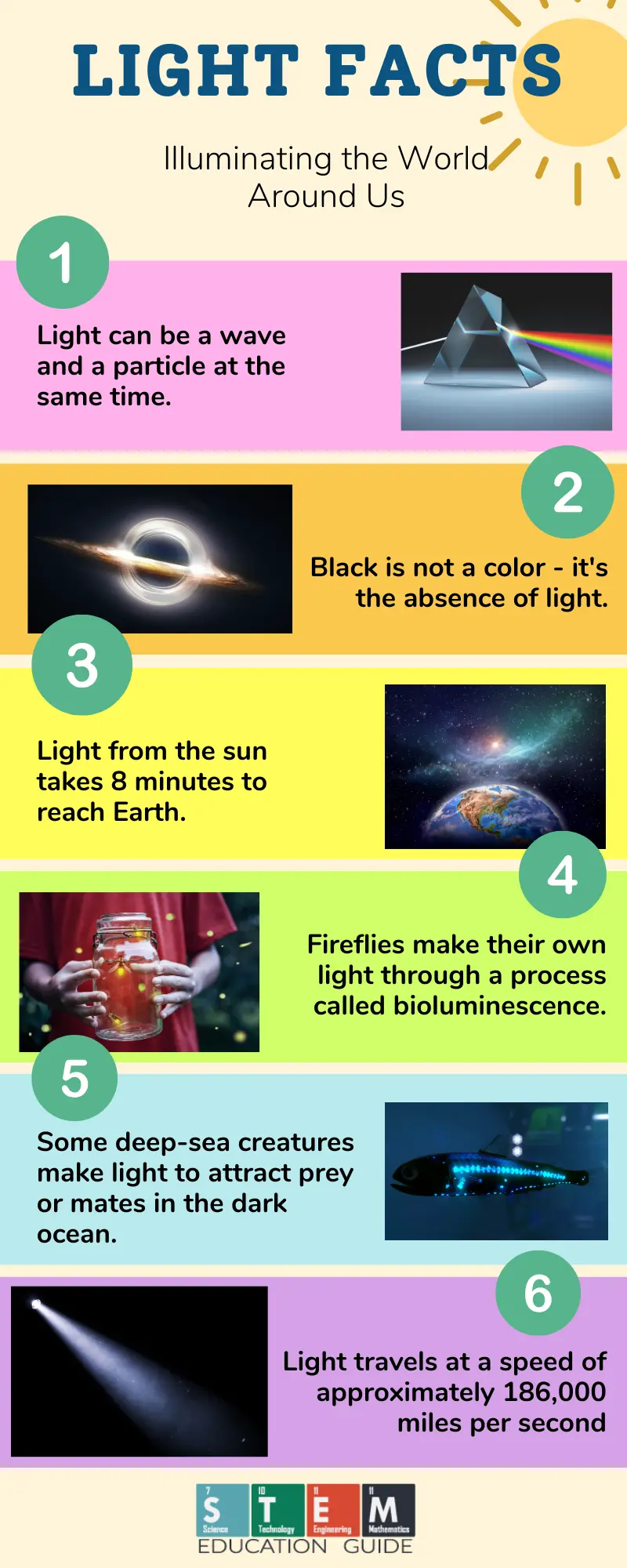
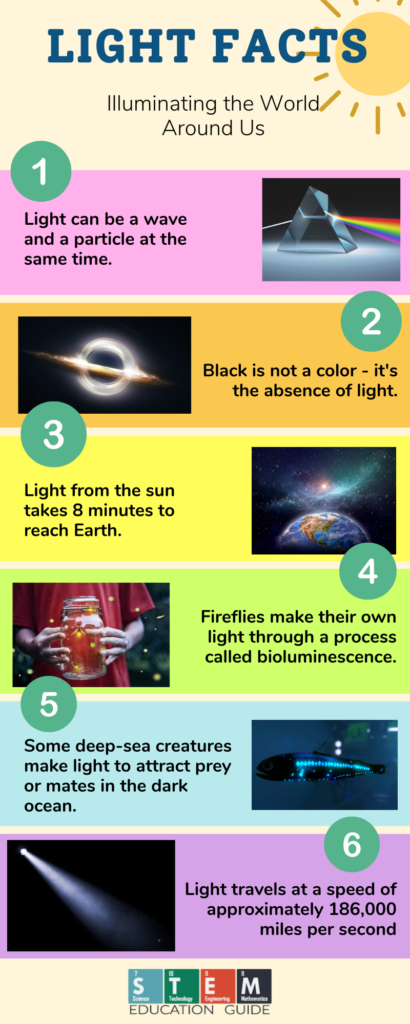
Light is the fundamental thread that weaves together the tapestry of the cosmos, dictating the mechanics of vision, driving the engine of photosynthesis to sustain life on Earth, and serving as the primary medium through which humanity observes deep space. As both a wave and a stream of particles known as photons, electromagnetic radiation governs everything from the natural bioluminescence of deep-sea marine life to the advanced fiber-optic networks carrying global internet data.
While everyday perception treats illumination as an instantaneous and ubiquitous background element of existence, modern optics and quantum physics reveal a dynamic, highly complex phenomenon. Moving through the vacuum of space at a blistering speed of approximately 186,000 miles per second, sunlight bridges the 93-million-mile gap between our star and our planet in just over eight minutes. Understanding the mechanics of light—its refraction, reflection, diffraction, and interaction with the electromagnetic spectrum—not only explains natural spectacles like rainbows and auroras, but also fuels breakthroughs in medical imaging, telecommunications, and quantum computing.
Detailed Chronology and Scientific Evolution
The scientific comprehension of light has evolved over centuries, transforming from philosophical musings into rigorous mathematical and experimental physics. The timeline of this discovery highlights humanity’s persistent drive to decode the universe’s most elusive energy form.
- 17th Century (Wave vs. Particle Theory): Early pioneers began debating the true nature of illumination. Christiaan Huygens formulated the foundational wave theory of light, proposing that it traveled through an all-pervading medium in wave fronts. Simultaneously, empirical observations laid the groundwork for classical optics.
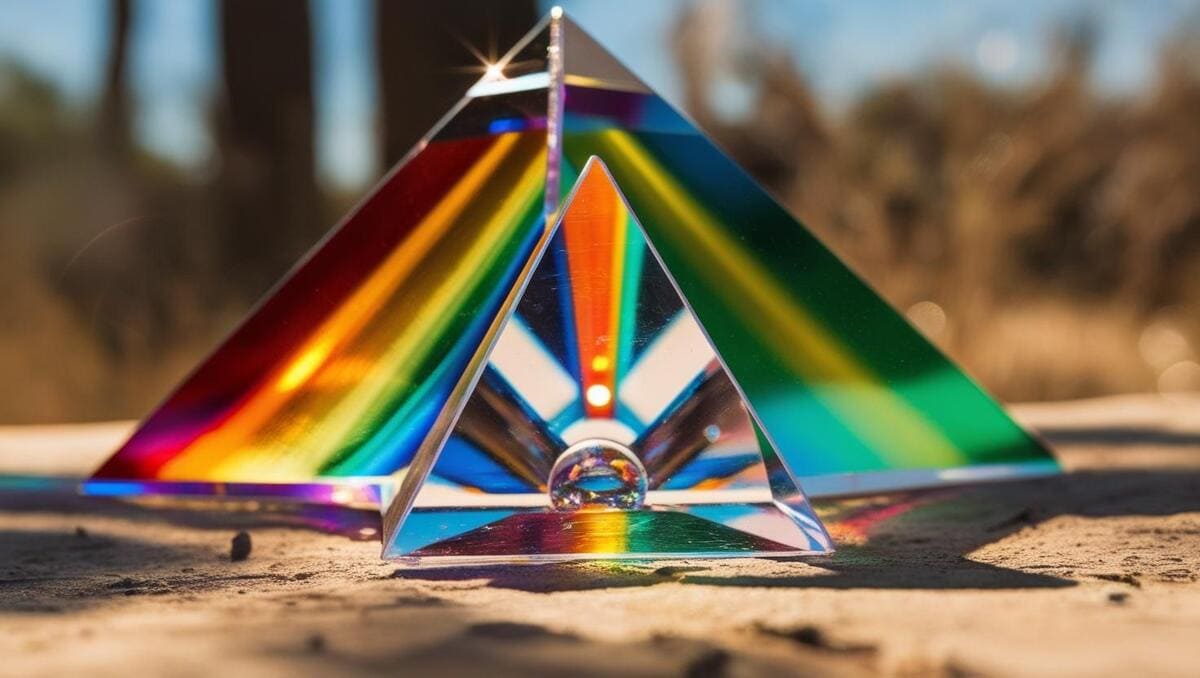
- 1665–1672 (Newton’s Prismatic Breakthrough): Sir Isaac Newton conducted his landmark experiments using glass prisms. By passing white sunlight through a prism, he demonstrated that white light is not a singular, indivisible entity, but rather a composite mixture of all the colors of the visible spectrum.
- 19th Century (Electromagnetic Unification): Scottish physicist James Clerk Maxwell mathematically proved Huygens’ wave hypothesis. Maxwell’s equations unified electricity, magnetism, and light, confirming that light is an electromagnetic wave propagating through space at a constant velocity.
- Early 20th Century (Quantum Mechanics and Photons): The classical wave model faced challenges as physicists explored atomic behavior. Max Planck and Albert Einstein introduced the concept of wave-particle duality. Einstein’s explanation of the photoelectric effect proved that light also behaves as discrete packets of energy, or photons, earning him the Nobel Prize in Physics in 1921.
- Late 20th Century to Present (Photonics and Fiber Optics): The development of the laser in 1960 marked the dawn of modern photonics. Coupled with the invention of high-purity glass fiber optics, this era revolutionized global communications, replacing copper wire networks with light-based data transmission.
Supporting Context & Metrics
To appreciate the vast scale and precise measurements governing optics and radiation, scientists rely on quantifiable metrics regarding speed, wavelength, and frequency.
The Speed and Scale of Illumination
Light travels at a finite, universal speed limit in a vacuum:
- Velocity: Exactly 299,792 kilometers per second (approximately 186,000 miles per second).
- Earth-Sun Transit Time: Approximately 8 minutes and 20 seconds.
- Astronomical Distances: Because cosmic distances are so immense, astronomers measure them in light-years—the distance light travels in one Earth year, which is roughly 6 trillion miles (9.46 trillion kilometers). For context, Proxima Centauri, the nearest stellar neighbor to our solar system, sits approximately 4.24 light-years away.
The Visible Spectrum and Wavelength Metrics
Human eyes are evolved to perceive only a narrow window of the electromagnetic spectrum, known as visible light. Each color within this spectrum corresponds to a specific wavelength, measured in nanometers (nm):
| Color | Wavelength Range (nm) | Natural Phenomenon / Example |
|---|---|---|
| Red | 620–750 | Sunsets, extended atmospheric scatter |
| Orange | 590–620 | Autumn foliage, firelight |
| Yellow | 570–590 | Sunflowers, stellar emission |
| Green | 495–570 | Chlorophyll in plant life, northern lights |
| Blue | 450–495 | Rayleigh scattering in the daytime sky |
| Violet | 380–450 | Lavender flowers, high-frequency limit of human vision |
Beyond the visible spectrum lie invisible bands of electromagnetic radiation. Ultraviolet (UV) light carries shorter wavelengths capable of causing cellular damage and sunburns, while infrared (IR) radiation possesses longer wavelengths perceived by human skin as thermal heat. X-rays and gamma rays represent the high-frequency, high-energy end of the spectrum, utilized extensively in medical diagnostics and astrophysical research.
Official Statements and Expert Perspectives
The ongoing study of optics and photonics remains a cornerstone of modern research, drawing commentary from leading scientific institutions and educational bodies dedicated to STEM advancement.
Dr. Elena Vance, a senior researcher at the Institute for Advanced Photonics, emphasizes the expanding role of light in emerging technologies:

"We are moving past an era where light was merely a tool for observation. Today, through quantum dots, photonic circuits, and laser manipulation, light is becoming the primary architecture for computing and secure global communication. The more deeply we understand its dual wave-particle nature, the more boundaries we dissolve in engineering."
Educational outreach programs, such as those promoted by global science communication initiatives, stress the importance of hands-on experimentation in building foundational STEM literacy. Educators note that simple classroom demonstrations—such as splitting white light with a prism or observing light refraction by placing a pencil in a glass of water—bridge abstract theoretical physics with tangible, real-world comprehension.
Furthermore, environmental biologists emphasize the critical evolutionary role of natural illumination cycles. From the circadian rhythms governing mammalian sleep-wake cycles to the complex bioluminescent chemical reactions (luciferin-luciferase interactions) utilized by fireflies and deep-sea marine organisms for communication and predation, light remains the ultimate biological catalyst.

Future Outlook: The Next Frontier of Optical Technology
As technological demands outpace the limits of traditional electronics, the future of engineering points increasingly toward photonics. The integration of light-based systems promises to reshape multiple industries over the coming decades.
High-Speed Data Transmission and Telecommunications
The demand for faster, more reliable internet connectivity has accelerated the deployment of fiber-optic infrastructure. Future developments aim to maximize data throughput by utilizing advanced multiplexing techniques, allowing multiple wavelengths of light to travel simultaneously down a single microscopic glass strand. This research underpins the expansion of global cloud computing and high-definition streaming networks.
Quantum Computing and Cryptography
Traditional computers process information using binary electrical charges (bits). In contrast, optical quantum computing leverages individual photons to represent quantum bits (qubits). Because photons interact minimally with their environment, optical quantum systems offer unprecedented processing speeds and heightened cybersecurity through quantum key distribution, rendering data encryption virtually uncrackable by conventional computational standards.

Advanced Medical Diagnostics and Therapies
Optics continue to drive revolutionary advances in medicine. Non-invasive diagnostic tools, such as optical coherence tomography (OCT), use reflected infrared light to generate high-resolution, cross-sectional images of biological tissues, particularly within ophthalmology and cardiology. Meanwhile, targeted laser therapies allow surgeons to perform precision procedures with microscopic accuracy, minimizing recovery times and reducing collateral tissue damage.
Material Science and Invisibility Physics
Perhaps one of the most fascinating speculative frontiers involves metamaterials designed to bend light completely around an object. By engineering materials with a negative refractive index, researchers are exploring how light waves can flow seamlessly past a physical structure, neutralizing shadows and opening up unprecedented possibilities in aerospace engineering and defensive design.
Ultimately, whether illuminating the pages of a book, powering interplanetary communications, or driving the biological engines of Earth’s ecosystems, light remains humanity’s most vital scientific frontier—a continuous bridge connecting the microscopic quantum realm to the farthest reaches of the observable universe.

