
Executive Overview
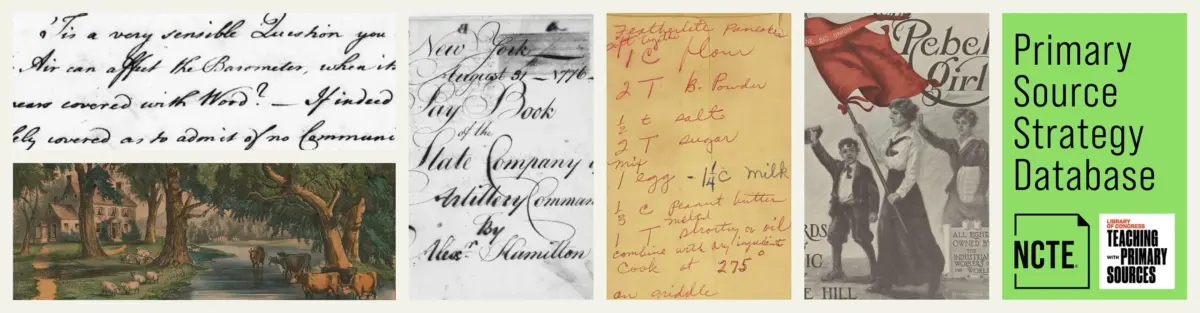
In an era defined by rapid-fire information, digital media consumption, and evolving educational landscapes, the ability to critically analyze historical texts has never been more vital. At the forefront of bridging the gap between archival history and modern classrooms is a powerful collaborative initiative between the National Council of Teachers of English (NCTE) and the Library of Congress. Operating under the umbrella of the Teaching with Primary Sources (TPS) Consortium, this partnership is fundamentally shifting how literacy teachers and students interact with history.
At the heart of this collaborative effort is an expansive, searchable digital database featuring pedagogical strategies for over 150 specific artifacts drawn directly from the Library of Congress’s vast digitized primary source collections. Designed by more than two dozen educators, curriculum directors, and English language arts (ELA) leaders, the database bridges raw historical artifacts with actionable classroom strategies. Each entry outlines the specific literacy value of a given document, aligning it with pedagogical themes, multi-disciplinary thematic units, and state learning standards.
Among the standout artifacts featured in the database is an 1851 letter to the editor titled "The New Costume," published in The Mountain Sentinel. This document—which defends the revolutionary and controversial "Bloomer costume" of the 19th century—offers a compelling lens through which students can explore rhetoric, gender roles, and historical argumentation. By integrating primary sources like this letter into daily instruction, the NCTE and the Library of Congress are equipping a new generation of students with the analytical tools needed to dissect arguments, evaluate rhetorical devices, and connect historical movements to contemporary socio-cultural debates.
Detailed Chronology: The Evolution of the Bloomer Costume and the 1851 Debate
To fully grasp the instructional value of the 1851 Mountain Sentinel letter, educators must examine the historical timeline that birthed the garment and the fierce national conversation surrounding it. The artifact serves as a microscopic view of a macro-level societal shift in 19th-century America.
Pre-1850s: The Constraints of Victorian Fashion
For decades, mainstream Victorian fashion dictated rigid, restrictive standards for women. Heavy, floor-length skirts reinforced by layered petticoats and tightly laced corsets physically restricted women’s mobility, breathing capacity, and participation in public life. While these garments signaled elite social status and adherence to prevailing gender norms, they also caused documented health issues, including muscular atrophy, organ displacement, and chronic fatigue.
1850–1851: Invention and Popularization
Though frequently associated with Amelia Bloomer, the revolutionary style of dress—consisting of a shorter skirt worn over loose trousers—was actually invented by Elizabeth Smith Miller, a women’s rights activist who sought a more practical alternative to traditional female attire.
Amelia Bloomer, a pioneering women’s rights advocate and the editor of the feminist newspaper The Lily, quickly recognized the political and practical power of the style. She began wearing the outfit publicly and aggressively advocated for dress reform within the pages of her newspaper. The look immediately captured the public imagination—and generated intense backlash.
The Fall 1851 Mountain Sentinel Letter ("The New Costume")
Amidst national debate, an 1851 letter to the editor published in The Mountain Sentinel and signed by the pseudonym "Amicus" launched a passionate defense of the attire. The author systematically dismantled common criticisms leveled against the garment, arguing that true morality and femininity are not tethered to uncomfortable, health-compromising clothes.
"Amicus" employed classical rhetorical strategies, engaging directly with counterarguments raised by conservative critics who branded the outfit as unseemly, unfeminine, and radical. The author argued that women deserved the same physical freedom of movement as men, particularly as industrialization and shifting social dynamics began to draw women into public and professional spheres.
Legacy and Aftermath
Although the shock value of the Bloomer costume eventually caused its popularity as everyday wear to wane by the late 1850s—largely because the women wearing it faced intense public harassment—its cultural impact was indelible. The garment became a foundational symbol of the early women’s rights movement, prefiguring later battles for bodily autonomy, suffrage, and gender equality.
Supporting Context & Metrics: The Mechanics of Primary Source Literacy
The inclusion of artifacts like "The New Costume" letter within the NCTE database is not accidental; it is driven by rigorous educational metrics and frameworks designed to meet modern ELA standards.
Navigating the NCTE-Library of Congress Database
The searchable database is engineered for high usability, allowing teachers to filter resources by specific tags such as picturebook, argument, government, law, politics, and nonfiction/informational text. By housing over 150 curated items, the platform ensures that educators do not have to sift blindly through the millions of items in the Library of Congress catalog. Instead, they receive ready-to-use pedagogical roadmaps that include:
- Instructional Value: Clear explanations of why a specific text matters for contemporary ELA curricula.
- Contextual Summaries: Detailed background information that brings historical texts to life without requiring hours of outside research by the teacher.
- Standards Alignment: Direct connections to state-level learning standards, ensuring instructional time directly supports academic requirements.
Case Study: Standards Integration (Missouri Learning Standards)
To understand how these primary sources translate into classroom practice, consider their alignment with state curricula, such as the Missouri Learning Standards (MLS) highlighted within the database:
- MLS.9-10.RI.2.B: Analyze how an author uses rhetoric to advance point of view or purpose.
- Classroom Application: Students reading "The New Costume" analyze how "Amicus" selects specific diction (e.g., contrasting "health" and "comfort" against "bondage" and "custom") to persuade readers who are skeptical of dress reform.
- MLS.11-12.RI.2.D: Evaluate an author’s argument and reasoning for effectiveness, validity, logic, credibility, and relevance of the evidence.
- Classroom Application: Upper-level high school students evaluate whether the logical appeals made by "Amicus" regarding physical health and efficiency hold up against the counter-evidence of Victorian cultural norms.
The Power of Accessible Historical Language
One of the primary barriers to using 19th-century primary sources in middle and high school classrooms is the dense, archaic language often found in historical documents. However, letters to the editor—like the 1851 Mountain Sentinel piece—frequently feature more direct, persuasive, and conversational language than formal government treaties or legislative acts. This accessibility makes them ideal "gateway texts" for introducing students to historical analysis, rhetorical mapping, and source evaluation.
Furthermore, these texts bridge historical inquiry with modern media literacy. When students analyze how a 19th-century author addresses opposing viewpoints, they are building the exact cognitive skills required to navigate modern op-eds, social media debates, and contemporary political discourse.
Official Perspectives: Bridging Archives and Classrooms
The collaboration between the National Council of Teachers of English and the Library of Congress represents a deliberate shift in educational philosophy. Rather than treating history as a static sequence of dates and dead names to be memorized, the TPS Consortium framework treats history as a dynamic dialogue preserved in primary texts.
The Role of the Library of Congress
As the world’s largest library, the Library of Congress holds millions of books, manuscripts, photographs, maps, and sound recordings. However, making these vast digital holdings accessible to K-12 educators has historically presented a logistical challenge. Through the TPS Consortium, the Library actively partners with educational organizations like NCTE to translate its archival wealth into practical, classroom-ready pedagogical tools.
The Contribution of ELA Leaders and Teachers
The strategies housed in the NCTE database were not drafted by distant bureaucrats; they were created by more than two dozen working teachers and English language arts leaders. These practitioners understand the daily realities of the classroom, including pacing constraints, standardized testing pressures, and the diverse reading levels found in modern heterogeneous classrooms. By anchoring historical artifacts within ELA frameworks—focusing heavily on rhetoric, informational text structures, and argumentative writing—the creators ensure that history teachers and English teachers can seamlessly collaborate through cross-curricular units.
Future Outlook: The Next Frontier in Literacy Education
As educational technology evolves and pedagogical strategies shift toward inquiry-based learning, the demand for high-quality, authentic primary sources will only accelerate. The ongoing work between the NCTE and the Library of Congress points toward several key trends for the future of literacy and history education:
1. Deepening Cross-Curricular Collaboration
The artificial divide between English language arts and social studies classrooms is increasingly recognized as a barrier to comprehensive student learning. Primary source databases that emphasize both historical context and rhetorical analysis encourage schools to build interdisciplinary units where students read historical texts in ELA while studying the corresponding historical eras in social studies.
2. Scaling Digital Archives for Modern Classrooms
With over 150 items currently indexed with robust teaching strategies, the NCTE-Library of Congress database serves as a proof-of-concept for how massive national archives can be curated for K-12 consumption. Future expansions are expected to incorporate an even wider array of multimedia sources—including audio recordings, political cartoons, photographs, and early film clips—allowing teachers to address diverse learning styles and multimodal literacy needs.
3. Fostering Civic Engagement and Critical Thinking
In an age characterized by debates over media literacy, misinformation, and civic polarization, the skills taught through primary source analysis are profoundly relevant. When students learn to ask Who wrote this? What was their motivation? How do they construct their argument? and What evidence do they omit?, they are developing the critical thinking skills required of active, engaged citizens in a democratic society.
By continuing to unlock the treasures of the Library of Congress through initiatives like the Teaching with Primary Sources Consortium, the NCTE is ensuring that students do not just read about history—they learn how to interrogate it, understand it, and connect it to their own lives.

