
Executive Overview
In the rapidly evolving landscape of commercial spaceflight, research astronaut and payload specialist Kellie Gerardi is a trailblazer, expanding access to the final frontier for civilian scientists. In 2023, she etched her name in history as one of the first non-government payload specialists to fly on a suborbital science mission, cementing her status as the 90th woman to travel to space. Yet, while her career milestones played out on a global stage—including groundbreaking research on lactation in microgravity and serving as the subject of a Barbie doll created in her likeness—a profoundly private and deeply challenging narrative was quietly unfolding in the background.
For nine years, Gerardi navigated the complex, emotional, and physical labyrinth of secondary infertility. Her journey involved a punishing cycle of egg retrievals, In Vitro Fertilization (IVF) treatments, pregnancy losses, and the intense pressure of aligning her family-planning timeline with rigid, uncontrollable spaceflight windows.
In a remarkably candid appearance on The Motherly Podcast hosted by Liz Tenety, Gerardi pulled back the curtain on this dual odyssey. She discussed the psychological weight of balancing orbital mechanics with biological aspirations, the phenomenon she jokingly calls "IVF girl math," and the profound, mind-bending realization while in orbit that she was literally on a different planet from her children. This in-depth feature explores Gerardi’s extraordinary life, examining the intersection of modern space exploration, maternal ambition, and the destigmatization of infertility struggles.
Detailed Chronology: From Jupiter, Florida, to the Edge of Space and Back
Roots in the Space Coast
Growing up in Jupiter, Florida, Kellie Gerardi was uniquely positioned for a life intertwined with space exploration. Living just miles from the Kennedy Space Center, human spaceflight was not an abstract concept seen only on television; it was the dynamic, thundering backdrop of her childhood and adolescence.
"I joke that I had front row seats to the final frontier right up the coast," Gerardi shared during her podcast conversation. Rather than intimidating her, the proximity of NASA and commercial aerospace initiatives made the cosmos feel accessible. Her North Star crystallized early: she wanted to dedicate her life to helping open up space access for the next generation of researchers and scientists.
This foundational ambition was heavily nurtured by her parents, particularly her mother. Eschewing a culture of entitlement, they instilled in Gerardi a psychological framework built on a precise balance of humility and confidence.
"The greatest gift they gave me was this combination of humility and confidence as a mindset," Gerardi explained. "The humility to know that it’s not a given, not something where I deserve to do this… but more the quiet confidence of, if I work hard enough for long enough, why not me?"
The Dual Dream: Motherhood and Microgravity
From an early age, Gerardi harbored two co-equal dreams: participating in human space exploration and becoming a mother. The realization of the first dream came to fruition with her historic 2023 suborbital flight. However, the path to expanding her family was fraught with unforeseen trials.
After the birth of her first daughter, Delta, Gerardi assumed that expanding her family would follow a relatively straightforward trajectory. Instead, she encountered secondary infertility—the inability to conceive or carry a pregnancy full-term after the birth of one or more children.
Months bled into years. Following her landmark spaceflight in 2023, Gerardi reassessed her life, career, and biological timeline. Facing the realities of aging and the demands of an escalating career in commercial spaceflight, she made the definitive choice to pursue IVF. What followed was a grueling multi-year odyssey encompassing multiple egg retrievals, chemical losses, and heartbreaking second-trimester miscarriages.
The Intersection of Orbital Windows and Biological Timelines
One of the most complex challenges Gerardi faced was coordinating her space mission assignments with her fertility treatments. Unlike corporate or academic timelines, spaceflight windows are dictated by rocket availability, regulatory approvals, government payloads, and orbital mechanics. They cannot be easily rescheduled to accommodate personal milestones.
Following her 2023 flight, Gerardi was assigned to lead a follow-up science mission targeting a launch window in the near future. This dual pressure—preparing for a rare suborbital flight while racing against a biological clock—forced her to engage in what she humorously terms "IVF girl math."
"The timing of my spaceflights was not in my control," Gerardi noted. "You’re assigned to a flight. Add to that a lot of anxiety around my ability to conceive generally… That was my joke, my version of girl math was running the numbers and figuring out, okay, what is my window?"
The stakes reached a heart-wrenching peak during one specific IVF cycle. After enduring the severe attrition rates typical of egg retrievals, Gerardi was left with a single, potentially viable embryo—literally "all my eggs in one basket." Miraculously, the subsequent transfer resulted in a successful conception. However, the joy was short-lived: she suffered a devastating pregnancy loss on the exact day she was scheduled to "graduate" from her IVF clinic.
Despite this profound grief, a shift in the mission schedule gave her the runway to try again. Through sheer resilience, Gerardi and her husband ultimately welcomed their second daughter, Max, bridging a nine-year gap between their two children.
Supporting Context & Metrics: Destigmatizing Secondary Infertility and Loss
The Silence Surrounding Secondary Infertility
Gerardi’s decision to speak openly about her reproductive struggles highlights a pervasive cultural silence surrounding secondary infertility and pregnancy loss. Historically, society has relegated these topics to hushed whispers, encouraging women to endure physical and emotional trauma in isolation.
The traditional societal rule of thumb—advising women to wait 12 weeks before announcing a pregnancy—is deeply ingrained. Gerardi admits she was initially preconditioned to follow this social contract to avoid the painful prospect of "un-telling" people in the event of a loss.
However, after navigating multiple permutations of loss—including waiting the requisite 12 weeks only to suffer a devastating second-trimester miscarriage—Gerardi reached a turning point. She realized that maintaining privacy often meant forfeiting a vital support system.
"A fertility journey is this odyssey, physically, mentally, emotionally, financially. It’s just everything, and it becomes the A plot of your life," Gerardi emphasized. As her public profile grew following her spaceflight, she felt an ethical imperative to dismantle the stigma. To continue speaking exclusively about her career achievements while keeping silent about the "thousand-pound elephant sitting on top of my personal life" would have been disingenuous.
Coping Mechanisms and the Evolution of Resources
As a data-driven scientist, Gerardi initially coped with her infertility by immersing herself in medical literature, clinical studies, and online forums. She described haunting online communities late at night, trying to calculate her body’s statistical odds at any given moment—a coping mechanism she acknowledges wasn’t always the healthiest, but one driven by a desperate need for control in an uncontrollable situation.
Reflecting on the broader landscape of reproductive health, Gerardi notes that while the journey remains agonizing, the availability of discourse, medical resources, and peer support networks has expanded dramatically over the past decade. By stepping out of the shadows of self-imposed isolation, she transformed her private grief into a public platform of advocacy for other women in STEM and beyond.
Official Statements and Reflections
Redefining Hope: The Concept of "Functional Hope"
The cumulative weight of pregnancy losses and failed IVF cycles fundamentally altered Gerardi’s worldview. When asked how her journey changed her, she rejected the cliché that every heartbreak carries an immediate, positive lesson.
"I want to be careful, because I’m definitely not someone who believes every heartbreak is a lesson to be learned. Some things are just terrible and objectively painful, and there is no silver lining to them," she stated candidly.
Instead of toxic positivity, Gerardi cultivated what she terms "functional hope." Rather than resting on the passive belief that everything will inevitably work out according to a divine plan, functional hope is anchored in self-confidence and psychological resilience. It is the steady conviction that, regardless of how an individual story ends, the person will possess the inner strength to survive and endure the aftermath.
The Cosmic Perspective and Parenting
Gerardi’s dual identity as both a space explorer and a mother has given her a profound cosmic perspective—one that she believes society would benefit from cultivating without necessarily having to leave the troposphere.
"Taking time intentionally to look up in awe at the night sky is the perfect visual representation of that combination and contradiction of humility and confidence," she observed.
This perspective took on an intensely emotional dimension while she was in orbit. Gazing down at Earth from the vantage point of space, Gerardi experienced a moment of cognitive dissonance that remains etched in her memory: the realization that she was physically separated from her child by the expanse of the atmosphere.
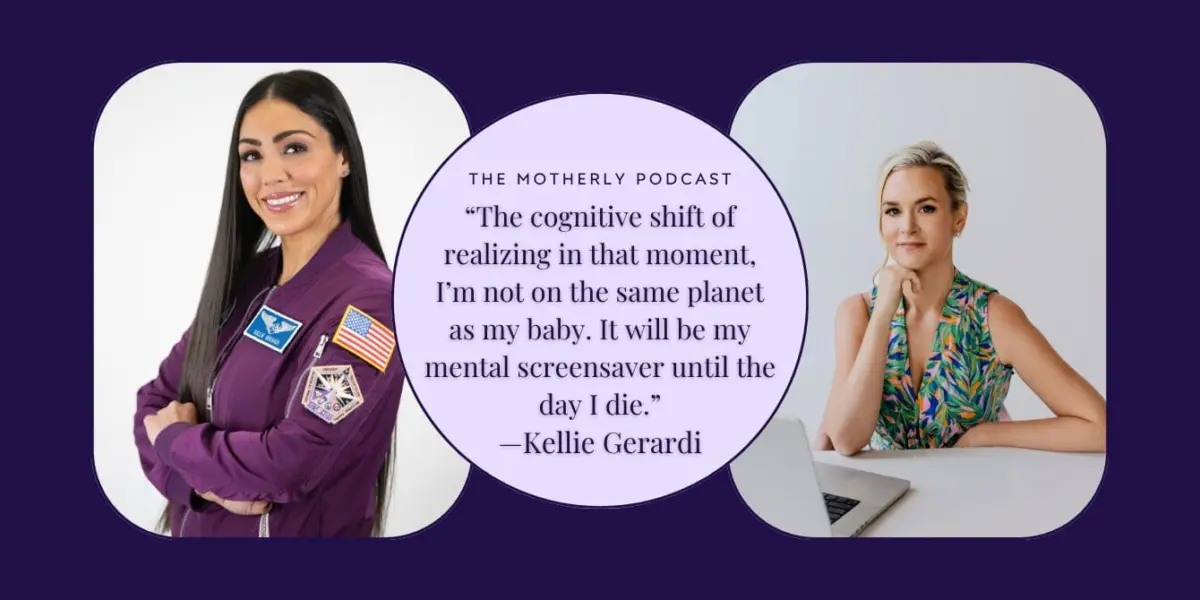
"The cognitive shift of realizing in that moment, I’m not on the same planet as my baby… it’s mind-bending. It will be my mental screensaver until the day I die."
Pumping Milk in Microgravity
Gerardi’s commitment to maternal health science extended directly into her professional work. Just eight weeks postpartum following the birth of her first child, she elected to participate in pioneering research studying lactation and the postpartum body in microgravity.
Working aboard specialized parabolic aircraft—famously known as "vomit comets"—which simulate weightlessness through rapid freefall maneuvers, Gerardi pumped breast milk to help researchers understand how altered gravity environments affect lactation and milk composition. Emphasizing that her participation was entirely voluntary, she found the experience deeply empowering. It provided a powerful visual demonstration of the extraordinary capabilities of the postpartum female body.
Future Outlook: The Next Mission and Legacy
Balancing Risk and Family
As a mother preparing to lead an upcoming suborbital science mission, Gerardi is frequently asked how she reconciles the inherent risks of spaceflight with her responsibilities to her daughters. She is refreshingly transparent: she never trivializes the dangers of human spaceflight, but she places profound trust in the engineering teams and rigorous training protocols that safeguard modern missions.
Rather than shielding her children from the realities of her career, Gerardi has chosen an ethos of radical transparency. When her eldest daughter, Delta, was five years old and watched her mother fly into space, the child naturally grappled with the risks, asking poignant questions about celestial hazards. This opened the door for developmentally appropriate, honest conversations about spacecraft mechanics, safety protocols, and the value of scientific discovery.
Furthermore, Gerardi has intentionally integrated her children into her professional life, affectionately referring to Delta as her "pint-sized co-principal investigator." Whether discussing how fidget toys behave in microgravity or explaining the purpose of her experiments, Gerardi is raising her daughters in an environment where curiosity is celebrated and boundaries between work and family are fluid.
A Legacy of Limitless Imagination
When asked what she hopes her daughters will say about her in the future, Gerardi doesn’t point to her historical flight, her status as the 90th woman in space, or her contributions to commercial aerospace payloads. Instead, she anchors her legacy in the personal gift her own parents gave her.
"I hope they say very similar things to how I speak about my parents, which is that they gave me the best gift possible, this limitless imagination and confidence for what’s possible in this life, and they encouraged me every step of the way. That’s what I would love to earn."
As Kellie Gerardi prepares to launch into her next science mission, her journey serves as a powerful testament to the resilience of the human spirit. By bridging the vast gulf between the earthbound heartaches of secondary infertility and the boundless expanses of orbital flight, she has redefined what it means to be a modern mother, scientist, and explorer.
To hear Kellie Gerardi’s full conversation on navigating IVF, "girl math," and space exploration, listen to the complete episode of The Motherly Podcast on Apple Podcasts or your preferred podcast platform.

