
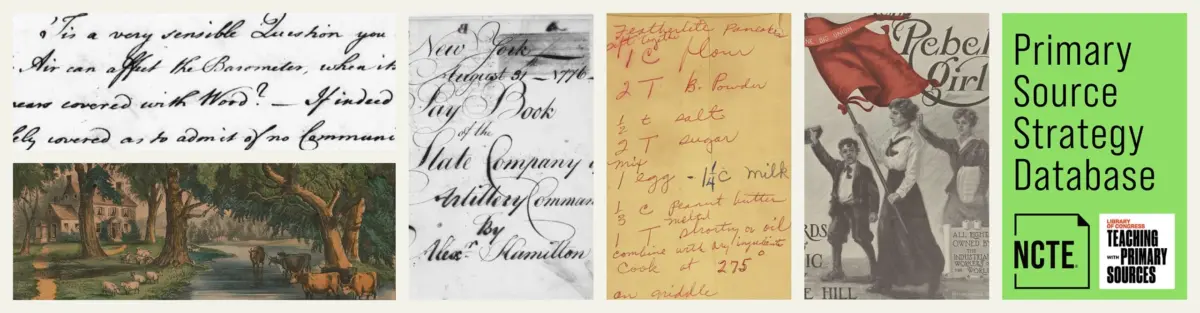
Executive Overview
In an era defined by an influx of digital information and a critical need for media literacy, educators are constantly seeking innovative methodologies to bridge the gap between historical fact and student engagement. Addressing this imperative, a powerful nationwide educational initiative is reshaping how students interact with history. The National Council of Teachers of English (NCTE) has formally joined forces with the Library of Congress as an active participant in the prestigious Teaching with Primary Sources (TPS) Consortium.
This collaborative endeavor is purposefully designed to expand and fundamentally enrich the use of primary source documents within the daily teaching and learning habits of literacy educators and their students nationwide. At the heart of this partnership is a newly deployed, highly searchable digital database containing pedagogical strategies for more than 150 specific, digitized artifacts drawn directly from the vast historical archives of the Library of Congress.
Crafted by more than two dozen distinguished educators, literacy leaders, and English language arts (ELA) specialists, these curated resources transcend traditional textbook learning. Each entry outlines the explicit literacy merits of specific manuscripts, photographs, and prints for curriculum implementation, complete with suggested thematic units, grade-level applications, and direct connections to state educational standards.
By leveraging tags such as "picture book" and "argument," teachers can seamlessly integrate rigorous historical artifacts into cross-curricular lesson plans. Among the crown jewels of this database is a deep dive into the Frederick Douglass Papers: Financial Papers, 1847–1928; Bank books. These extraordinary financial records dismantle one-dimensional historical narratives, offering students a tangible, quantitative look at the monetary resilience, economic independence, and civic strategy of one of the most towering figures in American history. Through this initiative, the NCTE and the Library of Congress are not merely teaching history; they are arming the next generation of learners with the critical thinking, analytical depth, and financial literacy required to navigate a complex modern world.
Detailed Chronology: The Evolution of the NCTE-Library of Congress Partnership
The integration of primary source documents into American classrooms did not happen overnight; it represents the culmination of decades of pedagogical evolution, inter-institutional cooperation, and a growing recognition that textbooks alone are insufficient for fostering true historical inquiry.
The Foundations of Primary Source Pedagogy (Late 20th Century)
For generations, K-12 education relied heavily on secondary narratives—summarized accounts found in textbooks that flattened the complex, messy realities of historical events. While efficient for broad timelines, these summaries frequently stripped history of its human element. By the late 1990s and early 2000s, educational researchers began pushing for "inquiry-based learning," a model where students examine raw, unedited historical artifacts—letters, photographs, ledgers, and government documents—to construct their own understanding of the past.
The Birth and Expansion of the TPS Consortium
Recognizing the unparalleled educational value of its collections, the Library of Congress established the Teaching with Primary Sources program. Designed to help educators harness millions of digitized items available in the public domain, the TPS program formed a national consortium of universities, educational associations, and professional organizations. The primary goal of the consortium was clear: train teachers to use primary sources effectively, thereby enhancing student critical thinking, engagement, and historical comprehension.
The NCTE Integration and Database Development
As the premier professional organization for English language arts educators, the NCTE recognized a vital synergy. Literacy is not merely the mechanical act of reading and writing; it is the comprehensive ability to decode, analyze, and synthesize multimodal texts—including historical manuscripts and visual media.
To formalize this connection, the NCTE entered into its ongoing collaboration with the Library of Congress. Over the past several years, the organization mobilized more than two dozen leading ELA teachers, curriculum developers, and instructional coaches. Tasked with reviewing over 150 specific Library of Congress artifacts, these educators developed actionable, standards-aligned instructional strategies.
The resulting searchable database represents a milestone in curriculum design. By organizing content around functional literacy markers—such as argumentative writing frameworks and visual literacy tags—the initiative bridges the historically siloed disciplines of English language arts, economics, history, and civic education.
Supporting Context & Metrics: Unlocking the Frederick Douglass Financial Papers
To understand the practical application of the NCTE-Library of Congress database, one must examine the specific artifacts featured within the collection and the rigorous pedagogical frameworks built around them. A prime example is the inclusion of the Frederick Douglass Papers: Financial Papers, 1847–1928; Bank books.
The Historical Artifact: Beyond the Abolitionist Orator
When students encounter Frederick Douglass in standard curricula, he is almost universally introduced through the lens of his oratorical brilliance, his gripping slave narratives, and his tireless advocacy for the abolition of slavery and the securing of women’s suffrage. However, the Library of Congress’s digitized bank books and financial records reveal an entirely different dimension of Douglass’s life: his astute management of personal finance, property acquisition, and economic autonomy.
Spanning more than eight decades (including posthumous entries and family records), these documents provide a meticulous ledger of Douglass’s financial activities—encompassing deposits, withdrawals, real estate outlays, and operational expenses. In an era when institutionalized racism, discriminatory banking laws, and legal restrictions systematically barred African Americans from accumulating and preserving generational wealth, Douglass’s financial stability was nothing short of revolutionary.
Interdisciplinary Learning: Where History Meets Economics and ELA
The instructional value of these financial papers extends far beyond traditional history lessons. The curriculum strategies developed by the NCTE underscore how these bank books serve as a powerful tool for interdisciplinary learning:
- Economic Resilience and Civil Rights: The documents provide a tangible connection between Douglass’s political activism and his hands-on approach to economic survival. Students investigate how financial independence provided Douglass with the foundational security necessary to sustain his writing, public speaking, and publishing ventures without relying on hostile patrons or compromising his political independence.
- Systemic Barriers and Financial Literacy: By analyzing these ledgers, students confront broader historical questions regarding the structural obstacles African Americans faced in obtaining fair economic opportunities. Teachers utilize these primary sources to spark discussions on wealth disparities, historical redlining, and the vital role financial literacy plays in personal and community empowerment.
- Critical Thinking and Sociopolitical Context: The database prompts students to evaluate how personal financial habits interact with macro-level social and political movements. Rather than viewing Douglass as a static historical icon, students engage with him as a real person actively navigating, negotiating, and occasionally subverting the oppressive financial structures of 19th-century America.
Standards Alignment and Classroom Application
To ensure seamless adoption by school districts, the pedagogical frameworks linked to these papers are mapped directly to state educational standards. For instance, under Louisiana State Standards W.11-12.1(a), students are challenged to introduce precise, knowledgeable claims regarding Douglass’s financial autonomy, establish the significance of those claims, distinguish them from counterclaims, and construct an argument logically sequenced with reasons and evidence.
Furthermore, aligned with world history standards such as WH.1 and WH.4, students utilize these primary sources to analyze how economic ideas and civil rights paradigms evolved, changed, or persisted over time from the 19th century into the modern era.
Official Statements and Pedagogical Philosophy
The partnership between the NCTE and the Library of Congress is underpinned by a shared philosophy regarding the transformative power of primary sources in shaping informed, critically minded citizens. While the digitized database speaks for itself through its meticulous design, leaders within the educational community have continually emphasized the broader societal stakes of this work.
The Role of Literacy in Historical Inquiry
Educational leaders involved in the TPS Consortium have long argued that literacy education cannot exist in a vacuum. Reading comprehension improves exponentially when students are given authentic, high-stakes texts to analyze.
By bringing original manuscripts, bank books, abolitionist broadsides, and historical photographs directly into the ELA classroom, teachers are teaching students how to interrogate sources: Who created this document? For what audience? What omissions exist? How does this financial ledger corroborate or contradict written autobiographies?
This inquiry-driven model transforms students from passive consumers of historical trivia into active investigators. As outlined in the NCTE’s curriculum guidelines, the ability to parse an 1850s bank book for underlying economic and social realities directly translates to modern media literacy—equipping students to evaluate contemporary economic data, political claims, and digital media with a discerning eye.
Future Outlook: The Next Phase of Primary Source Education
As the educational landscape continues to adapt to rapid technological advancements, hybrid learning environments, and shifting pedagogical demands, the NCTE and the Library of Congress are looking toward the future with an ambitious expansion agenda.
Scaling the Database and Deepening Teacher Professional Development
The current iteration—featuring more than 150 analyzed items and contributions from over two dozen ELA leaders—is only the beginning. Organizers within the TPS Consortium plan to scale the database significantly over the coming years. Future phases will incorporate:
- Expanded Archival Selections: Broader integration of multicultural manuscripts, indigenous records, industrial-era labor documents, and 20th-century civil rights artifacts.
- Enhanced Digital Interactivity: Advanced search filters, multimedia lesson builder tools, and collaborative workspace features that allow teachers to co-create and share custom interdisciplinary units.
- Professional Development Modules: Expanded virtual workshops, micro-credentials, and webinars designed to train pre-service and veteran teachers in the art of primary source-based literacy instruction.
Bridging the Past and Future
Ultimately, the collaboration between the National Council of Teachers of English and the Library of Congress serves as a beacon for modern educational reform. By marrying the rigorous text-analysis techniques of English language arts with the deep evidentiary troves of historical archives, this initiative ensures that students do not just memorize the past—they interrogate it, learn from it, and use its lessons to build a more equitable and economically literate future.

