
EXECUTIVE OVERVIEW
In a landmark move poised to reshape the landscape of digital defense, OpenAI officially introduced Daybreak for Frontline Defenders on September 3, 2026. This sweeping global initiative commits a staggering $1 billion in subsidized access to OpenAI’s advanced Daybreak cybersecurity models, comprehensive training programs, specialized technical support, and strategic industry partnerships.
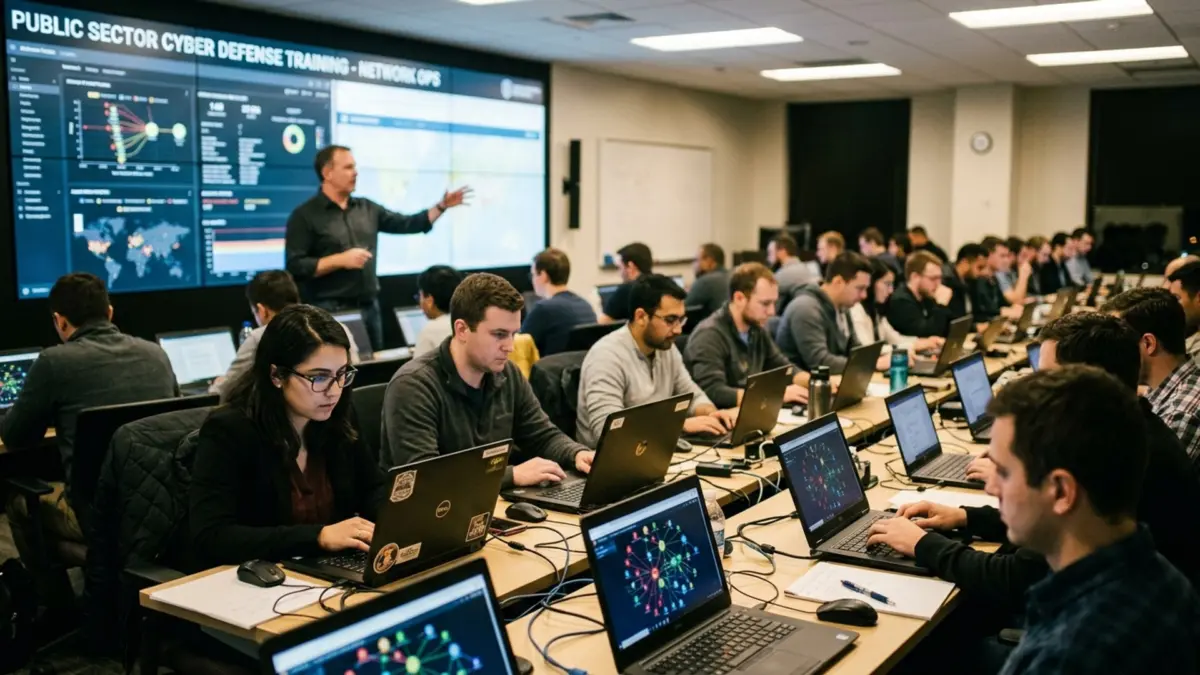
Designed to combat an increasingly sophisticated and accelerated threat landscape, the program launches alongside a high-stakes pilot project with the Multi-State Information Sharing and Analysis Center (MS-ISAC). This collaboration specifically targets state, local, tribal, and territorial (SLTT) cyber defenders who frequently find themselves on the front lines of digital warfare with minimal resources.
The initiative addresses a critical vulnerability in modern critical infrastructure: while large enterprises and nation-state adversaries leverage cutting-edge artificial intelligence to launch lightning-fast attacks, many vital public services—including water treatment facilities, local electrical grids, and regional financial institutions—continue to operate on legacy systems with severely restricted budgets. OpenAI’s $1 billion injection aims to bridge this widening asymmetry, democratizing access to frontier AI models to ensure that under-resourced defenders can outpace modern threats.
1. Deconstructing the $1 Billion Commitment: Daybreak for America and Beyond
The core of OpenAI’s announcement centers on a massive $1 billion commitment to expand subsidized access to Daybreak cyber models and products across the United States and international markets. According to the company, this substantial financial allocation is targeted for consumption over the next six months, reflecting an urgent, wartime-speed approach to immediate defense needs.
Daybreak for America
The domestic arm of the initiative, dubbed Daybreak for America, consolidates and scales OpenAI’s ongoing efforts to protect vital infrastructure networks. This includes safeguarding the backbone of civil society: water and wastewater treatment plants, electric grids, municipal governments, and community banking institutions.
OpenAI has confirmed that the initiative will rapidly expand to international partner countries in the coming weeks. However, the initial domestic rollout prioritizes operators of essential services that historically lack the deep pockets, specialized toolsets, or dedicated cybersecurity workforces of Fortune 500 companies.
The Vulnerability Gap in Critical Infrastructure
Security analysts have long warned that municipal and regional utilities represent the "soft underbelly" of national security. These organizations are frequently tasked with defending complex, aging, and fragmented architectures against threat actors who move at machine speed.
Under Daybreak for America, priority access is systematically granted to:
- Water and wastewater system operators
- Electric grid and utility providers
- State, local, tribal, and territorial (SLTT) governments
- Community and regional banks
- Nonprofit organizations and public-interest groups
- Open-source software maintainers
- Other resource-constrained entities guarding critical nodes
By offering these groups subsidized access to high-tier AI defense models, OpenAI hopes to neutralize the structural disadvantages that leave local infrastructure exposed to catastrophic cyberattacks.
2. The MS-ISAC Pilot: A Blueprint for Public-Sector Defense
A cornerstone of the September 2026 announcement is the public-sector and water-focused pilot program launched in direct partnership with the Multi-State Information Sharing and Analysis Center (MS-ISAC).
Bridging AI with Public-Sector Realities
The pilot pairs direct access to OpenAI’s Daybreak models with rigorous, guided training and hands-on engineering assistance for an initial cohort of public-sector and water system defenders. This structured support is engineered to help security teams accomplish several vital tasks:
- Validate and Prioritize Findings: Sifting through thousands of automated alerts to isolate genuine, high-risk vulnerabilities.
- Coordinate Remediation: Streamlining the patching and fixing process across bureaucratic and technical silos.
- Develop Repeatable Frameworks: Establishing standardized, automated security workflows that can be scaled and adapted over time.
The Critical Role of MS-ISAC
Operating as a division of the Center for Internet Security (CIS), MS-ISAC stands as the United States’ premier cybersecurity resource dedicated exclusively to serving SLTT government organizations. MS-ISAC provides essential services to thousands of public-sector entities, including county governments, public hospitals, K-12 school districts, and local law enforcement agencies.
By integrating Daybreak into MS-ISAC’s existing framework—which already delivers cyber-threat intelligence, incident-response support, and real-time information sharing—OpenAI aims to forge a scalable security model. The long-term vision is to transition this pilot into a permanent, accessible resource capable of benefiting the entire MS-ISAC membership base and similar public-sector communities nationwide.
3. Inside the Daybreak Ecosystem: Architecture and Access Tiers
To fully understand the weight of OpenAI’s $1 billion pledge, one must examine the technical architecture of the Daybreak program itself. Launched earlier in 2026, Daybreak was architected specifically to enable verified public- and private-sector defenders to harness advanced generative AI for authorized, defensive cyber operations.
The Dual-Tier Access Model
The program operates on a structured two-tier access architecture designed to balance accessibility with rigorous security controls:
- Daybreak Blue: Tailored for common defensive operations, this tier leverages OpenAI’s mainline frontier models to assist security teams with routine tasks, log analysis, and baseline threat hunting.
- Daybreak Red: Reserved for pre-approved organizations operating in high-stakes environments, this tier grants access to specialized, highly sensitive cyber models built for technically demanding defensive engineering, vulnerability discovery, and complex patch generation.
Presently, the Daybreak ecosystem has seen rapid adoption. OpenAI reports that thousands of defenders across 2,000 approved organizations and workspaces—spanning dedicated cybersecurity firms, national defense agencies, and law enforcement bodies—are already utilizing the platform.
The Agentic Defense Loop
The Daybreak program is not merely a conversational AI chatbot; it functions as a comprehensive, governed cyber defense stack. The platform pairs state-of-the-art frontier models with a specialized coding harness, advanced security tooling, trusted workflows, and integrations with premier ecosystem partners.
OpenAI characterizes Daybreak as an agentic defense loop, executing a continuous operational cycle:
- Inventory: Automatically mapping digital assets, software dependencies, and network topologies.
- Discovery: Proactively scanning for architectural flaws, misconfigurations, and zero-day vulnerabilities.
- Dynamic Validation: Simulating adversarial attack paths to verify whether a discovered vulnerability is exploitable in a real-world environment.
- Ownership Assignment: Automatically routing verified security findings to the appropriate engineering or administrative teams.
- Verified Remediation: Generating, testing, and preparing code patches for human review.
Crucially, OpenAI emphasizes a human-in-the-loop paradigm: human operators retain absolute authority to review consequential changes, analyze AI-generated outputs, and independently verify deployed fixes before they go live in production environments.
4. Historical Context: Real-World Provenance and Defender Convenings
The launch of the $1 billion initiative is not an isolated corporate philanthropic gesture; it is the culmination of months of targeted crisis response and grassroots collaboration between OpenAI and frontline defenders.
Emergency Water System Interventions
In the wake of a series of aggressive, foreign-backed cyberattacks targeting U.S. water and wastewater utilities, OpenAI quietly mobilized resources to assist affected regions. The company offered impacted state agencies and municipal water authorities up to $1 million in no-cost API credits, direct Daybreak access, and specialized technical assistance.
According to OpenAI, these emergency relief efforts yielded tangible security successes. Participating response teams utilized Daybreak’s AI tooling to conduct exhaustive code reviews, audit system configurations, validate security scan findings, and develop and test emergency patches—all while critical water treatment systems remained fully operational and online.
Grassroots Convenings of Critical Infrastructure Leaders
Recognizing that technology alone cannot solve systemic cybersecurity challenges, OpenAI has spearheaded an ongoing series of strategic convenings with frontline operators, including municipal utilities, state government CIOs, and regional bankers.
Most notably, a recent gathering of utility companies brought together delegates representing 40 states and the District of Columbia. Collectively, the organizations present at these convenings provide essential services to more than half of the entire U.S. population. OpenAI has confirmed that these collaborative forums will continue and expand as the Daybreak initiative scales globally, ensuring that real-world operational feedback directly shapes the evolution of the AI models.
5. The Daybreak Defense Network and the "Defense Factory"
To ensure that the Daybreak models integrate smoothly into existing organizational workflows, OpenAI is leveraging a robust partner ecosystem alongside groundbreaking internal operational blueprints.
The Daybreak Defense Network
In tandem with the frontline-defender announcement, commercial partners within the newly formed Daybreak Defense Network rolled out more than 35 enterprise products and partner-operated services. These offerings seamlessly embed Daybreak’s specialized cyber models directly into the legacy tools, security orchestration platforms (SOAR), and daily workflows that enterprise defenders already rely on, minimizing friction and maximizing adoption.
Open-Sourcing the "Defense Factory" Architecture
In a significant contribution to the broader security community, OpenAI published its operational blueprint for building what it terms a "Defense Factory."
The Defense Factory represents a continuous, agent-first operational model that integrates seamlessly with existing security and engineering infrastructure. Its primary objective is to autonomously scan systems, discover and validate vulnerabilities, and formulate thoroughly tested code fixes ready for human review.
By open-sourcing the architectural framework and sharing the operational lessons learned during its development, OpenAI is inviting independent developers, enterprises, and open-source maintainers to adapt the Defense Factory approach to their own unique operating environments.
6. Future Outlook: The Road Ahead for AI-Driven Cyber Defense
As OpenAI’s $1 billion subsidized access window opens—scheduled to be consumed over the next six months—the cybersecurity industry stands at a definitive crossroads. The integration of autonomous, agentic AI into defensive operations marks a paradigm shift away from reactive, signature-based security toward proactive, machine-speed resilience.
Challenges on the Horizon
Despite the optimistic outlook, industry analysts point out several challenges that lie ahead for the Daybreak initiative:
- The Dual-Use Dilemma: While Daybreak is rigorously governed and restricted to authorized defenders, the underlying technological advancements in automated vulnerability discovery could theoretically inspire more sophisticated adversarial tactics from malicious threat actors.
- Adoption and Training Curves: For under-resourced municipal governments and rural water boards, mastering complex AI tooling requires not just subsidized access, but sustained educational investment and cultural adaptation.
- Long-Term Sustainability: With the initial $1 billion subsidy structured to be consumed over a six-month horizon, questions remain regarding how resource-constrained entities will maintain their access once initial credits and promotional tiers expire.
A New Standard for Public-Private Defense
Nevertheless, the launch of Daybreak for Frontline Defenders establishes a powerful new precedent for how private-sector technology giants can collaborate with public-sector entities to protect critical national infrastructure. By directly targeting the municipalities, water systems, and local banks that form the bedrock of daily life, OpenAI’s initiative signals a collective acknowledgment that national cybersecurity is a shared responsibility—one that requires the most advanced tools available to be placed directly into the hands of those who need them most.
Eligible state and local governments, critical infrastructure operators, nonprofit organizations, open-source project maintainers, and supporting cybersecurity entities are encouraged to visit the official OpenAI Daybreak website to review detailed eligibility criteria, technical documentation, and application procedures for subsidized access and technical assistance.

