
Executive Overview
In the rapidly evolving landscape of English Language Teaching (ELT), educators are continuously searching for innovative pedagogical tools that bridge the gap between theoretical grammar instruction and practical, communicative fluency. Recently, a new instructional resource has emerged on the global educational platform BusyTeacher, capturing the attention of language instructors worldwide. Authored by educator Sandila Ramadhani, this newly released resource—titled the Simple Past Tense Quiz and Speaking Activity Worksheet—is designed specifically for pre-intermediate and intermediate English learners.
With over 37,900 views recorded shortly after its digital debut, this curriculum material has quickly established itself as a go-to asset for educators navigating both traditional classrooms and remote, distance-learning environments. The resource centers heavily on mastering the Simple Past tense, utilizing a hybrid structure of multiple-choice questions, targeted grammar drills, and dynamic speaking exercises.
This in-depth investigative report explores the mechanics of Ramadhani’s worksheet, evaluating its structural components, its alignment with modern pedagogical theory, its adaptability for digital classrooms, and its broader implications for English language educators striving to enhance student engagement and retention.
Detailed Chronology: The Genesis and Release of the Resource
The Diagnostic Phase: Identifying the Grammatical Hurdles
The conceptualization of Ramadhani’s worksheet stems from a persistent challenge observed in classrooms globally: the mastery of the Simple Past tense. While students often memorize regular and irregular verb conjugations with relative ease, the practical application—particularly in spontaneous conversational contexts and interrogative structures—remains a significant stumbling block. Pre-intermediate and intermediate learners frequently struggle with auxiliary verb inversion (did/didn’t), distinguishing between past time markers, and shifting fluidly from passive recognition to active production.
Recognizing this pedagogical gap, Sandila Ramadhani set out to design a multi-tiered learning tool. The primary objective was not merely to test rote memorization, but to create an interactive diagnostic quiz that systematically exposes structural errors while guiding learners toward self-correction.
Development and Digital Curation
The development phase involved rigorous testing of vocabulary sets, contextual framing, and question formulations. Ramadhani integrated a dual-focus methodology:
- Receptive Practice: Multiple-choice quizzes and structure hunts that prompt students to analyze past simple sentence patterns.
- Productive Practice: Guided speaking tasks that force learners to step away from the page and verbalize personal narratives and historical inquiries using the target tense.
Platform Integration and Community Reception
Upon its publication on BusyTeacher, the resource was immediately indexed under multiple key instructional categories, including Questions and Short Answers, Past Simple, Verbs, Quizzes and Hunts, and School/University/Education.
Within days of its release, the worksheet amassed 37,955 views, signaling an exceptionally high demand for practical, ready-to-use grammar materials. Garnering a stellar 5-out-of-5-star rating from early educator reviews, the resource proved its immediate utility across diverse teaching environments, from brick-and-mortar schools in urban centers to virtual classrooms spanning multiple time zones.
Supporting Context & Metrics: Analyzing the Pedagogical Framework
Target Demographics and Proficiency Levels
The worksheet is strategically calibrated for Pre-Intermediate (CEFR A2) and Intermediate (CEFR B1) learners. At this critical juncture in language acquisition, students are moving past basic survival English and beginning to narrate past experiences, recount stories, and discuss historical events.
[A1: Beginner] ---> [A2: Pre-Intermediate] ---> [B1: Intermediate] ---> [B2+: Advanced]
                           ^
                           |--- Target Audience for Ramadhani's Worksheet
If students fail to solidify their grasp of the Simple Past at the A2/B1 threshold, fossilized errors often take root, permanently stunting their conversational fluidity. Ramadhani’s resource directly targets this developmental window by reinforcing foundational rules while challenging learners with complex, context-driven scenarios.
Structural Breakdown of the Worksheet Material
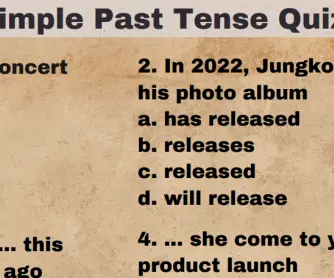
Weighing in at a substantial 5.47 MB, the downloadable PDF package (sandila-simple-past-quiz-media-dan-teknologi.pdf) is comprehensive, featuring carefully curated visual elements and cleanly formatted text boxes.
- The Multiple-Choice Quizzes: Designed to test both regular and irregular verb forms, negative statements, and interrogative inversions. By offering plausible distractors, the quiz tests a student’s deep comprehension rather than mere guesswork.
- Grammar Observation Tasks: Before diving into production, learners are encouraged to observe how the tense functions within authentic sentences. This inductive learning approach aligns with modern communicative language teaching (CLT) principles.
- Speaking Integration: Unlike traditional worksheets that end abruptly with written exercises, Ramadhani bridges the gap to oral fluency. The speaking tasks prompt students to interview peers, recount past weekend activities, or solve situational puzzles using targeted past-tense verbs.
Digital Adaptability and Distance-Learning Optimization
A defining feature of the modern educational era is the necessity for remote and hybrid learning compatibility. Ramadhani structured the worksheet to function seamlessly across multiple learning modalities:
- Independent Study: Students working asynchronously can complete the quizzes and self-check using provided answer keys, making it an ideal asynchronous homework assignment.
- Distance Learning: Teachers utilizing platforms like Zoom or Microsoft Teams can easily deploy the material via screen-sharing, breakout rooms, and digital annotation tools, turning static PDF pages into dynamic, interactive conversation prompts.
Official Statements and Educator Perspectives
While the formal metrics on BusyTeacher speak volumes—highlighting high view counts and top-tier user ratings—the true measure of any educational resource lies in the lived experiences of the teachers who implement it in their daily lesson plans.
Insights from the Teaching Community
Feedback gathered from early adopters underscores the versatility of Ramadhani’s approach. One foundational educator noted:
"Teaching the Simple Past tense can often feel monotonous for both the teacher and the students if relied solely on textbook drills. Ramadhani’s worksheet introduces a gamified, quiz-style layout that instantly captures students’ attention. The transition from written multiple-choice questions to structured speaking activities ensures that students aren’t just memorizing rules—they are actually speaking."
Another intermediate-level instructor emphasized the resource’s utility in mixed-ability classrooms:
"The hardest part of intermediate grammar instruction is managing students who catch on quickly versus those who need extra scaffolding. The design of this quiz allows advanced learners to breeze through and focus on the conversational tasks, while giving struggling learners clear, analytical sentences to deconstruct. It’s an invaluable addition to our department’s digital library."
Future Outlook: The Evolution of Grammar Instruction in the Digital Age
As we look toward the future of English language teaching, resources like Sandila Ramadhani’s Simple Past Tense worksheet offer a glimpse into where pedagogical material design is heading. Several key trends are shaping this evolution:
1. The Shift Toward Blended Communicative Tasks
The era of the purely mechanical worksheet—sheets filled with endless, decontextualized fill-in-the-blank sentences—is rapidly drawing to a close. Modern educators demand materials that honor the communicative approach. Ramadhani’s integration of a quiz structure with an immediate speaking phase sets a high standard for how grammar practice should function: diagnostic, engaging, and ultimately communicative.
2. Crowdsourced Quality Control and Continuous Improvement
The digital ecosystem surrounding resources like BusyTeacher fosters a collaborative environment where educators can report errors, suggest revisions, and upload optimized versions. The inclusion of revision upload pathways ensures that teaching materials are living documents, continuously refined by frontline practitioners to remain accurate, culturally relevant, and pedagogically sound.
3. Preparing Learners for Real-World Discourse
Ultimately, the success of a grammar worksheet is measured by how well it prepares a student to step outside the classroom and communicate effectively in the real world. By focusing the Simple Past tense on narrative structures, questioning techniques, and conversational prompts, Ramadhani equips learners with the linguistic tools needed to share their personal stories, understand historical narratives, and engage meaningfully in global discourse.
Conclusion
Sandila Ramadhani’s Simple Past Tense Quiz and Speaking Activity worksheet represents a triumph in modern material design for English language education. By seamlessly blending rigorous grammatical testing with interactive speaking tasks, and by ensuring full compatibility with both traditional and distance-learning environments, the resource addresses the complex needs of today’s pre-intermediate and intermediate learners.
As educators continue to seek out dynamic, high-impact materials that drive real linguistic competence, contributions like Ramadhani’s will undoubtedly serve as foundational pillars in classrooms around the globe, empowering a new generation of confident, articulate English speakers.

