
Executive Overview
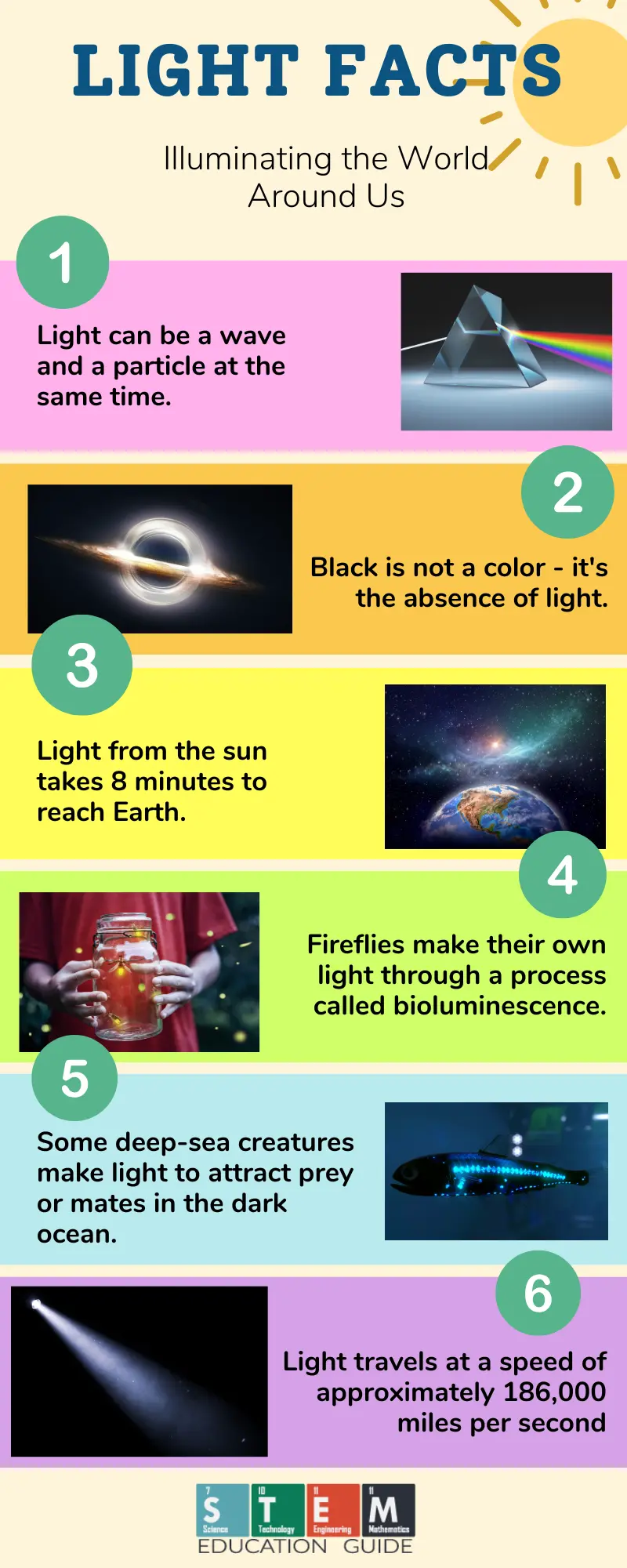
Light is the foundational thread of our universe. Beyond merely illuminating our surroundings, it dictates the pacing of life on Earth, drives the biological engine of photosynthesis, and carries historical data from deep space directly to our telescopes. Defined fundamentally as a form of electromagnetic energy that travels concurrently as waves and discrete particles known as photons, light is an extraordinary physical phenomenon.
While everyday experiences with light—such as casting shadows, admiring a sunset, or turning on a household LED bulb—feel mundane, the underlying mechanics are complex and deeply fascinating. Traveling through the absolute vacuum of space at an astonishing velocity of approximately 186,000 miles per second (299,792 kilometers per second), light bridges cosmic distances, allowing sunlight to reach Earth in just over eight minutes.
This comprehensive report explores the dual nature of light, its interactions with matter, its breathtaking manifestations in the natural world, and the historical breakthroughs of optics. Furthermore, it examines cutting-edge technological innovations—ranging from fiber-optic communication to quantum dots—that harness light to shape the modern world and pave the way for future scientific revolutions.
Detailed Chronology of Light Science
The human quest to understand light spans millennia, transitioning from philosophical musings to empirical physics and quantum mechanics. The evolution of our collective understanding features several pivotal milestones:
- Antiquity and Early Optics: Ancient Greek philosophers such as Pythagoras and Euclid debated the nature of vision. Some theorized that "visual rays" emanated from the eyes to touch objects, while others, like Epicurus, argued that objects shed physical particles perceived by the eye.
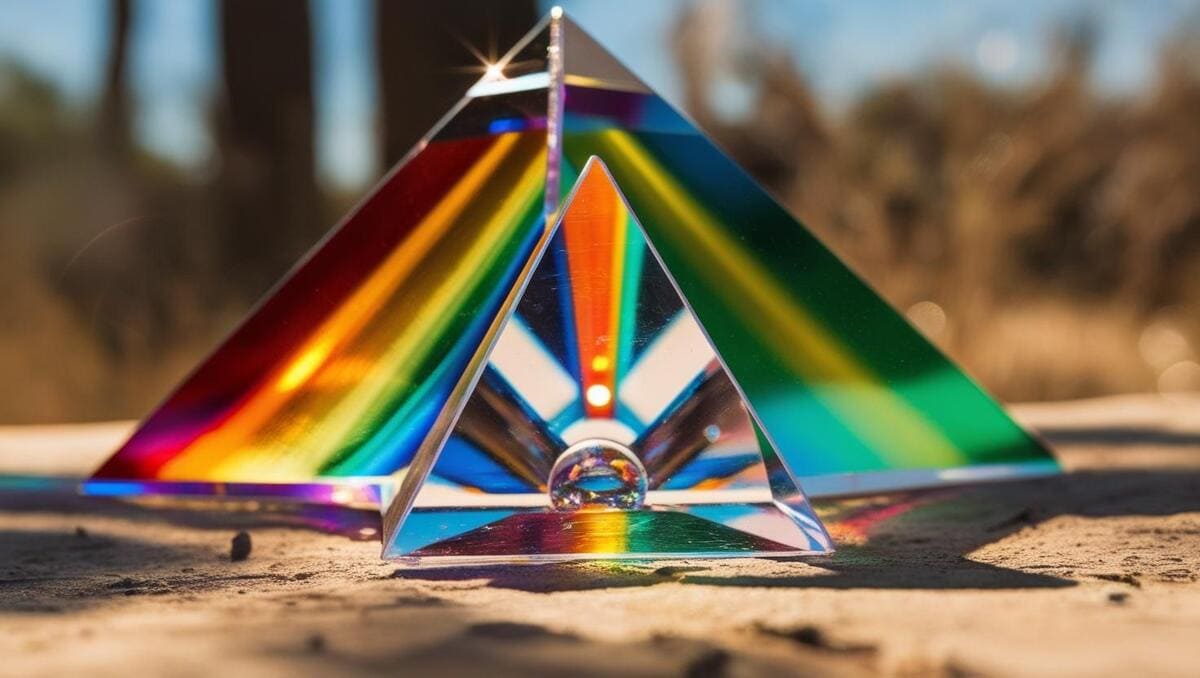
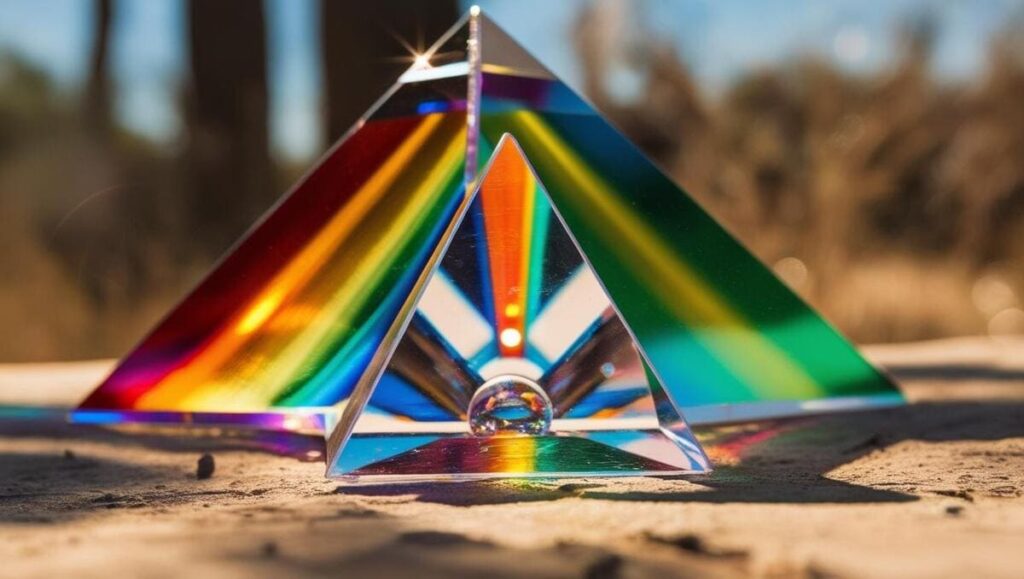
- 17th Century – The Wave-Particle Debate: Dutch physicist Christiaan Huygens published his groundbreaking Treatise on Light in 1690, proposing that light propagates in waves. Concurrently, Sir Isaac Newton advanced a corpuscular (particle) theory of light, demonstrating with a glass prism in 1666 that white light is composed of a spectrum of distinct colors. Newton’s authority temporarily sidelined the wave theory.
- 19th Century – Electromagnetism and Wave Proof: Thomas Young’s double-slit experiment confirmed the wave nature of light through interference patterns. Later, James Clerk Maxwell unified electricity, magnetism, and light into a single theoretical framework in the 1860s, mathematically proving that light is an electromagnetic wave.
- Early 20th Century – The Quantum Revolution: Max Planck and Albert Einstein shattered classical physics by introducing the concept of wave-particle duality. Einstein’s explanation of the photoelectric effect in 1905—for which he received the Nobel Prize in Physics—proved that light can behave as packets of energy, later named photons.
- Late 20th Century to Present – Lasers, Fiber Optics, and Quantum Dots: The invention of the laser in 1960 by Theodore Maiman transformed manufacturing, medicine, and telecommunications. Today, modern physicists utilize quantum optics to develop ultra-fast computing, quantum cryptography, and advanced microscopic imaging techniques.
Supporting Context & Metrics: The Properties of Light
To truly comprehend light, scientists measure several core physical properties. Light operates across a vast continuum known as the electromagnetic spectrum, of which human vision perceives only a razor-thin sliver.
The Electromagnetic Spectrum and Visible Light
The light accessible to the human eye is called visible light. Different colors correspond to specific wavelengths and frequencies. Red light possesses the longest wavelengths and lowest frequencies within the visible spectrum (roughly 620 to 750 nanometers), whereas violet light exhibits the shortest wavelengths and highest frequencies (380 to 450 nanometers).
| Color | Wavelength Range (nm) | Prominent Example in Nature |
|---|---|---|
| Red | 620 – 750 | Vibrant desert sunsets |
| Orange | 590 – 620 | Autumn foliage |
| Yellow | 570 – 590 | Sunflowers and radiant sunlight |
| Green | 495 – 570 | Chlorophyll-rich forest canopies |
| Blue | 450 – 495 | Clear daytime sky and deep oceans |
| Violet | 380 – 450 | Blooming lavender flora |
Beyond the Visible: Invisible Radiation
While the human eye is restricted to visible light, the broader electromagnetic spectrum includes:
- Ultraviolet (UV) Rays: Invisible to humans, though detected by various insects and birds. Excessive UV exposure causes skin sunburns.
- Infrared (IR) Radiation: Experienced primarily as thermal heat on the skin.
- X-rays and Gamma Rays: High-energy, short-wavelength radiation used in medical diagnostics and emitted by extreme cosmic events.
Speed and Measurement
In a vacuum, light achieves the ultimate speed limit of the universe: 186,000 miles per second. When light enters denser mediums—such as water or glass—it slows down. This reduction in speed is quantified by the refractive index. Because water possesses a higher refractive index than air, light bends (refraction), creating everyday optical illusions like a bent straw in a glass of water or the deceptive shallowness of a swimming pool floor.
Official Statements and Expert Perspectives
The academic and scientific community continues to emphasize the critical role of optics and photonics in modern society. Dr. Elizabeth Vance, a senior researcher in quantum optics at the National Institute of Standards and Technology (NIST), emphasizes the profound utility of light in contemporary technology:

"Light is no longer merely a subject of passive observation; it is an active tool for engineering the future. From routing global internet traffic through hair-thin glass fibers to manipulating individual atoms with laser cooling, our mastery over the photon defines the cutting edge of human capability."
Furthermore, educational advocates underscore the importance of early STEM engagement through optics. Hands-on learning experiences—such as utilizing prisms, exploring reflections with plane mirrors, and experimenting with simple lenses—foster critical thinking in young minds. By observing how a red apple reflects red wavelengths while absorbing all other colors, students grasp foundational principles of absorption, reflection, and human color perception.
Light in Nature: Natural Phenomena
Nature displays some of its most awe-inspiring spectacles through the behavior of light. These phenomena demonstrate the interplay between solar radiation, planetary atmospheres, and biological adaptations.

Rainbows and Atmospheric Optics
Rainbows occur when sunlight encounters atmospheric moisture. As rays enter spherical raindrops, they refract, reflect off the interior back surface of the droplet, and refract once more upon exiting. This dual refraction splits white sunlight into its constituent spectral colors, painting a luminous arc across the sky. Similarly, atmospheric scattering during sunrises and sunsets filters out shorter blue wavelengths, allowing longer red and orange wavelengths to dominate the horizon.
The Aurora Borealis
The Northern Lights (and their southern counterpart, the Aurora Australis) are magnificent luminous displays near Earth’s polar regions. They are generated when charged energetic particles from solar wind collide with gaseous atoms in Earth’s upper atmosphere. The resulting excitation of oxygen and nitrogen molecules releases vibrant curtains of green, pink, and violet light.
Bioluminescence and Phosphorescence
Life has adapted to utilize light in total darkness. Bioluminescence is the production and emission of light by living organisms through chemical reactions. Fireflies use rhythmic flashes to attract mates, while deep-sea creatures—such as anglerfish and certain species of jellyfish—emit eerie glows to hunt prey or evade predators.

In contrast, phosphorescence involves materials absorbing light energy and slowly re-emitting it over extended periods. This property is observed in glow-in-the-dark consumer products as well as specific minerals and marine organisms.
Future Outlook
As we look toward the horizon, light-based technologies promise to revolutionize computing, telecommunications, and medicine.
Quantum Dots and Ultra-High-Definition Displays
Researchers are heavily developing quantum dots—nanoscale semiconductor particles that exhibit unique optical properties. When exposed to light or electrical current, quantum dots emit exceptionally pure colors. This technology is rapidly transforming display engineering, resulting in ultra-thin, hyper-realistic television and monitor screens with unprecedented energy efficiency.
Photonics and Optical Computing
Traditional electronic computers rely on the movement of electrons through copper pathways, generating heat and encountering physical speed limitations. Photonics seeks to replace electrons with photons. Optical computing and advanced fiber-optic networks promise to transmit data at near-light speeds with negligible thermal loss, unlocking unprecedented processing power and global internet speeds.
The Pursuit of Invisibility
Advanced laboratories are actively researching metamaterials capable of bending light entirely around an object. By precisely manipulating the path of photons using engineered sub-wavelength structures, scientists are moving closer to practical cloaking devices. While still in experimental phases, such breakthroughs could revolutionize aerospace engineering, medical imaging, and military safety protocols.
Ultimately, light remains the ultimate bridge between the macroscopic cosmos and the microscopic quantum realm. As humanity continues to decode its properties and harness its immense energy, our understanding of the universe will only continue to brighten.

