
Executive Overview
Navigating the labyrinth of K-12 school finance has long been considered one of the most formidable hurdles in educational research. For decades, analysts, policymakers, and academic researchers attempting to understand how billions of taxpayer dollars flow through American public school systems have faced a grueling data-wrangling process. Relevant financial datasets are chronically fragmented, scattered across a disparate array of federal, state, and local agencies. These numbers frequently arrive in incompatible formats, utilize inconsistent definitions, and require extensive, time-consuming data cleaning before any meaningful analysis can even begin.
Recognizing this systemic bottleneck, national education nonprofit Bellwether developed and launched edfinr—an open-source R package designed to streamline, organize, and democratize tidy K-12 school finance data. One year after its initial release, the tool has become an indispensable asset for the education policy community, racking up more than 2,000 downloads and transforming how researchers interact with complex fiscal datasets.
Today, following an intensive year of direct user engagement, workshops, and methodological refinement, Bellwether is officially launching a major, upgraded version of edfinr. This new iteration introduces advanced data fields, expanded analytical capabilities, and enhanced cross-referencing tools designed to tackle complex educational economics questions with unprecedented speed. As public school systems nationwide grapple with the compounding pressures of declining student enrollment and the complete evaporation of federal COVID-19 pandemic relief funds (Elementary and Secondary School Emergency Relief, or ESSER), the timing of this enhanced toolkit could not be more critical. The modernized edfinr is purpose-built to help researchers, advocates, and policymakers track resource allocation transparently, ensuring that education dollars are directed where they are needed most.
Detailed Chronology: From Concept to Community Standard
The journey of edfinr from a novel idea to an established industry standard reflects Bellwether’s commitment to bridging the gap between raw government data and actionable policy insights. The timeline of its development highlights how listening to the research community drives continuous innovation in educational technology.
August 2025: The Genesis of edfinr
Recognizing the massive barrier to entry posed by raw federal datasets—such as the U.S. Census Bureau’s Annual Survey of School System Finances (F-33) and the National Center for Education Statistics (NCES) locale data—Bellwether launched the original version of edfinr. The core mission was simple: eliminate the tedious data-cleaning phase that consumed weeks of researchers’ time and provide a standardized, tidy R package that allowed users to dive straight into analysis. By codifying best practices in data formatting, the initial release instantly attracted the attention of quantitative education researchers, graduate students, and think-tank analysts who previously had to build their own bespoke data pipelines from scratch.
Fall 2025 to Spring 2026: Field Testing and Community Engagement
Following the launch, the Bellwether team embarked on an active outreach campaign. They engaged directly with the research community through high-profile academic and professional gatherings, including the Association for Education Finance and Policy (AEFP) annual conference and sessions hosted by Harvard University’s prestigious Strategic Data Project (SDP).
Through a dynamic mix of virtual webinars, hands-on coding workshops, and in-person conference sessions, Bellwether guided researchers through the mechanics of education finance analysis using edfinr. Crucially, these sessions served a dual purpose: they were listening tours. As users applied edfinr to diverse state-level contexts and specialized research queries, they encountered operational edge cases, missing fiscal variables, and opportunities for methodological expansion. Bellwether collected this feedback meticulously, laying the groundwork for a comprehensive system overhaul.
Summer 2026: The Launch of the Upgraded edfinr
Integrating months of user feedback, technical refinements, and newly integrated data fields, Bellwether rolled out the next generation of edfinr. The updated package is engineered to handle deeper economic inquiries—such as localized wage adjustments and demographic cost variations—allowing analysts to generate sophisticated comparative visualizations in a matter of minutes rather than days.
Supporting Context & Metrics: The Anatomy of School Finance Disparities
To fully appreciate the utility of edfinr, one must understand the sheer complexity of American school funding. Public education in the United States is financed through a notoriously complex three-legged stool comprising local property taxes, state aid formulas, and federal programmatic grants. Each funding stream operates under different reporting timelines, fiscal years, and compliance mandates.
The Challenge of Geographic Wage Adjustments
One of the most persistent challenges in educational cost analysis is accounting for regional variations in the cost of living and labor markets. A dollar spent on teacher salaries in rural Mississippi purchases a very different basket of goods and labor than the same dollar in urban New York City or suburban San Francisco.
To address this, researchers rely on metrics like the Comparable Wage Index for Teachers (CWIFT), which measures geographic variations in the wages of college graduates who are non-teachers, providing a reliable proxy for the competitive salary a school district must offer to attract high-quality talent.
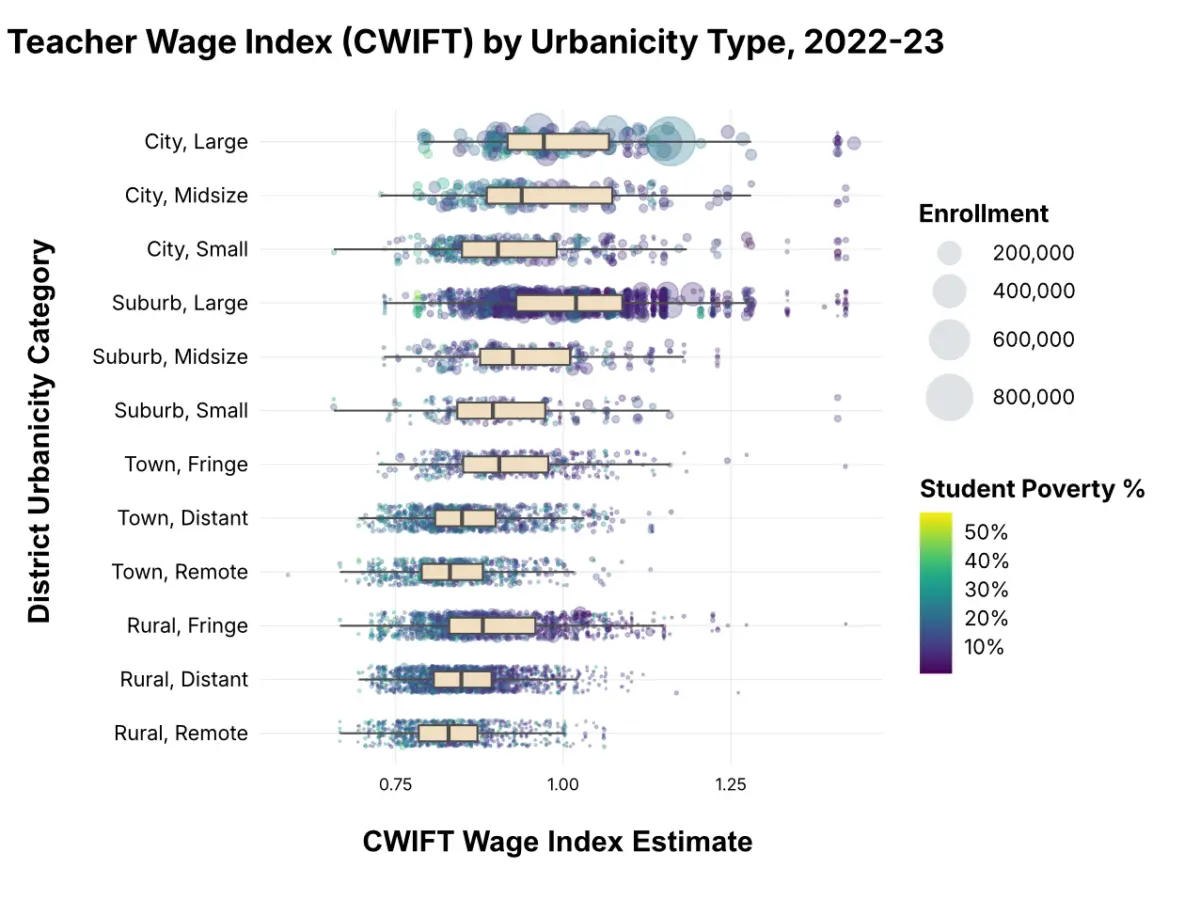
With the updated version of edfinr, analyzing these nuances is streamlined. For example, researchers can instantly examine how the CWIFT wage index fluctuates across urban, suburban, and rural school districts nationwide.
# Example conceptual workflow using the updated edfinr package
library(edfinr)
library(tidyverse)

# Load district-level financial and locale data with integrated CWIFT metrics
district_finances <- load_edfinr_data(year = 2024)

# Generate a comparative visualization of wage indexes across locale types
district_finances %>%
  filter(enrollment > 300) %>%
  ggplot(aes(x = locale_category, y = cwift_index, fill = locale_category)) +
  geom_boxplot() +
  labs(
    title = "CWIFT Wage Index Distribution by District Locale",
    subtitle = "Analysis of districts with enrollment > 300 students",
    x = "Locale Type",
    y = "Comparable Wage Index for Teachers (CWIFT)"
  ) +
  theme_minimal()
The resulting data visualizations reveal striking structural realities. Urban and high-cost suburban districts systematically cluster at the higher end of the wage index, while rural districts face unique structural constraints. When overlaid with student enrollment figures—filtering out micro-districts with fewer than 300 students to prevent statistical distortion—analysts can observe macro-level economic trends that dictate teacher recruitment struggles and operational efficiencies across the American educational landscape.
Macroeconomic Pressures: Declining Enrollment Meets the Fiscal Cliff
The release of the upgraded edfinr arrives at a critical historical juncture for public education. School districts across the country are navigating a brutal fiscal convergence:
- The Expiration of ESSER Funds: The historic influx of federal COVID-19 relief funding, which temporarily propped up district budgets, saved jobs, and funded intensive academic recovery programs, has completely dried up.
- Demographic Decline: Due to plunging birth rates and shifting migration patterns, K-12 public school enrollment is declining in a majority of U.S. states. Because state funding formulas are largely tethered to student headcounts (Average Daily Attendance or Full-Time Equivalency), declining enrollment triggers immediate, painful budget cuts.
In this environment, school board members, superintendents, and state legislators are forced to make agonizing decisions regarding school closures, staffing reductions, and program eliminations. Transparent, rigorous financial research is the only antidote to arbitrary budgeting. By lowering the technical barriers to analyzing fiscal data, edfinr empowers researchers to audit how dollars flow through school systems, identify administrative bloat versus classroom investment, and model the equity impacts of funding cuts.
Official Statements and Industry Perspective
The reception of edfinr within the educational research community highlights a broader movement toward open-source data democratization in public policy.
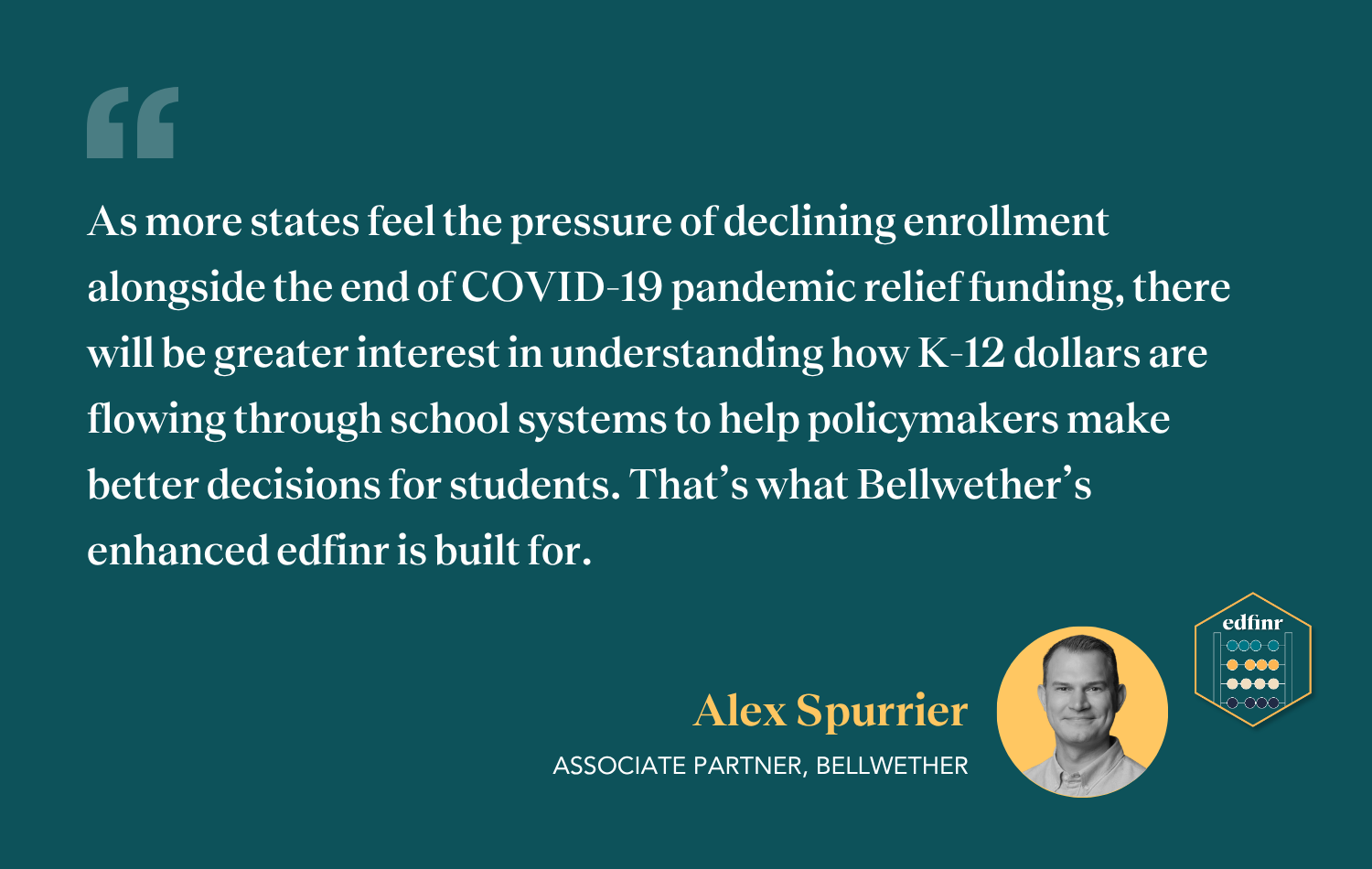
Alex Spurrier, a leading researcher at Bellwether and the primary point of contact for the project, emphasizes that the tool’s evolution is directly tied to the needs of the field. "School finance has historically acted as an exclusive club reserved for econometricians who had the time and specialized computing power to clean decades of messy federal data," Spurrier notes. "Our goal with edfinr was to dismantle those walls. By listening closely to our users at AEFP and the Strategic Data Project, we’ve built a tool that meets researchers where they are—turning a multi-week data-cleaning headache into a streamlined, repeatable process."
Educational economists and policy analysts have echoed these sentiments, pointing out that open-source R packages like edfinr accelerate the pace of academic inquiry. When researchers spend less time troubleshooting missing data fields or harmonizing state identification numbers, they can focus their intellectual capital on answering vital policy questions: How do funding cuts disproportionately impact low-income students? Are high-poverty districts receiving their equitable share of state and local revenues? How efficiently are districts deploying resources to combat chronic absenteeism and learning loss?
Future Outlook: The Next Frontier in Educational Equity Research
As public scrutiny over school spending intensifies, the role of transparent data infrastructure will only grow in importance. Bellwether has designed edfinr as a living, breathing ecosystem rather than a static software product.
The underlying data-cleaning methodology and functional capabilities of edfinr will continue to evolve in tandem with federal reporting updates and emerging research demands. Future iterations plan to incorporate more granular personnel expenditure data, longitudinal tracking of special education funding streams, and enhanced integration with student demographic performance metrics.
For researchers, data scientists, and policy advocates looking to integrate edfinr into their analytical workflows, comprehensive documentation, installation guides, and tutorials are publicly available via the official edfinr webpage.
As school systems brace for a turbulent economic future defined by fiscal cliffs and shifting demographics, tools like edfinr provide the clarity needed to navigate difficult choices. By transforming messy federal records into clean, actionable insights, Bellwether is helping ensure that education leaders and policymakers have the empirical foundation required to make equitable, student-centered decisions.
For questions, methodological feedback, or collaboration inquiries regarding the updated edfinr package, researchers are encouraged to contact Alex Spurrier directly at [email protected].

