
EXECUTIVE OVERVIEW
In the ongoing national conversation surrounding early childhood literacy and evidence-based reading instruction, educators and curriculum developers continue to search for innovative, tactile tools that bridge the gap between abstract phonics rules and student comprehension. Addressing this critical classroom need, educational platform This Reading Mama has released a brand-new, complimentary pedagogical resource: Free Diphthong Puzzles.
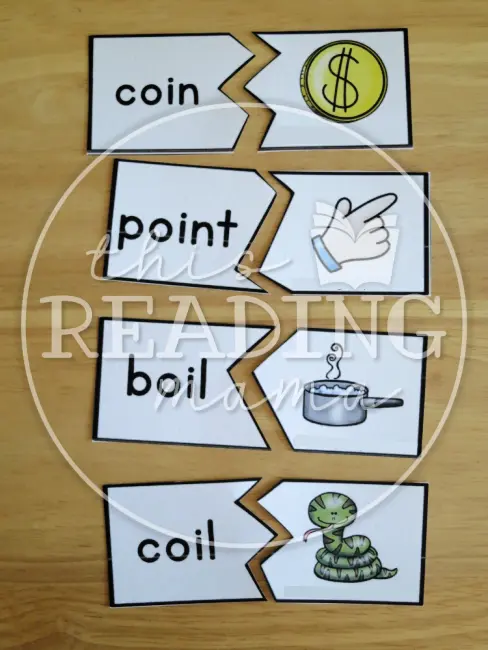
Designed specifically for elementary-age learners—primarily kindergarten through third grade—these interactive puzzles aim to demystify one of the trickiest concepts in English orthography: vowel diphthongs. By combining visual cues, mouth-position awareness, and hands-on manipulation, the puzzles offer a dual-purpose approach for both decoding (reading) and encoding (spelling) words.
This release arrives at a crucial time for primary education. Literacy experts emphasize that mastering complex vowel combinations is a vital milestone that separates basic decoders from fluent readers. However, because diphthongs require a dynamic physical transition of the mouth and tongue, many students struggle to grasp them through traditional worksheet-based instruction alone. The introduction of these free, highly visual puzzles provides teachers, reading specialists, and homeschooling parents with an engaging, low-stakes intervention tool designed to build phonemic confidence without overwhelming the learner.

1. Executive Overview & The Literacy Landscape
The journey from learning individual letter sounds to fluent reading is fraught with complex linguistic hurdles. While short and long vowels are often introduced early in foundational phonics curricula, specialized vowel combinations—such as diphthongs—frequently present a stumbling block for developing readers.
A vowel diphthong (pronounced diff-thong) occurs when the mouth glides dynamically from one vowel sound to another within the same syllable. A classic example is the sound heard in the word boy. When articulating this word, the speaker’s mouth begins in the configuration of the open "o" sound and smoothly transitions, or glides, into the "y" sound.
Because this process requires precise oral-motor coordination and auditory discrimination, teaching it effectively demands more than rote memorization. Traditional flashcards and repetitive spelling drills often fall short, leaving students disengaged or confused. Recognizing this pedagogical gap, literacy advocates have increasingly championed multisensory learning tools. The newly launched Diphthong Puzzles directly answer this call, offering an interactive, puzzle-based mechanism that transforms a complex phonetic concept into a tangible, rewarding challenge.
2. Detailed Chronology of the Resource Development
The path from recognizing a persistent classroom obstacle to publishing a finished, accessible educational tool involves careful planning, linguistic research, and design refinement.

Phase 1: Identifying the Instructional Gap
For years, reading interventionists noted that while students could easily decode simple CVC (consonant-vowel-consonant) words, they frequently stalled when encountering complex vowel teams and glides. Educators reported a lack of specialized, high-engagement materials that targeted diphthongs specifically, rather than bundling them into overwhelming, generalized phonics packets.
Phase 2: Incorporating Oral-Motor Awareness
In developing the puzzles, instructional designers integrated insights from speech-to-print phonics research. Understanding how the mouth moves is just as important as knowing what letters represent the sound. Consequently, the development phase prioritized the integration of visual speech-mouth cues. By showing learners how the mouth shifts during sounds like "oi" and "oy," the resource bridges the gap between auditory phonology and visual orthography.
Phase 3: Prototyping and Classroom Testing
Before making the puzzles publicly available, preliminary versions underwent rigorous testing in simulated learning environments and home-school settings. The primary objective during this phase was usability: Ensuring that the puzzle pieces were intuitive to assemble, visually distinct, and versatile enough to be used for both reading practice and spelling interventions.
Phase 4: Public Release and Digital Integration
The official launch of the Diphthong Puzzles on This Reading Mama marked the culmination of this development cycle. Made available as a free digital download, the resource was integrated alongside supplementary offerings, including curated summer learning games and exclusive membership portals designed to streamline lesson-planning for busy educators.

3. Supporting Context & Metrics: The Science of Reading Diphthongs
To fully appreciate the utility of the new puzzle resources, one must examine the linguistic and cognitive principles underpinning phonics instruction.
What Exactly Is a Diphthong?
Linguistically speaking, a diphthong is a "sliding vowel." Unlike pure vowels (monophthongs), where the vocal tract remains relatively steady during articulation (such as the long /e/ sound in beet), a diphthong involves a noticeable movement of the tongue, lips, and jaw.
- The "OY" and "OI" Glides: In words like boy, soil, coin, and toy, the mouth transitions from an open-mid back unrounded or rounded vowel position to a high front glide.
- The "OW" and "OU" Glides: Similarly, in words like cow, house, cloud, and down, the vocal tract moves from an open central or front vowel sound toward a high back glide.
Cognitive Load and Multisensory Learning
Educational psychology underscores the importance of reducing cognitive load during skill acquisition. When students manipulate physical puzzle pieces to construct a word, they engage multiple sensory pathways—visual, tactile, and kinesthetic.
- Reading Practice: When utilizing the puzzles for decoding, students look at the component parts, isolate the diphthong sound, and blend the phonemes together to recognize the whole word. This reinforces the alphabetic principle in a low-pressure format.
- Spelling (Encoding) Practice: When utilizing the puzzles for spelling, students must listen to a target word, isolate the individual sounds, select the correct puzzle fragments corresponding to the diphthong and surrounding consonants, and physically piece them together.
Prerequisite Mastery: A Critical Warning for Educators
A central tenet emphasized by the creators of the resource is the strict requirement of prerequisite mastery. Educational research consistently shows that forcing a student to complete tasks involving phonics patterns they have not yet mastered leads to frustration, anxiety, and a reliance on guessing rather than genuine decoding.

Before introducing these puzzles to independent workstations or small groups, teachers and parents are strongly advised to ensure that learners have been explicitly taught the specific diphthong patterns. The puzzles are designed not as an introductory teaching lecture, but as a reinforcement, practice, and assessment tool to solidify existing knowledge.
4. Official Statements & Expert Perspectives
Educational leaders and curriculum developers have increasingly emphasized the necessity of bridging structural linguistics with engaging classroom tools.
"Phonics instruction should never feel like an exercise in mindless memorization," notes a leading curriculum strategist specializing in early literacy intervention. "When children can physically see, touch, and manipulate the building blocks of language—such as understanding how their mouth moves to create a diphthong—they transition from passive memorizers to active, analytical readers."
Proponents of multisensory learning point out that resources like the Diphthong Puzzles address diverse learning modalities. While auditory learners benefit from pronouncing the words aloud and hearing the glide, kinesthetic learners thrive on the physical act of snapping puzzle pieces into place.

Furthermore, the creators behind the resource emphasize accessibility. By offering the puzzles as a free, easily downloadable PDF—complemented by clear printing and downloading guides—they remove financial barriers that often prevent under-resourced classrooms and home educators from accessing high-quality, targeted phonics materials.
5. Future Outlook: The Evolution of Phonics Intervention
As educational paradigms shift toward rigorous, evidence-based literacy standards—often referred broadly under the umbrella of the "Science of Reading"—the demand for specialized, high-integrity instructional materials is projected to grow exponentially.
The Move Away From Whole Language Toward Structured Literacy
For decades, many school districts relied on whole-language approaches that encouraged children to guess words based on pictures or context clues. Today, a decisive nationwide pivot toward structured literacy has placed explicit, systematic phonics at the forefront of elementary education. Tools that target specific phonological nuances, such as vowel diphthongs, R-controlled vowels, and digraphs, are now viewed as indispensable components of a modern reading curriculum.
Digital vs. Tangible Learning Environments
Even as classrooms become increasingly digitized, educators continue to champion tactile, hands-on manipulatives for foundational skill-building. Physical puzzles, word sorts, and interactive sorting mats offer a necessary tactile break from screen-based learning, fostering fine motor skills alongside linguistic competence.
What Lies Ahead for This Reading Mama and Similar Platforms
Looking forward, developers of early education resources are expected to expand their offerings to include even more granular phonics interventions, digital companion games, and comprehensive progress-monitoring tools. As platforms like The Library continue to curate ad-free, specialized resources for educators, the collective capacity of classrooms and homes to support struggling readers will be vastly strengthened.
Ultimately, tools like the Diphthong Puzzles remind educators of a fundamental truth: when complex linguistic concepts are broken down into engaging, hands-on, and visually intuitive components, every child can experience the joy and confidence of becoming a successful, fluent reader.

