
Executive Overview
In an era defined by rapid information consumption, digital noise, and evolving standards of civic engagement, the ability to critically analyze historical artifacts has never been more vital. Recognizing this imperative, the National Council of Teachers of English (NCTE) has forged a dynamic, ongoing partnership with the Library of Congress as an active member of the Teaching with Primary Sources (TPS) Consortium.
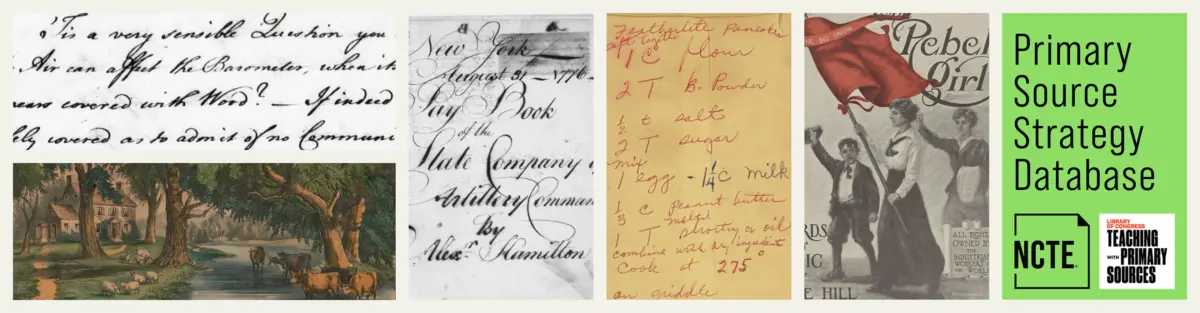
This nationwide initiative is designed to fundamentally transform how literacy teachers and students interact with history. By bridging the vast, digitized archival holdings of the Library of Congress with modern English Language Arts (ELA) pedagogy, the collaboration equips educators with robust, searchable instructional tools. At the heart of this initiative is a specialized database featuring teaching strategies for more than 150 specific items culled from the Library’s extensive collections. Developed by over two dozen veteran educators and ELA leaders, these resources connect primary source analysis directly to curriculum needs, thematic units, and state standards.
Far from being dry history lessons, these instructional modules are engineered to foster advanced literacy skills—such as argumentation, rhetorical analysis, and critical comprehension—while inviting students to grapple with complex social realities. Among the most culturally resonant resources in this database are those addressing systemic racism, identity, and historical power structures through everyday artifacts, such as early-20th-century advertisements for Black hair care products.
This article explores the mechanics of the NCTE-Library of Congress partnership, details the pedagogical frameworks driving these initiatives, examines the specific case study of historical hair discrimination advertisements, analyzes the broader socio-political context surrounding these curricular choices, and outlines the future outlook for primary-source-driven literacy education.
Detailed Chronology and Collaborative Framework
The integration of Library of Congress primary sources into English language arts classrooms is not an isolated project; it represents the culmination of years of targeted programmatic development aimed at modernizing American education.
The Genesis of the TPS Consortium
The Library of Congress established the Teaching with Primary Sources program to help educators connect students to history using the institution’s unparalleled digital archives—consisting of millions of manuscripts, maps, photographs, audio recordings, and print materials. Recognizing that literacy teachers occupy a unique position to teach critical analysis through texts (broadly defined to include visual and material culture), the Library formed the TPS Consortium, bringing professional organizations like the NCTE into the fold.
Building the Searchable Educator Database
To make these archival treasures accessible to busy classroom teachers, the NCTE mobilized teams of expert educators, curriculum developers, and ELA leaders. Over multiple phases of development, these professionals authored comprehensive teaching strategies for over 150 distinct primary sources.
- Tagging and Accessibility: Content within the database is meticulously cataloged using intuitive tags such as picturebook, argument, comprehension, grammar, and spelling.
- Curricular Alignment: Each entry explicitly details the primary source’s instructional value, offering suggested themes, cross-curricular connections, and formal alignment with state content standards (such as New Mexico’s adopted ELA and history/social studies standards).
Evolving the Definition of "Text"
A central pillar of the NCTE’s collaboration with the Library of Congress is the expansion of traditional literacy definitions. In contemporary ELA classrooms, "reading" extends far beyond traditional novels and poetry to encompass visual media, historical journalism, advertisements, and artifacts. By analyzing these diverse primary sources, students learn to decode not just words, but visual rhetoric, cultural subtext, and the hidden assumptions embedded in historical media.
Supporting Context & Pedagogical Metrics: Analyzing Power Through Primary Sources
To understand the depth of the NCTE-Library of Congress initiative, one must examine how individual primary sources are deployed within the classroom to meet rigorous academic standards. A prime example within the database involves the study of an early-20th-century print advertisement for PORO Hair Grower, published in The Statesman and founded by pioneering entrepreneur Annie Malone Pope-Turnbo.
Case Study: The PORO Hair Grower Advertisement
- Description of the Artifact: The advertisement features photographs of company founder Annie Malone Pope-Turnbo and a woman identified as L. L. Roberts, both displaying long, straight hair. Accompanying captions read: "4 years ago my hair was only a finger-length, and my temples were bald halfway up my head" (Pope-Turnbo) and "4 years ago my hair just covered my shoulders" (Roberts). The text also issues warnings against fraudulent hair growth products flooding the market, urging consumers to seek authentic PORO items.
- The Intersections of Appearance and Power: While an advertisement for hair products might initially seem trivial, instructional materials developed by the NCTE guide students to analyze how seemingly minor aspects of physical appearance are deeply intertwined with historical power structures and systemic racism.
- Cultural Identity and Conformity: Discussions surrounding Black hair highlight how dominant social norms historically—and presently—aim to enforce cultural conformity and erase distinct identities. By examining these artifacts, students explore the psychological and emotional tolls of hair discrimination on individuals and communities, laying the groundwork for deep empathy, historical understanding, and civic consciousness.
Academic Rigor and Standards Alignment
Far from straying from academic fundamentals, utilizing such primary sources allows educators to target advanced reading, speaking, and listening standards. For instance, alignment with state standards (exemplified by New Mexico’s implementation) demonstrates how archival analysis reinforces core competencies:
- Speaking & Listening (SL.11-12.3): Students learn to evaluate a speaker or creator’s point of view, reasoning, and use of evidence and rhetoric. They assess the stance, premises, links among ideas, word choice, points of emphasis, and tone used in historical advertising campaigns.
- Literacy in History/Social Studies (RH.11-12.1 & RH.11-12.2): Students cite specific textual and visual evidence to support comprehensive analyses of primary sources, connecting micro-details (such as captions and photographic framing) to broader historical themes. They determine central ideas and map the relationships between key details and historical contexts.
Navigating Controversy: Potential for Challenges and Institutional Pushback
Any curriculum that touches upon systemic racism, cultural identity, or the policing of marginalized bodies inevitably enters a complex socio-political landscape. The NCTE curriculum frameworks explicitly acknowledge the potential for pushback, offering guidance for educators navigating community sensitivities.
Anticipated Points of Friction
- The "Colorblindness" Ideal: Some community members, parents, or administrators argue that race should not be a factor in education, positing that drawing attention to issues like hair discrimination or systemic racism actively creates division rather than healing it.
- Political Objections: Critics holding conservative viewpoints may object to discussions of systemic oppression, occasionally mislabeling historical investigations of race and power as inappropriate ideological indoctrination or Critical Race Theory (CRT).
- Curricular Prioritization: Detractors sometimes claim that exploring cultural artifacts and social justice topics distracts from the "core" academic curriculum (traditionally defined in narrow, back-to-basics terms).
- Historical Illiteracy: A lack of foundational understanding regarding the historical and contemporary significance of hair discrimination—and its concrete impact on Black communities—can lead to skepticism regarding the unit’s academic validity.
Constructive Responses and Empathy Building
Proponents of the NCTE-Library of Congress resources emphasize that analyzing these topics does not divide students; rather, it builds vital critical thinking skills. By examining how beauty standards are historically constructed, students learn to identify implicit biases, question societal norms, and challenge systems of inequality. Furthermore, for students who have personally experienced discrimination, engaging with historical contexts fosters a deeper appreciation of cultural heritage, encourages self-acceptance, and provides tools to resist harmful stereotypes.
Official Statements and Educational Impact
Educational leaders and organizational partners view the collaboration between the NCTE and the Library of Congress as a watershed moment for modern humanities education.
While individual teaching strategies within the database reflect the specialized expertise of diverse ELA leaders, the overarching institutional mission remains uniform: to democratize access to primary sources and foster inquiry-based learning.
- Fostering Agency: By working directly with historical artifacts like the PORO hair care advertisements, marginalized students are empowered to see their histories reflected in the curriculum. This cultivates resilience, authentic self-expression, and a sense of historical belonging.
- Empowering Educators: Teachers are provided with ready-to-use, standards-aligned frameworks that alleviate the heavy burden of curriculum design. By leveraging tags like argument and comprehension, educators can seamlessly integrate complex social histories into traditional language arts lesson plans without sacrificing academic rigor.
Future Outlook: The Next Phase of Primary Source Literacy
As the NCTE and the Library of Congress continue to expand the TPS Consortium, the roadmap for future literacy education points toward greater digital integration, expanded archival access, and deeper interdisciplinary studies.
Expanding the Database
Plans are underway to continuously review and expand the searchable database beyond the initial 150 items. As new collections within the Library of Congress are digitized—spanning diverse cultural histories, technological milestones, and literary milestones—expert ELA educators will continue drafting targeted pedagogical strategies.
Professional Development and Teacher Networks
A critical component of the future outlook is the scaling of professional development. Through workshops, webinars, and regional consortium partnerships, the NCTE aims to train thousands more ELA teachers in primary source pedagogy. By shifting classrooms away from passive textbook absorption and toward active, artifact-based inquiry, educators are preparing students to navigate an increasingly complex information ecosystem.
Conclusion
The collaboration between the National Council of Teachers of English and the Library of Congress represents a profound commitment to the future of American literacy. By fusing the unmatched archival power of the nation’s library with the pedagogical expertise of top ELA leaders, this initiative ensures that students do not merely read history—they interrogate it, learn from it, and use it to build a more empathetic, critically aware society.

