From the simple turning of a doorknob to the complex architecture of a modern skyscraper, human civilization is built upon the foundational principles of physics. At the heart of these innovations lie simple machines—the fundamental mechanical devices that make work easier by trading force for distance. Comprising six classic archetypes—the lever, the inclined plane, the wedge, the screw, the wheel and axle, and the pulley—these tools form the building blocks of all mechanical engineering. When combined, they evolve into compound machines capable of lifting skyscrapers, propelling vehicles, and powering global industry.
Yet, bridging the gap between abstract physics textbooks and tangible comprehension remains a perennial challenge for educators and parents alike. Traditional rote memorization often fails to ignite a genuine passion for science, technology, engineering, and mathematics (STEM). To cultivate the next generation of engineers, innovators, and problem-solvers, modern education increasingly relies on project-based, hands-on learning.
This comprehensive report examines the physics governing simple machines, debunks common conceptual misconceptions, and outlines six creative, highly engaging DIY classroom projects designed to bring mechanical advantage to life. Furthermore, we explore the broader ecosystem of STEM education resources, subscription boxes, and building kits that empower young minds to transition from passive learners to active creators.
Detailed Chronology: The Evolution of Simple Machines in Human History
The formal study and utilization of simple machines did not emerge overnight; it is the product of millennia of human ingenuity, trial, and analytical evolution. Tracing the timeline of how humanity discovered, documented, and harnessed these mechanical advantages reveals the bedrock of modern engineering.
Antiquity: The Dawn of Mechanical Advantage (Prehistory – 3rd Century BCE)
Long before the laws of physics were mathematically formalized, ancient civilizations intuitively grasped the power of simple machines to monumental effect.
The Neolithic Period: Early humans utilized wedges made of flint and stone to split wood and carve stone, while inclined planes—often disguised as earthen ramps—were deployed to position massive megaliths for structures like Stonehenge and the early pyramids of Egypt.
Mesopotamia and the Indus Valley (c. 3500 BCE): The invention of the wheel and axle revolutionized transport and pottery, drastically reducing friction and allowing heavy loads to be moved across vast distances.
Ancient Egypt and Mesopotamia: Pulleys and levers were standard in irrigation, construction, and water-drawing systems, allowing workers to hoist heavy buckets from deep wells with minimal effort.
The Classical Era: Mathematical Formalization (c. 3rd Century BCE)
The true turning point in the history of simple machines occurred in Ancient Greece, where philosophers transitioned from practical application to theoretical analysis.
Archimedes of Syracuse (c. 287–212 BCE): Often regarded as the father of mechanics, Archimedes provided the first rigorous mathematical treatments of the lever and the buoyant force. He famously declared, "Give me a place to stand, and I will move the Earth," highlighting the staggering potential of mechanical advantage. Archimedes is also credited with developing the Archimedes’ screw, a device used to transfer water from low-lying bodies into irrigation ditches.
Hero of Alexandria (c. 10–75 CE): Building upon the work of his predecessors, Hero formally categorized the "five mechanical powers" (lever, windlass/pulley, screw, wedge, and inclined plane), outlining how they could be used to multiply force.
The Industrial Revolution: Scaling Up Mechanics (18th – 19th Century CE)
During the Industrial Revolution, simple machines ceased to be standalone tools and became the internal organs of vast, steam-powered industrial machinery.
Compound Machines: Inventors such as James Watt combined gears (modifications of the wheel and axle), pulleys, and levers to create steam engines that transformed textile manufacturing, transportation, and global trade.
Standardization: The principles of mechanical advantage were codified into modern engineering curriculums, ensuring that bridges, railways, and factories were built upon precise mathematical calculations of force, friction, and work.
The Modern Era: STEM Education and Maker Culture (20th Century – Present)
In contemporary education, simple machines have transitioned from industrial necessities into vital pedagogical tools.
The Rise of Constructivism: Educational theorists like Jean Piaget and Seymour Papert championed "constructivism," the idea that children learn best by actively building mental models through physical creation.
The Maker Movement: Today, classrooms and home-school environments utilize recycled materials, 3D printing, and specialized STEM subscription boxes to reintroduce children to the foundational mechanics that govern our physical world.
Supporting Context & Metrics: Defining Work and Mechanical Advantage
To understand why simple machines are indispensable, one must first deconstruct the precise scientific definition of "work." In everyday vernacular, work refers to any task requiring physical or mental effort. In physics, however, work has a strict, quantifiable definition.
The Physics of Work
Work ($W$) is defined as the amount of force ($F$) applied to an object multiplied by the distance ($d$) over which that force is applied. This relationship is expressed by the fundamental equation:
$$W = F times d$$
Crucially, simple machines do not reduce the total amount of work required to perform a task. Pushing a heavy crate up a long, gentle inclined plane requires the exact same amount of total energy (neglecting friction) as lifting that crate straight up into the air.
So, what makes simple machines so revolutionary? They provide a mechanical advantage by trading force for distance. By spreading the required effort over a longer distance or a prolonged period, a simple machine allows a human to apply a smaller force to accomplish a task that would otherwise require superhuman strength.
[ Traditional Lift ] ---> High Force, Short Distance (Impossible for humans with heavy loads)
[ Simple Machine ]   ---> Low Force, Long Distance (Manageable and efficient)
Industry Metrics and Educational Impact
According to educational metrics tracked by STEM advocacy groups:
Early Engagement: Children who engage in hands-on STEM project-based learning before the age of 10 demonstrate a 35% higher retention rate in complex physics and algebra concepts during high school.
Spatial Reasoning: Constructing physical models of simple machines measurably improves spatial reasoning skills—a core cognitive metric directly correlated with success in engineering, architecture, and computer science.
Accessibility: Over 70% of modern elementary school curricula incorporate tactile machine-building exercises, recognizing that physical manipulation of materials bridges the gap between abstract theory and cognitive mastery.
Official Statements and Educational Insights
Educators, curriculum developers, and child development specialists universally emphasize the necessity of experiential learning when teaching foundational physics.
Dr. Helena Vance, a leading researcher in cognitive development and STEM pedagogy, notes:
"When children brainstorm everyday objects—from scissors to bicycle gears—they realize they are not merely observing physics; they are interacting with it constantly. Simple machines demystify technology. By breaking complex machinery down into six elementary components, we empower children to look at the world not with passive acceptance, but with analytical curiosity."
Furthermore, industry associations dedicated to youth development emphasize that tactile building fosters resilience. When a DIY pulley system slips or a cardboard car’s axle wobbles, students are forced into the scientific method organically: they hypothesize, test, observe, and redesign.
Mark Jenkins, director of the National Youth Engineering Initiative, adds:
"The misconception that simple machines ‘do the work for us’ is pervasive. Clarifying that machines distribute effort rather than eliminate it teaches children a vital life lesson in physics and perseverance: sustainable progress comes from smart planning, leverage, and patience."
6 Fun, Hands-On Simple Machine Projects for the Classroom and Home
To transform theoretical physics into an unforgettable learning experience, educators and parents can utilize these six crafty, hands-on STEM projects. Each activity targets one of the classic simple machines, offering an intuitive demonstration of mechanical advantage.
1. Make Your Own Pulley
Target Machine: Pulley
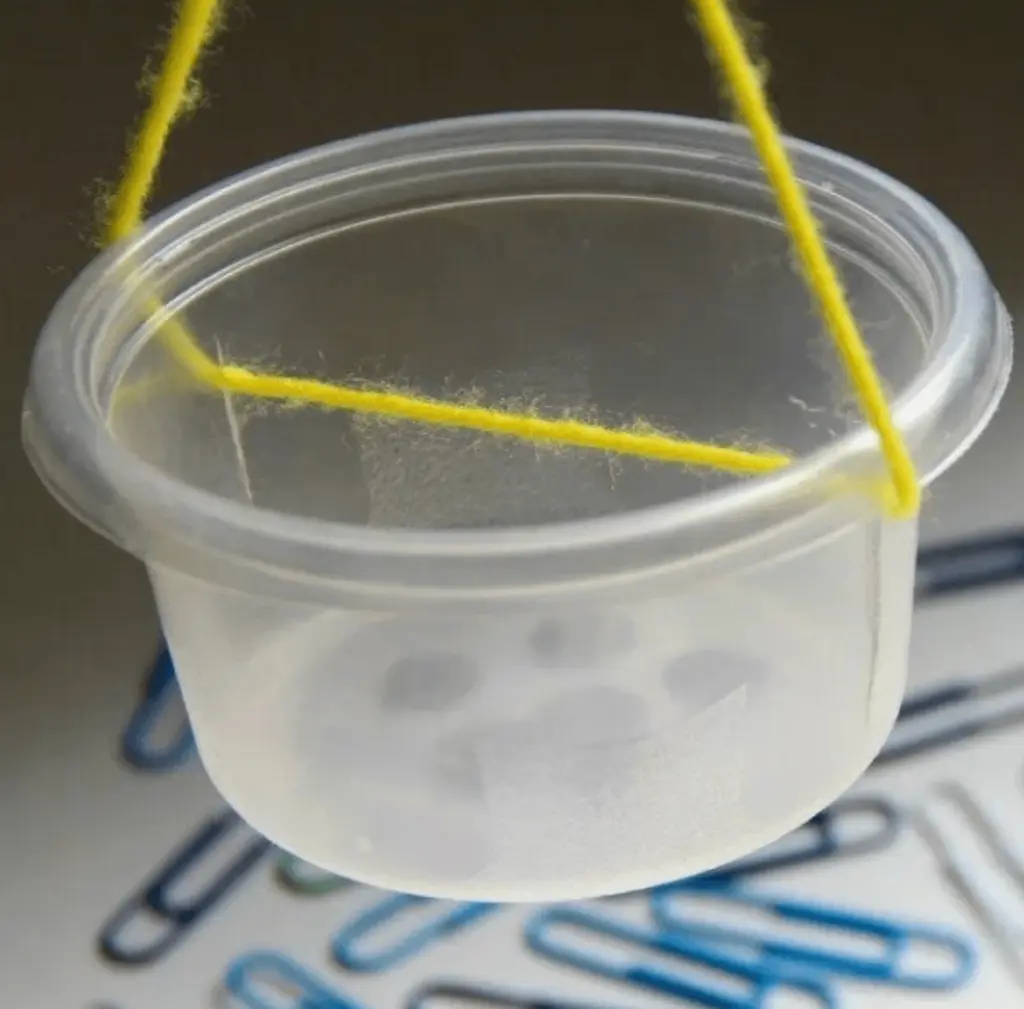
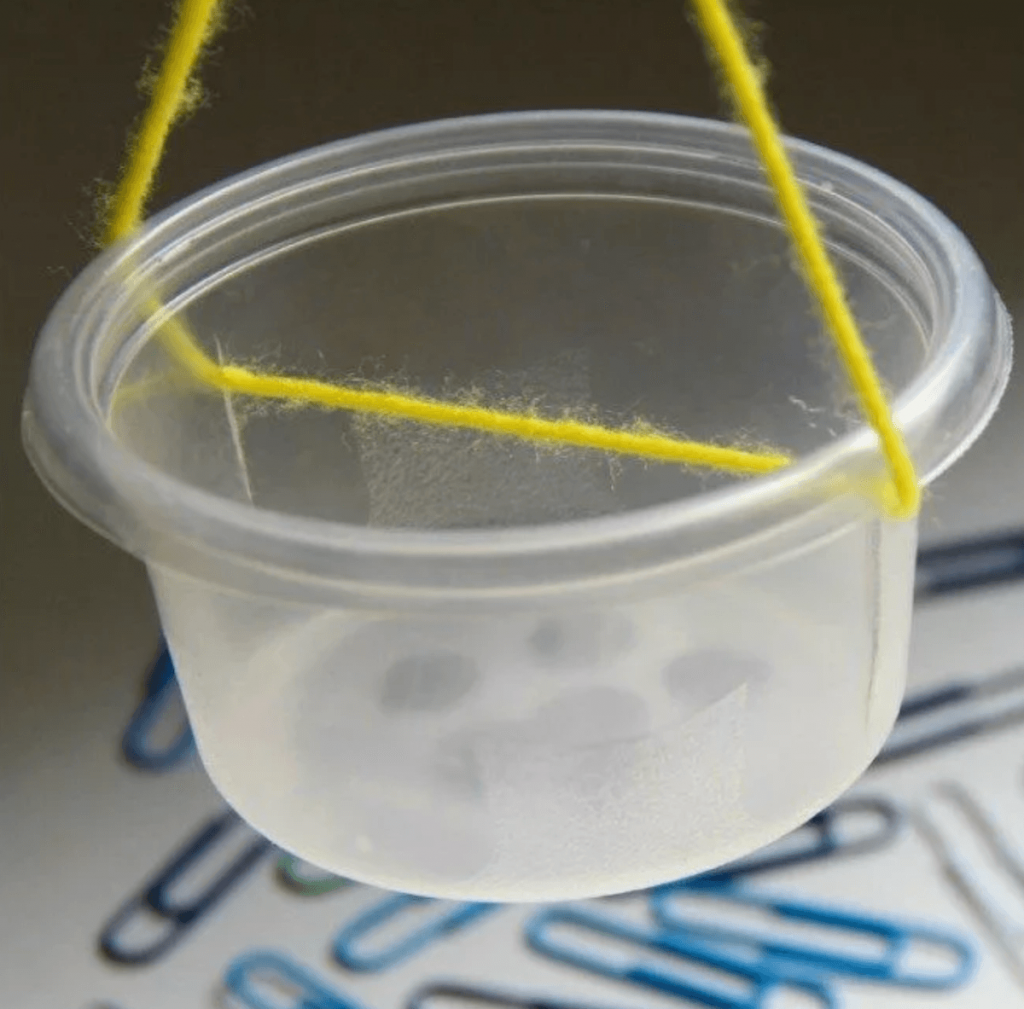
Overview: Utilizing materials such as empty thread spools, string, paper clips, and small plastic cups, students can construct a functional hanging pulley system.
Extension Activity: Turn the project into a competitive game. Challenge students to test how many pennies or metal washers their DIY pulley can lift before the string slips or the support structure bends. This directly demonstrates how fixed and movable pulleys alter the force required to hoist loads.
2. Marble Run Inclined Plane
Target Machine: Inclined Plane
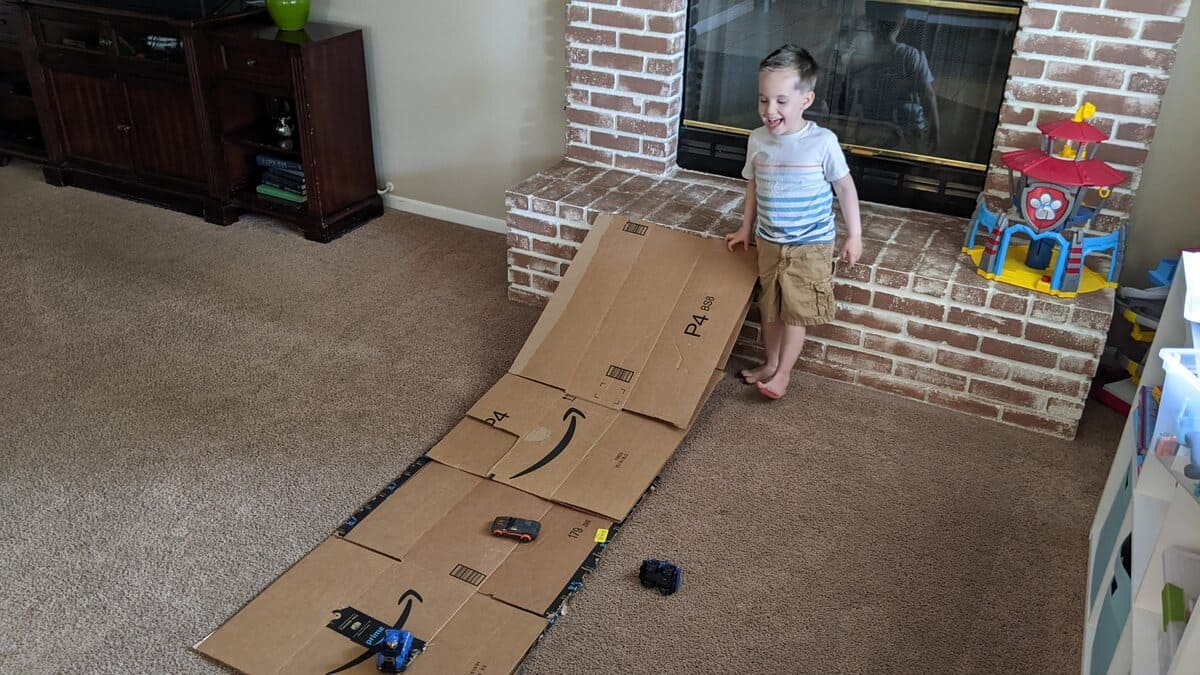
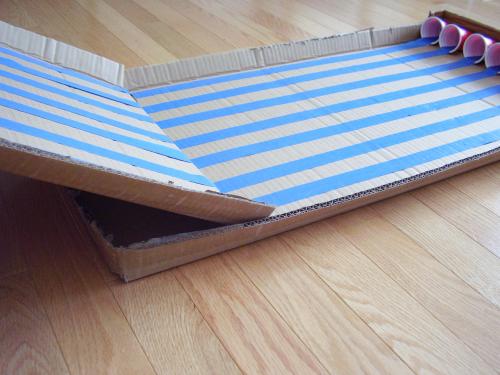
Overview: Transform cardboard tubes, cardstock, and tape into a high-speed marble racecourse. By altering the steepness (angle) of the ramps, students observe how a gentle slope requires less effort to move an object upward, while a steeper slope increases speed but reduces mechanical advantage.
Extension Activity: Introduce toy cars of varying weights to analyze how mass interacts with gravitational pull along an inclined plane.
3. Make a Lever with a Binder Clip
Target Machine: Lever
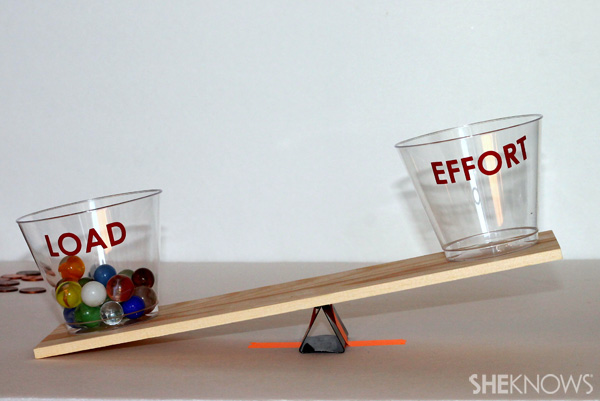
Overview: A standard binder clip serves as an exceptional, highly portable fulcrum, while a popsicle stick acts as the lever arm. By positioning the binder clip at different points along the stick, students can experiment with first-, second-, and third-class levers.
Extension Activity: Place a small eraser on one end and press down on the other. Measure how high the load flies based on where the fulcrum is placed, reinforcing the concepts of effort arms and load arms.
4. Splitting Play-Doh with a Wedge
Target Machine: Wedge
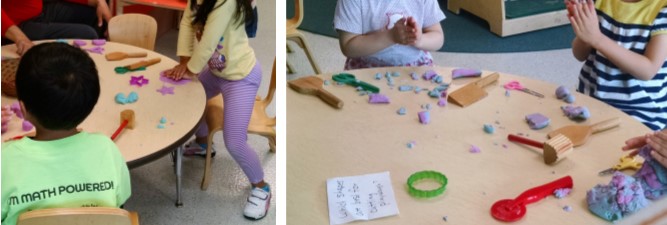
Overview: While an axe is the classic example of a wedge, it is hardly classroom-safe. Instead, provide students with blocks of soft Play-Doh rolled into miniature "logs."
Procedure: First, instruct children to slice the play dough using only the flat side of their hand. Naturally, it fails to cut. Next, introduce triangular wooden or plastic wedge blocks. Pressing the wedge down effortlessly splits the play dough, visually and physically demonstrating how a wedge redirects downward force into outward splitting forces.
5. Demonstrating Screws
Target Machine: Screw
Overview: A screw is essentially an inclined plane wrapped around a cylinder. To demonstrate this, cut a right triangle out of paper, color the slanted edge, and wrap it around a pencil. The colored line forms a visible helical thread.
Procedure: In a piece of soft wood or foam, have students attempt to push a smooth nail straight down with pure hand pressure. It is nearly impossible. Next, demonstrate how effortlessly a threaded screw enters the wood with rotational force, highlighting the mechanical advantage of helical planes.
6. Wheel and Axle Recycled Cars
Target Machine: Wheel and Axle
Overview: Collect cardboard tubes from toilet paper or paper towels, plastic bottle caps, straws, and wooden skewers or chopsticks.
Procedure: First, have students try pushing a bare cardboard tube across the floor. Next, assemble a wheel-and-axle system using straws as sleeves and skewers as axles, attaching bottle caps as wheels. When loaded with heavy weights, the vehicle glides smoothly across the floor, vividly proving how rolling friction drastically outperforms sliding friction.
Common Misconceptions About Simple Machines
Even though simple machines appear straightforward, several persistent misconceptions can derail a student’s conceptual understanding. Clearing these up is vital for advanced scientific literacy.
Misconception 1: All Levers Function Identically
Many students assume that every lever operates the exact same way. In reality, levers are divided into three distinct classes based on the relative positions of the fulcrum (pivot point), the load, and the effort:
First-Class Lever: The fulcrum is in the middle (e.g., a seesaw, crowbar, or pair of scissors).
Second-Class Lever: The load is in the middle (e.g., a wheelbarrow, nutcracker, or bottle opener).
Third-Class Lever: The effort is in the middle (e.g., tweezers, tongs, or a human forearm).
Misconception 2: Friction is Always the Enemy
In many mechanical contexts, friction is viewed as a destructive force that causes wear, tear, and energy loss. However, simple machines often rely on friction to function at all.
A wedge (such as a doorstop) requires friction to hold its position and prevent it from sliding back out.
A wheel and axle cannot grip the ground or generate forward momentum without sufficient traction (friction) between the tire and the road surface.
Misconception 3: Simple Machines Decrease the Total Work
As established by the work-energy principle, simple machines never reduce the absolute amount of work ($W = F times d$) required to complete a task. They merely alter the ratio between force and distance. They make tasks easier by allowing humans to exert lower force over a longer spatial interval, circumventing our biological limitations.
Future Outlook: STEM Toys, Subscription Boxes, and Next-Gen Engineering
As education pivots toward immersive, experiential models, the market for mechanical learning aids has expanded dramatically. Parents and educators looking to supplement classroom learning have access to an extraordinary array of resources.
STEM Subscription Boxes: Monthly kits deliver curated, hands-on engineering projects directly to the doorstep, ensuring continuous engagement with mechanical concepts without requiring extensive lesson planning from parents. (For a deep dive into top-tier options, explore resources such as 13 Awesome (& Educational) STEM Subscription Boxes for Kids).
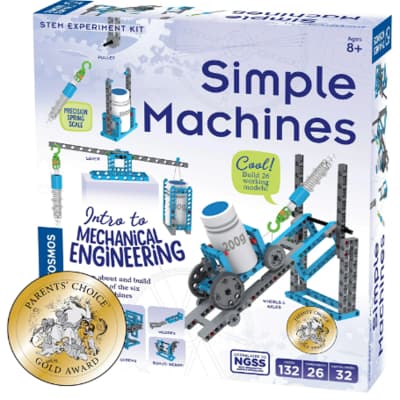
Modular Building Kits: Commercial model-building kits allow children to construct fully operational gear trains, cranes, and pneumatic systems, bridging simple machines with modern robotics.
Rube Goldberg Machines: The ultimate synthesis of simple machines is the Rube Goldberg machine—an intentionally complex contraption designed to perform a simple task through a chain reaction of levers, pulleys, and inclined planes. Designing these machines encourages iterative problem-solving, creativity, and persistent experimentation.
Conclusion
Simple machines are far more than historical relics or dusty textbook definitions; they are the invisible scaffolding of modern civilization. By demystifying the physics of work, mechanical advantage, and force distribution through hands-on projects, we equip young learners with the critical thinking skills needed to engineer a better future.
Whether crafting a cardboard pulley system, racing marble inclined planes, or exploring the mechanics of a wheel and axle, the journey of scientific discovery begins with a single, curious turn. Let curiosity guide the way, and happy building!