
Executive Overview
In an era defined by an overflow of digital information, the ability to critically analyze text, evaluate arguments, and distinguish historical context has never been more vital for students. Recognizing this educational imperative, the National Council of Teachers of English (NCTE) has forged a dynamic partnership with the Library of Congress as an active participant in the Teaching with Primary Sources (TPS) Consortium.
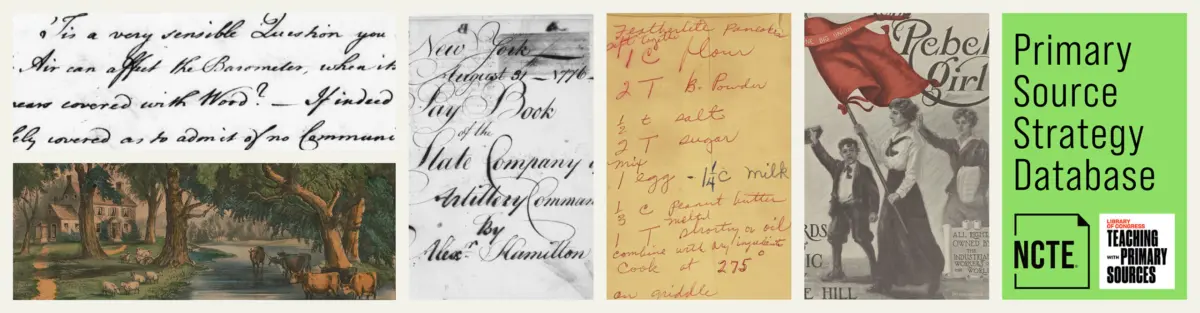
This nationwide initiative is designed to fundamentally shift how literacy teachers and students interact with historical documents. By integrating authentic, digitized artifacts from the Library of Congress into everyday curricula, educators are providing students with tangible touchpoints to the past. At the heart of this collaboration is an extensive, searchable database featuring teaching strategies for more than 150 specific historical items. Curated by over two dozen English language arts (ELA) leaders and educators, these resources attach clear instructional value to historical artifacts, aligning them with state standards, recommended themes, and cross-curricular units.
Among the standout artifacts featured in the database is an 1851 letter to the editor titled “The New Costume,” published in The Mountain Sentinel. This document—defending the controversial "Bloomer" fashion movement of the 19th century—serves as a microcosm of the project’s broader pedagogical goals. By analyzing texts like "The New Costume," students move beyond passive reading into active historical inquiry, dissecting rhetorical devices, evaluating authorial intent, and drawing parallels between historical social justice movements and contemporary debates over bodily autonomy, self-expression, and societal norms.
Detailed Chronology: The Evolution of the NCTE-Library of Congress Partnership
The integration of primary sources into modern American classrooms did not happen overnight. It is the result of years of institutional alignment, digital archiving efforts, and pedagogical reform aimed at making history and literature instruction more inquiry-driven.
Phase 1: Digitization and the Birth of Accessible Archives
For decades, the vast repositories of the Library of Congress—containing millions of manuscripts, photographs, maps, and newspapers—were largely inaccessible to the average K-12 classroom. Physical visits were restricted to scholars and researchers, limiting the use of raw historical documents in foundational education.
The turning point began with the massive digitization initiatives of the late 20th and early 21st centuries. As the Library of Congress systematically scanned its collections, making them accessible via web browsers, the barrier to entry for educators dropped dramatically. However, a new challenge emerged: raw access does not equal pedagogical utility. Teachers, pressed for time and often lacking formal archival training, struggled to translate raw historical documents into structured ELA and social studies lessons.
Phase 2: Formation of the Teaching with Primary Sources (TPS) Consortium
To bridge the gap between archival wealth and classroom practice, the Library of Congress established the Teaching with Primary Sources Consortium. This network brings together universities, school districts, and professional organizations—including the NCTE—to design professional development programs, build instructional frameworks, and create educator-facing tools.
The NCTE’s involvement marked a crucial pivot toward integrating primary sources specifically within literacy instruction. While history teachers frequently use documents for chronological storytelling, ELA educators use them to examine authorial voice, persuasive rhetoric, text structure, and socio-cultural subtext.
Phase 3: Building the Searchable Database
Recognizing the need for standardized, high-quality instructional materials, the NCTE mobilized more than two dozen ELA leaders and curriculum developers. Their mandate was clear: select key artifacts from the Library of Congress digital collection and build robust, standards-aligned teaching strategies around them.
The resulting database is structured for maximum utility. Content is tagged meticulously—using markers such as picturebook, argument, nonfiction, and argumentative writing—allowing teachers to filter materials based on specific classroom needs. Each entry provides a deep dive into the artifact’s historical context, its literary merit, potential classroom challenges, and direct connections to state learning standards, such as the Missouri Learning Standards (MLS) for grades 9 through 12.
Supporting Context & Metrics: The Case of "The New Costume" (1851)
To understand the practical application of the NCTE-Library of Congress database, one can examine its treatment of specific archival entries. A prime example is the 1851 letter to the editor titled “The New Costume,” sourced from The Mountain Sentinel.
Historical Background: The Bloomer Revolution
In the mid-19th century, women’s fashion was inextricably bound to Victorian ideals of domesticity, fragility, and restricted mobility. Heavy, multi-layered skirts supported by cage crinolines and cinched by tight corsets severely limited women’s physical freedom, frequently resulting in respiratory issues, muscle atrophy, and impaired mobility.
In response, dress reform advocates sought functional alternatives. While the physical style known as the "Bloomer costume"—consisting of a shorter skirt worn over loose trousers—was invented by Elizabeth Smith Miller, it was championed and popularized nationally by Amelia Bloomer. As the editor of the pioneering feminist newspaper The Lily, Bloomer wore the outfit publicly and used her publication to advocate for dress reform as a cornerstone of women’s rights.
This sartorial rebellion sparked fierce national debates. Critics decried the outfit as ungodly, immodest, and an affront to traditional gender roles. Conversely, supporters saw it as a liberation movement.
The Primary Source: "The New Costume"
The 1851 letter in The Mountain Sentinel captures this cultural friction in real-time. Written by a supporter using the pseudonym "Amicus," the letter fiercely defends the new style against conservative detractors.
From an ELA perspective, the document is rich with instructional value:
- Rhetorical Analysis: The author employs classic persuasive techniques, directly addressing counterarguments raised by critics and refuting claims regarding modesty and social order.
- Tone and Voice: Students can analyze how "Amicus" balances passionate advocacy with logical appeals regarding the health and comfort benefits of the attire.
- Socio-Cultural Context: The text offers a direct window into how everyday media participated in nineteenth-century debates over bodily autonomy and gender roles.
Standards Integration and Classroom Utility
The NCTE database maps this single document directly to rigorous state educational standards, ensuring that historical inquiry reinforces core language arts competencies. For instance, the resource aligns with:
- MLS.9-10.RI.2.B: Analyzing how an author uses rhetoric to advance a point of view or purpose.
- MLS.11-12.RI.2.D: Evaluating an author’s argument and reasoning for effectiveness, validity, logic, credibility, and relevance of evidence.
By using accessible historical arguments like "Amicus’s" letter, teachers can scaffold complex informational text analysis. Students learn that persuasive writing is not a modern invention born of social media, but a centuries-old tradition utilized by citizens to challenge the status quo.
Official Perspectives: The Pedagogy of Primary Sources
Educational leaders and literacy experts involved in the TPS Consortium emphasize that working with primary sources fundamentally changes the dynamic between students and text.
Traditional textbooks often present history and literature as settled narratives—a sequence of undisputed facts to be memorized and regurgitated. Primary sources, by contrast, introduce ambiguity, bias, emotion, and incompleteness. When students read an 1851 newspaper letter, they are not reading a sanitized summary written by a modern textbook author; they are encountering a living voice from the past, complete with contemporary biases, rhetorical strategies, and passions.
According to curriculum specialists collaborating with the NCTE, this approach fosters critical thinking through several key mechanisms:
- Inquiry-Driven Learning: Instead of being told what happened, students are guided by focus questions that prompt them to investigate the author’s motivations, target audience, and underlying assumptions.
- Empathy and Perspective-Taking: Encountering historical arguments about social change helps students understand how generational shifts occur, illuminating the roots of modern civil rights movements.
- Information Literacy: In an age of deepfakes, synthetic media, and polarized online discourse, the skills required to analyze a 19th-century newspaper editorial—sourcing, contextualization, corroboration, and close reading—are identical to the skills needed to navigate the modern internet.
Future Outlook: Expanding Access and Deepening Literacy
As the NCTE and the Library of Congress continue to expand their collaboration, the future of literacy education looks increasingly interconnected, digital, and analytical.
Scaling the Database
The current repository of over 150 meticulously analyzed artifacts is just the beginning. Plans are underway to scale the database by partnering with additional educators across diverse geographic regions and academic disciplines. Future expansions will likely incorporate multimedia primary sources—including historical audio recordings, early film footage, digitized broadsides, and photographic collections—allowing ELA teachers to incorporate multimodal literacy frameworks.
Professional Development and Teacher Empowerment
Creating tools is only half the battle; ensuring teachers know how to use them effectively is paramount. The TPS Consortium continues to roll out professional development workshops, webinars, and micro-credentialing programs for teachers. These initiatives train educators to design their own primary-source-based inquiry units, moving beyond the pre-packaged database entries to source local and regional archives relevant to their specific student populations.
Preparing Students for Civic Participation
Ultimately, the alliance between the NCTE and the Library of Congress transcends academic test scores. By anchoring literacy instruction in primary sources, educators are equipping the next generation with the intellectual tools required for active, informed civic participation. When students learn to dissect the rhetoric of an 1851 letter defending women’s freedom of movement, they are simultaneously learning how to evaluate the political speeches, media campaigns, and social arguments shaping their own world today.
Through this vital work, history is rescued from the dry pages of encyclopedias and restored to its rightful place: a vibrant, contested, and deeply human conversation across the centuries.

