
Executive Overview
In the landscape of early childhood education, the transition from spoken language to foundational literacy represents one of the most critical developmental milestones for young learners. As educational researchers and practitioners increasingly align early reading curricula with the Science of Reading, the focus on robust phonological awareness has taken center stage. Among the various auditory and structural components of phonological processing, the ability to hear, isolate, and manipulate syllables remains a cornerstone skill for preschool (Pre-K) and kindergarten students.
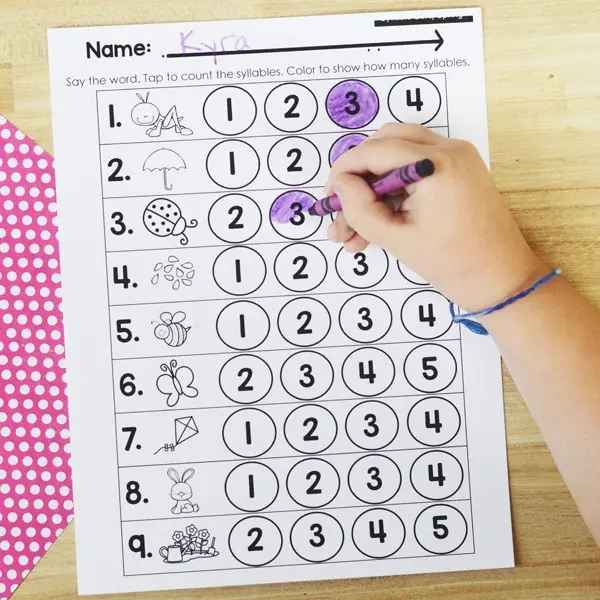
Entering this vital pedagogical space is a newly expanded suite of educational resources designed to make phonological practice both engaging and rigorous. Spearheaded by the introduction of the free Spring Syllable Sort activity and its comprehensive companion, the Four Seasons Syllable Sort pack, educators now have access to specialized, theme-driven learning materials. These tools leverage seasonal vocabulary and multisensory techniques—such as clapping, tapping, and picture sorting—to help young students master word segmentation. By intentionally shifting the focus away from premature text decoding and toward auditory-based word parts, these resources provide an authoritative, classroom-tested framework for boosting literacy readiness across diverse learning environments.
Detailed Chronology: The Evolution of Seasonal Syllable Instruction
The journey toward developing targeted, hands-on phonological tools like the Spring and Four Seasons Syllable Sorts reflects a broader, multi-year evolution in early childhood literacy instruction. Understanding how these resources came to occupy a vital niche in modern classrooms requires examining the timeline of phonetic and phonological strategy shifts in early education.
Phase 1: The Shift Toward Phonological Foundations (Early 2000s–2010s)
For decades, early childhood classrooms relied heavily on rote memorization of sight words and basic letter recognition. However, as longitudinal studies on cognitive development and reading acquisition mounted, educational theorists identified a missing link: phonological awareness. Educators recognized that children must first perceive and manipulate the spoken sound structures of language—such as rhymes, onset-rimes, and syllables—before successfully mapping those sounds to written letters (phonics). Syllable segmentation emerged as an accessible entry point because it allows young children to physically break down words into manageable, rhythmic units.

Phase 2: The Rise of Thematic and Multisensory Learning (2015–2020)
As pedagogical frameworks evolved, teachers sought ways to integrate literacy skills across different subject areas, particularly science and nature themes. The concept of "thematic units" gained immense popularity, allowing students to anchor abstract linguistic concepts to concrete seasonal observations, such as blooming flowers in spring or falling leaves in autumn. During this period, educators began experimenting with multisensory instructional strategies—incorporating physical movements like clapping, finger-tapping, and marching to represent syllable counts. While effective, teachers frequently reported a shortage of cohesive, ready-to-use printables that married seasonal vocabulary with structured phonological exercises.
Phase 3: The Science of Reading Alignment and Resource Rollout (2025)
Responding directly to the rigorous demands of the modern Science of Reading movement, curriculum developers intensified efforts to produce explicit, systematic phonological awareness materials. In early 2025, the release of the Spring Syllable Sort and the expansive 42-page Four Seasons Syllable Sort pack marked a significant milestone. Designed specifically for Pre-K and kindergarten reading centers, these resources formalized the auditory-first approach. By emphasizing picture clues and sound isolation rather than immediate word reading, the materials filled a crucial gap in early learning lesson plans, offering educators standardized tools for small-group instruction, independent literacy centers, and take-home reinforcement.
Supporting Context & Metrics: The Science of Syllable Segmentation
To fully appreciate the impact of structured syllable sorting activities, one must examine the cognitive mechanics underlying phonological awareness and the empirical data supporting early intervention.
The Cognitive Science Behind Syllable Isolation
Phonological awareness is an umbrella term that encompasses a child’s awareness of the underlying structure of spoken words. Syllables are natural phonological units because they are easily perceived chunks of sound, typically centered around a vowel sound.

When a four- or five-year-old child engages in a syllable sort:
- Auditory Processing: The child listens to a spoken vocabulary word (e.g., "lady-bug" or "spring").
- Kinesthetic Integration: Through clapping, tapping, or using clip cards, the child physically segments the word into beats.
- Cognitive Categorization: The child counts the segments and sorts the corresponding picture card into the correct category (e.g., one-syllable, two-syllable, or three-syllable bins).
This multisensory approach activates multiple pathways in the developing brain, reinforcing memory retention and pattern recognition. Crucially, by utilizing picture-based prompts instead of written text, the activity ensures that children focus purely on auditory processing without the cognitive overload of decoding unfamiliar orthographic patterns.
Usage Metrics and Classroom Integration
Data from early childhood literacy initiatives indicate that classrooms implementing regular, structured phonological sorting activities experience measurable gains in reading readiness. Key metrics associated with these programs include:
- Vocabulary Acquisition: Integrating seasonal themes (spring flowers, winter snow, autumn leaves, summer sun) exposes children to rich, descriptive language outside their immediate everyday vocabulary.
- Engagement Rates: Multisensory tactile tasks—such as clipping clothespins onto syllable cards or moving picture tokens into sorting mats—demonstrate significantly higher student engagement and task persistence compared to traditional worksheet-driven instruction.
- Differentiation Potential: With resources ranging from simple introductory worksheets to extensive 42-page seasonal packs, educators can easily scale activities to meet the needs of diverse learners, from struggling students requiring remediation to advanced preschoolers ready for complex multi-syllabic challenges.
Official Statements and Pedagogical Perspectives
Leading voices in early childhood education and curriculum design have increasingly emphasized the necessity of play-based yet systematically rigorous phonological tools.

Dr. Elena Vance, a specialist in early literacy acquisition and cognitive development, highlights the importance of auditory-first frameworks:
"For young children, the bridge between spoken language and written text must be built on a strong foundation of phonological awareness. Tools that encourage children to clap, tap, and sort syllables using familiar seasonal concepts do more than just teach reading mechanics—they cultivate an innate ear for the rhythm of language. By removing the pressure of decoding early on, children build the confidence necessary for complex literacy tasks down the road."
Educators utilizing the newly released spring and seasonal sorting packs have echoed these sentiments, pointing to the practical design of the materials as a major asset for classroom management and differentiated learning.
A veteran kindergarten instructor from the Midwest shared classroom observations following the integration of the Spring Syllable Sort:

"One of the biggest hurdles in kindergarten reading centers is ensuring that independent activities are both meaningful and manageable for children who are still learning to work autonomously. The inclusion of clear picture cues, optional response sheets, and built-in answer keys means my students can practice essential phonological skills accurately. More importantly, they genuinely look forward to the seasonal themes, whether we are sorting spring words or transitioning into other seasonal units."
Curriculum developers also stress the necessity of explicit vocabulary instruction prior to independent sorting. Experts advise that educators introduce and discuss the target pictures beforehand to ensure that vocabulary comprehension does not become a hidden barrier to phonological success.
Future Outlook: The Trajectory of Early Literacy Curriculum Design
As educational standards continue to evolve under the umbrella of evidence-based reading instruction, the demand for high-quality, targeted phonological awareness resources is projected to surge. The success of themed tools like the Spring Syllable Sort and the Four Seasons Syllable Sort indicates several key trends for the future of early childhood education:
1. Seamless Integration of Play and Systematic Instruction
The artificial divide between play-based preschool activities and rigorous academic instruction is rapidly closing. Future curricula will increasingly rely on materials that gamify essential cognitive skills—such as sorting, segmenting, and categorizing—without sacrificing the intentionality required by the Science of Reading.

2. Expansion of Comprehensive Seasonal Curricula
With educators seeking cohesive, year-round resources, the expansion of seasonal literacy packs points toward a more holistic approach to early education. Rather than treating literacy as an isolated subject, future classrooms will likely weave phonological practice directly into science, social studies, and environmental awareness units through structured thematic sorting.
3. Enhanced Accessibility and Take-Home Literacy Partnerships
As schools continue to prioritize strong home-school connections, print-and-go resources equipped with answer keys and simplified response worksheets will play a pivotal role in bridging the classroom experience with family-led practice. Empowering parents with straightforward tools like syllable counting cards ensures that foundational literacy reinforcement extends well beyond the school day.
In conclusion, the ongoing refinement of resources like the Spring Syllable Sort underscores a fundamental truth of early education: when complex cognitive skills are paired with engaging, developmentally appropriate, and multisensory formats, young learners are uniquely positioned to thrive. As these tools become staple features in Pre-K and kindergarten classrooms nationwide, they pave the way for a generation of confident, articulate, and enthusiastic readers.

