
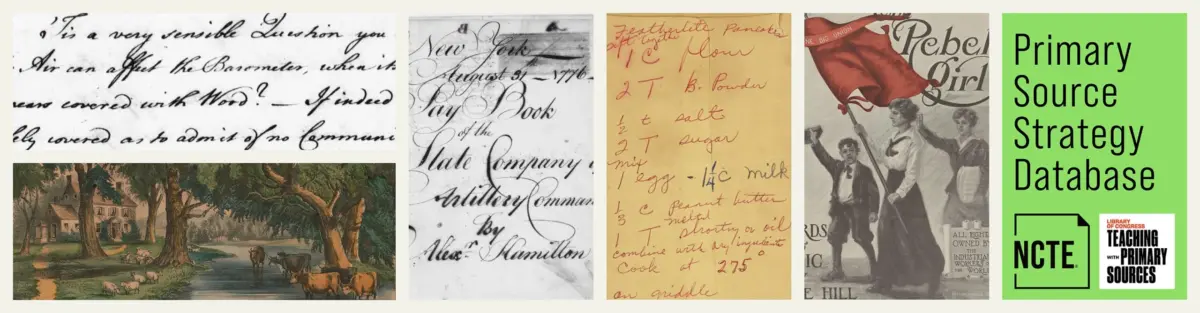
WASHINGTON, D.C. — In an era defined by an urgent need for critical thinking, media literacy, and a deeper comprehension of the human experience, the National Council of Teachers of English (NCTE) is spearheading a transformative educational initiative. Through a strategic partnership with the Library of Congress as part of the prestigious Teaching with Primary Sources (TPS) Consortium, NCTE is fundamentally reshaping how literacy educators and students interact with historical documents.
At the center of this pedagogical evolution is a robust, searchable database designed to bridge the gap between archival history and modern English language arts (ELA) classrooms. Featuring instructional strategies for over 150 specific artifacts drawn directly from the Library of Congress’s vast digitized collections, the initiative provides teachers with the tools necessary to turn raw history into dynamic, inquiry-based learning experiences.
This comprehensive report explores the architecture of this collaborative initiative, spotlights a compelling case study on gender non-conformity in historical journalism, outlines curriculum standards alignment, and evaluates the long-term future of primary-source-driven literacy education.
Executive Overview: Bridging Archives and Classrooms
For decades, traditional reading instruction often relied heavily on secondary texts—textbooks that synthesize, and sometimes sanitize, historical narratives. While secondary sources offer convenience, they frequently strip away the complexity, nuance, and raw human emotion embedded in original historical documents. Recognizing this pedagogical limitation, the NCTE-Library of Congress partnership seeks to place primary sources directly into the hands of students, fostering an environment where learners act as historians, detectives, and critical analysts.
The initiative’s searchable database is not merely a repository of old documents; it is an active instructional toolkit. Developed by more than two dozen distinguished educators and leaders in English language arts education, the platform offers meticulously crafted teaching strategies tailored to specific items in the Library of Congress archive.
Each entry in the database articulates the specific literacy merit of an artifact, detailing its relevance to contemporary ELA curricula, suggested thematic units, and explicit alignments with state and national content standards. Content is intuitively indexed through functional tags such as picturebook, argument, vocabulary, media literacy, writing process, and collaboration.
By integrating these strategies, educators can seamlessly blend historical inquiry with core literacy competencies—improving reading fluency, teaching rigorous textual analysis, and encouraging collaborative debate.
Detailed Chronology: The Evolution of the TPS Consortium and NCTE Partnership
The integration of Library of Congress archives into American classrooms did not happen overnight. It represents the culmination of years of institutional collaboration, digital preservation, and educational reform.
Phase 1: Digitization and Accessibility (Early 2000s)
The foundation of the current initiative was laid when the Library of Congress embarked on massive digital archiving projects, making millions of historical newspapers, manuscripts, photographs, maps, and audio recordings accessible to the public via the internet. However, availability did not automatically equal utility. Educators overwhelmed by the sheer volume of material struggled to adapt raw archival assets into structured lesson plans that aligned with evolving educational standards.
Phase 2: Formation of the TPS Consortium
To bridge the gap between archival wealth and classroom practice, the Library of Congress established the Teaching with Primary Sources Partner Program, forming a nationwide consortium of universities, museums, libraries, and professional organizations like the NCTE. The goal was clear: train educators to use primary sources effectively and develop scalable, high-quality instructional materials.
Phase 3: Collaborative Curriculum Design (Recent Years)
Leveraging its network of premier English language arts educators, the NCTE mobilized two dozen classroom leaders to curate, analyze, and design pedagogical frameworks for over 150 specific Library of Congress items. This phase focused specifically on the intersection of historical artifact and literacy skill—ensuring that learning about the past directly enhanced students’ reading comprehension, argumentative writing, and critical listening skills.
Phase 4: Launch of the Searchable Database and Ongoing Expansion
The culmination of this collaborative effort is the current digital database hosted via NCTE. Designed with advanced tagging and search capabilities, the platform allows teachers to filter resources by media type, thematic units, and instructional goals. Today, the partnership continues to expand, regularly incorporating new strategies that address evolving societal conversations and educational needs.
Supporting Context & Metrics: Uncovering the Marginalized
To understand the practical application of this initiative, one must examine the specific educational materials generated by the collaborative. Among the database’s prominent entries is a historic newspaper article from The Salt Lake Tribune that serves as a powerful catalyst for classroom discussions regarding gender, identity, and societal expectations.
Case Study: Defying Social Norms in the Historical Record
The featured artifact is an article written by London-based correspondent Rupert Neville, listed as a “Special Cable to The Tribune.” The piece chronicles the extraordinary lives of several women who lived part or all of their lives as men. The profiles include historical figures such as:
- Marie LeRoy
- Madame Velasquez
- Hannah Snell
- Mary Ann Talbot
- Catherine Coome
- Marion Edwards
These individuals systematically defied the rigid social norms, legal constraints, and economic expectations of their respective eras. Their stories vividly illustrate the severe historical limitations placed upon women, while simultaneously demonstrating remarkable agency and resilience.
Instructional Value and Critical Thinking Metrics
According to the NCTE curriculum framework, introducing these lesser-known historical figures offers profound cross-curricular value:
- Challenging Traditional Gender Roles: By examining women who crossed societal boundaries, students are encouraged to critically evaluate traditional gender roles and analyze how systemic societal expectations impact individual autonomy across different historical periods.
- Rescuing Hidden Histories: Many of these women were systematically marginalized, erased, or hidden from conventional historical narratives. Studying them provides students with a more complete, inclusive, and nuanced understanding of history.
- Cultivating Empathy: Learning about the immense challenges, dangers, and triumphs faced by these individuals helps students build deep empathy for people who defy societal norms and fight for basic human rights.
- Connecting Past to Present: The resource bridges historical analysis with modern socio-political discourse, allowing students to trace the ongoing, generational struggle for gender equity and civil rights.
Standards Connections & Academic Rigor
To ensure that engaging with such complex topics meets strict educational accountability metrics, the lesson strategies tied to this resource are mapped directly to adopted content standards, such as the New Mexico Content Standards for Reading and Literacy in History/Social Studies:
- RI.9-10.1: Cite strong and thorough textual evidence to support analysis of what the text says explicitly as well as inferences drawn from the text.
- RI.9-10.8: Delineate and evaluate the argument and specific claims in a text, assessing whether the reasoning is valid and the evidence is relevant and sufficient; identify false statements and fallacious reasoning.
- RH.11-12.2: Determine the central ideas or information of a primary or secondary source; provide an accurate summary that makes clear the relationships among the key details and ideas.
Official Perspectives: The Philosophy of Primary Source Literacy
Educational leaders and archival experts have long championed the union of primary source materials and literacy instruction. The underlying philosophy of the NCTE and Library of Congress partnership centers on the premise that true literacy extends far beyond basic decoding; it requires active inquiry, evaluation of authorial bias, and the synthesis of multifaceted evidence.
In professional development materials associated with the TPS Consortium, curriculum designers emphasize that primary sources force students to confront ambiguity. Unlike textbooks that present history as a neat, linear narrative, primary sources are messy, subjective, and open to interpretation.
"When students read a digitized 19th-century newspaper cable or examine a handwritten diary entry, they are no longer passive consumers of information," notes an NCTE curriculum advisor. "They become active investigators. They have to ask: Who wrote this? For what audience? What was left out? These are the exact media literacy skills required to navigate the complex information ecosystem of the 21st century."
Furthermore, educators involved in creating the database stress the importance of representation. By intentionally unearthing stories of individuals who operated on the margins of society—such as the women documented in The Salt Lake Tribune article—teachers validate the diverse experiences of their students and foster inclusive classroom cultures.
Future Outlook: The Next Frontier in Literacy Education
As educational technology evolves and pedagogical standards adapt to an increasingly digital and interconnected world, the NCTE and Library of Congress partnership is poised for continued growth.
Expanding Digital Accessibility and Interactivity
Future phases of the initiative aim to expand the database well beyond the initial 150 items, incorporating multimedia primary sources such as early audio recordings, oral histories, interactive maps, and digitized photographic essays. By embracing multimodal literacy, the partnership ensures that ELA teachers can engage diverse learners—including English language learners and students with varying reading proficiencies.
Professional Development and Teacher Empowerment
A critical component of the future outlook is professional development. Providing teachers with a searchable database is only the first step; empowering educators to confidently navigate potentially sensitive or challenging historical topics is paramount. Upcoming NCTE initiatives will feature expanded professional learning communities, webinars, and collaborative workshops focused on scaffolding difficult texts, facilitating respectful classroom dialogue, and addressing potential community challenges proactively.
Cultivating the Next Generation of Critical Thinkers
Ultimately, the collaboration between the National Council of Teachers of English and the Library of Congress represents a profound investment in democratic education. By equipping students with the tools to interrogate historical records, evaluate arguments with intellectual rigor, and appreciate the multifaceted nature of human history, this initiative prepares young people to be informed, empathetic, and critically engaged citizens.
To explore the searchable database, access comprehensive teaching strategies, and learn more about the NCTE Teaching with Primary Sources initiative, visit the official NCTE portal.

