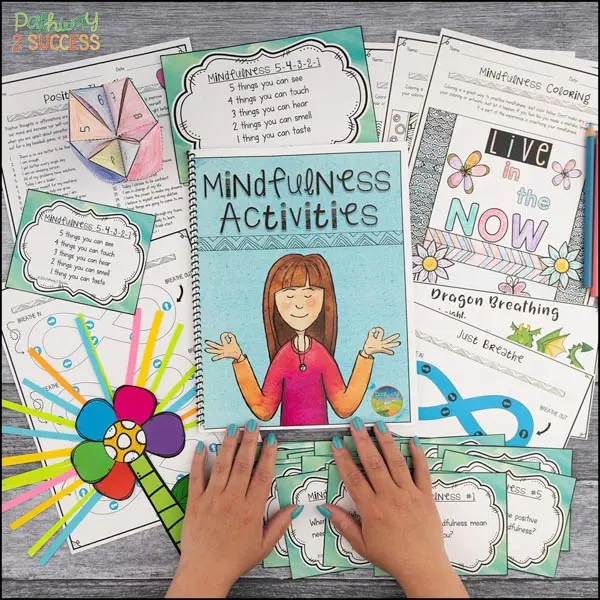
In an era defined by constant digital stimulation, fragmented attention spans, and rising rates of youth anxiety, educators, parents, and clinicians are continuously searching for effective interventions to support the cognitive development of children and teenagers. While mindfulness has historically been championed as a mechanism for relaxation and emotional decompression, contemporary neuroscience reveals a much more profound function: it is a potent catalyst for developing and strengthening executive functioning skills.
Executive functioning refers to the high-level, brain-based command center managed predominantly by the prefrontal cortex. These cognitive processes include attention regulation, self-control, working memory, emotional regulation, flexible thinking, and perseverance. When these systems operate at peak efficiency, young people can plan ahead, transition smoothly between tasks, resist impulsive behaviors, and thoughtfully navigate complex social and academic landscapes. Conversely, deficits in executive functioning frequently manifest as chronic disorganization, academic underachievement, behavioral outbursts, and a paralyzing inability to cope with setbacks.
By intentionally integrating evidence-based mindfulness strategies into daily routines, educators and caregivers can help youth tap into their brain’s neuroplasticity. Mindfulness is not merely a passive state of rest; it is an active cognitive workout. Just as physical exercise strengthens muscle fibers, regular mindfulness practice conditions the neural pathways governing self-regulation and intentional thought. This comprehensive report explores the neurological link between mindfulness and executive functioning, deconstructs its six core components, and outlines actionable, evidence-based strategies for implementation in homes and classrooms.
Detailed Chronology and Scientific Evolution
To understand the modern integration of mindfulness in educational and clinical settings, it is necessary to examine how contemplative practices transitioned from ancient philosophical traditions to empirical, evidence-based psychology.
The Shift from Mysticism to Empirical Science
Late 20th Century: Mindfulness was largely viewed in Western societies as an esoteric, spiritual practice isolated to Eastern philosophical traditions. Early psychological frameworks rarely considered its cognitive applications.
The 1970s and 1980s: Pioneers such as Dr. Jon Kabat-Zinn introduced Mindfulness-Based Stress Reduction (MBSR) into clinical medicine, proving that secularized meditative practices could measurably reduce chronic pain and psychological distress in adult populations.
The 2000s: As neuroimaging technologies such as functional Magnetic Resonance Imaging (fMRI) advanced, researchers began mapping the physical changes in the brain resulting from mindfulness training. Studies revealed structural thickening in the prefrontal cortex and a reduction in the reactivity of the amygdala—the brain’s threat-detection center.
The 2010s to Present: Educational researchers recognized that if mindfulness could alter adult neurocircuitry, it could profoundly impact developing adolescent brains. This catalyzed a wave of school-based social-emotional learning (SEL) initiatives focused on pairing breathwork and self-awareness with core academic curricula. Today, mindfulness is firmly established as an evidence-based intervention for bolstering cognitive control and self-regulation in youth.
Executive functioning is not a single mental faculty, but rather a coordinated symphony of cognitive processes. When youth practice mindfulness, they directly stimulate and exercise specific domains of the prefrontal cortex. Let us examine how mindfulness intersects with the six pillars of executive functioning.
1. Focus and Attention
Definition: Attention is the cognitive capacity to sustain mental effort on a specific person, task, or concept over time, filtering out competing internal and external distractions.
The Mindfulness Connection: Mindfulness exercises are, fundamentally, attention training. When a child focuses exclusively on the physical sensation of breathing, they are intentionally directing their mental spotlight. Inevitably, the mind wanders. Recognizing this drift and gently guiding focus back to the breath is the exact cognitive repetition required to build attentional stamina.
2. Self-Control (Inhibitory Control)
Definition: Self-control is the ability to hit an internal "pause" button, inhibiting immediate behavioral impulses in favor of thoughtful, goal-directed decision-making.
The Mindfulness Connection: Impulsivity is driven by rapid, automated neural firing loops that bypass rational thought. Mindfulness creates a micro-pause between a stimulus and a response. By training young people to observe an impulse—such as the urge to lash out or disrupt a peer—without acting on it, mindfulness builds the neural inhibition required for long-term self-mastery.
3. Emotional Regulation
Definition: Emotional regulation is the capacity to monitor, evaluate, and modify emotional reactions to prevent them from becoming overwhelming or maladaptive.
The Mindfulness Connection: Mindfulness fosters meta-awareness—the ability to observe one’s own thoughts and feelings as passing events rather than absolute truths. When a student feels rejected or overwhelmed, deep breathing activates the parasympathetic nervous system, shifting them away from "fight or flight" and back to the rational "thinking brain."
4. Working Memory
Definition: Working memory is the mental workspace used to temporarily hold, manipulate, and update complex information—such as multi-step instructions or mathematical formulas—while performing a task.
The Mindfulness Connection: Mental clutter, anxiety, and sensory overload consume valuable working memory capacity. Regular mindfulness practices clear out extraneous cognitive noise, functioning much like clearing a cluttered computer desktop. This provides students with a "clean slate" to process and retain essential academic information.
5. Flexible Thinking
Definition: Cognitive flexibility allows individuals to switch perspectives, adapt to unexpected rule changes, and view challenging situations through alternative lenses.
The Mindfulness Connection: Mindfulness encourages non-judgmental acceptance of reality, even when circumstances are unfavorable or distressing. When young people learn to accept a difficult situation without immediate frustration, they unlock the mental flexibility needed to brainstorm creative solutions and embrace critical feedback as a tool for growth rather than a personal attack.
6. Perseverance
Definition: Perseverance, closely linked to grit, is the capacity to sustain effort toward a long-term goal despite encountering obstacles, fatigue, or failure.
The Mindfulness Connection: Sticking with a mindfulness exercise when the mind wants to wander is an active exercise in perseverance. By practicing endurance during quiet, focused moments, youth build the psychological resilience required to push through difficult academic projects and complex life challenges.
Official Statements and Expert Perspectives
The integration of mindfulness into youth development is supported by a growing consensus among developmental psychologists, neuroscientists, and educational leaders.
"Mindfulness is not about trying to empty your mind or achieve a state of permanent bliss. It is about waking up to where you are, recognizing the patterns of your thoughts, and cultivating the cognitive agility required to respond to life’s challenges with intention rather than automated reactivity."
— Dr. Daniel Siegel, Clinical Professor of Psychiatry at the UCLA School of Medicine and Executive Director of the Mindsight Institute.
Educational researchers echo these sentiments, emphasizing the practical utility of these interventions in modern classrooms:
"When schools invest time in teaching foundational self-regulation and mindfulness skills, they are not taking time away from academics; they are building the very neurological infrastructure that makes academic learning possible. A dysregulated brain cannot learn. Mindfulness unlocks the door to higher-order thinking."
— Leading Educational SEL Consortium Review
Actionable Mindfulness Strategies for Kids and Teens
Successfully introducing mindfulness to youth requires moving away from rigid, prolonged meditation sessions and toward engaging, dynamic, and developmentally appropriate activities. Below are evidence-based strategies designed for classrooms, counseling sessions, and home environments.
1. Foundational Mindful Breathing
Breathing is the ultimate portable anchor. Because breath is always present, youth can access it anywhere—during a high-stakes exam, before a sports competition, or after an interpersonal conflict.
Basic Technique: Instruct learners to sit in a comfortable, upright position. Guide them to inhale slowly through the nose, feeling the air fill the lungs, and exhale gently through the mouth. When the mind wanders, gently direct their attention back to the physical sensations of breathing.
Advanced Variations: Introduce imaginative prompts such as "Cooling Off the Pizza" (inhale deeply through the nose as if smelling a hot slice, then exhale slowly through the mouth as if cooling it down) or "Shape Breathing" (tracing geometric shapes with a finger while timing inhales and exhales).
2. Mindful Coloring
Coloring is a tactile, rhythmic activity that engages fine motor skills while naturally quieting the analytical centers of the brain.
Implementation: Provide structured geometric or nature-themed coloring pages. Emphasize that the goal is not artistic perfection, but rather total absorption in the present moment—focusing exclusively on the friction of the crayon or marker against the paper and the blending of hues.
3. Mindful Movement, Yoga, and Stretching
Physical movement bridges the gap between somatic awareness and cognitive focus.
Implementation: Integrate gentle yoga flows or dynamic stretching breaks into the daily routine. Encourage students to synchronize their physical movements with deep, intentional breaths, cultivating bodily awareness and physical poise.
4. Mindful Journal Writing
Journaling gives youth a structured outlet to externalize internal thoughts, process daily events, and practice self-reflection.
Implementation: Begin the morning or academic session with targeted journaling prompts. Allow students to engage in free-writing to clear mental clutter, document emotional states, or explore personal goals.
Implementation: Take learning outdoors for guided sensory walks, mindful gardening, cloud watching, or quiet observation of local wildlife. Encourage students to engage all five senses: what do they hear, smell, feel, and see?
6. Mindful Affirmations
Positive self-talk can disrupt negative cognitive loops and strengthen emotional resilience.
Implementation: Introduce daily affirmation phrases that students can repeat silently while practicing deep breathing. Keep visual reminder cards in student desks, binders, or lockers. Examples include:
"I have the power to pause before I react."
"I can handle difficult moments with patience and courage."
"My mind is calm, clear, and ready to learn."
7. Mindful Observance
This exercise trains the brain’s capacity for hyper-focused attention using everyday objects.
Implementation: Place a common object—such as a smooth stone, a leaf, a water bottle, or a pen—in front of the student. While breathing slowly, direct them to examine every intricate detail: the play of light on the surface, unique textures, temperature, and subtle weight. This sharpens perceptual awareness and concentration.
Future Outlook
As educational paradigms continue to evolve, the artificial divide between academic instruction and social-emotional well-being is rapidly dissolving. The future of youth development relies heavily on preventative, neuro-informed interventions that equip children and adolescents with lifelong self-regulation tools.
Future research initiatives will likely focus on longitudinal studies tracking neuroplastic changes in youth who participate in sustained mindfulness curricula, examining correlations with long-term academic retention, career success, and mental health resilience. Furthermore, as digital distractions accelerate, schools are expected to institutionalize mindfulness not as an occasional luxury, but as a foundational pillar of daily pedagogy.
By systematically integrating mindfulness into the daily lives of children and teens, we do more than foster temporary calm. We construct a durable neurological foundation—strengthening attention, self-control, working memory, and cognitive flexibility—that empowers the next generation to navigate an increasingly complex world with clarity, resilience, and purpose.