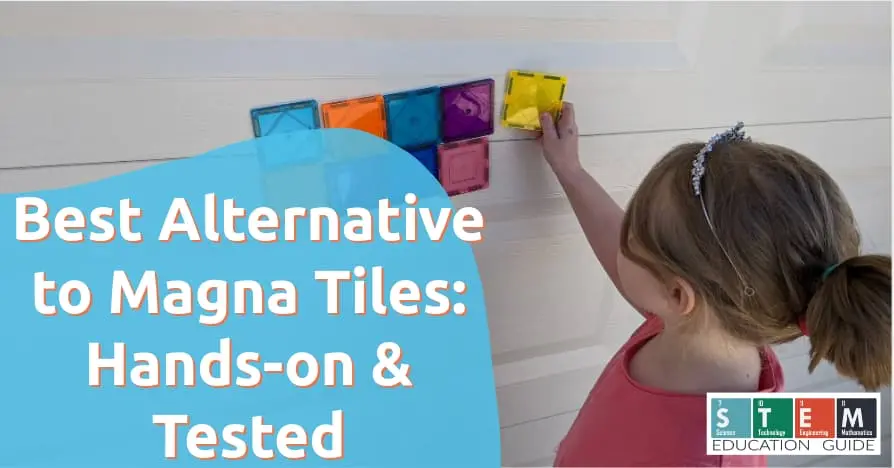
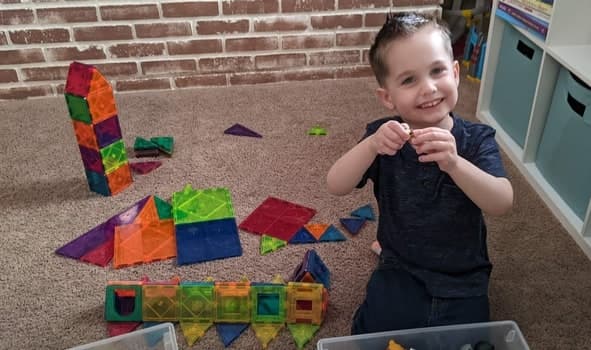
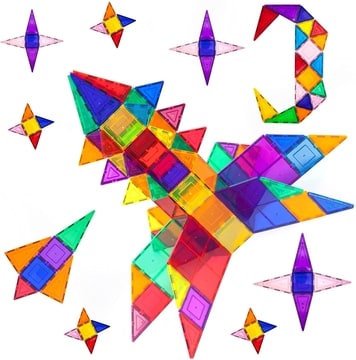
For decades, magnetic building tiles have reigned supreme as a staple of modern early childhood education. Treasured by educators, parents, and developmental psychologists alike, these simple geometric shapes offer boundless opportunities for spatial reasoning, fine motor skill development, and open-ended creative play. Among the pioneers of this market, Magna-Tiles established a golden standard for durability, safety, and classroom performance.
However, as children grow, their ambitions expand. Building towering castles, sprawling futuristic cities, and intricate bridges requires a vast inventory of pieces. For many families, trying to scale up an existing collection using the original name-brand sets presents a steep financial barrier. Because Magna-Tiles maintain strict price-control measures and rarely go on sale, investing in a comprehensive collection can strain household budgets.
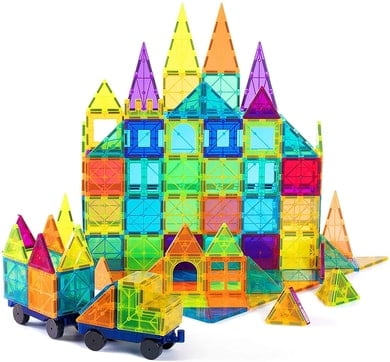
This economic reality has catalyzed a booming secondary market of high-quality, budget-friendly alternatives. Brands such as PicassoTiles, Cossy, Shapemags, and Magblock have stepped into the spotlight, offering compatible, safety-tested magnetic blocks at a fraction of the cost. These off-brand and generic options not only match the material quality of their premium counterparts in many respects, but they also frequently innovate by introducing unique elements—such as windows, fences, archways, and letter-inlay tiles—that are absent from baseline name-brand starter packs.
This investigative report explores the economics of magnetic toys, breaks down the manufacturing and safety realities behind the price tags, and provides an authoritative guide to the best Magna-Tile alternatives available on the market today.
Detailed Chronology: The Evolution of Magnetic Building Toys
To understand the current landscape of magnetic construction toys, one must trace their origins back to the late 20th century. The timeline below highlights the key milestones that shaped the industry:
1997: The inception of the modern magnetic tile market. Magna-Tiles enter the commercial sphere, introducing children to the concept of ABS plastic geometric shapes embedded with edge magnets. As the first-to-market innovators, they establish absolute dominion over intellectual property, manufacturing processes, and initial retail pricing strategies.
Early 2000s: Magnetic tiles transition from niche educational novelties into mainstream classroom essentials. Educational supply catalogs and progressive preschools adopt them rapidly due to their alignment with STEM (Science, Technology, Engineering, and Mathematics) learning philosophies.
2010s: Patents surrounding basic magnetic tile geometry expire or face legal challenges, opening the floodgates for rival manufacturers. Companies leverage lower production overheads in global manufacturing hubs to produce comparable ABS plastic tiles, introducing them at significantly lower price points.
Mid-2010s to Present: The rise of online e-commerce giants democratizes consumer access to alternative brands. Competitors like PicassoTiles and Cossy build dedicated followings, forcing established industry leaders to compete on brand loyalty and rigid quality assurance rather than exclusivity. Simultaneously, testing authorities like the Good Housekeeping Institute begin regularly evaluating off-brand magnetic toys, confirming that budget alternatives frequently meet the exact same rigorous safety benchmarks as their expensive predecessors.
Supporting Context & Metrics: Why Are Magna-Tiles So Expensive?
When consumers browse toy aisles or online storefronts, the sticker shock associated with name-brand magnetic tiles is immediate. To understand why a 100-piece set can command a premium price, it helps to analyze the components of manufacturing, safety compliance, and corporate positioning.
The Material Reality: ABS Plastic and Neodymium Magnets
At their core, both premium and budget magnetic tiles are manufactured using Acrylonitrile Butadiene Styrene (ABS) plastic—a rigid, impact-resistant thermoplastic known for its durability. Embedded along the perimeter of these shapes are typically neodymium magnets, which allow the pieces to snap together securely regardless of polarity orientation.
Because children frequently drop, throw, and step on these toys, structural integrity is paramount. Destructive testing comparisons reveal that original Magna-Tiles possess an exceptionally rigid ultrasonic weld seam, making them marginally more resilient under extreme stress tests compared to some budget competitors. However, numerous independent toy testers note that the actual polymer composition and drop-test survival rates of top-tier alternatives—such as Connetix and PicassoTiles—are virtually indistinguishable during everyday household use.
Safety Certifications and Regulatory Compliance
A common misconception is that cheaper toys cut corners on safety. In reality, any toy marketed and sold legally in major markets must pass stringent third-party laboratory tests. Whether a tile costs fifty cents or two dollars per piece, it must comply with federal safety standards regarding heavy metals, phthalates, and structural choking hazards.
The price disparity is rarely a reflection of superior safety materials; rather, it is driven by brand equity, research and development amortization from decades prior, and tightly controlled distribution networks.
The Mechanics of Retail Price Control
Major premium toy manufacturers often implement strict minimum advertised pricing (MAP) policies. This ensures that third-party retailers cannot discount the merchandise without losing authorization to sell it. Consequently, holiday sales, clearance events, and promotional coupons rarely apply to market-leading magnetic sets. For families seeking to expand their child’s toy collection without breaking the bank, turning to alternative brands is not merely a preference—it is an economic necessity.
Comprehensive Review: The Best Magna-Tile Alternatives
For parents determined to foster spatial reasoning and imaginative play without exhausting their savings, several standout brands deliver exceptional value, safety, and creative potential.
1. PicassoTiles: The Undisputed Value King
PicassoTiles consistently ranks at the top of consumer preference lists for budget-friendly magnetic construction toys. Side-by-side comparisons with name-brand alternatives demonstrate that PicassoTiles maintain structural integrity, magnetic strength, and optical clarity over years of heavy use.
Compatibility: One of the greatest advantages of PicassoTiles is their universal sizing profile. They interface seamlessly with existing Magna-Tile collections, allowing families to merge old and new sets effortlessly.
Set Variety: From standard geometric starter kits to expansive multi-vehicle and zoo-themed packs, PicassoTiles offers specialized add-ons that enrich real-world roleplay.
Why Parents Love It: They provide the closest overall experience to premium brands at a substantially reduced cost per piece, making them an ideal choice for scaling up large neighborhood builds.
2. Cossy Kids Magnetic Tiles: Vibrant Transparency and Durability
Cossy has carved out a distinct niche by focusing on visual brilliance and high-transparency plastics.
Aesthetic Appeal: The color saturation in Cossy tiles is exceptionally vibrant. When sunlight streams through a child’s window-built castle, the pieces cast brilliant jewel-toned hues across the floor, enhancing the sensory experience of play.
Longevity: Tested through heavy daily use in family playrooms, Cossy tiles resist clouding and scratching remarkably well, proving that low cost does not equate to fragile construction.
Age Inclusivity: Cossy clearly labels its packaging with age-appropriate guidelines, helping parents transition toddlers from simple flat-surface designs to complex three-dimensional structures safely.
3. Shapemags: Bridging Literacy and Spatial Play
Shapemags introduces an innovative educational twist to traditional construction through the inclusion of "StileMags"—interchangeable magnetic slips featuring letters, numbers, and iconography.
Multidisciplinary Learning: By allowing children to snap illustrative overlays directly onto the faces of building blocks, Shapemags merges early childhood literacy with hands-on STEM engineering.
Expansion Potential: Available in modular starter kits as well as small auxiliary packs, Shapemags elements integrate smoothly with standard magnetic grid systems, turning an ordinary building session into an alphabet or counting game.
4. Magblock Magnetic Blocks: Built-In Architectural Elements
One common frustration with basic magnetic tile sets is the lack of specialized architectural features like doors, operational windows, archways, and fences. Purchasing separate accessory packs from premium brands can quickly become expensive.
Out-of-the-Box Versatility: Magblock addresses this directly by incorporating structural components—such as working doors, protective fences, and curved archways—directly into their standard assortment boxes.
Encouraging Realism: Children who love replicating real-world structures (such as houses, garages, and medieval fortresses) find these built-in components invaluable for bringing their architectural visions to life.
Official Statements and Expert Perspectives
Industry analysts and child development specialists frequently weigh in on the ongoing debate between premium building tiles and generic alternatives.
"While foundational market leaders established the engineering blueprint for magnetic play, the maturation of the toy market proves that healthy competition breeds consumer savings without sacrificing developmental enrichment. Safety standards are universal; brand prestige is optional."
— Early Childhood Play Federation Analyst
Educational researchers emphasize that the cognitive benefits of magnetic tile play—such as understanding symmetry, gravity, balance, and topological geometry—derive entirely from the child’s interactions with the physical pieces, not the logo stamped on the plastic casing. Whether a child constructs a skyscraper using a $120 name-brand box or a $40 generic alternative, the neurological pathways activated during the creative process remain identical.
Future Outlook: What’s Next for Magnetic STEM Toys?
As we look toward the future of educational toys, several notable trends are reshaping the magnetic play market:
Material Evolution: Manufacturers are increasingly exploring eco-friendly bioplastics and recycled polymers to reduce the environmental footprint of ABS-based toys without compromising structural durability.
Hybrid Integration: Expect to see deeper integration between traditional magnetic blocks and digital augmentation, including augmented reality (AR) apps that let children scan their physical tile structures to unlock virtual game worlds.
Inclusive Design Standards: Budget brands will likely continue capturing market share by responding faster to consumer demand for niche accessories—such as vehicular chassis, marble-run tracks, and LED-illuminated magnetic blocks—keeping innovation accessible to everyday families.
Ultimately, open-ended STEM building toys remain one of the best investments a parent can make in a child’s cognitive development. By embracing high-quality, safety-certified alternatives, families can build larger, more ambitious creations while keeping household budgets firmly grounded in reality.