
EXECUTIVE OVERVIEW
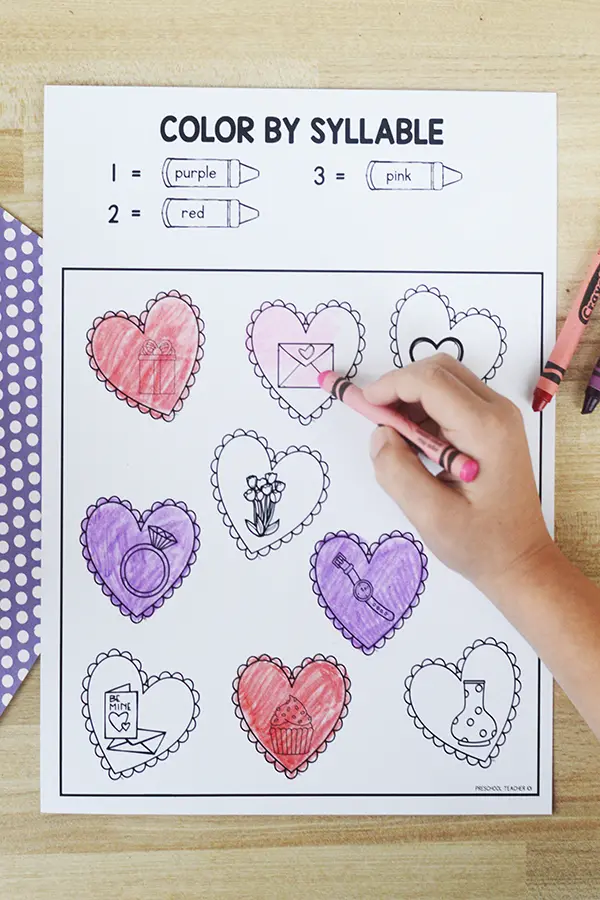
In the modern educational landscape, foundational literacy remains the bedrock upon which all future academic achievement is built. As educators and curriculum developers continually seek dynamic ways to engage young minds, the intersection of play-based learning and cognitive development has yielded transformative results. A prime example of this pedagogical shift is the growing popularity of holiday-themed phonological awareness tools, most notably the newly released Valentine’s Day Color by Syllable activities designed for preschool and kindergarten classrooms.
Created by early childhood education expert Shaunna Evans, these no-prep literacy resources merge the festive charm of seasonal celebrations with rigorous pre-reading skills. By breaking down complex words into individual phonetic components—specifically focusing on syllable segmentation—educators are equipped with an authoritative, stress-free method to foster early phonemic awareness. This report provides an in-depth look at the mechanics, pedagogical value, and broader implications of these literacy tools, examining how structured, play-based interventions are reshaping early education standards across classrooms and households alike.

The Evolution of Early Literacy: Understanding Phonological Awareness in Pre-K and Kindergarten
To appreciate the significance of tools like the Color by Syllable series, one must first understand the cognitive developmental milestones expected of children in pre-kindergarten and kindergarten. Phonological awareness—the ability to recognize, combine, and manipulate the spoken parts of sentences and words, such as syllables, onset-rimes, and phonemes—is widely recognized by reading specialists as a vital precursor to successful reading comprehension.
Traditional methods of teaching phonological awareness often relied heavily on rote memorization, clapping out beats, or repetitive verbal drills. While effective for some learners, these methods frequently struggle to capture the fleeting attention spans of young children. Enter the "color-by-code" methodology, which has been cleverly adapted from visual art exercises into a targeted literacy intervention.
By associating specific syllable counts with designated color palettes, children engage multiple cognitive pathways simultaneously. Visual recognition, fine motor control, and auditory segmentation merge into a cohesive, highly engaging task. When a child looks at an image representing a Valentine’s Day-themed vocabulary word—such as "cupid" or "chocolate"—they must mentally isolate the word, count the beats (syllables), and apply the correct color. This multi-sensory approach transforms abstract phonological concepts into tangible, visual achievements.

Detailed Chronology: The Development and Expansion of the "Color by Syllable" Framework
The journey toward comprehensive, year-round phonological resources did not happen overnight. It represents a systematic response to a persistent demand from educators for high-quality, low-preparation materials that align with early learning standards.
Phase 1: The Conceptualization of Holiday-Themed Literacy Integration
Years of classroom observation revealed a distinct gap in early childhood curricula: while holiday themes were frequently leveraged for arts and crafts, their potential for core academic integration was often underutilized. Developers recognized that children naturally exhibit higher engagement levels during festive periods. By anchoring literacy lessons to seasonal milestones—beginning with major holidays like Valentine’s Day—educators could drastically reduce resistance to foundational skill practice.
Phase 2: Piloting the Valentine’s Day Pilot Modules
In early foundational testing, the Valentine’s Day-themed modules were introduced to select preschool and kindergarten classrooms. The objective was simple: determine whether a "color by code" visual format could effectively teach syllable counting without requiring extensive teacher supervision. The pilot yielded overwhelmingly positive results. Students demonstrated an increased ability to independently segment words ranging from one to three syllables, while teachers reported a significant decrease in preparation time.

Phase 3: Broadening the Scope into a Comprehensive Year-Long Curriculum
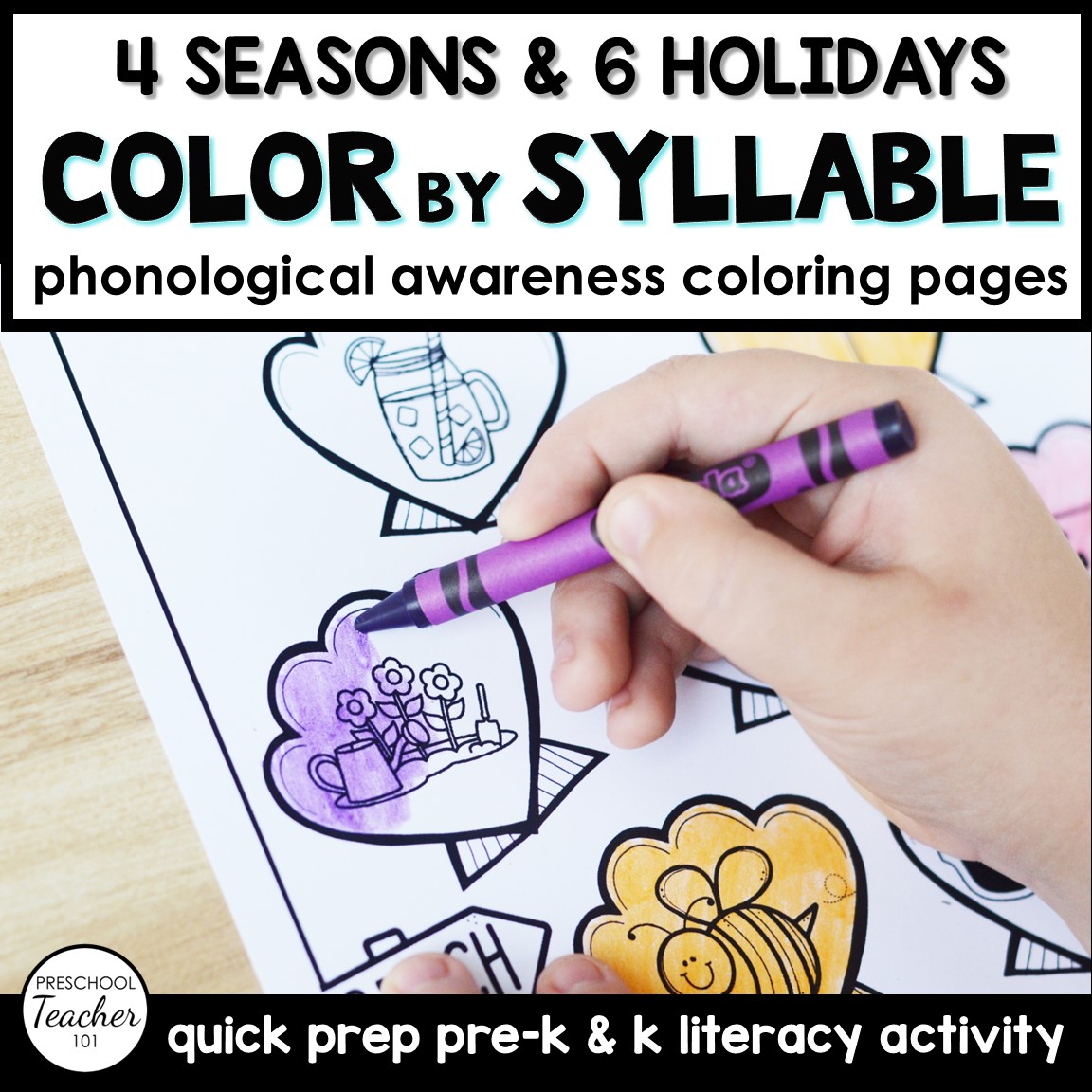
Buoyed by the success of holiday-specific pilots, educational designers expanded the framework into a comprehensive, 33-page comprehensive suite covering multiple seasons and holidays throughout the academic calendar. This full-year collection allows educators to maintain continuity in instructional design, ensuring that children encounter familiar, reliable learning formats month after month while mastering increasingly complex vocabulary and syllable structures (spanning one to five syllables).
Supporting Context & Metrics: The Mechanics of Syllable Segmentation in Early Childhood
The efficacy of the Color by Syllable system is rooted in established developmental psychology and literacy research. Statistical evaluations of early reading programs consistently highlight that children who master syllable segmentation in kindergarten exhibit significantly stronger decoding skills by the end of second grade.
Structural Breakdown of the Activity Modules
The curriculum is deliberately structured to accommodate diverse learning speeds and developmental stages within a single classroom environment. Key structural elements include:

- No-Prep Implementation: Recognizing the immense time constraints placed on modern educators, worksheets are designed for immediate printing and deployment, serving as ideal solutions for literacy centers, morning work, or "fast finisher" extensions.
- Graduated Complexity: While initial worksheets focus on simple one- and two-syllable words, the broader curriculum scales up to accommodate five-syllable challenges, ensuring continuous cognitive growth.
- Vocabulary-First Methodology: Experts emphasize that children cannot successfully segment words they do not understand. The curriculum incorporates explicit guidelines for introducing target vocabulary terms prior to independent worksheet execution.
Versatility in Educational Settings
The adaptability of these printables makes them invaluable across multiple educational ecosystems:
- Literacy Centers: Serving as an independent station rotation where children reinforce concepts learned during direct instruction.
- Take-Home Practice: Bridging the gap between the classroom and the living room, allowing parents to actively participate in their child’s phonological development.
- Inclusive Differentiation: Providing tiered options within the same thematic framework to support both advanced learners and those requiring remedial intervention.
Official Statements and Pedagogical Perspectives
The release of these specialized literacy tools has drawn praise from educators, curriculum specialists, and developmental advocates alike.
Shaunna Evans, the creator behind the initiative, emphasizes the intentional design philosophy driving the project:

"Color-by-syllable activities provide a seamless, no-prep mechanism that breaks down complex phonetic structures into digestible components. By anchoring these lessons in familiar holiday themes, we allow children to hear the sounds within words and master syllable segmentation naturally, turning what could be tedious drill work into an enjoyable, creative experience."
Educational administrators note that tools addressing phonological awareness without imposing heavy administrative or preparation burdens are critical in today’s resource-constrained school environments. Furthermore, childhood literacy advocates stress that introducing playful, low-stakes interventions during pre-K and kindergarten significantly curtails reading anxiety later in a child’s academic career.
Future Outlook: The Trajectory of Play-Based Phonological Tools
As educational technology and printable pedagogical resources continue to evolve, the demand for high-quality, research-backed literacy aids shows no signs of slowing down. The success of the Color by Syllable framework points toward a broader industry trend: the integration of cognitive science with creative, joy-centered instructional design.
Looking ahead, developers are exploring avenues to integrate these foundational printables with digital tracking tools, allowing educators to monitor student progress in real-time as they complete physical worksheets. Additionally, plans are underway to expand the linguistic scope of the curriculum, adapting syllable-segmentation frameworks to support multilingual learners and English Language Learners (ELL) in diverse classroom settings.
Ultimately, initiatives like the Valentine’s Day literacy activities demonstrate that rigorous academic standards and genuine classroom enjoyment are not mutually exclusive. By embedding essential phonological awareness training into festive, accessible formats, educators are well-equipped to guide the next generation of readers toward a lifelong love of literacy.

