
Executive Overview
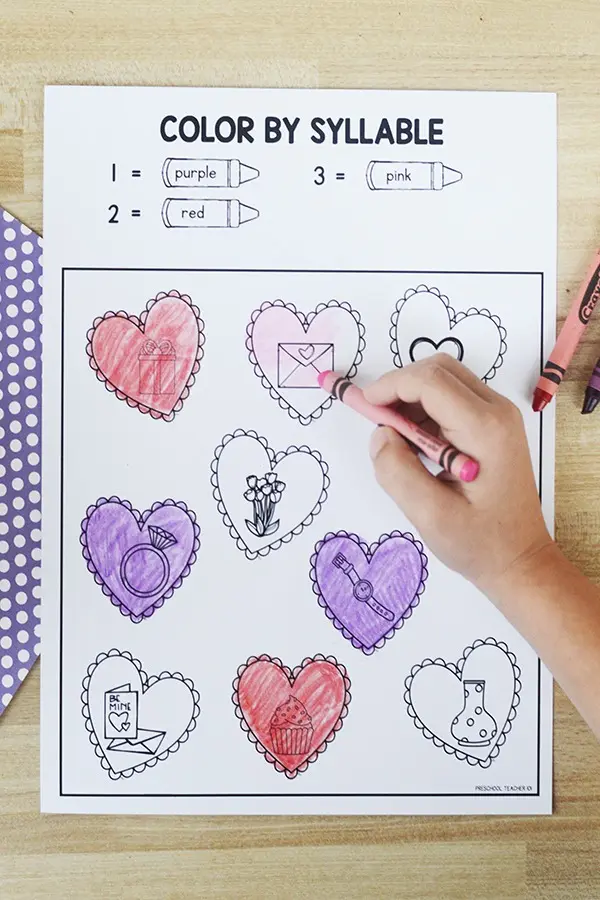
The landscape of early childhood education is undergoing a quiet, highly impactful revolution. As educators, school administrators, and curriculum developers continually search for evidence-based methods to bridge the gap between play and foundational pre-reading skills, the demand for innovative, low-prep resources has reached an all-time high. Enter the concept of phonological awareness through visual, hands-on learning—best exemplified by interactive tools like the newly popularized Valentine’s Day Color by Syllable activity and its comprehensive, year-round counterpart.
Developed by early childhood education expert Shaunna Evans, these no-prep literacy resources are designed to transform how preschool and kindergarten students engage with phonics. By blending the classic appeal of "color-by-code" art exercises with critical phonological awareness metrics—specifically syllable segmentation and auditory sound discrimination—these activities offer a pedagogical framework that is both rigorous and deeply engaging.
This report investigates the pedagogical significance of these literacy tools, examining their design methodology, their alignment with modern early childhood development standards, and the broader implications for literacy centers, take-home practice, and comprehensive preschool lesson planning.

Detailed Chronology of the Literacy Resource Evolution
To understand the current impact of the Color by Syllable framework, one must trace the evolution of early childhood literacy aids over the past decade.
The Shift Toward No-Prep Literacy Centers (2015–2020)
For years, early childhood educators struggled with a dichotomy in the classroom: hands-on, play-based activities often required exhaustive preparation, cutting into valuable instructional time, while traditional worksheets lacked the tactile engagement necessary to hold a four- or five-year-old’s attention. Around the mid-2010s, educators began adapting color-by-number templates into phonics-based exercises. However, these early iterations primarily focused on letter identification or sight words rather than deeper auditory processes like phonological awareness.
The Rise of Phonological Awareness Focus (2021–2023)
As the Science of Reading movement gained mainstream traction, educational researchers emphasized that decoding written text relies heavily on a child’s ability to manipulate the spoken parts of sentences and words—such as syllables, onsets, and rimes. Curriculum designers began pivoting sharply toward phonological awareness. Resources that could explicitly teach children how to hear and segment individual word parts without feeling like rote memorization became highly sought-after commodities in digital marketplaces like Teachers Pay Teachers.

The Introduction of Seasonal and Holiday Syllable Frameworks (2024–Present)
By late 2024, educators like Shaunna Evans expanded on the color-by-code model by introducing specialized, holiday-themed packets. The rollout culminated in targeted seasonal releases, such as the Valentine’s Day Color by Syllable set in December 2024, followed by structural updates in early 2025. These releases introduced structured, multi-page packets spanning the entire calendar year—offering 33-page comprehensive sets designed to take pre-K and kindergarten classrooms seamlessly from autumn through summer while reinforcing foundational syllable recognition (ranging from one to five syllables per word).
Supporting Context & Metrics: The Science Behind Syllable Segmentation
Phonological awareness is widely recognized by reading specialists as one of the most reliable predictors of future reading success. But what actually happens in a young child’s brain during a syllable-counting exercise?
Cognitive Processing and Auditory Discrimination
Children do not naturally parse continuous speech into discrete words, let alone discrete syllables or phonemes. When a child encounters a word like val-en-tine or cup-id, their auditory system must process a continuous wave of sound. Syllable segmentation tasks teach students to isolate these chunks.

Research in early literacy indicates that:
- Auditory-Visual Integration: Combining the auditory act of clapping or counting syllables with the visual act of coloring a specific segment bridges two distinct cognitive pathways, enhancing memory retention.
- Working Memory Load: No-prep worksheets that minimize extraneous cognitive load—such as complex instructions or confusing layouts—allow children to focus purely on the linguistic task at hand. By utilizing familiar color-by-code mechanics, the cognitive energy is preserved entirely for phonological processing.
Addressing Diverse Student Needs in Pre-K and Kindergarten
Classrooms today are inherently heterogeneous. Educators face the daily challenge of accommodating fast finishers, children requiring remedial phonological intervention, and English Language Learners (ELLs) who may need extra vocabulary scaffolding.
The Color by Syllable methodology addresses this diversity through structural flexibility:

- Differentiated Worksheets: Providing multiple tiers of difficulty within a single thematic pack allows teachers to assign specific sheets based on individual diagnostic assessments.
- Vocabulary Pre-Teaching: Because children cannot segment a word they do not understand, successful implementation mandates preliminary vocabulary instruction. This transforms a simple coloring sheet into a comprehensive vocabulary-building exercise.
- Multi-Modal Application: Whether utilized during small-group literacy centers, independent morning work, fast-finisher stations, or take-home packets for family engagement, the format adapts fluidly to varying classroom logistics.
Official Statements and Educational Philosophy
The philosophy underpinning these resources is rooted in the belief that early childhood education should honor a child’s natural inclination toward play while maintaining rigorous academic standards.
"Color-by-syllable activities are a fantastic, no-prep way to break down words into their individual syllables so children can learn to hear the sounds in the word and master segmenting," notes early childhood educator and creator Shaunna Evans. "By weaving this practice into seasonal and holiday themes—whether it’s Valentine’s Day, fall harvesting, or winter events—we make literacy joyful, relevant, and accessible."
Educational strategists working with preschool curricula emphasize that early literacy tools must avoid the trap of "busywork." A spokesperson for related primary education resources noted:

"When teachers download a resource, they aren’t just looking for something to keep children quiet. They are looking for intentional design. Every worksheet must serve a distinct diagnostic and developmental purpose. When a child colors a heart based on whether a word has two or three syllables, they are actively participating in phonics-based problem solving."
Future Outlook: The Direction of Early Literacy Resources
Looking ahead, the market for early childhood literacy materials is poised for several notable shifts as technology, teacher feedback, and pedagogical research continue to evolve.
1. Greater Integration of Blended Learning Models
While printable worksheets remain a staple of preschool and kindergarten classrooms due to the critical development of fine motor skills (such as pencil grip and coloring control), future iterations of phonological awareness tools will likely see increased synergy with digital tracking tools. Educators are increasingly utilizing printable centers alongside digital assessments to track a student’s progression from single-syllable recognition to complex five-syllable word segmentation.
2. Expanded Emphasis on Comprehensive Year-Round Curriculums
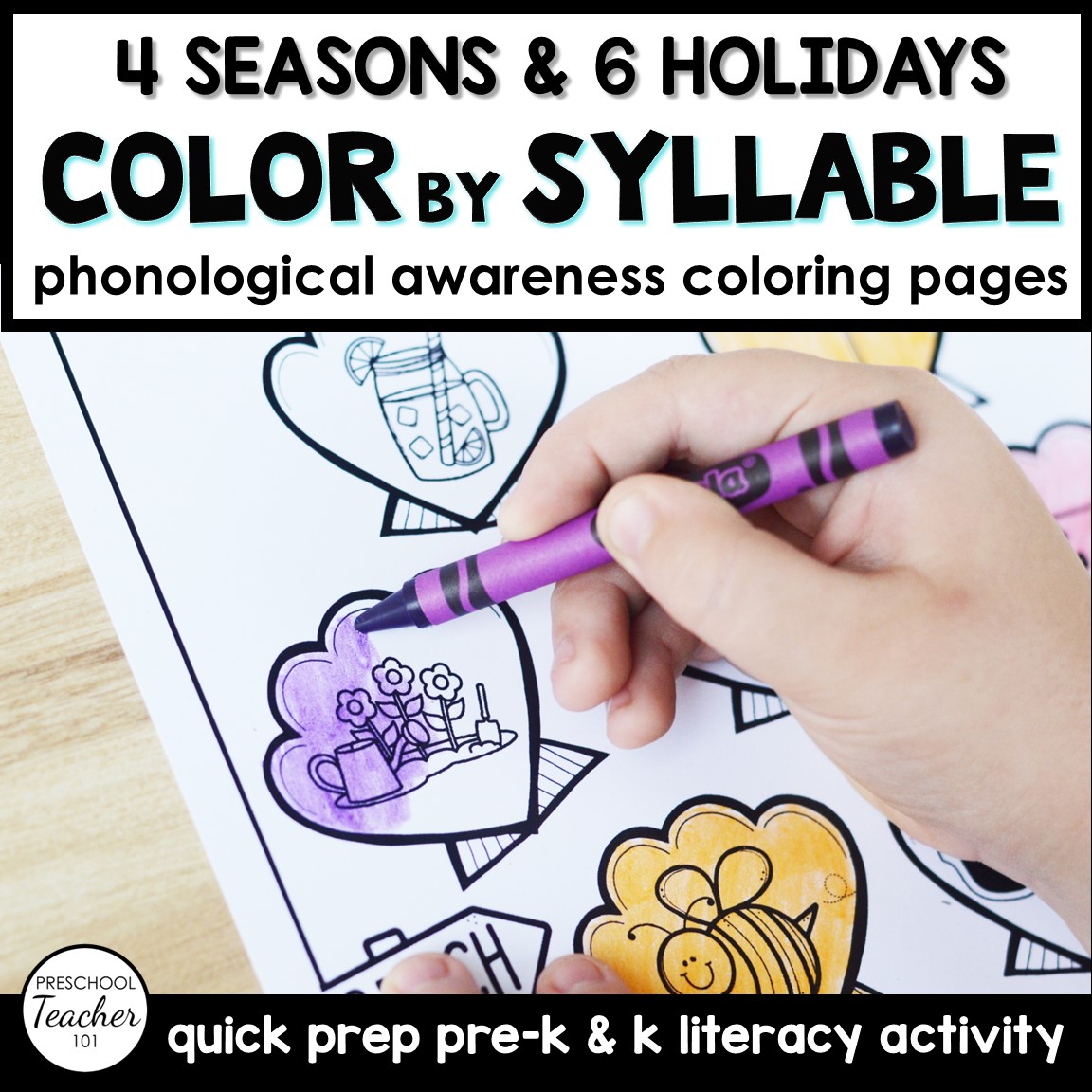
The shift away from isolated, single-holiday worksheets toward comprehensive, 30-plus-page yearlong sets (such as the full-year color-by-syllable packs available through platforms like Preschool Teacher 101 and Teachers Pay Teachers) signals a demand for longitudinal consistency. Teachers want predictable routines where the format of the activity remains constant, allowing children to work independently, while the content evolves dynamically with the changing seasons.
3. Strengthening Family-School Connections
As educational institutions place greater emphasis on take-home practice to reinforce classroom learning, resources that require minimal specialized parent training will dominate. Color-by-syllable sheets are uniquely positioned for this role; parents instantly understand the mechanics of color-by-code, enabling them to actively participate in their child’s phonological awareness journey without needing a degree in elementary education.
Conclusion
The evolution of early literacy centers hinges on resources that respect both the teacher’s time and the child’s developmental milestones. Through targeted innovations like the Valentine’s Day Color by Syllable printables and their extensive year-round counterparts, educators have access to tools that make phonological awareness intuitive, engaging, and fundamentally fun. By seamlessly fusing auditory processing with artistic expression, these activities ensure that the foundational building blocks of reading are laid firmly, joyfully, and effectively in classrooms worldwide.

