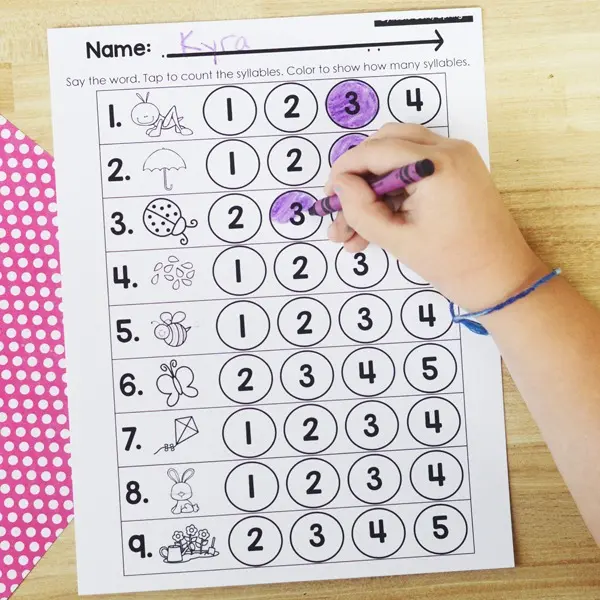
In an era where foundational literacy is receiving renewed empirical focus through the "Science of Reading" movement, educators are constantly searching for dynamic, developmentally appropriate instructional tools. A newly released educational resource suite—highlighted by a free "Spring Syllable Sort" and an expansive 42-page "Four Seasons Syllable Sort" pack—is addressing this pedagogical demand head-on. Designed specifically for preschool, pre-kindergarten, and kindergarten classrooms, these interactive phonological awareness tools leverage multi-sensory techniques, such as clapping, tapping, and picture-based sorting, to help young learners isolate and segment word parts.
By prioritizing auditory and phonological processing ahead of strict written text decoding, these resources align with modern cognitive science research regarding how young brains acquire language. This report provides an in-depth look at the mechanics of these new sorting tools, their integration into broader seasonal curricula, the cognitive theories underpinning their design, and their long-term implications for early childhood literacy centers nationwide.
1. Executive Overview: The Shift Toward Multisensory Literacy
The landscape of early childhood education has experienced a profound shift over the past decade. Traditional rote memorization and passive worksheets are rapidly being replaced by active, multisensory learning modules grounded in cognitive research. At the heart of this transformation is the emphasis on phonological awareness—the ability to recognize, parse, and manipulate the spoken parts of sentences and words, including syllables, onsets, rimes, and phonemes.
Recognizing a critical gap in engaging, classroom-ready materials for early learners, curriculum developers have rolled out specialized literacy tools tailored to seasonal themes. The centerpiece of this rollout is the Spring Syllable Sort, a targeted pre-reading activity designed to bridge the gap between spoken language and structural word awareness. Available as a complimentary digital download alongside a comprehensive, comprehensive 42-page Four Seasons Syllable Sort pack, these tools provide educators with systematic frameworks to make phonological instruction both rigorous and joyful.
Core Pedagogical Objectives
Auditory Discrimination: Training young ears to isolate distinct word parts without the cognitive overload of reading written text simultaneously.
Kinesthetic Engagement: Utilizing physical movements—specifically clapping and tapping—to anchor abstract linguistic concepts into physical reality.
Categorical Sorting: Enhancing cognitive flexibility by grouping vocabulary words according to syllable counts (e.g., one, two, or three syllables).
Vocabulary Acquisition: Expanding children’s lexicon through vibrant, season-specific imagery that reflects the natural world around them.
2. Detailed Chronology: Development and Implementation of Seasonal Syllable Curricula
The creation and deployment of these structured literacy packets did not happen in a vacuum; they represent the culmination of years of iterative classroom testing and alignment with contemporary reading science.
Phase 1: Identifying the Classroom Need (Early Planning Stages)
For decades, early childhood educators struggled to find resources that targeted phonological awareness without overwhelming pre-readers with premature spelling demands. Many available worksheets focused heavily on grapheme-phoneme correspondence before students had mastered the foundational ability to hear individual syllables within spoken words.
Curriculum designers observed that children learned vocabulary most effectively when connected to real-world seasonal changes. Spring, with its explosion of distinct, recognizable vocabulary words (such as flower, bee, raincloud, and butterfly), offered a natural thematic umbrella for early literacy intervention.
Phase 2: Prototyping and Pilot Testing (Pre-Kindergarten Integration)
During the pilot testing phase in select pre-K and kindergarten classrooms, educators introduced rudimentary picture cards representing spring themes. Students were asked to say the word aloud, tap or clap out its rhythm, and drop the card into designated sorting bins marked with numerical indicators (1, 2, or 3).
Key Finding: Children demonstrated significantly higher engagement rates when kinesthetic markers (clapping) were combined with visual picture clues.
Refinement: Designers realized the need for accompanying black-and-white response sheets, allowing teachers to assess individual student progress formally following the hands-on sorting exercise.
Phase 3: Launch of the Free Spring Syllable Sort
Building on successful pilot metrics, the free Spring Syllable Sort was finalized and made available to educators globally. The kit was structured to include:
Syllable counting cards with high-definition spring imagery.
Large, colorful word and picture cards ideal for pocket charts and literacy centers.
An optional, scaffolded response worksheet for independent practice.
A definitive answer key to streamline grading and station self-checks for teachers.
Phase 4: Expansion to the Four Seasons Syllable Sort Pack
Buoyed by the positive reception of the spring-themed release, developers expanded the methodology into a comprehensive, 42-page Four Seasons Syllable Sort pack. This robust resource covers autumn, winter, spring, and summer, ensuring that phonological awareness centers can remain fresh, relevant, and seasonally appropriate throughout the entire academic calendar. The pack made its debut on major educational distribution platforms, including specialized teacher resource networks and Teachers Pay Teachers.
3. Supporting Context & Metrics: The Science of Reading and Phonological Foundations
To fully appreciate the value of these sorting activities, one must examine the empirical data supporting phonological awareness training in early childhood education.
The Science of Reading Framework
According to the influential "Simple View of Reading" and subsequent consensus models within the Science of Reading, skilled reading is the product of two primary components: decoding (word recognition) and linguistic comprehension. Long before children can decode printed text, they must develop phonological sensitivity.
Research consistently demonstrates that phonological awareness—specifically syllable segmentation—is a robust predictor of future reading and spelling success. Children who struggle to hear the natural breaks in spoken words often experience downstream difficulties with phonics, spelling, and reading comprehension.
Quantitative and Qualitative Impact in Literacy Centers
Classrooms utilizing structured syllable-sorting activities report several measurable benefits:
Highly adaptable via picture cards vs. written words
Teacher Preparation Time
High; requires custom material creation
Low; print-and-go cards, worksheets, and answer keys
The Role of Picture Clues and Vocabulary Pre-Teaching
A critical methodological detail emphasized in the curriculum guidelines is the prerequisite of vocabulary pre-teaching. Educators are strongly advised to introduce and review all picture cards with students before independent center work begins. If a child does not recognize an image (for instance, mistaking a "caterpillar" for a "worm"), the syllable count exercise becomes invalid. By anchoring phonological practice in known vocabulary, the activity simultaneously builds oral language proficiency and semantic comprehension.
4. Official Statements and Pedagogical Perspectives
Leading voices in early childhood education and curriculum development have weighed in on the philosophy driving these seasonal literacy tools.
"Phonological awareness is not merely an academic checkbox for kindergarten readiness; it is the acoustic foundation upon which all future literacy is built," explains a lead early childhood literacy specialist. "When we ask children to clap out the beats of a word like ‘butter-fly’ while looking at vibrant spring imagery, we are engaging multiple neural pathways simultaneously. It transforms abstract linguistic rules into a tangible, playful experience."
Educators utilizing the newly released resources have shared equally enthusiastic feedback regarding their flexibility within diverse classroom models.
The Literacy Center Perspective: Teachers note that the large, colorful cards fit effortlessly into standard pocket charts, making them ideal for small-group guided reading instruction where targeted interventions can take place.
The Independent Practice Perspective: The inclusion of black-and-white worksheets gives teachers a reliable artifact for student portfolios, satisfying administrative assessment requirements without sacrificing play-based instructional values.
The Home-School Connection: Because the materials are intuitive and require minimal specialized props (just scissors, optional lamination, and clapping hands), parents can easily replicate the exercises at home for supplemental literacy practice.
5. Future Outlook: The Evolution of Thematic Literacy Centers
As educational standards continue to prioritize evidence-based reading instruction, the demand for high-quality, low-prep phonological tools is projected to rise. The success of the Spring Syllable Sort and the broader Four Seasons pack signals a broader trend in curriculum design: the harmonious marriage of rigorous cognitive science with engaging, seasonal themes.
Anticipated Developments in Early Literacy Resources
Digital Integration: Future iterations of seasonal sorting packs are expected to incorporate interactive digital components, allowing students on tablets and smartboards to drag and drop syllables into digital sorting bins.
Cross-Curricular Expansion: Developers are exploring ways to link phonological sorting directly with elementary science concepts—such as matching life cycle stages (egg, caterpillar, chrysalis, butterfly) to their respective syllable counts, thereby reinforcing both language arts and life sciences concurrently.
Inclusive and Multilingual Adaptations: Plans are underway to adapt phonetic segmentation packs for English Language Learners (ELL), utilizing cognates and universal imagery to support dual-language classrooms.
Conclusion
The release of the Spring Syllable Sort and the Four Seasons Syllable Sort pack represents a significant win for early childhood educators. By translating dense cognitive science into accessible, hands-on, and joyful classroom activities, these resources empower teachers to foster essential literacy skills naturally. Whether implemented during morning circle time, dedicated literacy centers, or take-home practice sessions, these tools ensure that young learners step into the world of reading with confidence, rhythm, and a deep appreciation for the language of the changing seasons.