
Executive Overview
As the winter season settles in, educators, parents, and child development specialists frequently observe a distinct shift in the behavioral landscape of children and adolescents. The combination of disrupted routines, extended periods of indoor confinement, and the emotional anticipation—or stress—surrounding major holiday breaks can severely test a young person’s ability to maintain emotional equilibrium. At the heart of this seasonal turbulence lies self-regulation: the foundational neurological and behavioral capacity to manage thoughts, govern feelings, and modulate actions in response to environmental demands.
While self-regulation is a crucial developmental milestone year-round, its maintenance becomes acutely critical during the winter months. When children lose the predictable structures of daily schooling, outdoor physical outlets, and consistent peer interaction, their capacity to focus, connect positively with others, and cope with everyday frustrations diminishes rapidly.
Fortunately, neurological research and pedagogical frameworks confirm that self-regulation is not an innate, fixed trait, but rather a dynamic skill that can be systematically taught, practiced, and strengthened. Far from being a clinical or burdensome chore, building emotional regulation can be seamlessly integrated into engaging, winter-themed activities. This report explores the foundational science of youth self-regulation, examines the unique seasonal pressures faced by children and teenagers, and details a comprehensive compendium of ten engaging, evidence-based activities designed to cultivate calm, focus, and resilience throughout the winter months.
Detailed Chronology: Understanding the Winter Behavioral Shift
To effectively address self-regulation challenges during the colder months, it is essential to understand the timeline and trajectory of behavioral changes in children and teens from late autumn through early spring.
Phase 1: The Pre-Holiday Surge (Late November to Mid-December)
As the academic calendar winds down toward the winter holiday break, classrooms and households experience a notable spike in ambient stress. The disruption of standard academic routines, coupled with school-wide holiday events, creates a hyper-stimulating environment. During this window, children often exhibit signs of emotional fatigue, manifested as increased impulsivity, difficulty transitioning between tasks, and heightened emotional reactivity. Neurologically, the prefrontal cortex—responsible for impulse control and executive functioning—struggles to manage the overwhelming sensory input and structural unpredictability.
Phase 2: The Break Transition (Mid-December to Early January)
The arrival of winter break brings a sudden, radical shift in environment. While holidays offer joy and family connection, they frequently eradicate the predictable temporal anchors that children rely on for emotional security. Sleep schedules shift, dietary habits change, and unstructured free time abounds. For many children, this abrupt withdrawal of structured expectations leads to dysregulation, making the return to school in January exceptionally jarring.
Phase 3: The Post-Break Reset and Deep Winter (January to February)
Upon returning to institutional settings in the new year, children face a prolonged stretch of cold weather, reduced daylight, and limited outdoor physical activity. This period—often characterized by indoor recesses, stagnant classroom air, and cabin fever—tests the endurance of both educators and students. Without intentional interventions focused on grounding, mindfulness, and sensory engagement, this deep winter phase can give rise to chronic restlessness, behavioral infractions, and a precipitous drop in academic engagement.
Supporting Context & Metrics: The Science of Self-Regulation
Self-regulation is governed by the autonomic nervous system, specifically the interplay between the sympathetic nervous system (the "fight-or-flight" mechanism that triggers stress responses) and the parasympathetic nervous system (the "rest-and-digest" mechanism that promotes calm, recovery, and cognitive processing).
Neurological Impact of Seasonal Stressors
Research in pediatric psychology demonstrates that chronic lack of physical movement and reduced exposure to natural sunlight during winter months can dysregulate circadian rhythms and lower serotonin production. This physiological baseline makes children more susceptible to anxiety, irritability, and executive dysfunction. When children engage in targeted self-regulation activities—such as controlled breathing, sensory exploration, or mindful movement—they intentionally stimulate the vagus nerve, immediately shifting their biology away from stress reactivity and toward physiological equilibrium.
Empirical Evidence Supporting Experiential Strategies
- Mindful Breathing: Clinical studies consistently show that slow, diaphragmatic breathing exercises activate the parasympathetic nervous system within minutes, reducing cortisol levels and enhancing working memory in school-aged children.
- Nature Exposure: According to Attention Restoration Theory (ART), even brief interactions with natural environments—such as a winter nature walk—replenish depleted cognitive resources, improve directed attention, and reduce psychological stress.
- Expressive Arts and Sensory Play: Tactile engagement and creative outlets (such as mindful coloring, sensory bins, and crafts) provide constructive channels for kinetic energy, satisfying the tactile-sensory needs of developing nervous systems while fostering creative autonomy.
Comprehensive Winter Self-Regulation Activities
To combat the winter slump and foster emotional resilience, adults can implement a diverse suite of engaging, evidence-based activities. These exercises are categorized by sensory modality and developmental appropriateness, ensuring applicability for both young children and teenagers.
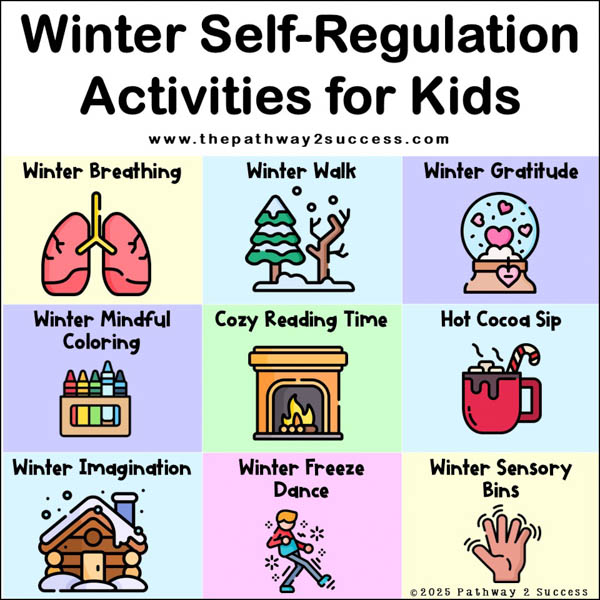
1. Winter Breathing and Mindfulness Exercises
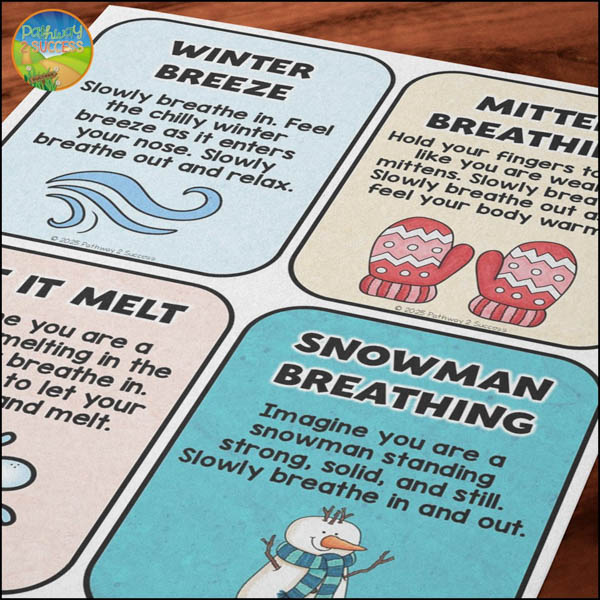
- What it is: Structured deep-breathing exercises paired with winter-themed imagery designed to help children hit an internal "pause button."
- Implementation: Educators and parents introduce mindful breathing as a neurological tool rather than a mere behavioral mandate. By focusing deliberately on slow inhales and exhales, children learn to interrupt automatic impulsive reactions. Winter-themed variations—such as imagining smelling a warm cup of cocoa or blowing out a row of imaginary candles on a frosty window—make abstract concepts concrete.
- Mechanism: This foundational practice directly stimulates the parasympathetic nervous system, inducing physiological calm and optimizing the brain for sustained focus.
2. Outdoor Nature Walks
- What it is: Structured outdoor excursions focused on multi-sensory environmental awareness.
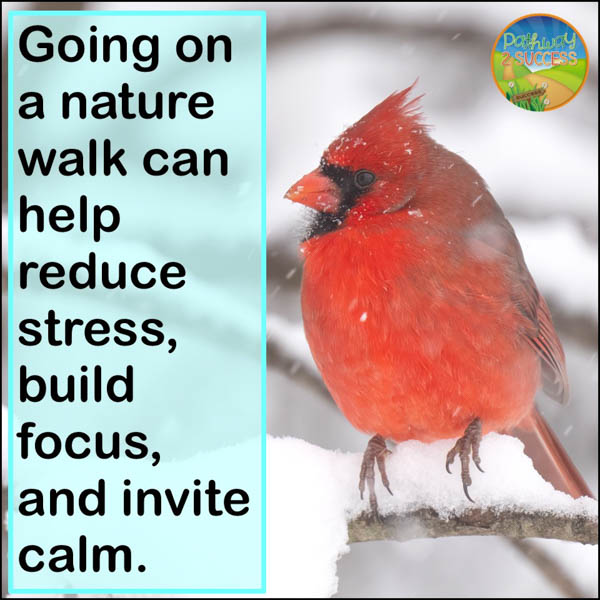
- Implementation: Before stepping outside, leaders establish clear expectations regarding safety and environmental respect. During the walk, children are encouraged to actively engage all five senses: noticing the crunch of frozen ground beneath their boots, observing the vapor of their breath in the crisp air, or spotting wildlife against a stark winter backdrop. Post-walk reflection circles allow students to articulate their sensory discoveries verbally or through writing.
- Mechanism: Combining physical exercise, fresh air, and environmental mindfulness reduces cortisol, combats winter lethargy, and enhances attentional capacity.
3. Winter Gratitude Practices
- What it is: Intentional reflection exercises designed to reframe perspective by identifying specific positive aspects of the winter season.
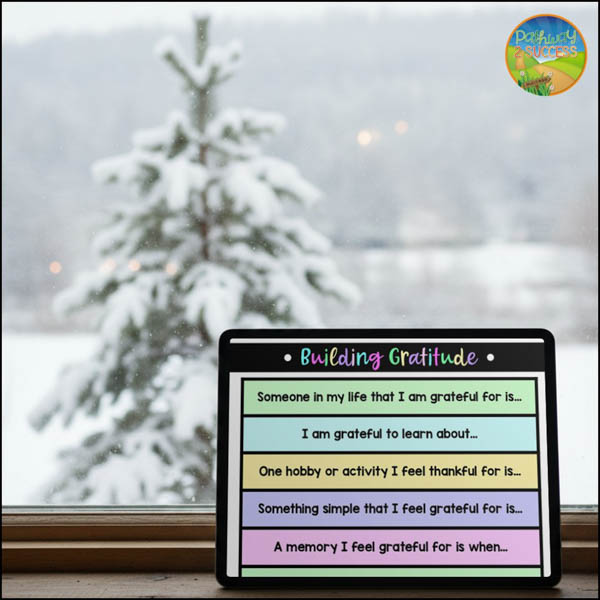
- Implementation: Facilitators guide children beyond generalized statements to identify nuanced sources of gratitude, such as the unique sensation of winter sunlight, the comfort of warm blankets, or the fellowship of family gatherings. Utilizing gratitude sentence starters or dedicated winter journals encourages students to document and illustrate their appreciations.
- Mechanism: Regular gratitude practice neurochemically reinforces neural pathways associated with positive affect, building resilience, improving sleep architecture, and bolstering psychological well-being.
4. Mindful Winter Coloring
- What it is: Creative coloring activities utilizing winter-themed templates paired with positive self-talk prompts.
- Implementation: Children are provided with varied art supplies (colored pencils, crayons, water-based markers) and invited to color intricate winter designs. Crucially, the objective is decoupled from artistic perfection; instead, the focus is placed on rhythmic movement, slow breathing, and internal calm.
- Mechanism: Mindful coloring serves as a somatic bridge for children who find stationary meditation challenging. It satisfies the need for gentle movement while lowering anxiety and improving mood states.
5. Cozy Reading and Co-Regulation Sessions
- What it is: Immersive reading experiences designed to foster stillness, empathy, and interpersonal connection.
- Implementation: Adults can establish a serene ambiance by utilizing digital fireplace displays, dimming harsh overhead lighting, and offering comfortable seating arrangements. While independent silent reading is valuable, group read-aloud sessions offer unique co-regulation benefits, allowing children to sync their emotional rhythms with a trusted adult reader.
- Mechanism: Deep literary immersion lowers physiological arousal, decreases muscle tension, and provides a cognitive sanctuary from daily stressors.
6. Winter Sensory Bins
- What it is: Hands-on tactile exploration utilizing high-engagement, winter-themed loose parts.
- Implementation: Large containers are filled with safe, tactile materials such as artificial snow, polished ice-blue glass gems, cotton batting, pinecones, and cinnamon sticks. Children manipulate these items freely or within guided narrative frameworks.
- Mechanism: Tactile play anchors children in the present moment, satisfying deep sensory integration needs while refining fine motor skills, fostering curiosity, and soothing overstimulated nervous systems.
7. The Mindful Hot Cocoa Ritual
- What it is: A sensory-rich consumption exercise that transforms a seasonal treat into an active mindfulness practice.
- Implementation: Participants hold a warm mug of cocoa, consciously registering its physical weight and thermal energy. They inhale the aroma, take deliberate slow sips, and pause between swallows to analyze taste profiles and internal physical sensations. (Note: This exercise can be adapted using any preferred warm food or beverage).
- Mechanism: The deliberate slowing down of consumption combined with tactile warmth signals safety to the central nervous system, effectively grounding scattered thoughts and calming physiological agitation.
8. Winter Imagination and Guided Visualization
- What it is: Mental imagery exercises designed to transport participants to serene, tranquil winter landscapes.
- Implementation: With eyes closed, children are led through immersive sensory prompts by an instructor, visualizing peaceful scenes such as a quiet snow-covered forest, a gentle mountain snowfall, or a cozy cabin interior, actively noting sights, sounds, and tactile feelings.
- Mechanism: Visualization harnesses the brain’s neuroplastic capacity to elicit real physiological relaxation responses, shifting baseline neural activity from high-stress to restorative states.
9. Structured Hands-On Winter Crafts
- What it is: Creative project-based learning requiring multi-step execution and fine motor control.
- Implementation: Children engage in structured or open-ended crafting—such as constructing paper snowflakes, assembling nature collages, or building seasonal dioramas. Facilitators encourage mindfulness regarding the process rather than the final product.
- Mechanism: Fine motor engagement paired with sequential instructions requires executive function, teaching children how to self-monitor frustration and manage emotional impulses when physical execution encounters obstacles.
10. Winter Music and Freeze Dance Integration
- What it is: Dynamic movement-based games that alternate high-energy kinetic expression with strict physical self-control.
- Implementation: Gentle instrumental winter compositions are played to cultivate a calm ambient atmosphere during transitions or independent work. For dynamic self-regulation practice, movement games like "Freeze Dance" require children to immediately halt physical motion upon hearing specific seasonal vocabulary words or musical cues.
- Mechanism: Alternating rapidly between active movement and sudden stillness challenges the central nervous system to exercise inhibitory control, directly strengthening the neurological circuits responsible for behavioral self-regulation.
Official Statements and Expert Perspectives
Child development experts and educational psychologists emphasize that the emotional challenges of the winter season require proactive, empathetic institutional responses rather than punitive disciplinary measures.
Dr. Elena Vance, a leading researcher in pediatric self-regulation and neurodevelopment, notes:
"When children act out or appear disorganized during the winter months, adults frequently misinterpret this behavior as willful defiance. In reality, it is often a physiological distress signal. The nervous system is crying out for predictability, warmth, and grounded sensory input. By embedding structured mindfulness, sensory integration, and joyful movement into daily routines, we provide children with the vital biological scaffolding they need to weather seasonal stressors successfully."
Furthermore, educational administrators point out that investing time in self-regulation activities does not detract from academic rigor; rather, it acts as a foundational prerequisite for effective learning. "You cannot access higher-order cognitive processing when a child’s nervous system is stuck in survival mode," explains urban school psychologist Marcus Thorne. "Taking ten minutes for mindful breathing, a sensory break, or a hot cocoa ritual isn’t pausing instruction—it’s preparing the brain to learn."

Future Outlook
As educational institutions and family dynamics continue to evolve in an increasingly fast-paced and digitally saturated world, the necessity of explicit self-regulation instruction is projected to grow. Future interventions will likely see increased integration of biometric feedback tools, expanded outdoor winter education programs, and more comprehensive professional development for educators regarding trauma-informed, somatic self-regulation strategies.
Ultimately, navigating the winter season successfully requires a cultural shift toward recognizing emotional regulation as a fundamental human skill that requires practice, patience, and community support. By implementing creative, evidence-based activities—from mindful breathwork and outdoor exploration to sensory bins and cozy reading sessions—adults can transform the winter months from a period of behavioral strain into an empowering season of growth, resilience, and deep emotional well-being for the children and teenagers in their care.

