
Executive Overview
In the modern educational landscape, the illusion of learning often masquerades as classroom engagement. Teachers frequently experience the gratifying sense of a successful lesson when a chorus of students answers questions correctly in unison. Yet, a persistent, vexing question lingers for educators across the globe: How much of that newly acquired knowledge actually survives after the classroom door closes and the school day ends?
A groundbreaking educational study conducted by researchers Boulahnane, Ismaili, and Haddi (2026) sought to answer this critical pedagogical question. Focusing on a Moroccan middle school, the researchers undertook a rigorous three-week comparative investigation into the cognitive efficacy of game-based digital learning versus conventional instructional paradigms. By evaluating two ninth-grade classes learning identical curricula—spanning English grammar, English vocabulary, and Life and Earth Science—the researchers moved beyond traditional, immediate post-instruction assessments. Crucially, they introduced a two-week delayed retention test to measure whether digital interactivity truly alters long-term memory consolidation.
The empirical findings are both striking and definitive. Students instructed using the game-based platform Kahoot! achieved roughly twice the learning gains of their peers in the control group. Furthermore, these students demonstrated a superior ability to retain information over time, maintaining significantly higher test scores during the follow-up assessment administered two weeks later. Alongside these academic metrics, qualitative surveys revealed a profound chasm in student motivation: learners utilizing Kahoot! reported drastically higher engagement levels compared to those subjected to traditional teacher-led instruction, textbook drills, and pair-work exercises.
This comprehensive report examines the methodology, metrics, and broader implications of the Boulahnane, Ismaili, and Haddi (2026) study. By dissecting the precise mechanisms of formative gamified assessment, immediate feedback loops, and targeted classroom intervention, this article explores how modern educators can harness digital tools to transform fleeting classroom participation into enduring academic mastery.
Detailed Chronology and Methodological Framework
To understand the weight of the Boulahnane, Ismaili, and Haddi (2026) findings, one must closely examine the structural methodology deployed during the three-week empirical study. Educational research often struggles with confounding variables, but this study maintained strict controls to ensure validity across test groups.
Setting the Baseline: Participants and Curriculum
The research took place in a public middle school setting, centering on two distinct ninth-grade classes. Each class comprised 30 students aged 14 to 15 years old. To eliminate variables related to prior knowledge or curricular divergence, both cohorts were taught by the same instructional staff, covered identical educational material, and dedicated the exact same amount of classroom contact hours to the subject matter.
The curriculum spanned three distinct academic domains:
- English Grammar: Complex structural rules and sentence construction.
- English Vocabulary: Tier-two and tier-three lexical items relevant to the grade level.
- Life and Earth Science: Core scientific concepts, ecological processes, and biological terminology.
While the control group followed a conventional, time-tested pedagogical model—consisting of direct teacher-led lectures, comprehensive textbook exercises, and collaborative pair-work drills—the experimental group integrated Kahoot! as the primary vehicle for interactive content delivery and formative assessment.
The Instructional Mechanics: Conventional vs. Gamified
In the conventional classroom, instruction followed a linear, traditional trajectory. Teachers explained concepts, assigned workbook problems for individual or paired completion, and reviewed answers by calling on students at random. While effective to a degree, this model relies heavily on passive listening and self-reported student comprehension, which can often mask underlying learning gaps.
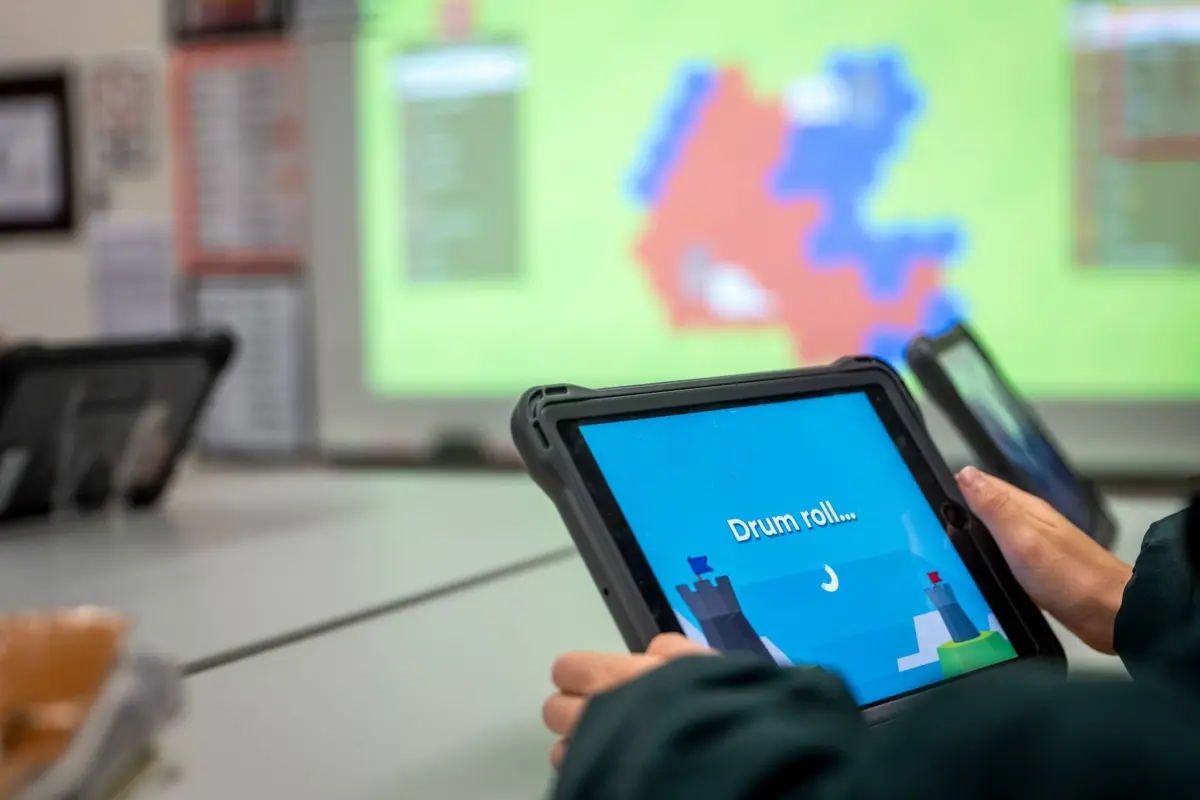
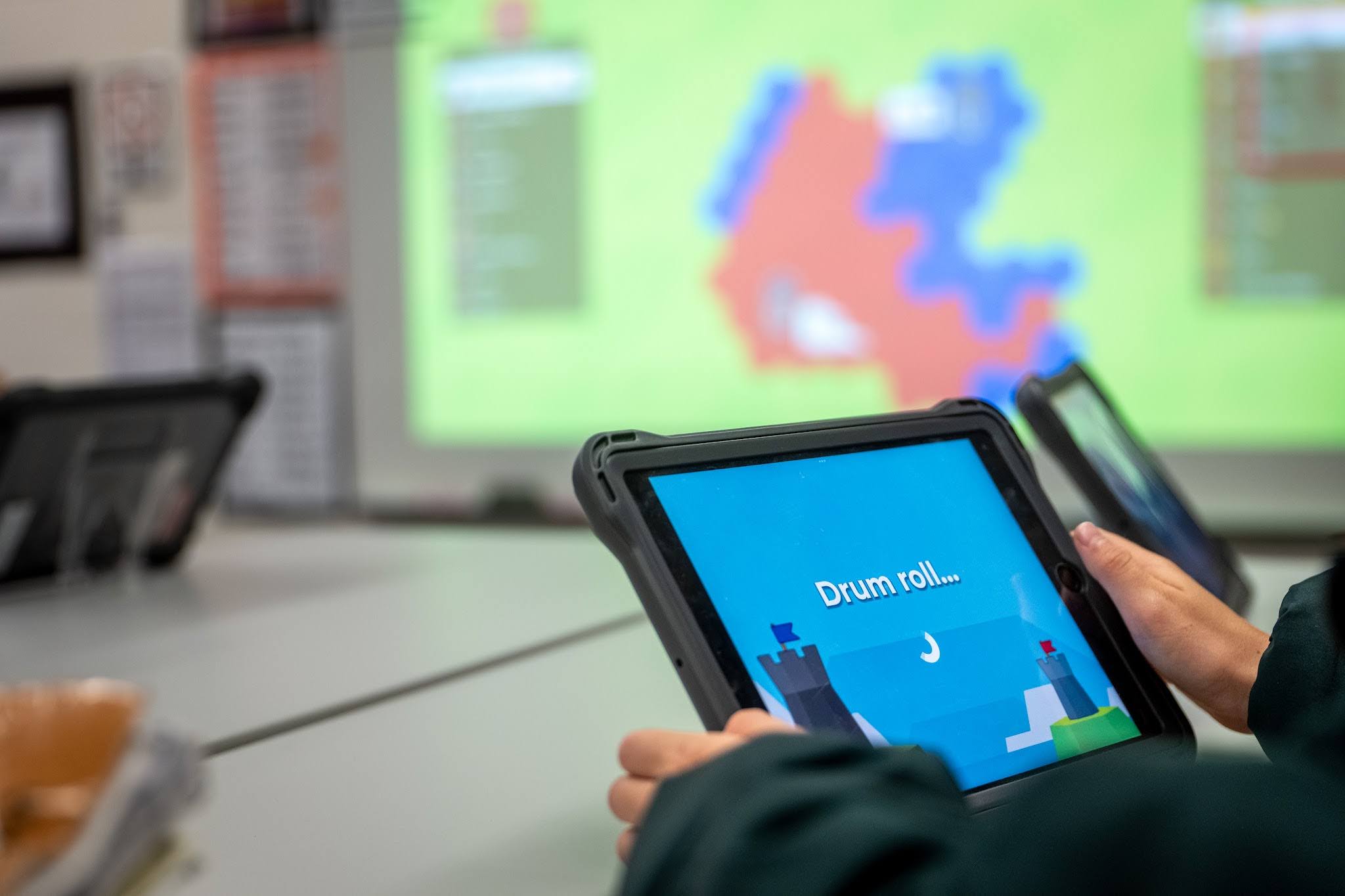
By contrast, the experimental classroom reimagined the assessment and review cycle through gamification. During Kahoot! sessions, teachers projected quiz questions onto a shared, central classroom screen. Students engaged directly with the material using their own personal smartphones or school-provided tablets. The digital interface transformed the classroom into an interactive arena where speed, accuracy, and collective competition intersected.
However, the true pedagogical value of the intervention extended beyond the gamified interface itself. The study highlighted a deliberate, highly structured pedagogical routine executed by the teachers during the digital quizzes:
- Real-Time Data Visualization: Immediately after each question concluded, the software displayed a visual breakdown of how the entire class responded, alongside the correct answer.
- Targeted Formative Intervention: Rather than blindly advancing to the next prompt, teachers leveraged this visual data to pause the game. If a significant portion of the class answered incorrectly, the instructor initiated an impromptu mini-lesson, explicitly addressing the misconception before proceeding.
- Iterative Retrieval Practice: The format naturally forced students to retrieve information from memory under time constraints, activating cognitive pathways known to strengthen neural encoding.
Testing Intervals and Assessment Design
To measure cognitive impact accurately, the researchers implemented a rigorous three-tiered testing schedule. Prior to the commencement of the instructional unit, all 60 students completed a baseline pretest consisting of 20 distinct items for each of the three subjects (grammar, vocabulary, and science).
Following the completion of the three-week instructional block, students were administered an immediate posttest to gauge short-term knowledge acquisition. To test the hypothesis of true cognitive retention—moving beyond short-term cramming or working memory overload—the researchers administered the exact same 20-item assessment a second time, exactly two weeks after the instructional unit concluded. This delayed posttest served as the ultimate metric for educational durability.
Supporting Context and Metrics: The Data Behind the Gains
The quantitative results gathered by Boulahnane, Ismaili, and Haddi (2026) provide compelling statistical evidence supporting the integration of game-based digital tools in middle-school education.
Initial Equivalence and Immediate Posttest Shifts
Both the experimental (Kahoot!) and control groups began the study on equal footing. Statistical analysis of the baseline pretest scores revealed no significant differences in prior knowledge across English grammar, English vocabulary, or science between the two cohorts. Both groups hovered near baseline competency levels.
However, once instruction concluded, the divergence in performance was immediate and pronounced. Measured on a standardized scale out of 20 points, the students utilizing Kahoot! demonstrated markedly superior improvements across all three domains compared to the conventional instruction group:
- English Grammar: The Kahoot! cohort achieved substantially steeper upward trajectories in structural mastery, outpacing the control group’s score gains.
- English Vocabulary: Lexical retention soared among the gamified group, with students demonstrating an enhanced ability to define and contextualize new vocabulary terms.
- Life and Earth Science: Complex scientific concepts—traditionally prone to rote memorization and rapid forgetting—yielded significantly higher immediate posttest scores in the digital cohort.
The Two-Week Retention Test: Defying the Forgetting Curve
The most critical phase of the study occurred during the follow-up assessment administered two weeks after the instruction ended. Educational psychology has long documented the "forgetting curve," a phenomenon where humans rapidly lose memory of newly acquired knowledge unless deliberate reinforcement occurs.
The follow-up data revealed clear insights into long-term memory retention:
- Sustained Advantage: The Kahoot! class maintained higher average scores across all three subjects during the delayed posttest, securing a consistent performance advantage of 3.3 to 3.7 points over the conventional comparison class.
- The Decay Phenomenon: It is noteworthy that neither group was immune to the forgetting curve. Both the Kahoot! cohort and the conventional group experienced a minor downward drift in scores between the immediate posttest and the two-week follow-up. This underscores a vital educational reality: digital tools enhance retention, but they do not eliminate the necessity for ongoing, cyclical review.
- Cognitive Mechanisms: The researchers hypothesized that the combination of repeated active retrieval practice and immediate, low-stakes feedback fundamentally reinforced neural pathways, allowing Kahoot! students to retain a larger percentage of their original gains compared to their peers.
Engagement Metrics: Quantifying Student Motivation
Cognitive performance rarely occurs in a vacuum; it is deeply intertwined with affective variables such as student motivation, attention, and emotional state during learning. To evaluate this dimension, researchers administered a comprehensive engagement survey following the instructional units.
The findings painted a stark picture of student experience:
- Kahoot! Class Engagement Score: Students in the game-based learning cohort reported an astronomical average engagement score of 23.6 out of 25.
- Conventional Class Engagement Score: Conversely, students in the traditional instruction group reported an average engagement score of 17.0 out of 25.
This delta of more than six points represents a monumental shift in classroom climate. The gamified environment transformed passive recipients of information into active, invested participants, directly correlating heightened emotional engagement with superior academic outcomes.
Official Insights and Expert Analysis
While the empirical data speaks volumes, understanding why these interventions succeeded requires examining the underlying cognitive mechanisms and educational theories at play. Although Boulahnane, Ismaili, and Haddi (2026) focused on a specific demographic in a Moroccan middle school, their findings echo a rapidly expanding global consensus regarding digital pedagogy.
Active Retrieval vs. Passive Reception
Traditional education has long relied on transmissive teaching models—where educators transmit knowledge and students passively absorb it. However, cognitive science consistently demonstrates that the human brain learns best through active construction.
When students participate in a live Kahoot! session, they are forced into active retrieval practice. They cannot simply wait for a classmate to answer or zone out during a lecture; they must individually evaluate the prompt, scan their memory banks, and commit to an answer within a compressed timeframe. This act of pulling information out of memory rather than pushing information in strengthens the neural traces associated with that knowledge, making it significantly easier to recall two weeks later.
The Power of Immediate, Non-Punitive Feedback
Another core driver identified in the study is the role of immediate feedback. In a traditional classroom setting, tests and quizzes are often graded days or weeks after administration. By the time a student receives their corrected paper, the cognitive connection to the moment of confusion has evaporated.
Kahoot! short-circuits this delayed feedback loop. By revealing answer distributions and correct responses instantly, the platform provides learners with immediate metacognitive calibration. Students instantly realize whether their mental model matches reality.
More importantly, the study underscores the indispensable role of the teacher within this digital ecosystem. The technology did not replace the educator; rather, it acted as a diagnostic scanner. When teachers paused the game to address widespread misunderstandings, they transformed a digital quiz into a powerful, targeted teachable moment. This real-time remediation bridges the gap between assessment and instruction, ensuring that misconceptions are corrected before they can permanently root themselves in student cognition.
Future Outlook: Practical Applications for Modern Educators
As educational technology continues to evolve at a breakneck pace, studies like the one conducted by Boulahnane, Ismaili, and Haddi (2026) provide much-needed empirical grounding in an industry often driven by hype. What do these findings mean for teachers, curriculum developers, and school administrators navigating the modern classroom?
Actionable Strategies for Middle School Classrooms
Middle school represents a uniquely challenging developmental window. Students are navigating rapid neurological development, shifting social dynamics, and declining intrinsic motivation in traditional academic subjects. Integrating gamified formative assessment offers a pragmatic bridge over these developmental hurdles.
For educators teaching languages, sciences, humanities, or mathematics, the takeaways from this research can be distilled into a simple, three-step pedagogical workflow:
- Diagnose with Digital Tools: Deploy short, gamified quizzes (such as Kahoot!) at strategic intervals—not merely as summative tests at the end of a unit, but as formative checkpoints during or immediately following direct instruction.
- Analyze the Data in Real-Time: Pay close attention to the aggregated response distribution. Resist the urge to rush through the quiz for the sake of pacing; instead, treat low-performing questions as glaring neon signs indicating conceptual breakdown.
- Facilitate Collaborative Remediation: Pause the game to address common errors openly and constructively. Foster a classroom culture where incorrect answers are viewed not as failures, but as valuable diagnostic data that guides class discussion and peer learning.
Limitations and the Road Ahead
Responsible scientific reporting necessitates acknowledging the boundaries of any study. Boulahnane, Ismaili, and Haddi (2026) focused specifically on two ninth-grade classes within a single school environment, tracking long-term retention over a relatively modest two-week window. Furthermore, while the study highlighted the dual benefits of active retrieval and immediate feedback, its methodological design did not fully isolate these variables to quantify their individual, independent contributions.
These limitations point toward fertile ground for future educational research. Subsequent studies should examine whether these learning gains persist over longer temporal horizons (such as three months or a full academic year), expand across diverse demographic settings, and scale upward into high school and higher education environments.
Conclusion
The message from Boulahnane, Ismaili, and Haddi (2026) is clear: technology, when deployed with intentional pedagogical strategy, is far more than a passing classroom distraction or a digital babysitter. By transforming abstract formative assessments into engaging, interactive, and socially dynamic experiences, tools like Kahoot! can double student learning gains and foster resilient, long-term knowledge retention. For middle school educators striving to pierce the armor of adolescent disengagement, gamified learning offers an empirically validated pathway toward deeper, more enduring academic success.

